
Lash Extension Aftercare: The Makeup to Avoid and What to Use Instead

A fresh set of lash extensions should look like the client's own lashes, only better — longer, darker, curled, with no mascara in sight. And yet the most common complaint artists hear is not about the application at all. It is about the second week: lashes twisting, clumping, and shedding in clusters, long before the fill appointment. In almost every case, the culprit is not the adhesive or the artist's technique. It is the makeup the client wore in between — the cleansing oil that dissolved the bond, the waterproof mascara that could only be removed by rubbing, the eyeliner drawn hard against the lash line. Extensions are not fragile, but the chemistry holding them on is specific, and it has enemies that sit in most makeup bags.
Good aftercare is not a list of prohibitions for its own sake. It is a short course in how the bond works, followed by a few swaps — oil-free remover instead of cleansing oil, tubing mascara instead of waterproof, powder shadow instead of a heavy cream liner — that let a client keep a full eye look while the extensions last. The artists who keep clients returning for fills all teach the same lesson on the chair: protect the bond, and the lashes protect themselves.
How lash adhesive works — and what breaks the bond
Lash extension adhesive is based on cyanoacrylate, a family of fast-setting glues that cure — harden into a rigid bond — by reacting with tiny amounts of moisture in the air and on the lash surface. The artist isolates a single natural lash, dips the base of a synthetic extension into a small bead of adhesive, and places it a fraction of a millimetre from the eyelid, never touching skin. The bond that forms is strong in tension along the lash but vulnerable in specific ways: it softens when exposed to oils and certain solvents, it weakens under repeated friction, and it degrades faster in sustained heat and steam.
Oils are the first enemy. Mineral oil, plant oils, silicones and the emollients that make cleansing balms feel luxurious all work by creeping into the microscopic structure of the cured adhesive and softening it from within. The effect is not instant — one night of cleansing oil rarely strips a set — but repeated nightly exposure loosens the bond until extensions slide off with the natural lash still attached, or twist sideways and tangle with their neighbours. Glycols are the quieter second enemy. Propylene glycol, butylene glycol and related humectants appear in many toners, serums and makeup removers, and they act as solvents on cyanoacrylate in much the same way. A product does not need to be labelled "oil-based" to threaten the bond; the ingredient list is the only reliable check.
Waterproof formulas are the third enemy, and they work by forcing the client into bad habits. Waterproof mascara and long-wear eyeliner are designed to resist water, which means they can only be removed with an oil-based remover or with sustained rubbing — and both of those destroy extensions. The product itself may never touch the adhesive, but the removal routine it demands will. Friction completes the picture: rubbing the eyes, pulling at the lash line with cotton pads, sleeping face-down on a pillow, and tugging at a twisted extension all apply shear force to a bond that was designed to hold along the lash, not across it. Heat and steam round out the list — saunas, hot showers aimed at the face, and heated styling tools held close to the eyes all soften cured adhesive over time, which is why artists in tropical climates warn clients about steam rooms as carefully as they warn about cleansing oils.
The first 24–48 hours: what to avoid while the bond cures
The bond that leaves the salon is not finished. Cyanoacrylate continues to cure for hours after application, and most artists advise treating the first day as a protected window: no water on the lashes, no steam, no sweating, no makeup near the eye, and no touching. The common industry guidance is to wait at least 24 hours before wetting the lashes, and 48 hours is the safer window, particularly in humid climates where the adhesive cures more slowly and where a client may sweat within hours of leaving the chair.
What counts as breaking the rule is broader than most clients expect. A hot shower with the face in the stream, a facial steamer, a sauna session, a sweaty workout, crying at a wedding, and even a long session under a hairdryer all put moisture and heat on a bond that is still hardening. Makeup is the most avoidable risk of all: foundation and concealer near the eye are harmless if kept away from the lash line, but eyeliner, mascara and shadow applied in the first day put product and removal friction on a fresh bond. The practical approach is to schedule the appointment so the first day is a quiet one — no event the same evening, no gym the next morning — and to keep the lashes completely dry until the cure window has passed.
There is one counterintuitive point worth stating plainly: after the cure window, extensions should be washed. The old advice to keep lashes dry forever encouraged a build-up of oil, makeup residue and dead skin at the lash line, which irritates the eyelid, feeds bacterial growth, and — ironically — shortens retention. The American Academy of Dermatology advises cleaning the eyelid area regularly and avoiding products that irritate the eyes, and lash artists echo that guidance: clean lashes last longer than dirty ones, provided the cleaning is done with the right product and the right touch.
The makeup to avoid — and what to use instead
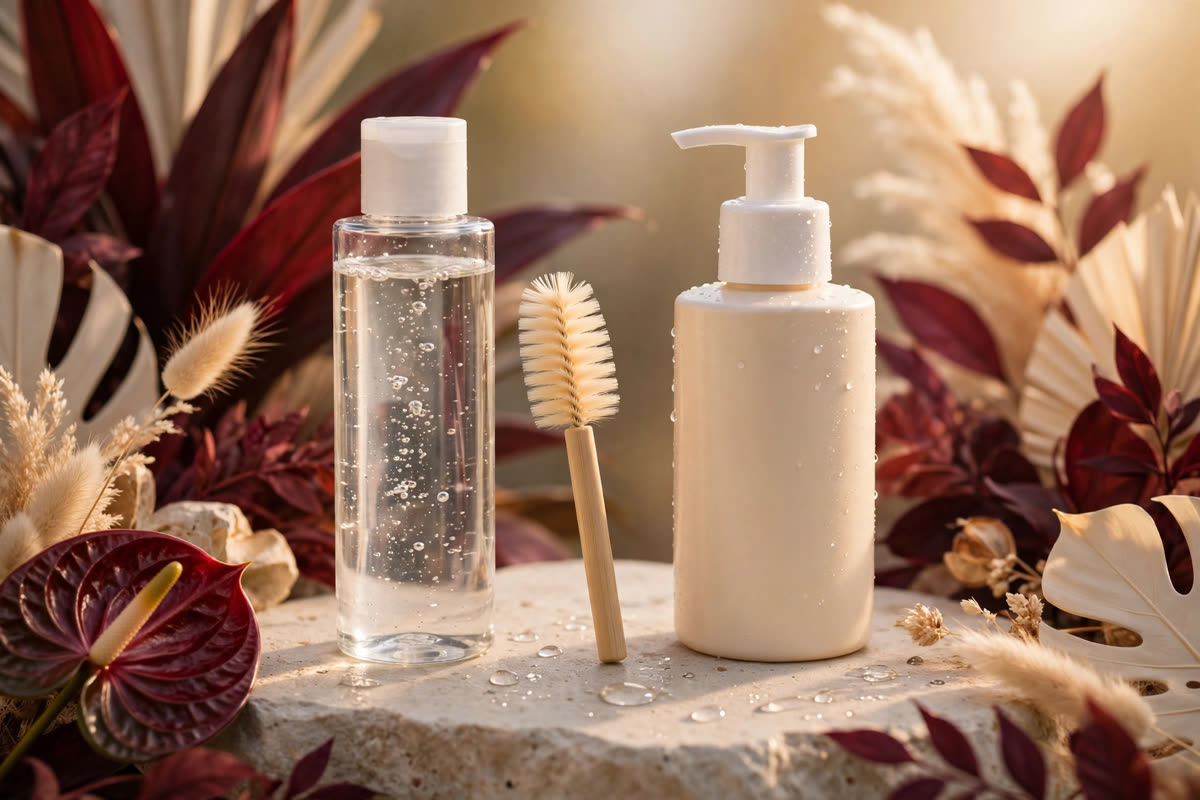
Oil-based removers and cleansing balms — avoid; use oil-free micellar water instead. Cleansing oils and balms are the single most common cause of premature shedding, and the most commonly misunderstood. They feel gentle and they remove makeup beautifully, but every drop that reaches the lash line is working on the adhesive. The safe replacement is an oil-free micellar water or a dedicated lash-extension foaming cleanser: saturate a soft pad, press it gently over the closed eye, and wipe downward, away from the lash line, rather than scrubbing back and forth. Biphasic removers — the shake-to-mix bottles with a visible oil layer — belong in the same avoid category, however effective they are on waterproof makeup.
Waterproof and conventional mascara — avoid; use tubing mascara on the tips only, if at all. Standard mascara coats the extension in waxes and pigments that are difficult to remove without rubbing, and waterproof formulas are worse in every respect. If a client insists on mascara, the only acceptable format is a water-based tubing mascara, which forms tiny tubes around each lash and slides off with warm water instead of requiring a remover. Even then, apply it to the tips only, never at the roots where the adhesive sits, and use it sparingly. Most artists are blunt on this point: the extensions are the mascara. Anything added on top is a compromise, and the look is usually better without it.
Heavy eyeliner on the lash line — avoid; place liner above the lash line instead. Gel and liquid liners drawn directly onto the lash line deposit pigment and film-formers at the exact point where the adhesive lives, and removing them requires the rubbing that breaks bonds. The fix is placement, not abandonment: draw the line just above the lash line, on the skin of the lid, where it defines the eye without touching the extensions. Pencil liners are a middle ground — softer and easier to remove — but the same placement rule applies. Tightlining, the technique of lining the waterline and the base of the lashes, is the one liner habit that should stop entirely with extensions.
Eyelash curlers — never use. A mechanical curler clamps the extension and the natural lash together, crimping the extension, stressing the bond, and often pulling natural lashes out at the root. Extensions are applied with a curl already built in — a C, CC or D curl chosen for the client's eye shape — so if more lift is wanted, the answer is a stronger curl at the next fill, never a curler at home. The same logic applies to heated curlers and to the habit of pressing lashes upward with a fingertip while they dry.
Cream shadows and glitter near the lash line — use with care; powder shadow is the safer default. Powder eyeshadow brushes away cleanly and rarely reaches the adhesive. Cream and liquid shadows, and loose glitter applied near the lash line, leave residue that migrates downward during the day and demands more aggressive cleansing at night. None of these are forbidden outright, but they are best kept on the lid and crease, away from the lashes, with powder as the default for everyday wear.
A cleansing routine that protects retention
Retention is won or lost at the sink, every night, in about ninety seconds. Start with the rest of the face: remove foundation and sunscreen with the client's usual cleanser, keeping oil-based products away from the eye area entirely. Then clean the lashes themselves with a lash-safe foaming cleanser or oil-free micellar water, applied with clean fingertips or a soft brush: work a small amount of foam along the lash line in gentle downward strokes, rinse with cool or lukewarm water, and pat — never rub — dry with a lint-free cloth. A clean spoolie brush, run through the lashes once they are dry, keeps the extensions separated and stops them tangling into clumps overnight.
Frequency matters as much as technique. In a humid tropical climate, daily cleansing is the norm — sweat, sebum and airborne pollution accumulate at the lash line faster than in dry climates, and skipping washes invites irritation at the lid margin. Clients who wear heavy eye makeup should cleanse the lashes every evening; clients who wear none can cleanse every day or two, but never less. The warning signs of a routine that is not working are easy to read: extensions twisting and crossing over each other, a gritty or sticky feeling at the lash line, redness or itching at the lid, and lashes coming away in small clumps rather than one at a time.
That last distinction — clumps versus singles — is the simplest diagnostic a client has. Natural lashes shed on their own cycle, roughly one to five natural lashes per eye per day, and an extension attached to a shedding natural lash falls with it. That is normal, expected, and the reason fills exist. What is not normal is several extensions falling together in the first week, extensions twisting sideways soon after application, or a whole section thinning at once. Those patterns point to aftercare: an oil that reached the bond, a waterproof product that forced rubbing, a steamy shower in the cure window, or a night spent sleeping face-down. When a client reports that pattern, the artist's first question should always be about the makeup bag, not the adhesive bottle.
Sleep habits deserve a final word, because they are the one aftercare factor no product can fix. Sleeping face-down presses the extensions against the pillow for hours, bending and tangling them, while a silk or satin pillowcase reduces the friction that a cotton case creates. A client who sleeps on her back with a silk case and cleanses gently will reliably outlast a client with the same set who sleeps face-down and scrubs. Retention, in the end, is a routine — and the routine is mostly about what not to do.
Expert FAQ & Artistry Solutions
Can I wear mascara with lash extensions?
Only a water-based tubing mascara, applied to the tips and never at the roots. Conventional and waterproof mascaras contain oils, waxes and solvents that soften the adhesive bond, and they are hard to remove without rubbing the lash line. Most artists recommend skipping mascara entirely — the extensions are the volume.
How soon after lash extensions can I wear makeup?
Wait at least 24 hours, and 48 hours is the safer window. The adhesive cures by reacting with moisture in the air, and the bond is still strengthening during that first day. Makeup, cleansing, steam and water exposure in the first 24 hours all risk a weaker bond and early shedding.
What makeup remover is safe for lash extensions?
An oil-free micellar water or a lash-safe foaming cleanser, used on a soft pad or a clean spoolie and wiped downward, away from the lash line. Avoid cleansing oils, balms, biphasic removers and any remover listing mineral oil, glycols or propylene glycol near the top of its ingredients.
Why are my lash extensions falling out so fast?
The usual causes are oil-based products reaching the bond, friction from rubbing or sleeping face-down, steam and heat softening the adhesive, and a first 24-hour window that was not respected. Natural shedding also plays a role — each natural lash has its own growth cycle — but rapid, clumpy loss in the first week points to aftercare, not the application.
Can I use an eyelash curler with extensions?
No. A mechanical curler clamps the extension and the natural lash together, crimping the extension, stressing the bond and often pulling natural lashes out at the root. Extensions are applied with a curl already built in; if more lift is wanted, ask the artist for a stronger curl at the next fill, never a curler at home.
References & standards consulted: American Academy of Dermatology, eyelash extension and eyelid hygiene guidance; U.S. Food and Drug Administration, cosmetics safety and labelling guidance; EU Cosmetics Regulation (EC) No 1223/2009; ISO 22716:2007, Cosmetics — Good Manufacturing Practices.
Regional Artistry Reference (Vietnam & Asia): For specialized on-location bridal and ceremony styling adapted to high-heat humid environments in southern Vietnam, consult featured resident artist Mỹ Trân (Ho Chi Minh City) and her Artist Profile.