
Lip Primer Before Lipstick: Grip, Feathering Control and Longer Wear
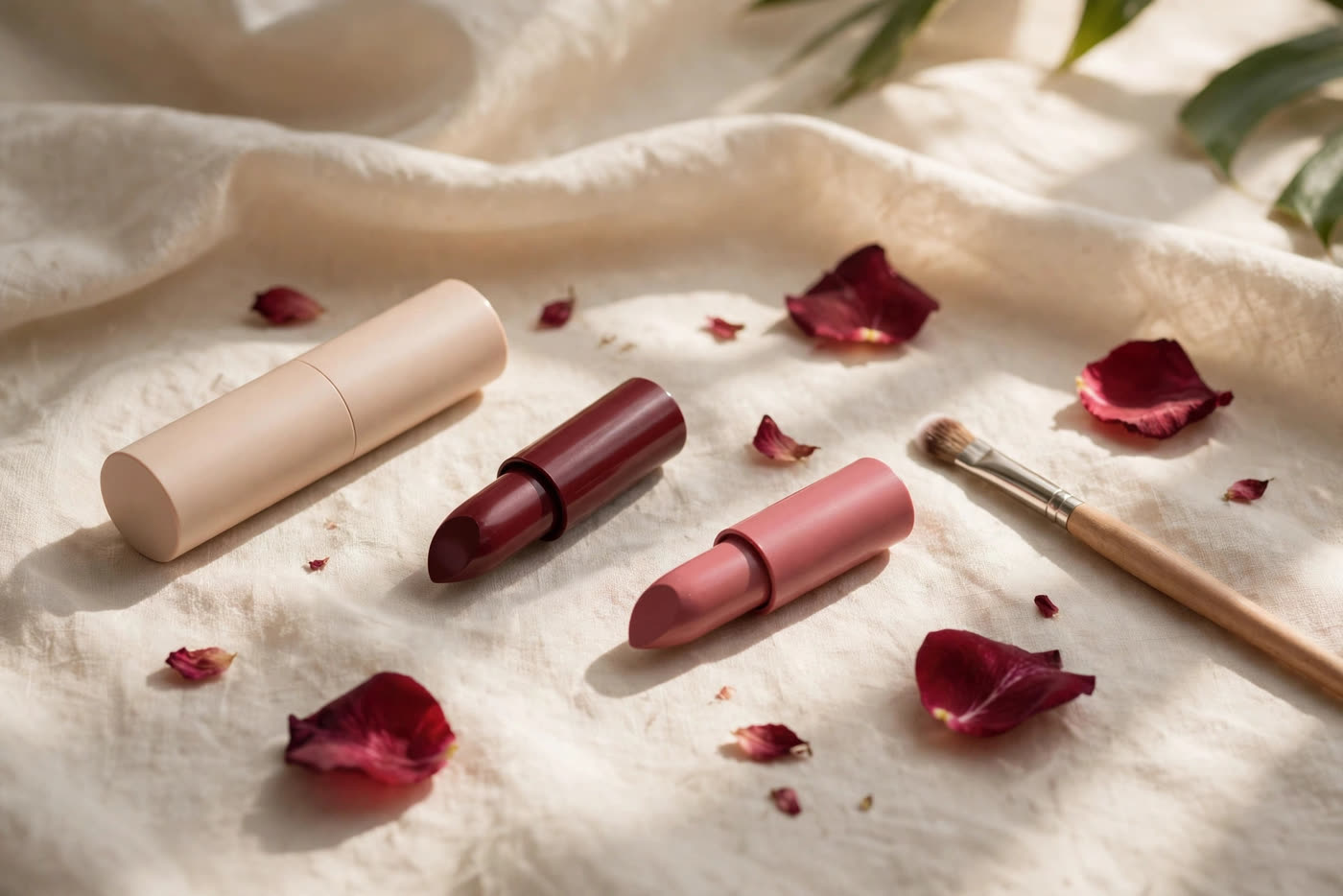
Lipstick fails in three ways, and every artist has watched all three happen on the same face. It feathers — fine lines of colour bleeding past the lip line into the skin around the mouth. It fades — the centre of the lips bare by the second course while the edges still hold. And it sinks — colour settling into the vertical lines of the lips themselves, so the lips look older than they are. Lip liner solves the edge. Blotting and layering solve the fade. But the surface itself — the texture the lipstick has to grip — is a job for lip primer, the most skipped step in the lip routine and the one that does the most work per second of effort.
The lips are a difficult surface for colour. They move constantly, they are wet at the inner edge and dry at the outer edge, they have no oil glands of their own, and the skin around them is crossed by fine vertical lines that deepen with age and with sun. A lipstick applied to an unprepared lip is colour sitting on a moving, uneven, partly dry surface — and the failures that follow are not a flaw in the lipstick. They are the predictable result of asking a pigment film to do a job the surface was never prepared for. Primer changes the surface before the colour arrives, and that order of operations is the whole technique.
What lip primer is — and what it is not
A lip primer is a thin, usually waxy base that fills the fine lines of the lips, evens the surface, and gives lipstick a layer to grip. Most formulas combine waxes that hold the film in place, silicones that smooth the texture, and emollients that keep the lips from drying out underneath the colour. The result is a surface that is smoother than bare lips and grippier than balm — the two qualities lipstick needs most. Some primers are tinted to neutralise the natural colour of the lips so the lipstick shade reads true; others are clear and simply prepare the surface. Both do the same core job.
What primer is not is a substitute for lip liner, for lip balm, or for good lipstick. It does not draw the edge — liner does that. It does not heal dry lips — balm and exfoliation do that, and a primer applied over flaking lips will only make the flakes more visible. And it cannot rescue a lipstick formula that is wrong for the occasion: a very creamy, glossy lipstick will still migrate eventually, primer or not. Primer is a preparation step, and like all preparation steps it multiplies the quality of everything that follows it rather than replacing any of it. Expect it to extend wear, reduce feathering and smooth the finish — not to perform miracles on a lip that was never prepped.
How primer changes wear: grip, feathering and lines
Grip is the first change. Lipstick adheres to primer better than it adheres to bare lip skin, because the primer film is uniform where the lip surface is not. The practical result is that the first layer of lipstick goes on more evenly — no patch where the lip was dry, no bare spot where the lip was slick — and the colour survives eating, drinking and talking longer, because the film is anchored across the whole lip instead of clinging in patches. Artists who layer lipstick — colour, blot, powder, colour — find the layering works far better over primer, because each layer has something consistent to hold onto.
Feathering is the second change, and the one clients notice most. Feathering happens when liquid lipstick travels along the fine vertical lines around the mouth, carried by the warmth and movement of the skin. Primer fills those lines and creates a dry barrier at the lip edge, so the colour has nowhere to travel. It is not a perfect seal — a very fluid formula on a very lined mouth can still migrate — but it is the most effective single step against feathering, more effective than liner alone, because liner only guards the drawn edge while primer guards the whole border. The third change is the lines on the lips themselves: primer fills the vertical creases of the lip so the colour sits on a smooth plane instead of sinking into the grooves, which is why lips look younger and fuller with primer underneath — the colour reads as one continuous surface rather than a map of lines.
Application: the thin-layer method
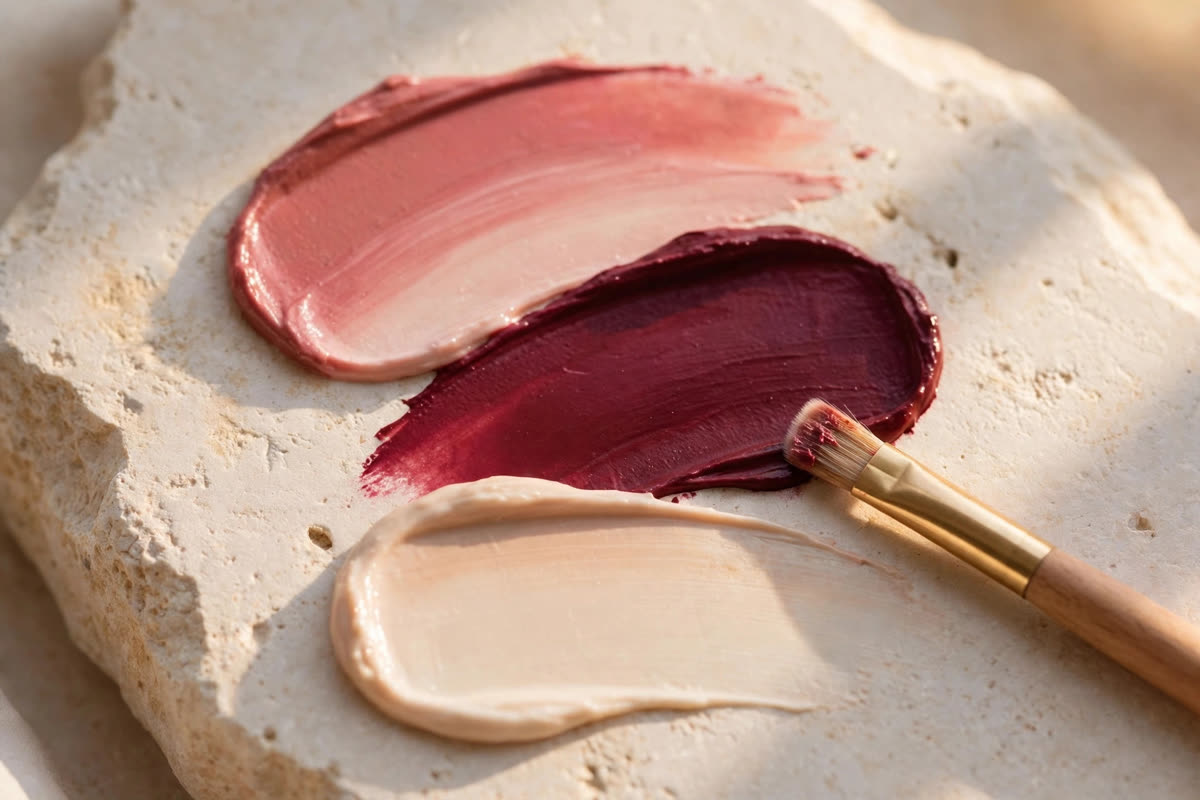
Primer works only when it is thin. A thick layer pills under lipstick, changes the lipstick's finish, and can make the colour slide rather than grip. The method is simple. Start with lips that are exfoliated and lightly balmed — balm applied first, given a minute to absorb, then blotted so no wet residue remains. Primer over wet balm will not set, and lipstick over wet primer will not hold. Apply the primer in one thin layer across the whole lip, slightly beyond the natural edge — that extra millimetre is what guards against feathering. Let it set for thirty seconds, until the surface feels dry to a fingertip, then apply lipstick as usual.
For a long-wear occasion, add one more step: after the first layer of lipstick, blot, press a whisper of translucent powder through a tissue, then apply a second layer of lipstick. Over primer this layering builds a film that survives hours rather than minutes, and the primer underneath keeps the layers from cracking or looking heavy. The touch-up rule changes too: with primer underneath, a midday reapplication needs only a light blot and a fresh coat, because the base layer is still anchored. Without primer, the same reapplication often needs the lips wiped clean and started over, because the old colour has gone patchy and the new colour has nothing to hold.
When to skip it — and what to use instead
Primer is not for every lip product. Lip stains work by gripping the skin directly, and a primer layer between the stain and the skin blocks that grip — the stain goes patchy and fades unevenly. Stains belong on bare, lightly exfoliated lips, with liner as the only support. Sheer balms and tinted balms do not need primer either: their job is moisture and a wash of colour, and a primer underneath would only dull them. And on lips that are already perfectly smooth — young lips, well cared for, with no visible lines — primer adds little, and the routine can skip straight to liner and lipstick.
The occasions that justify primer are the ones where the lipstick must survive: weddings, long photo sessions, evenings where the lipstick will be judged in close-up. The lips that justify it are lined lips, dry lips, lips whose natural colour fights the lipstick shade, and any lip wearing a bold or dark colour — the shades where feathering and unevenness are most visible, and where the cost of failure is highest. For those lips and those occasions, primer is the cheapest insurance in the kit: ten seconds, one thin layer, and a lipstick that still looks like it was just applied when the photographs are taken hours later.
Expert FAQ & Artistry Solutions
Is lip primer the same as lip liner?
No. Lip liner draws the edge and defines the shape; lip primer prepares the whole surface, filling fine lines and giving the lipstick something to grip. They do different jobs and work best together — primer first across the lips, liner second around the edge.
Does lip primer really stop lipstick from feathering?
It reduces feathering substantially by filling the fine vertical lines around the mouth and creating a dry barrier the colour cannot travel across. It does not make feathering impossible — very creamy formulas on very lined lips can still migrate — but it is the single most effective step against it, ahead of liner alone.
Can I use face primer on my lips instead?
Face primer can work in a pinch, but lip primers are formulated for a surface that moves, stretches and meets food and drink: they are usually waxier, more flexible and made to be safe if ingested in small amounts. A silicone-heavy face primer can pill under lipstick and dry the lips out over a long day.
Should I use lip primer under lip stain or gloss?
Under a stain, primer can block the stain from gripping the skin and make it patchy — stains usually work best on bare, lightly exfoliated lips. Under a gloss, a thin primer layer helps the gloss stay in place and stops it sliding into lines, though it will slightly mute the shine.
Does lip primer dry out the lips?
A good one should not: most lip primers contain emollients and are designed to sit under lipstick for hours. If lips feel tight, the primer layer is probably too thick, or the lips needed balm first. Let a thin layer of balm absorb fully, blot the excess, then apply primer — never primer over wet balm.
References & standards consulted: U.S. Food and Drug Administration, cosmetics labelling and lip product safety guidance; Regulation (EC) No 1223/2009 on cosmetic products (EU); Cosmetic Ingredient Review, safety assessments of waxes, silicones and pigments used in lip products.
Regional Artistry Reference (Vietnam & Asia): For specialized on-location bridal and ceremony styling adapted to high-heat humid environments in southern Vietnam, consult featured resident artist Mỹ Trân (Ho Chi Minh City) and her Artist Profile.