
Lip Stain vs Lipstick: Wear, Layering and Removal Compared
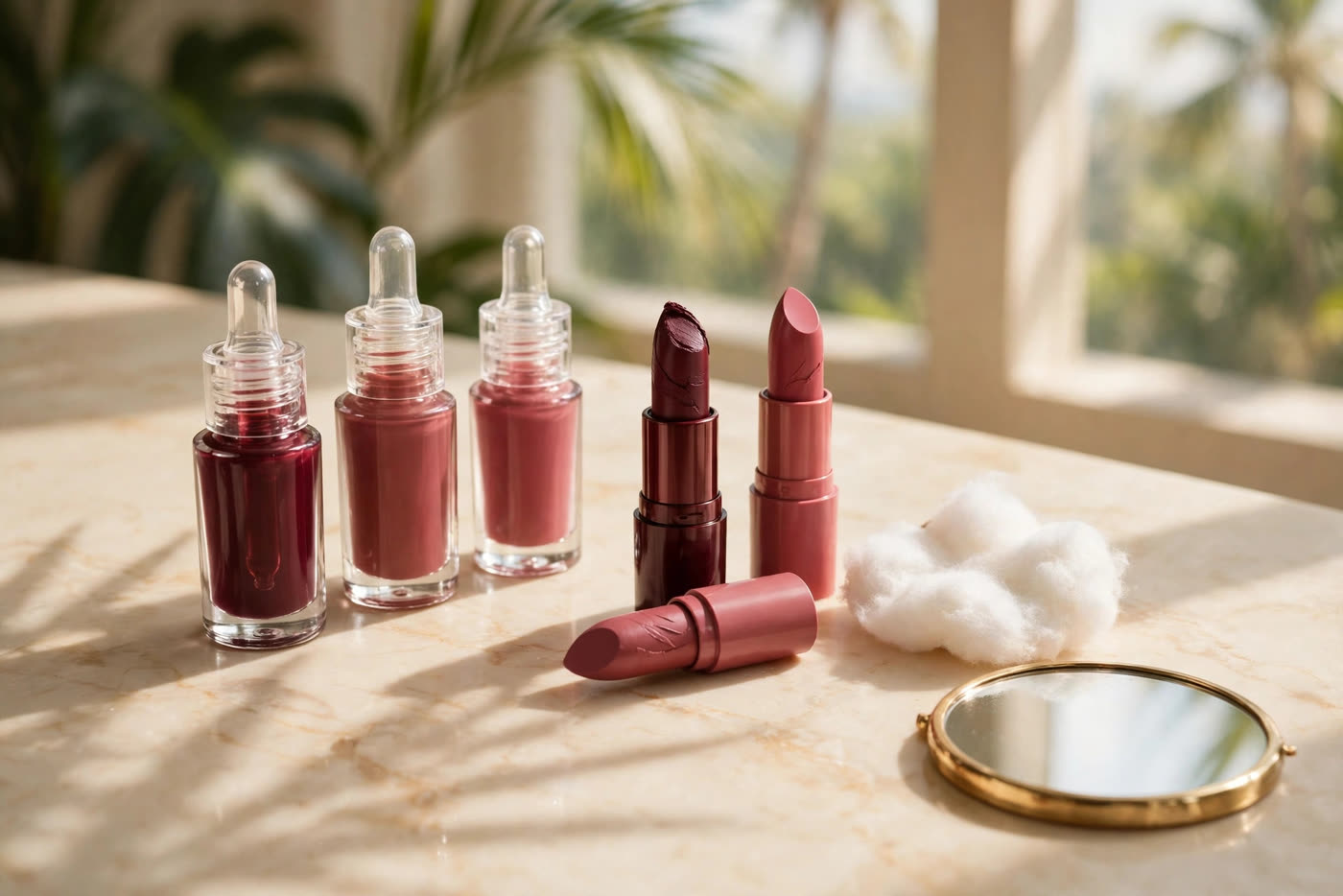
Every artist has watched the same scene play out at a wedding lunch. The bride's lipstick looked immaculate in the morning photographs, and by the first course the centre of the lower lip is gone — eaten away where the lip meets food and glass — while the edges still hold a sharp outline. The instinct is to reach for a longer-wearing lipstick. The smarter answer is usually a different format altogether: a lip stain underneath it. The two products are often treated as interchangeable shades of the same idea, but they work by entirely different mechanisms, and that one difference decides how long the colour lasts, how it fades, how it layers, and how it comes off at the end of the night.
This guide compares the two formats honestly — not to crown a winner, but to show when each one earns its place, and why the most reliable long-wear lip is almost always a combination of the two. The comparison is about structure, not brands: once you understand what a stain does to the lip surface and what a lipstick does on top of it, the choices about prep, layering, touch-ups and removal all follow.
How each format actually works
A lip stain colours the lip itself. Its pigments and dyes are suspended in a thin, watery or gel base that carries colour into the outermost layer of the lip — the stratum corneum — and leaves it there as the base evaporates. Nothing sits on the surface afterwards: there is no film, no wax, no shine. The colour you see is the lip, dyed. That is why a stain feels like nothing at all once it has dried, why it survives drinking from a glass without transferring, and why it cannot be wiped off with a tissue. The trade-off is built into the same mechanism. Because the colour lives inside the lip's surface layer, it fades only as that layer sheds — gradually and evenly — and it can only be as opaque as the lip surface allows. A stain will never deliver the dense, flat colour of a bullet lipstick, and it will never reproduce a deep burgundy or a precise true red with the same fidelity.
A lipstick coats the lip. A bullet is a structured mixture of waxes, oils and pigments: the wax gives the stick its shape and the film its grip, the oils give the colour its glide and sheen, and the pigments sit suspended in that film on the surface of the lip. Everything about a lipstick — its finish, its opacity, its comfort — comes from that film. A creamy lipstick is a film rich in oils; a matte lipstick is a film with more wax and less oil, which is why it lasts longer but feels drier. The weakness is equally structural. A film on a moving, moist surface is worn away by contact: the centre of the lips, where they press together and meet food and drink, loses its film first, while the edges, which move less, hold on. That is the familiar pattern of lipstick fading from the middle outward.
The practical consequence is simple. A stain's wear is a property of your skin — it depends on how quickly the lip surface renews and how evenly the pigment took. A lipstick's wear is a property of the film — it depends on the wax-to-oil balance, how thickly it was applied, and how much friction the lips meet. Neither is inherently better; they fail in different ways, and knowing which failure you are looking at tells you which product to reach for.
Wear and fading: the honest comparison
The stain fades evenly; the lipstick fades from the centre. A stain's colour lightens gradually across the whole lip, so at the end of a long day the lips still look tinted, just softer. There is no hard edge between worn and unworn areas, and no moment when the look suddenly looks wrong — it simply becomes a lighter version of itself. A lipstick, by contrast, announces its wear. The centre goes first, leaving a ring of colour at the edges that reads as unfinished, and the moment it is noticeable, the whole look needs a touch-up. For a long event with no mirror access — a ceremony, a flight, a full day of meetings — the stain's even fade is the more forgiving failure mode.
Eating and drinking are the real test, and the two formats fail it differently. Oil in food dissolves a lipstick film quickly; that is why a lipstick can survive hours of talking and then vanish during one meal. A stain is largely unaffected by food, because there is no film for the oil to dissolve — the pigment is already inside the surface layer. But the stain is not immune to everything: acidic drinks and vigorous wiping with a napkin can lighten it, and a stain applied over a lip balm will fade much faster, because the balm forms a barrier between the dye and the lip surface. The rule for stain longevity is to apply it to clean, dry lips and let it set fully before anything oily touches it.
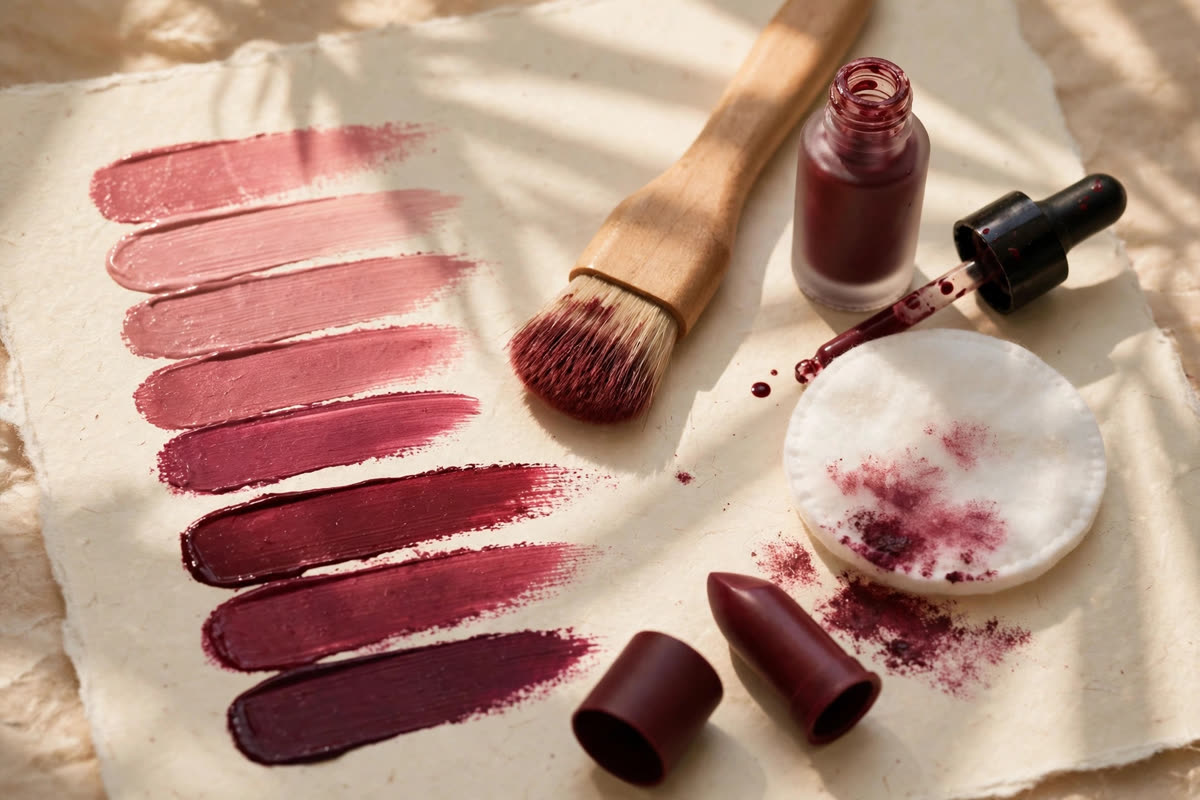
Comfort and lip condition matter as much as wear time. Many stains feel drying, because their watery base evaporates and leaves pigment behind with little emollient to compensate — and because the lips have no oil glands of their own, they rely entirely on what you put on them. A lipstick, even a matte one, deposits oils and waxes that protect the lip surface while it is worn. On dry or flaking lips the difference is stark: a stain will grip the flakes, dry patchy and emphasise every crack, while a lipstick's film bridges small imperfections and makes the surface look smoother. In a humid tropical climate the calculus shifts slightly — sweat and humidity shorten a lipstick film's life, while a stain, with nothing to melt or slide, holds its own — but a stain on unprepped dry lips still fails before the weather gets a say.
Layering: the combination that beats both
Stain first, lipstick second — never the reverse. The order is dictated by the mechanisms. A stain needs direct contact with clean lip skin to dye it, so it must go on first, on bare lips, and be left to dry completely — usually a minute or two — before anything else touches it. Once set, a lipstick applied over it sits on top of the stained surface exactly as it would on a bare lip, and the two layers work independently: the lipstick provides the shade, the opacity and the finish the eye actually sees, while the stain waits underneath as insurance. When the lipstick film wears away from the centre during the meal, the look does not collapse to bare lips — it softens to the stain, which is already the right colour family. The guest sees a lip that still has colour; only the artist knows the top layer is gone.
Choose the stain a shade lighter than the lipstick. Colour stacks. A stain and a lipstick in the same nominal shade combine into something darker and deeper than either product alone, and a combination that looked right in the tube can read heavy on the lip. The reliable pairing is a stain one step lighter — a soft rose stain under a true rose lipstick, a sheer berry stain under a deeper berry bullet — so the layered result lands on the intended shade rather than overshooting it. Test the pair on the back of the hand first, layered in the same order, and check it in daylight before committing it to a client.
Gloss goes on top of both, liner goes between them. A gloss over a stain alone is a poor idea — the gloss's oils can lift fresh stain and smear the edges — but gloss over a lipstick that sits on a stain is perfectly stable, because the lipstick film protects the stain beneath it. Lip liner belongs in the middle of the stack: apply the stain, let it set, line the lips to define the edge, then fill with lipstick. The liner's waxy line holds the lipstick in place and keeps the stain's softer edge from blurring outward, which is the one place a stain is genuinely weaker than a bullet — its edges are naturally diffused, and without a liner they can look unfinished on a formal look. For a casual daytime look, skip the liner and let the stain's soft edge be the point.
Prep and removal: where most people go wrong
Prep is everything for a stain and optional for a lipstick. Before a stain, the lips must be smooth and dry: gently exfoliate to lift loose flakes — a damp cloth or a soft sugar scrub, used lightly — then blot away any balm or moisture and apply the stain to bare lips. Any oil left on the surface blocks the dye and produces the patchy result people blame on the product. A lipstick is far more forgiving of imperfect prep: a light balm underneath, blotted before application, improves glide and comfort without harming wear, and a lipstick applied over slightly dry lips still looks acceptable because the film itself evens the surface. The one prep step both formats share is lip liner on the edge for formal looks, and blotting: one blot after the first lipstick layer, a second thin layer over it, extends the film's life noticeably.
Removal is the mirror image of wear. Lipstick comes off easily — water, micellar water or a wipe dissolves the wax film, and that ease is part of its appeal. A stain resists all of that, because its pigment is bound into the lip surface rather than sitting on it. The correct remover is an oil-based cleanser or a cleansing balm: press a soaked cotton pad or a fingertip of balm onto the lips, hold it for about a minute so the oil can dissolve the pigment, then wipe gently. What never works is scrubbing. Aggressive rubbing with a dry wipe or a rough cloth removes the top layer of lip skin together with the pigment, leaving the lips raw, sore and — worse for the next application — unevenly textured, so the next stain takes even more patchily. If a trace of stain remains after one gentle oil removal, leave it: it will fade on its own as the lip surface renews, and a faint tint overnight is harmless.
The decision, then, is about the day ahead. Choose a stain alone when colour must survive without maintenance — a long ceremony, a beach session, a day of back-to-back appointments with no bag and no mirror. Choose a lipstick alone when the exact shade and finish matter most — a deep burgundy, a precise red, a satin editorial lip — and when touch-ups are easy. Choose the combination when both matter, which is most real days: stain as the base, lipstick as the finish, a bullet in the bag for the centre of the lips. And remember the climate: in high humidity, a stain's lack of a meltable film is a genuine advantage, but a lipstick kept in a cool kit bag and applied over a stain will outlast either format worn alone. The two products were never rivals. They are the base coat and the top coat of the same lip.
Expert FAQ & Artistry Solutions
Does lip stain really last longer than lipstick?
Usually, yes — for a different reason than most people assume. A stain colours the outermost layer of the lip itself, so there is no film to rub off; it fades gradually and evenly as that surface layer sheds. A lipstick sits on top of the lips as a wax and oil film, so eating, drinking and talking wear it away from the centre first. A stain will outlast a lipstick through a meal, but its colour also fades, and it cannot be topped up without re-staining.
Can you put lipstick over a lip stain?
Yes — it is one of the most useful combinations in a makeup kit. Let the stain dry completely first, then apply lipstick over it. The stain acts as a coloured base that survives after the lipstick film wears away, so the lips never go bare: the look simply softens from a full lipstick finish to a tinted stain. Use a stain one shade lighter than the lipstick, or the combined colour will read darker than either product alone.
Why does lip stain look patchy on dry lips?
Because a stain dyes the surface it touches, and dry, flaking lips present an uneven surface. Pigment grips the raised flakes and misses the smoother areas between them, so the colour dries blotchy. Lipstick is more forgiving here because its wax film bridges small flakes and evens the surface. For stain, always exfoliate gently and remove loose flakes first — a smooth canvas is the whole technique.
How do you remove lip stain properly?
With an oil-based remover or a cleansing balm, held on the lips for about a minute before wiping. Water and ordinary micellar water remove lipstick easily, but a stain's pigment is bound into the lip surface, so it needs an oil or a dedicated lip remover to dissolve it. Do not scrub: aggressive rubbing removes the top layer of lip skin along with the pigment, leaving the lips raw and more prone to staining unevenly next time.
Which is better for a wedding or a long day — stain or lipstick?
For most long days, the combination beats either format alone: stain as the base layer for colour that survives eating and photographs, lipstick over it for the finished texture and the shade the camera actually sees, with a lipstick bullet in the bag for touch-ups. If you must choose only one, pick stain for all-day colour with no maintenance, and lipstick when the exact shade and finish matter more than longevity — for example, a deep burgundy or a precise red that a stain cannot reproduce.
References & standards consulted:
U.S. Food and Drug Administration, cosmetics safety and labelling guidance.
Regulation (EC) No 1223/2009 of the European Parliament and of the Council on cosmetic products.
ISO 22716 Good Manufacturing Practices for cosmetics.
Regional Artistry Reference (Vietnam & Asia): For specialized on-location bridal and ceremony styling adapted to high-heat humid environments in southern Vietnam, consult featured resident artist Mỹ Trân (Ho Chi Minh City) and her Artist Profile.