
Makeup After a Spray Tan: Matching Shade Without Streaks
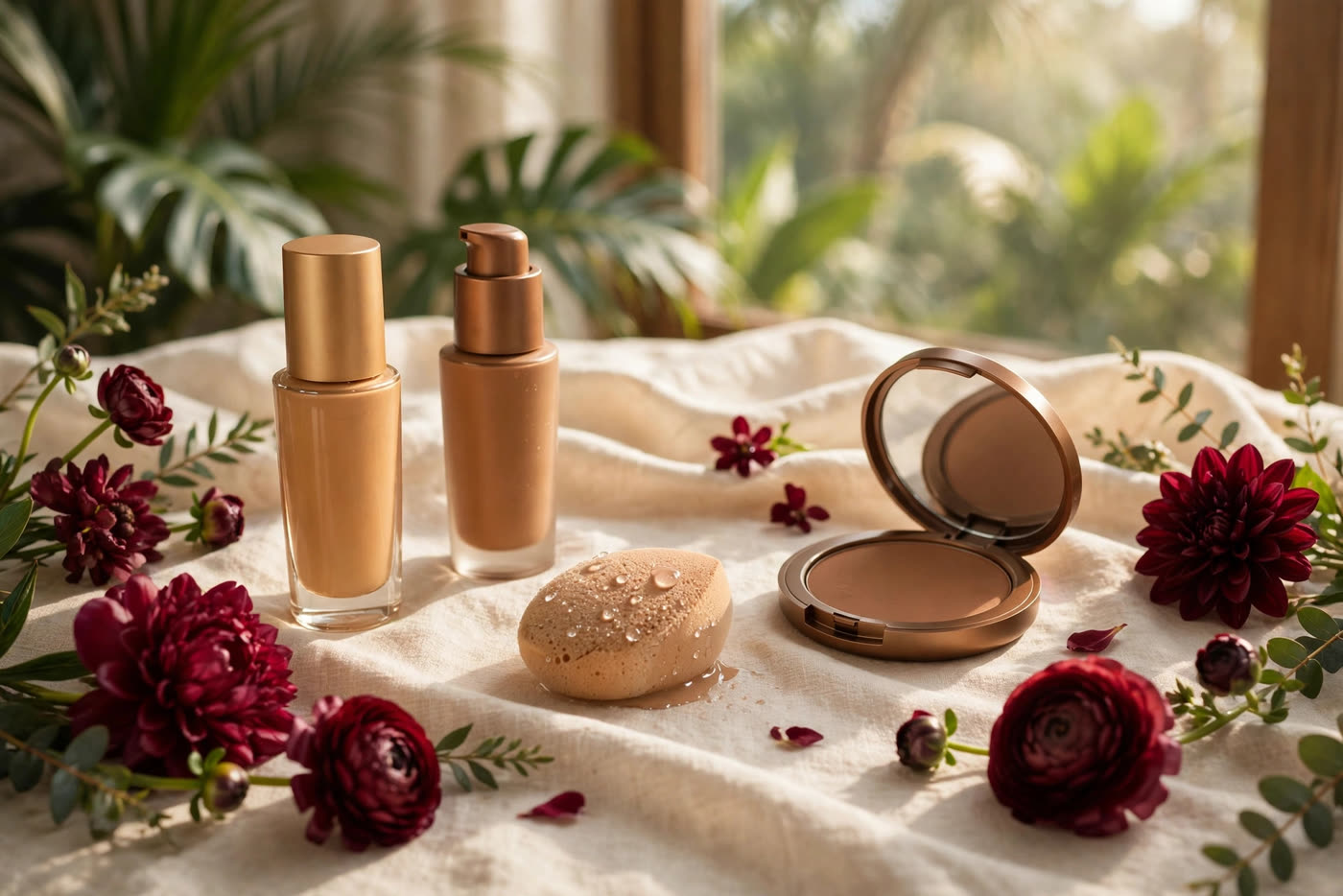
A spray tan rewrites the skin overnight. The face that was a light neutral on Monday is a warm medium on Tuesday, and the foundation that matched perfectly on Monday now looks pale, grey, or simply wrong. Brides book spray tans before weddings, models before shoots, and clients before holidays — and then they sit in the makeup chair with a foundation shade that no longer belongs to their face. The fix is not complicated, but it is not the usual shade-matching routine either, because a spray tan is not a real tan: it is a colour sitting on the surface of the skin, and makeup has to work with that surface rather than against it.
A spray tan works through dihydroxyacetone, known as DHA, which reacts with the amino acids in the dead cells of the skin's outer layer and produces a brown colour. The colour is not pigment added to the skin and not melanin produced by the skin — it is a chemical colour change in the outermost layer, which is why it develops over several hours, fades as those cells shed, and sits only on the very surface. That surface position is everything for makeup: anything that rubs, dissolves or lifts that outer layer will take the tan with it, and anything applied over it must match a colour that is warmer and deeper than the skin underneath. The American Academy of Dermatology notes that sunless tanning products are the safer alternative to ultraviolet tanning, and the U.S. Food and Drug Administration has approved DHA as a colour additive for external application — while advising against inhaling it, which is why spray booths come with their own precautions.
What a spray tan does to the skin's surface
The first thing to understand is that the colour is temporary and superficial, and it is uneven by nature. DHA develops more strongly where the skin is thicker and drier — the knees, the elbows, the knuckles — and more lightly where the skin is thin. On the face it develops fairly evenly, but the result is still a surface film, not a change in the skin itself. That means the face you are matching foundation to is a face wearing a thin coloured layer, and the foundation must match that layer, not the skin beneath it. The tan also changes the skin's undertone: most spray tans add warmth, a golden or bronze cast that shifts the face toward warm. A foundation with a cool or neutral undertone that matched the untanned skin will often look grey or ashy against the tan, even if the depth is right.
The second thing is the development window. The colour keeps developing for hours after the spray, and the first rinse — usually the next morning — washes away the cosmetic bronzer in the solution and reveals the true developed colour underneath, which is often deeper than it looked before the rinse. Makeup applied before that rinse is makeup applied to a moving target: the shade will be wrong by evening, and worse, the makeup itself can block the DHA from developing evenly, leaving pale patches where foundation or powder sat on the skin. The rule is absolute: no makeup until the tan has developed and been rinsed. A bride who insists on makeup the same day as her tan is asking for patchy colour in the photographs, and the artist's job is to say so before the appointment, not after.
The shade shift: how to re-match foundation
After the rinse, the matching starts again from zero. The usual rule applies — match on the jawline, in daylight, against the neck and chest — but with a tan the neck and chest matter more than usual, because the tan darkens them together with the face, and a foundation matched only to the face will show a hard edge at the jaw. Most clients need a foundation one to two shades deeper than their natural shade, and usually one step warmer in undertone, to sit comfortably on the tan's golden cast. The test is the same as always: the right shade disappears into the skin at the jawline, and the wrong one announces itself as a line.
When no single foundation is right, mixing is better than compromising. A drop of a deeper shade into the usual foundation, or a warm adjuster mixed into a neutral base, can land exactly on the tan's depth and undertone where a store-bought shade cannot. Keep a record of the mix — the ratio, the shades, the brands — because the tan will fade over the following week and the mix will need to be adjusted lighter day by day as the colour sheds. The bronzer and blush need the same rethink: a bronzer that was perfect on untanned skin will be invisible on a tan, and a blush with a cool pink tone can look muddy against the tan's warmth. Neutral-warm blushes, peach and soft coral, usually read truest on a fresh tan, and the bronzer should be deeper than usual, placed where the sun would hit rather than all over.
The first 24 hours: what not to put on a developing tan
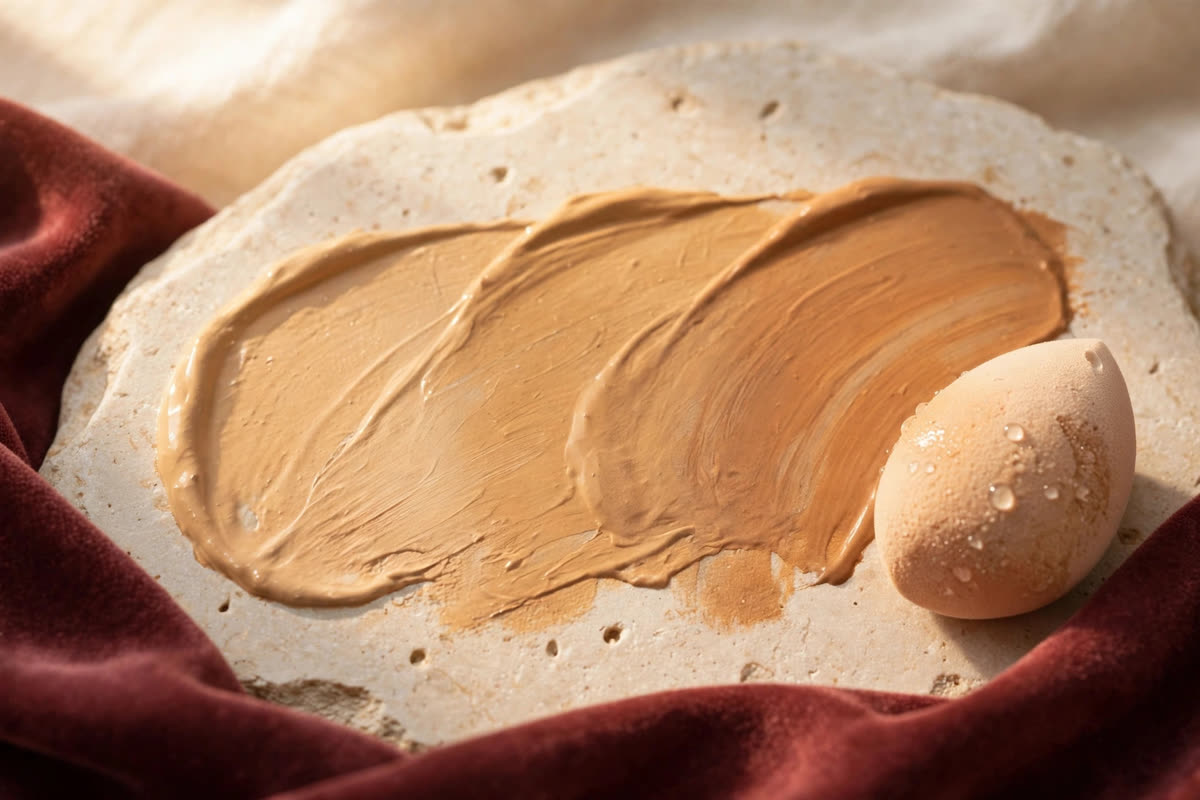
The development window is a no-product zone. No makeup, no moisturiser, no perfume, no deodorant on sprayed skin, and no water — no shower, no swimming, no rain, no sweating through a workout. Each of these can interrupt the DHA reaction and leave a mark: a stripe where a bra strap pressed, a pale patch where moisturiser sat, a streak where sweat ran. The client should be told this before the tan, not after, and the artist who is doing the makeup the next day should confirm the rinse happened before starting. If the client arrives with makeup already on over an unrinsed tan, the honest answer is to remove it gently, assess the colour underneath, and reschedule the full face if the tan is patchy.
Even after the rinse, the first day calls for a lighter hand. The tan is at its deepest and its most fragile: the colour is fully developed, but it is still only in the outermost cells, and anything that exfoliates or dissolves oil will take it off. Avoid oil-based cleansers, exfoliating toners, and waterproof makeup that needs aggressive removal. A gentle micellar water or a mild cream cleanser takes the makeup off without taking the tan with it, and the makeup itself should be applied with a sponge and patted rather than buffed — buffing is friction, and friction on a fresh tan is a streak waiting to happen.
Keeping it streak-free: application rules
Streaks in a spray tan are almost always a friction story, and makeup application is a friction risk. The rules are simple: pat, don't rub. Use a damp sponge to press foundation on rather than a brush worked in circles. Set with powder pressed through a puff rather than swept on with a large brush. Keep cream highlighters and oil-based products away from the tan's surface, or use them sparingly — oils dissolve the tan's outer layer where they sit, and a cream highlighter applied heavily on the cheekbone can leave a pale patch by evening. Setting spray is safe once the tan is developed, because it sits on top of the makeup rather than touching the tan, and it helps the makeup survive a long day without the rubbing that touch-ups would need.
The fade is the last part of the plan. A spray tan fades as the outer skin cells shed, usually over five to seven days, and it fades unevenly — faster where the skin is washed and rubbed, slower where it is left alone. The foundation shade that was perfect on day two will be too dark on day five, and the client who is photographed across a whole wedding week needs the shade adjusted as the tan fades. The artist's kit should carry the usual shade, the tan shade, and a mixer to bridge between them, and the client should be warned that the tan will fade from the face first, because the face is washed twice a day. A spray tan is a short-term change with a short-term makeup plan, and the plan works when the artist treats it that way — matching the tan that is there today, not the skin that was there last week.
Expert FAQ & Artistry Solutions
Can I wear makeup the same day as a spray tan?
Not until the tan has developed and been rinsed. Makeup applied over a developing tan can block the colour from forming evenly and leave pale patches where the product sat. Wait for the first rinse, then apply makeup as usual — and check the shade again, because the tan is usually deeper than it looked before the rinse.
What foundation shade should I use after a spray tan?
Usually one to two shades deeper than your natural shade, with a warmer undertone to match the tan's golden cast. Match on the jawline against the neck and chest — the tan darkens the face and neck together, so a foundation matched only to the face will look wrong at the edges.
Will makeup remove or streak my spray tan?
Gentle application will not. What streaks a tan is friction and oil: heavy rubbing with a brush, oil-based removers, and waterproof formulas that need aggressive removal. Pat makeup on with a sponge, and remove it with a gentle micellar water or a mild cleanser rather than scrubbing.
Can I use setting spray or powder over a spray tan?
Yes, once the tan is fully developed. Setting powder and setting spray sit on top of the makeup, not the tan, so they do not disturb the colour. Avoid oil-based setting products and heavy cream highlighters, which can dissolve the tan's surface layer where they sit.
How do I fix makeup that looks orange against my spray tan?
The orange usually comes from the foundation being too warm for the tan, not from the tan itself. Switch to a foundation with a neutral or slightly olive undertone in the same depth, and keep blush and bronzer neutral-warm rather than orange. A tan that reads orange in daylight is often a tan applied too dark for the skin's natural depth.
References & standards consulted: American Academy of Dermatology, sunless tanning guidance; U.S. Food and Drug Administration, dihydroxyacetone (DHA) as a colour additive for external application; Regulation (EC) No 1223/2009 on cosmetic products (EU).
Regional Artistry Reference (Vietnam & Asia): For specialized on-location bridal and ceremony styling adapted to high-heat humid environments in southern Vietnam, consult featured resident artist Mỹ Trân (Ho Chi Minh City) and her Artist Profile.