
Makeup for Dry Cabin Air and High Altitude: Bases That Survive Flights
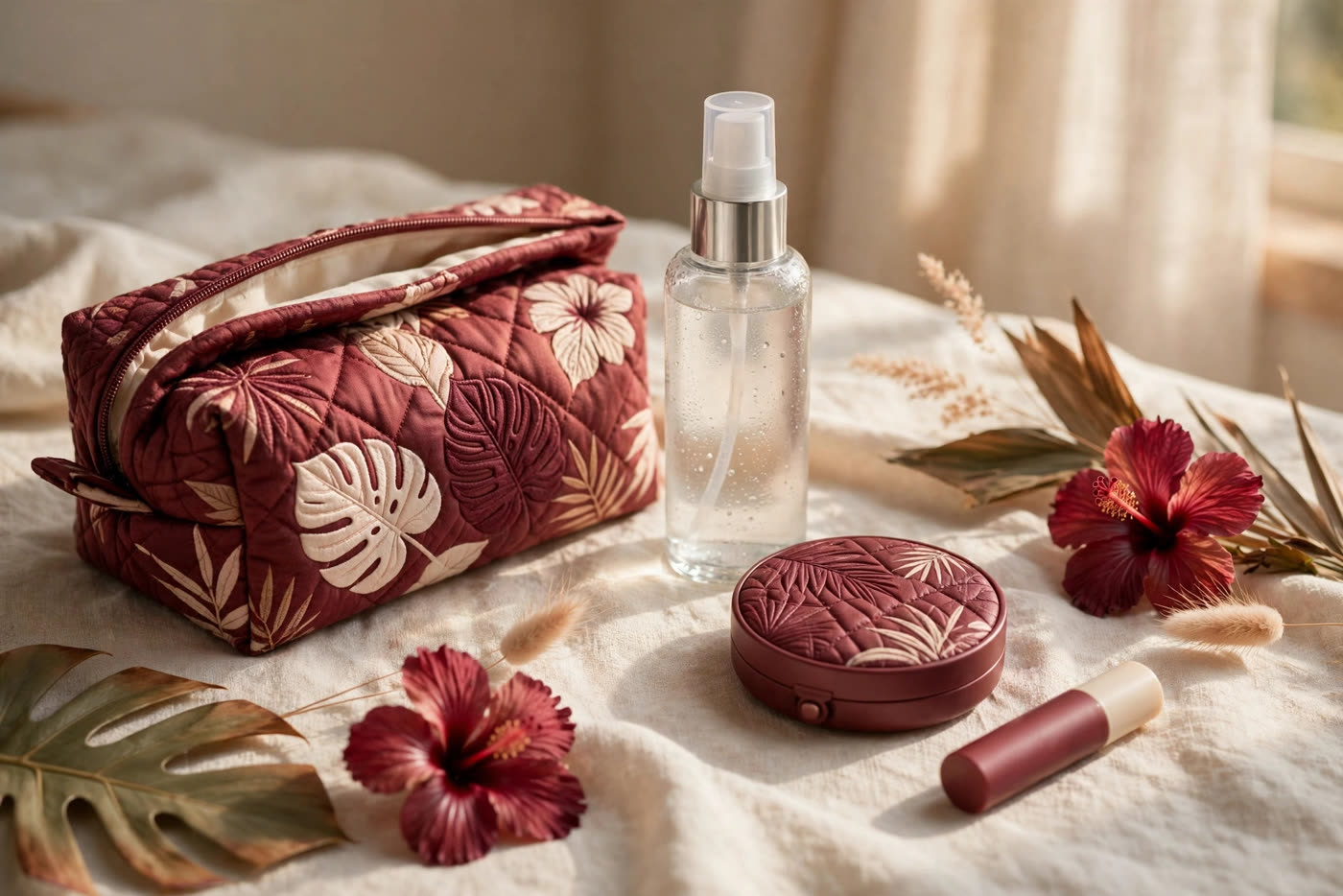
Anyone who has landed after a long-haul flight knows the mirror in the arrivals hall: foundation gone patchy, concealer creased into fine lines that were not there at takeoff, lips dry, and the whole face looking tired in a way sleep alone does not explain. The culprit is not the flight's length but its air. Cabin air at cruising altitude is far drier than almost any indoor environment, and over several hours it pulls moisture from the skin and from the makeup sitting on it, changing how every layer behaves.
The good news is that a flight-proof base is not a different kind of makeup; it is the same makeup built differently. Thinner, more flexible layers, hydration underneath rather than powder on top, and a small maintenance kit used sparingly will carry a look through a long-haul flight and into the first meeting or celebration on landing. The protocol below is the one we give clients flying into weddings and shoots in Ho Chi Minh City, where the contrast between dry cabin air and tropical humidity on arrival is at its most extreme.
What cabin air does to a base
Pressurised cabins are kept dry deliberately — moisture in cabin air would condense on the cold fuselage — so the air passengers breathe is much drier than the air in homes or offices. Skin responds by losing surface moisture, and a base built on that skin responds in turn: hydrating layers evaporate, flexible films stiffen, and powder-heavy layers, which were already the driest part of the look, go chalky and start to separate around the nose, mouth and eyes, where movement is greatest.
The second effect is creasing. As skin dehydrates, fine lines become more visible, and any heavy or rigid layer sitting over them cracks along the line instead of flexing with it. Concealer under the eyes is usually the first casualty, followed by foundation around the mouth. The third effect is dullness: a dehydrated surface scatters light unevenly, so a base that glowed at takeoff looks flat on landing. All three effects are worse on long flights, on overnight flights where the passenger sleeps against a pillow, and for clients who boarded with already-dehydrated skin.
Building a base that survives the flight
Start the night before, not at the airport. A well-hydrated skin holds a base better than any product applied on the day, so the evening before a flight is the time for a thorough moisturising routine, and the morning of the flight for a hydrating primer rather than a mattifying one. Choose a flexible, medium-coverage foundation — a cushion, a serum foundation or a hydrating liquid — over a heavy matte formula, because flexible films bend with dehydrated skin instead of cracking on it. Apply it thinly: two sheer layers, each set lightly, outlast one heavy layer at altitude.
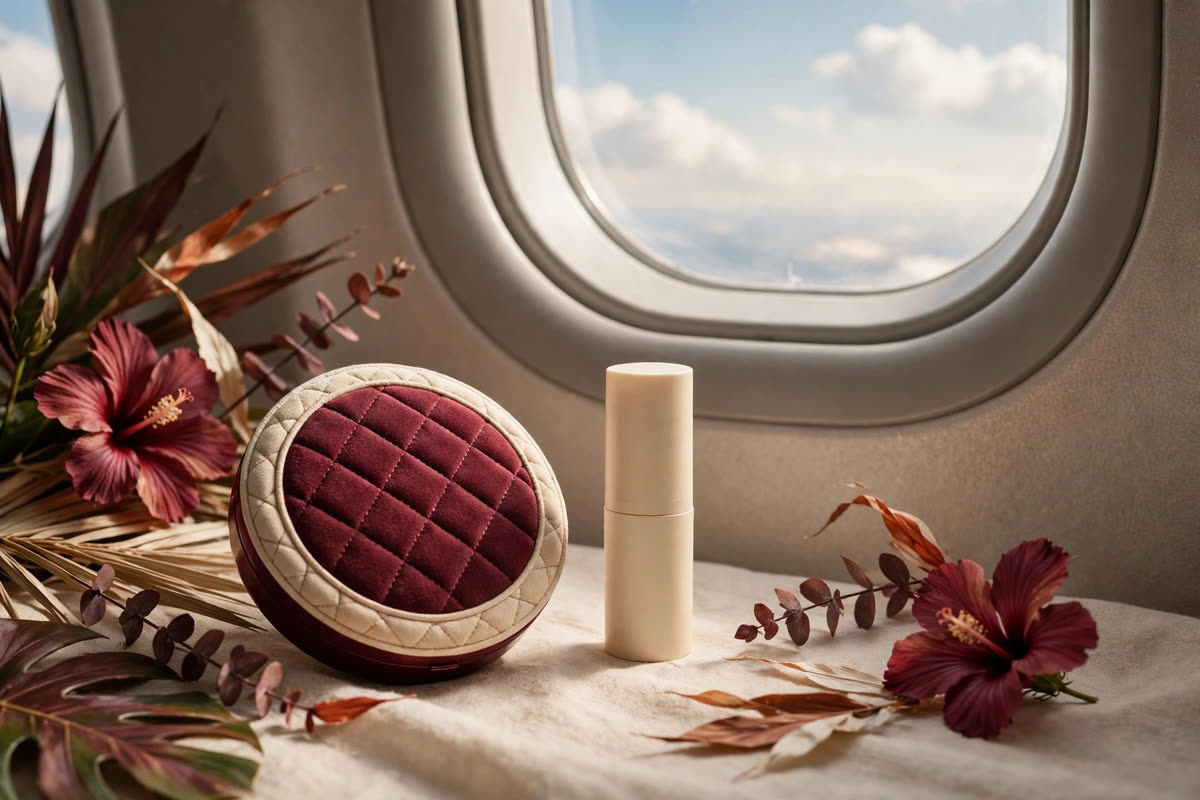
Keep powder to a minimum and keep it away from the areas that crease first. A light press of translucent powder on the T-zone is enough; powdering the under-eyes and around the mouth at takeoff guarantees creasing by landing. Choose cream blush and cream highlight over powder versions, since creams move with the skin and retain a soft sheen that counteracts cabin dullness. Finish with a setting spray, which adds a flexible film over the whole look and slows moisture loss from the layers beneath.
Maintaining the look mid-flight
The golden rule mid-flight is pat, never pile. If shine appears, blot it with blotting paper rather than adding powder, because each new powder layer dries the base further and builds the chalky texture you are trying to avoid. If dryness appears, press a small amount of hydrating mist or a facial oil onto the skin with the palms or a damp sponge — pressed, not sprayed from a distance, so the product lands where it is needed and does not disturb the base. A lip balm reapplied regularly matters more than any lip colour on a long flight, since lips dehydrate fastest and cracked lipstick is the most visible flight casualty.
Sleep strategically if the flight is overnight. A soft travel pillow that keeps the face off the seat, hair kept away from the face, and hands kept off the skin all reduce the friction that disturbs a base. Avoid touching up repeatedly: every touch-up adds a layer, and layers are what crack. One mid-flight check — blot, press in moisture, reapply lip balm — is worth more than five fussy corrections.
The five-minute landing refresh
Begin the refresh about thirty minutes before landing, not in the arrivals queue. Blot first, so you are working on a clean surface rather than sealing oil under new product. Press a drop of facial oil or a hydrating mist into any areas that look dry or creased, and let it settle for a minute — this step alone revives most of the base, because rehydrated skin scatters light evenly again. Then, and only then, touch up: a sheer layer of cushion or concealer pressed — never swept — over the areas that need it, cream blush revived with a fingertip, and lip colour reapplied over balm.
Finish with a light mist of setting spray and a final check in daylight if the cabin lights allow it. The goal of a landing refresh is not a new face but the takeoff face, revived: same look, same colours, moisture restored. Clients who follow this sequence walk off the plane looking rested rather than rebuilt, which is exactly the impression a wedding guest, a bride or a business traveller wants to make on arrival.
Expert FAQ & Artistry Solutions
Why does makeup look worse after a flight?
Because cabin air is far drier than indoor air, and over hours it dehydrates both skin and makeup. Powder layers go chalky, flexible films stiffen, and fine lines become more visible, so concealer creases and the whole base looks flat and patchy.
Should I wear less makeup on a flight?
Wear thinner makeup, not necessarily less coverage. Two sheer layers of a flexible, hydrating foundation outlast one heavy matte layer at altitude, because thin flexible films bend with dehydrated skin instead of cracking on it.
Is setting spray useful on a flight?
Yes. A setting spray adds a flexible film over the look and slows moisture loss from the layers beneath, which helps the base survive dry cabin air. It is more useful mid-flight than extra powder, which only dries the base further.
How do I fix creased concealer mid-flight?
Do not add more concealer over the crease. Press a drop of hydrating mist or facial oil into the area first and let it settle, then press a sheer layer of concealer over it. Pressing, not sweeping, is what prevents new creases.
What should be in a flight makeup kit?
Blotting paper, a hydrating mist or facial oil, lip balm, a cushion compact or concealer for touch-ups, and cream blush. That small kit covers blotting, rehydration and the landing refresh without adding weight or bulk.
References & standards consulted: World Health Organization, air travel and health guidance; U.S. Federal Aviation Administration, cabin environment information; American Academy of Dermatology, skin care basics guidance.
Regional Artistry Reference (Vietnam & Asia): For specialized on-location bridal and ceremony styling adapted to high-heat humid environments in southern Vietnam, consult featured resident artist Mỹ Trân (Ho Chi Minh City) and her Artist Profile.