
Makeup During Allergy Season: Itchy Eyes and Redness Without the Mess
Every artist who works outdoor ceremonies has watched it happen. The eye look is finished — soft shadow, clean liner, lashes in place — and then the client blinks, rubs the corner of one eye, and the whole thing starts to unravel. Pollen season does not care about your blending. The itch arrives, the eye waters, the redness creeps in, and every instinct the client has — to rub, to press, to wipe — is exactly the instinct that destroys the makeup and makes the eye feel worse.
The fix is not heavier makeup or stronger setting spray. It is a different routine, built around one principle: do as little as possible to the eye itself. Allergy-season eye makeup is an exercise in subtraction — fewer layers, no product on the waterline, no fallout, no fragrance, and a removal routine that dissolves makeup instead of scrubbing it off. Done well, the client keeps the look and the eyes stay calm enough to get through the day. This guide covers the itch and the redness specifically — the comfort problem — rather than the separate question of keeping a base intact when eyes water, which we cover elsewhere.
Why pollen makes eyes itch, water and turn red
An allergic eye reaction starts before makeup enters the picture. Airborne pollen, dust and other allergens land on the conjunctiva — the thin, clear membrane covering the white of the eye and the inside of the eyelids — and in a sensitised person the immune system treats them as a threat. It releases histamine and other inflammatory chemicals, which is what produces the classic trio: itching, redness and a watery or gritty feeling, sometimes with mild swelling of the lids. The American Academy of Ophthalmology describes this allergic conjunctivitis as one of the most common eye conditions, and its guidance is blunt about the first rule of managing it: do not rub the eyes.
Rubbing feels like relief and behaves like fuel. It presses allergens deeper against the eye, triggers more histamine release, and mechanically irritates a surface that is already inflamed. Add makeup to that cycle and the problem compounds: loose powder and glitter shed particles that fall into the eye, fragrance and preservatives near the lash line act as additional irritants, and tightlining places pigment directly against the waterline where the tear film is thinnest. A waterproof mascara that survives tears is no help either, because removing it demands the very rubbing the eye cannot afford. None of this means makeup is forbidden during allergy season. It means the usual eye routine — built for durability and definition — has to be rebuilt for gentleness, and the rebuilding starts before the first brush touches the lid.
The low-friction routine: what changes on allergy days
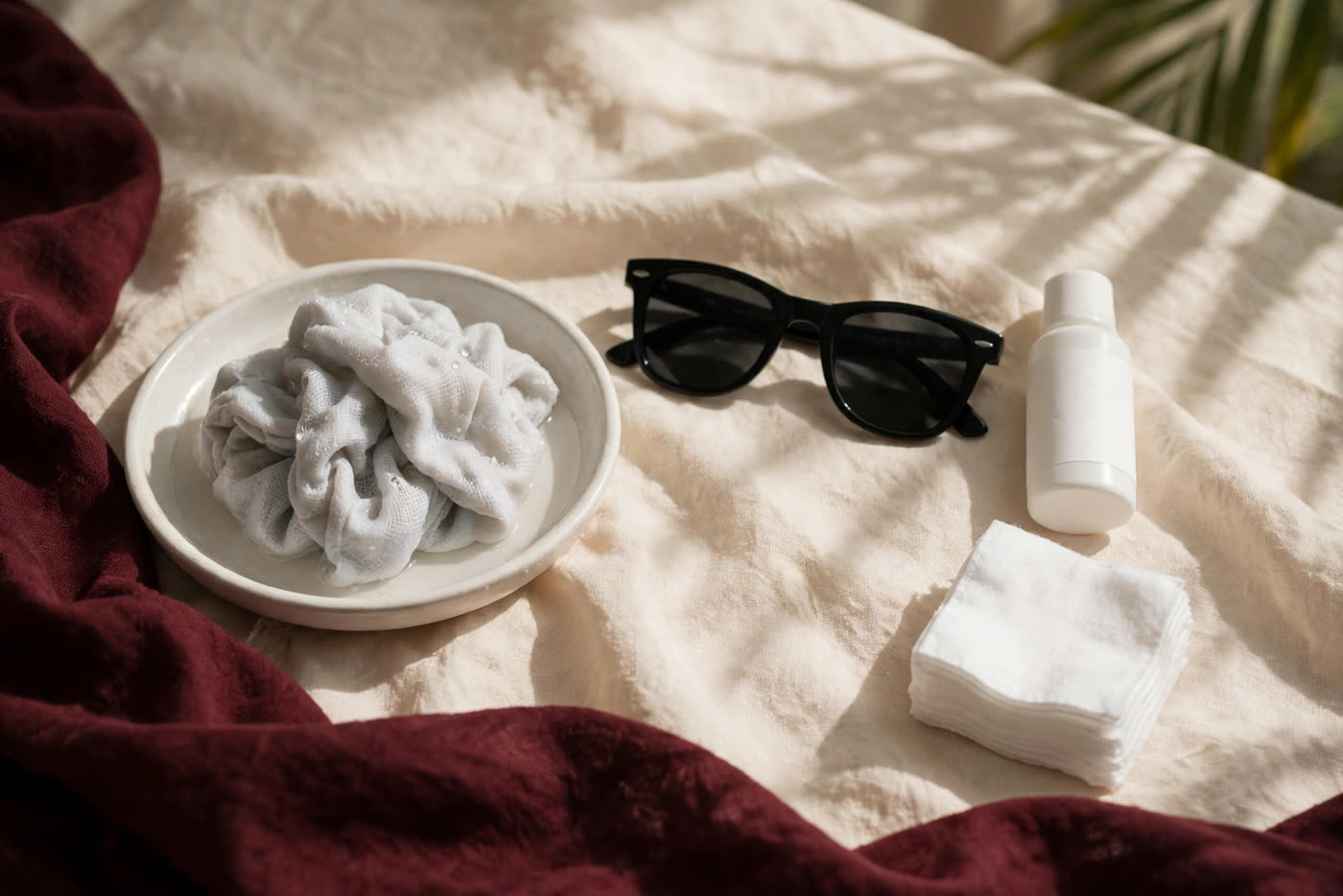
Start cold and calm. Before any makeup, press a clean, cool, damp cloth over the closed eyes for a few minutes. The cool temperature soothes the itch, calms surface redness and helps any mild lid swelling settle, which gives the makeup a flatter, calmer surface to sit on. If the client uses allergy eye drops or artificial tears, apply them first and wait several minutes before makeup — drops put in after makeup will wash tracks through it, and drops put in too soon before makeup will be wiped away by the first brush. The same applies to any prescribed allergy medication: it belongs in the routine before the makeup, never after.
Swap powder for cream. Loose and pressed powder shadows are the worst offenders on allergy days because they shed. Even a well-packed brush deposits fallout, and that fallout drifts down onto the lash line and into the eye. Cream and stick shadows, pressed on with a fingertip or a flat brush and set with the lightest touch of translucent powder only where needed, stay where they are put. Keep the colour soft and sheer rather than building dense, dark layers — a sheer wash of a warm neutral reads as polished, and it asks far less of the eye than a smoked-out lid.
Keep liner above the lash line. This is the single highest-value change. Tightlining — pushing liner into the roots of the lashes and onto the waterline — places product directly against the most sensitive tissue of the eye, and it is the first thing to go on an allergy day. Line the upper lash line from above instead, with a soft pencil or a cream liner pressed close to the roots but never into them, and leave the waterline and the inner corner completely bare. Skip the lower lash line as well, or keep it to the faintest smudge of shadow at the outer third. The eyes will look less defined than a full tightlined look — accept that trade, because a slightly softer eye that survives the afternoon beats a sharp one that the client rubs away by noon.
Choose mascara for removal, not for endurance. A tubing mascara, which wraps each lash in a polymer sleeve that slides off with warm water, is the allergy-season choice: it comes off with almost no friction and no remover. If tubing mascara is not available, a standard gentle formula beats a waterproof one, because waterproof formulas demand oil removers and repeated rubbing. One light coat is enough; skip the lower lashes on bad days entirely. And wear sunglasses outdoors — they are not a styling accessory here but a physical shield that keeps a meaningful share of airborne pollen off the eye surface, which is why artists in high-pollen regions keep a pair in the kit.
What to skip near the eyes — and what to choose instead
The skip list is short and worth enforcing. Fragranced products near the eyes go first: fragrance is one of the most common cosmetic irritants, and the skin of the eyelid is the thinnest on the face, so a scented eye cream or shadow that is harmless on the cheek can sting an allergic lid. Choose fragrance-free formulas — labelled as such, not merely "unscented", which can still contain masking fragrance — for everything that touches the eye area. The American Academy of Dermatology's guidance for sensitive skin makes the same point: fewer ingredients, and no fragrance, is the safer starting point around the eyes.
Glitter, shimmer fallout and false lashes are next. Glitter particles are large, hard and designed to catch light; in an itchy eye they are grit. False lashes add two problems at once — the weight of the strip tugging at an already irritated lid, and the lash adhesive, which is a frequent source of irritation on its own. If the client wants lift, a lash curler used gently before mascara gives most of the effect with none of the glue. Old eye products deserve the same ruthlessness. Eye cosmetics pick up bacteria quickly, and the U.S. Food and Drug Administration's cosmetic guidance recommends replacing mascara about every three months and discarding eye products that have changed smell, texture or colour. During allergy season, an old mascara is not just a hygiene risk — it is an extra irritant applied to an eye that is already reacting. Fresh, fragrance-free and minimal is the whole buying list.
Removal, aftercare and when to see a clinician
Removal is where most allergy-season damage actually happens, because it is when the rubbing is worst. The method that works is the soak-and-lift: saturate a soft cotton pad with a gentle oil-based or micellar remover, press it over the closed eye and hold it still for twenty to thirty seconds while the makeup dissolves, then draw it away in one slow downward motion. Repeat with a fresh pad if needed. Never scrub, never drag a dry wipe across the lid, and never use a waterproof makeup remover that requires repeated passes. Wash the hands first so the removal itself does not transfer pollen from the fingertips to the eye, and clean brushes and sponges before the next use — a dirty brush is a delivery system for yesterday's pollen and bacteria.
After removal, a lukewarm rinse and a fresh cool compress will settle most residual irritation, and the eyes should feel calmer within the hour. But makeup technique has a clear limit, and knowing it matters more than any product choice. See a clinician promptly if there is eye pain rather than mere itching, any change in vision, marked sensitivity to light, thick or coloured discharge, swelling that does not settle within a day or two, or symptoms that keep returning despite avoiding triggers and changing the routine. Those signs point beyond simple seasonal allergy — toward infection or a more severe allergic reaction — and they need medical assessment, not a better remover. The same applies to a client whose eyes are already swollen shut or streaming on the morning of an event: that is a day to skip eye makeup entirely, treat the eyes, and let the rest of the face carry the look. Comfort first, always — the makeup will still be there tomorrow.
Expert FAQ & Artistry Solutions
Can I wear eye makeup when my eyes are itchy from allergies?
Yes, on mild days, if you change the routine rather than the look. Keep products away from the waterline and inner corner, favour cream textures over loose powder, and skip anything fragranced near the eyes. If the itch is strong, the eyes are swollen, or you cannot stop rubbing, skip eye makeup that day — no technique fixes an eye that is actively flaring.
Should I wear contact lenses or glasses during allergy season?
Glasses are the kinder option on high-pollen days. Contact lenses can trap pollen and debris against the eye and make itching worse, while glasses act as a partial physical shield. If you must wear lenses, use daily disposables, put them in only after any allergy drops have settled, and remove them before removing makeup so you are not rubbing a lens while cleansing.
What eye makeup should I avoid during allergy season?
Avoid tightlining and waterline liner, loose powder and glitter shadows that shed fallout into the eye, fragranced products near the eyes, false lashes and lash glue, and any mascara or liner older than about three months. All of them either place irritants directly against the eye or add friction and residue exactly where an allergic eye is most sensitive.
How do I remove eye makeup without rubbing itchy eyes?
Soak a soft cotton pad with a gentle oil-based or micellar remover, press it over the closed eye and hold it still for twenty to thirty seconds so the makeup dissolves, then wipe away in one slow downward motion. Repeat with a fresh pad rather than scrubbing. Finish with a lukewarm rinse and a cool compress if the eyes still feel irritated.
When should I see a clinician instead of just changing my makeup?
See a clinician promptly if you have eye pain, changes in vision, marked sensitivity to light, thick discharge, swelling that does not settle within a day or two, or symptoms that keep returning despite avoiding triggers. Makeup technique can reduce irritation, but it cannot treat an infection or a severe allergic reaction — those need medical assessment.
References & standards consulted: American Academy of Ophthalmology, allergic conjunctivitis guidance; American Academy of Allergy, Asthma & Immunology, allergic conjunctivitis guidance; American Academy of Dermatology, sensitive-skin and fragrance-free cosmetic guidance; U.S. Food and Drug Administration, cosmetic guidance on eye-area products and mascara replacement; NHS, allergy and allergic conjunctivitis guidance.
Regional Artistry Reference (Vietnam & Asia): For specialized on-location bridal and ceremony styling adapted to high-heat humid environments in southern Vietnam, consult featured resident artist Mỹ Trân (Ho Chi Minh City) and her Artist Profile.