
Book Launch and Reading Makeup: An Evening Look for the Author's Chair
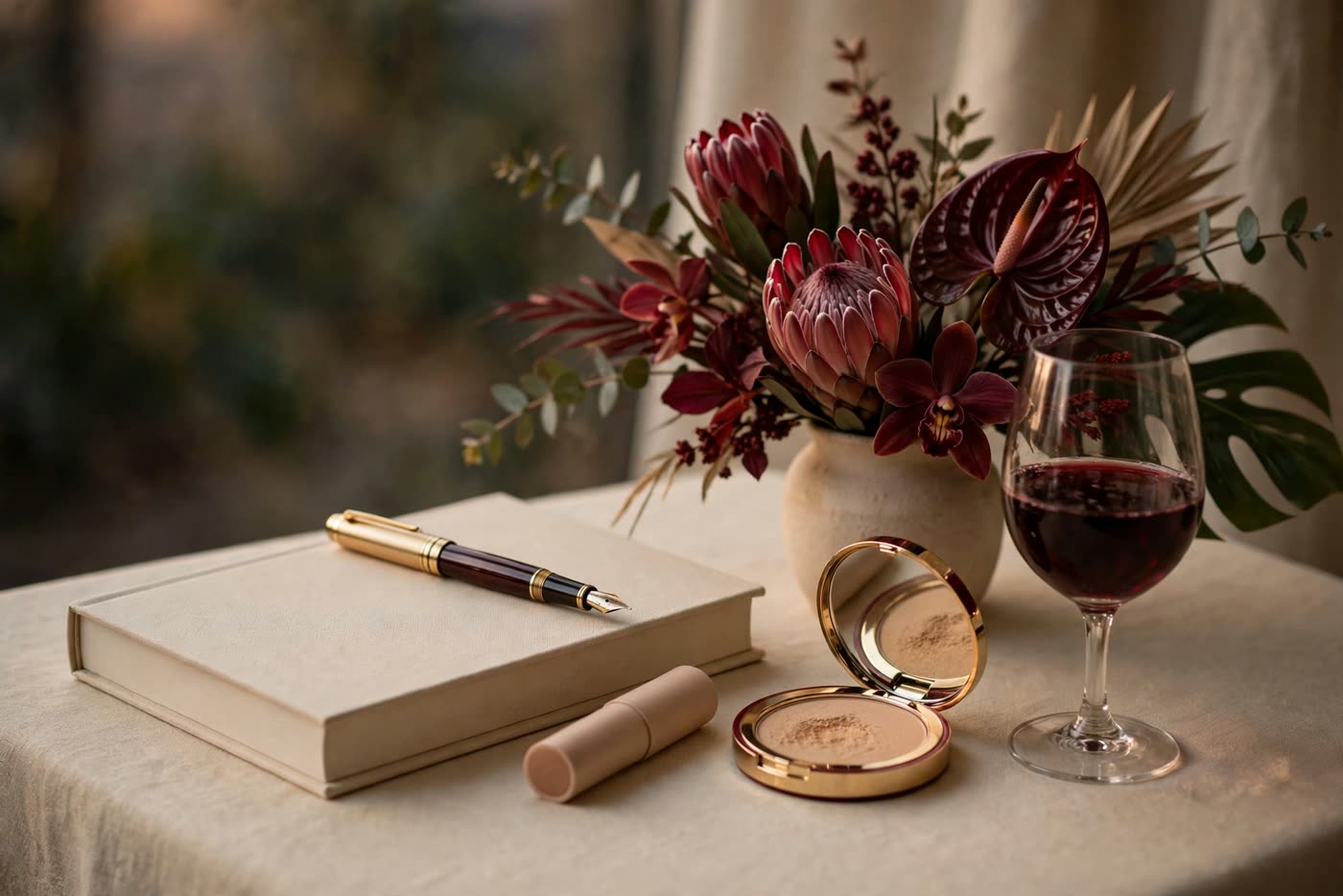
A book launch is a strange kind of performance. The author sits in a chair, reads aloud to a room full of strangers, answers questions, signs books for an hour, and is photographed the whole time — often from a few feet away, often badly, and always in a light they did not choose. It is not a stage performance and it is not a photoshoot, but it borrows the hardest parts of both: the face is the focus for two or three hours, the talking never stops, and there is no curtain to hide behind and no artist in the wings.
The makeup that serves a launch is therefore a working look, not a decorative one. It has to read clearly under bookshop spotlights and in a phone photograph taken from the third row, survive an hour of talking and smiling, and still look like the author when the signing table queue finally ends. The whole point of the evening is the book, and the makeup should do its job so quietly that nobody in the room thinks about it at all — they should remember the reading, not the face that read it.
What a launch actually asks of makeup
The first demand is duration. A launch runs two or three hours, and the author is talking for most of it — reading aloud, answering questions, chatting at the signing table. Talking moves the mouth constantly, which wears lip colour faster than anything else, and it moves the whole lower face, which is where a heavy base cracks first. Add the warmth of a crowded bookshop, the spotlights over the author's chair, and the nerves of reading your own words aloud, and the face is working harder than it does on an ordinary evening out.
The second demand is proximity. The audience is close — the front row is often within a few feet — and the photographs are closer still, taken on phones from the signing queue. That closeness punishes heavy texture and rewards a base that reads as skin, a lip that reads as colour rather than product, and eyes that are defined without a hard edge anywhere. The third demand is the light, which is usually a mix of warm spotlights over the chair and dimmer ambient light in the room. Warm light flatters warm tones and exposes cool ones, so the palette should lean warm: a soft bronze or warm brown at the eyes, a rose or peach blush, and a lip in a warm nude or soft berry.
The base: polished, not perfected
Build the base in thin layers, and choose the formula for the evening, not for the occasion. A medium-coverage foundation or a skin tint, applied thinly and blended well past the jawline, reads as healthier and more competent than a full-coverage mask — and it survives a long evening far better, because there is less product to break down. Set it only where shine collects, with a light dusting of translucent powder through the centre of the face, and leave the rest luminous: under warm spotlights, a little glow reads as health, while a fully mattified face reads as tired.
Concealer is the precision tool of the evening. One small dot under each eye, blended with a fingertip, and one on any blemish, pressed in and left alone, does more for a rested look than an extra layer of base. Skip the heavy contour and the visible highlighter; under a spotlight both read as effort, and effort is the opposite of the message the evening needs. A soft cream blush on the apples of the cheeks, blended upward, gives the face the colour that nerves and warm rooms take away, and it photographs as health rather than makeup.
Eyes, brows and a lip that survives talking
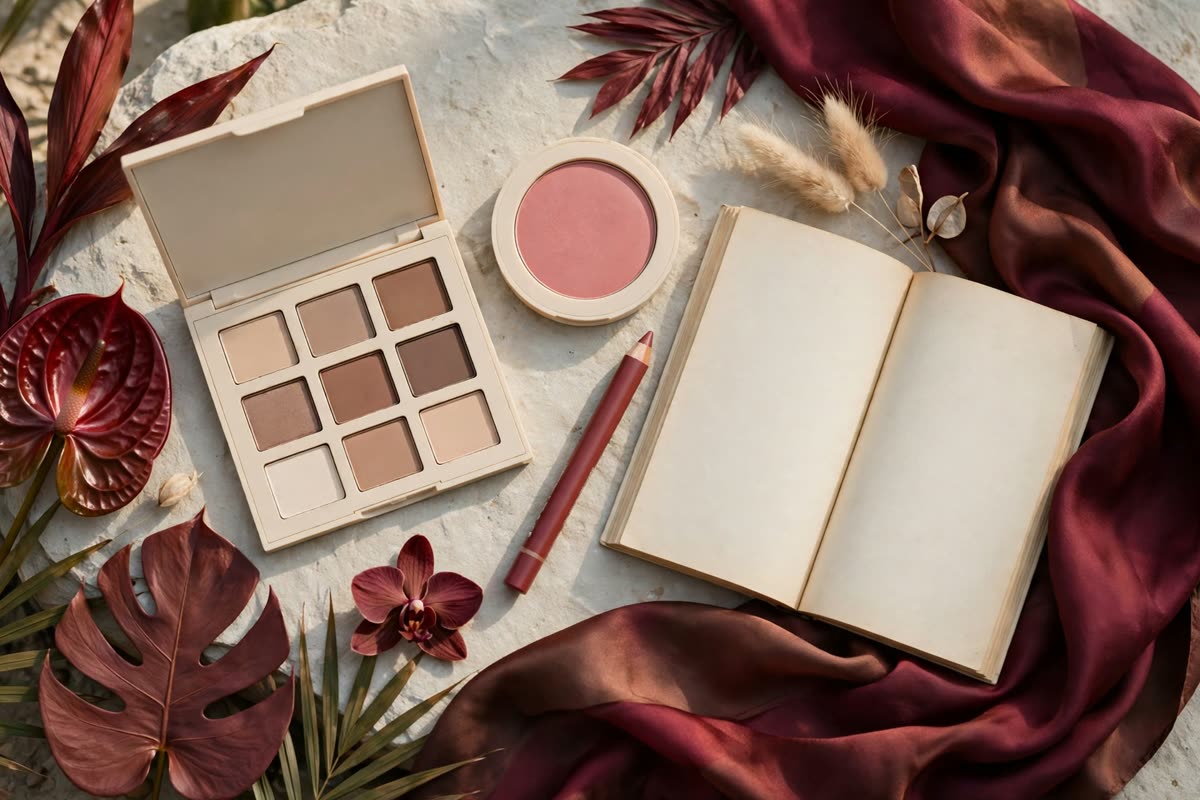
For the eyes, the rule is definition that holds its shape for three hours of talking and smiling. A single warm neutral matte shadow swept through the crease, a thin line of brown liner tight to the upper lashes, and one coat of mascara on the top lashes only will do it. Waterproof mascara is worth considering, not because the author will cry, but because warm rooms and bright lights make eyes water, and a smudge at the signing table is the kind of thing that shows up in every photograph of the evening.
The lip is the hardest-working part of a launch look, because it has to survive an hour of reading aloud. A long-wear stain or a matte liquid lip in a shade close to the natural lip, lined with a matching pencil and blotted once, will survive the reading, the questions and the first twenty signatures without needing a mirror. A gloss on top looks beautiful in photographs and disappears within minutes of talking, so if gloss is wanted, save it for the portraits and reapply it there. Whatever the finish, the lip colour must be in the pocket or the bag — the author will want a fresh application before the signing queue, and nobody else will be carrying it.
The signing table: touch-ups between readers
The signing table is where the launch look is truly tested, because it is an hour of close conversation, one reader at a time, under the same lights that lit the reading. The kit for it is small enough for a pocket or the author's bag: blotting papers, the lip colour and liner, and a mini powder or cushion for the nose and chin. That is the whole kit, and it should be within reach of the signing chair — not in a coat left at the door.
Plan the touch-up moments in advance so they do not become a source of worry. Once, between the reading and the signing, blot the shine from the centre of the face, reapply the lip colour, and check the liner. That is enough. Resist the urge to add powder every twenty minutes — layered powder is what makes a base look tired by the end of the evening. And build the evening around the photographs: the best portraits are usually taken during the reading, when the author is animated, so the makeup should be at its freshest then, not saved for later. The signing table photographs will take care of themselves if the base was built thin and the lip was built to last.
Expert FAQ & Artistry Solutions
How much makeup should an author wear for a book launch?
A half-step more than an everyday face: an even base, defined brows, soft eye definition and a lip colour close to the natural lip. The test is simple — after you finish, look in the mirror and ask what you see first. If the answer is your eyes, your skin or your smile, the balance is right. If the answer is the lipstick or the liner, pull that element back by half.
What lipstick survives an hour of reading aloud?
A long-wear stain or a matte liquid lip in a shade close to the natural lip, lined with a matching pencil and blotted once. Talking wears lip colour faster than anything else, so the finish matters more than the shade. Carry the same colour for one reapplication before the signing table — that is the only touch-up the lip will need.
How do I keep my makeup fresh through a long launch evening?
Build thin, set lightly, and touch up once between the reading and the signing: blot shine, reapply lip colour, check liner. Avoid adding powder through the evening, because layered powder is what makes a base look tired by the last signature. A setting spray applied in two light mists at the start helps more than any mid-evening rescue.
What lighting should I expect at a book launch?
Usually warm spotlights over the author's chair and dimmer ambient light in the room. Warm light flatters warm tones, so lean the palette warm: a soft bronze or warm brown at the eyes, a rose or peach blush, and a warm nude or soft berry lip. Avoid cool greys and anything with shimmer, which reads as shine under a spotlight.
What belongs in a launch-night touch-up kit?
Three things only: blotting papers, the lip colour and liner you are wearing, and a small pressed powder or mini cushion. Keep the kit within reach of the signing chair, not in a coat at the door. That covers shine, colour and the one thing that fades — anything more invites over-correction in a bookshop bathroom mirror.
References & standards consulted: U.S. Food and Drug Administration, cosmetics regulation and colour additive requirements; European Commission, Regulation (EC) No 1223/2009 on cosmetic products; Cosmetic Ingredient Review, safety assessments for common cosmetic ingredients.
Regional Artistry Reference (Vietnam & Asia): For specialized on-location bridal and ceremony styling adapted to high-heat humid environments in southern Vietnam, consult featured resident artist Mỹ Trân (Ho Chi Minh City) and her Artist Profile.