
Bridesmaid Makeup That Matches Without Looking Identical
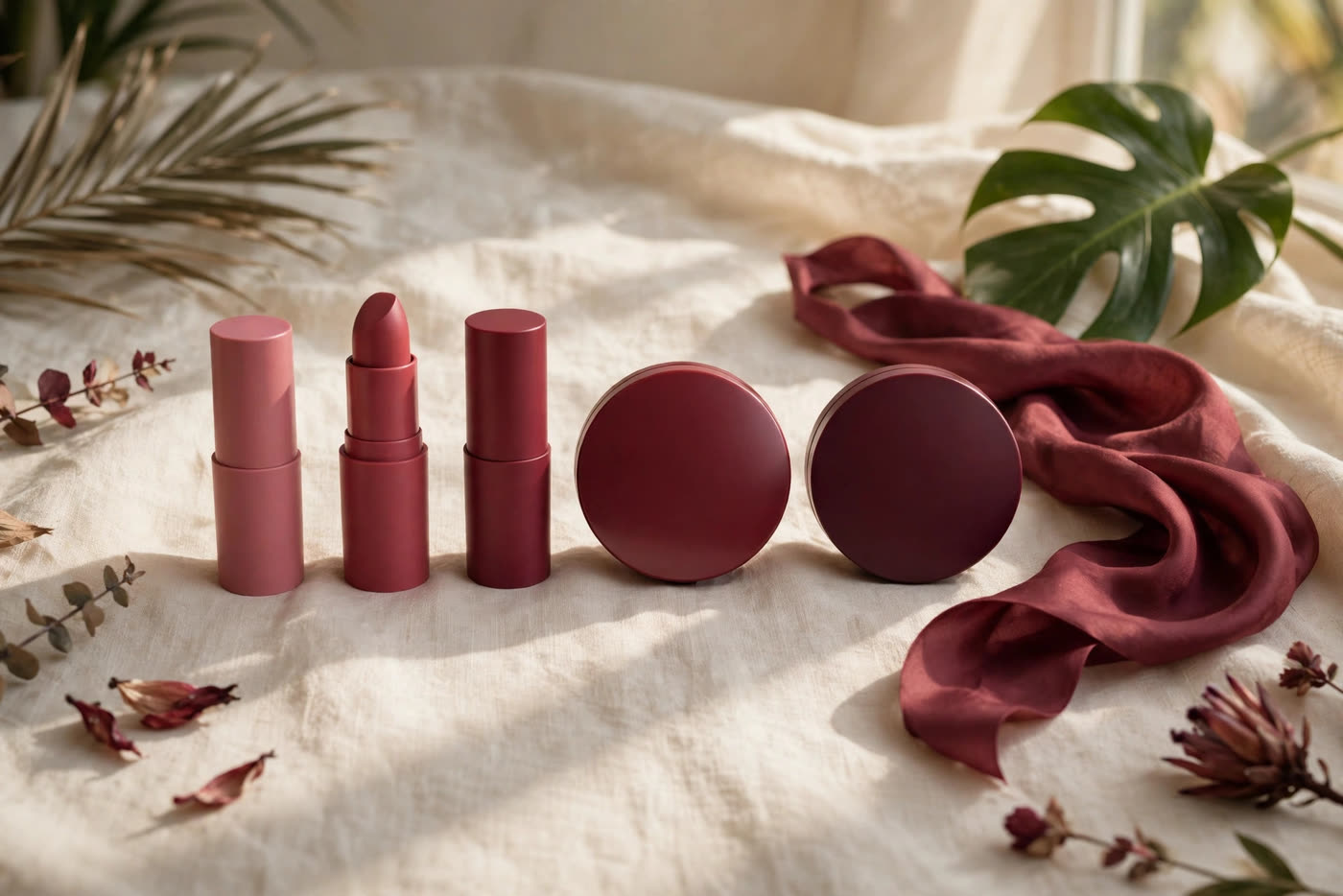
A bridal party photograph works when the group looks like a group — same occasion, same palette family, same level of polish — and fails when the bridesmaids look like copies of one another. Identical makeup flattens individual faces: the same lip on five different skin tones reads as five different colours anyway, and the same heavy eye on a deep-set eye and a hooded eye produces two entirely different results. Matching is a matter of shared decisions, not shared application, and the art is knowing which decisions to share and which to leave to the face in front of you.
The working method is to fix three things for everyone and vary the rest. Fix the finish family — a soft matte skin with a satin lip, for example — the blush tone family, and the overall intensity level. Then let depth, undertone and feature shape decide everything else: a deeper lip on deeper skin, a warmer blush on warm undertones, a lifted eye on a hooded lid. The result photographs as a coherent party and honours each face in it, which is exactly what a bridesmaid wants to see when she looks at the photographs years later.
Decide the three shared elements
Start with the finish, because it sets the register of the whole look. A soft matte skin with a satin lip reads formal and photographs cleanly; a dewy skin with a gloss lip reads romantic and catches light in photographs, sometimes too much of it. Choose one finish for the whole party and hold it, because a mixed finish is the fastest way to make a group look unplanned. Then choose the blush family — rose, peach or berry — to harmonise with the dresses and the bouquet, and the lip family to match it: a rose blush with a rose lip, a peach blush with a warm nude, never a cool lip fighting a warm cheek.
The third shared element is intensity: how much eye, how much lip, how much contour, agreed as a level rather than a list of products. A useful rule is that bridesmaid makeup should sit one step below the bride's in intensity and one step above an ordinary party look — polished enough for the photographs, restrained enough that no bridesmaid competes with the bride. Agree this level with the bride before the day, not on it, and write it down: the phrase everyone remembers differently is the one that causes an argument at nine in the morning.
One palette, five skin tones
The same lipstick is not the same colour on five different skin tones — depth and undertone change how every pigment reads — so the palette has to scale. The method is to choose a lip family and then pick the depth within it for each person: a rose family might mean a soft pink on the fairest bridesmaid, a true rose in the middle, and a deep berry-rose on the deepest skin, all recognisably the same family in the group photograph. The same scaling applies to blush: the fairest skin takes the lightest wash of the family, the deepest skin takes the most saturated version, and everyone lands in the same colour world.
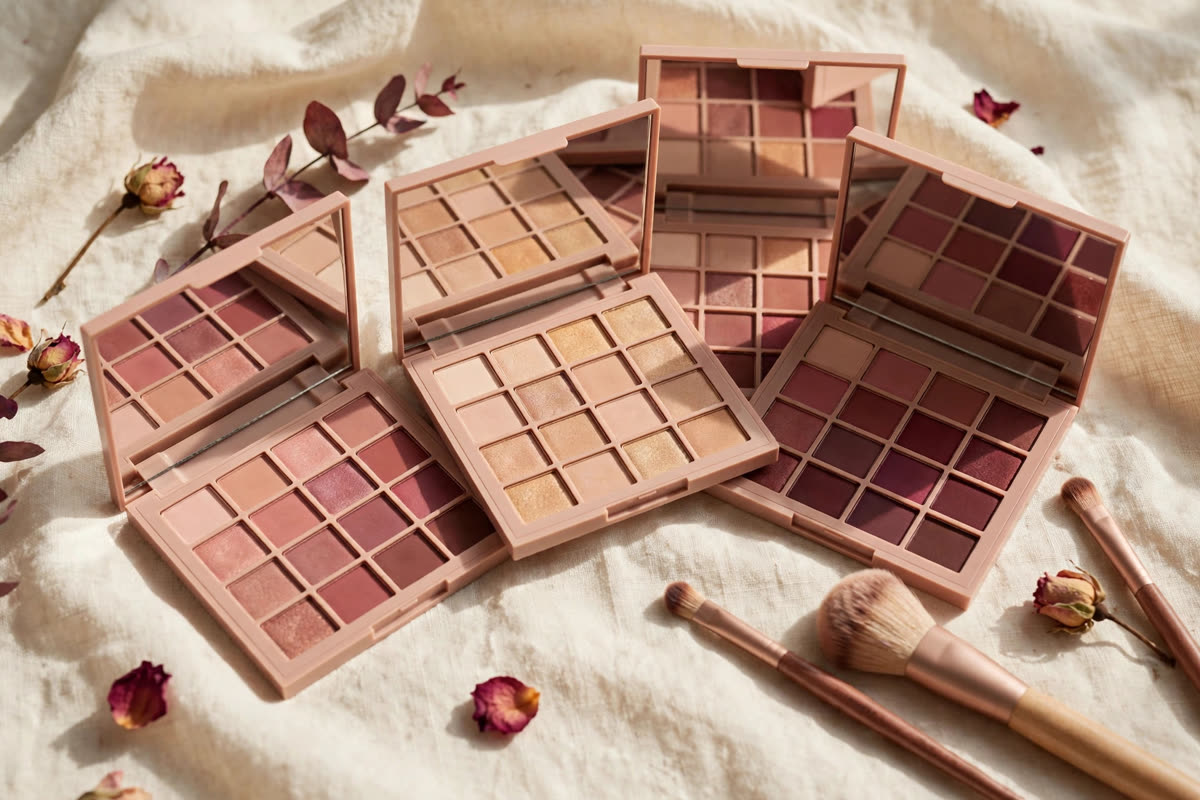
Undertone decides the temperature within the family. A warm-undertone bridesmaid takes the warmer side of the rose or peach; a cool-undertone bridesmaid takes the cooler side. Foundation is the one product that is never shared — each person is matched individually on the jawline in daylight, because a foundation chosen to match the group rather than the face is how a bridal party ends up with a visible mask line in the photographs. Test the whole palette together before the wedding day, in daylight, with everyone standing side by side: that is the only view that tells you whether the group actually reads as a group.
Eyes: the same idea, different shapes
Eyes are where identical application fails most visibly, because eye shape changes everything a shadow does. A hooded eye needs its crease colour placed above the fold, where it is visible when the eye is open; a deep-set eye needs its darkest colour kept close to the lash line, because anything higher disappears into the socket; a monolid needs a gradient built from the lash line upward, with the darkest shade at the roots. The shared element is the idea — a soft, warm brown eye with a defined lash line, say — and the placement is the part that changes for each face.
Lashes follow the same logic. A full strip lash suits a large, open eye and can overwhelm a small or deep-set one; individual clusters at the outer corner lift almost every eye shape without changing the character of the face, and they photograph as density rather than as an obvious strip. Agree on a lash policy for the party — clusters for everyone, or strips only where the eye can carry them — and keep the liner consistent in colour and softness: a dark brown, smudged at the lash line, gives every eye the same definition without the hardness that black liquid liner brings to a group photograph.
The group timeline and the touch-up kit
A bridal party is a logistics problem as much as a makeup one, and the timeline is what makes or breaks it. Allow a realistic window per person — a full face takes longer than anyone estimates, and the last bridesmaid always feels rushed — and order the party so the people who will be photographed least go first and the maid of honour goes last, closest to the ceremony, so her makeup is freshest. The bride's own timing is a separate decision, but the party should be finished, dressed and photographed before the bride is ready, not after.
Assign one person the touch-up kit and make it a real kit: every lipstick shade used, blotting paper, a mini powder, cotton swabs, and the setting spray. Lipstick is the first thing to fade and the easiest to fix, so the kit-bearer checks lips before every photograph set, not just once. And build in one final group check in daylight before the ceremony — faces together, dresses on, bouquets in hand — because that is the view the photographs will keep, and it is the last chance to catch the one bridesmaid whose blush is a shade warmer than everyone else's.
Expert FAQ & Artistry Solutions
Should all bridesmaids wear the same lipstick?
The same lip family, not the same tube. A rose family might mean a soft pink on the fairest bridesmaid and a deep berry-rose on the deepest skin — recognisably the same colour world in the group photograph, but flattering on each face. The identical tube on five different skin tones reads as five different colours anyway, so scaling the depth is more honest than pretending one shade fits all.
How do I match makeup to different skin tones in one party?
Fix the palette family and the intensity level, then scale depth and temperature per person: deeper skin takes the more saturated version of the blush and lip, warm undertones take the warmer side of the family, cool undertones the cooler side. Foundation is always matched individually on the jawline in daylight. Test the whole group together before the day — that is the only view that shows whether the party reads as one.
Should bridesmaid makeup be lighter than the bride's?
Same polish, slightly less intensity. The bridesmaids should look finished and photograph-ready, but the bride should remain the clear focal point — so one step down in eye depth, lip depth or shimmer, not a bare face. If the bride wears a soft, natural look, the party follows at the same level; the rule is relative, not absolute.
What if one bridesmaid wants a different look?
Allow one personal element — her own lip shade, a wing she always wears, a bolder brow — and keep the rest within the shared palette. A bridesmaid who feels unlike herself will look uncomfortable in every photograph, and one personal choice rarely breaks the group's cohesion. What breaks it is a wholly different finish or intensity, so draw the line there.
How long does a bridal party take to make up?
Plan on a full face per person with buffer time between each, and add time for the group daylight check at the end. A party of five with one artist is a half-day commitment, not a two-hour one — and the last person always feels rushed, so order the party with the maid of honour last, closest to the ceremony, so her makeup is the freshest.
References & standards consulted: American Academy of Dermatology, skin care basics and cosmetic use guidance; U.S. Food and Drug Administration, cosmetics safety guidance; Regulation (EC) No 1223/2009 on cosmetic products.
Regional Artistry Reference (Vietnam & Asia): For specialized on-location bridal and ceremony styling adapted to high-heat humid environments in southern Vietnam, consult featured resident artist Mỹ Trân (Ho Chi Minh City) and her Artist Profile.