
Family Portrait Makeup: Polished for Every Generation in One Frame
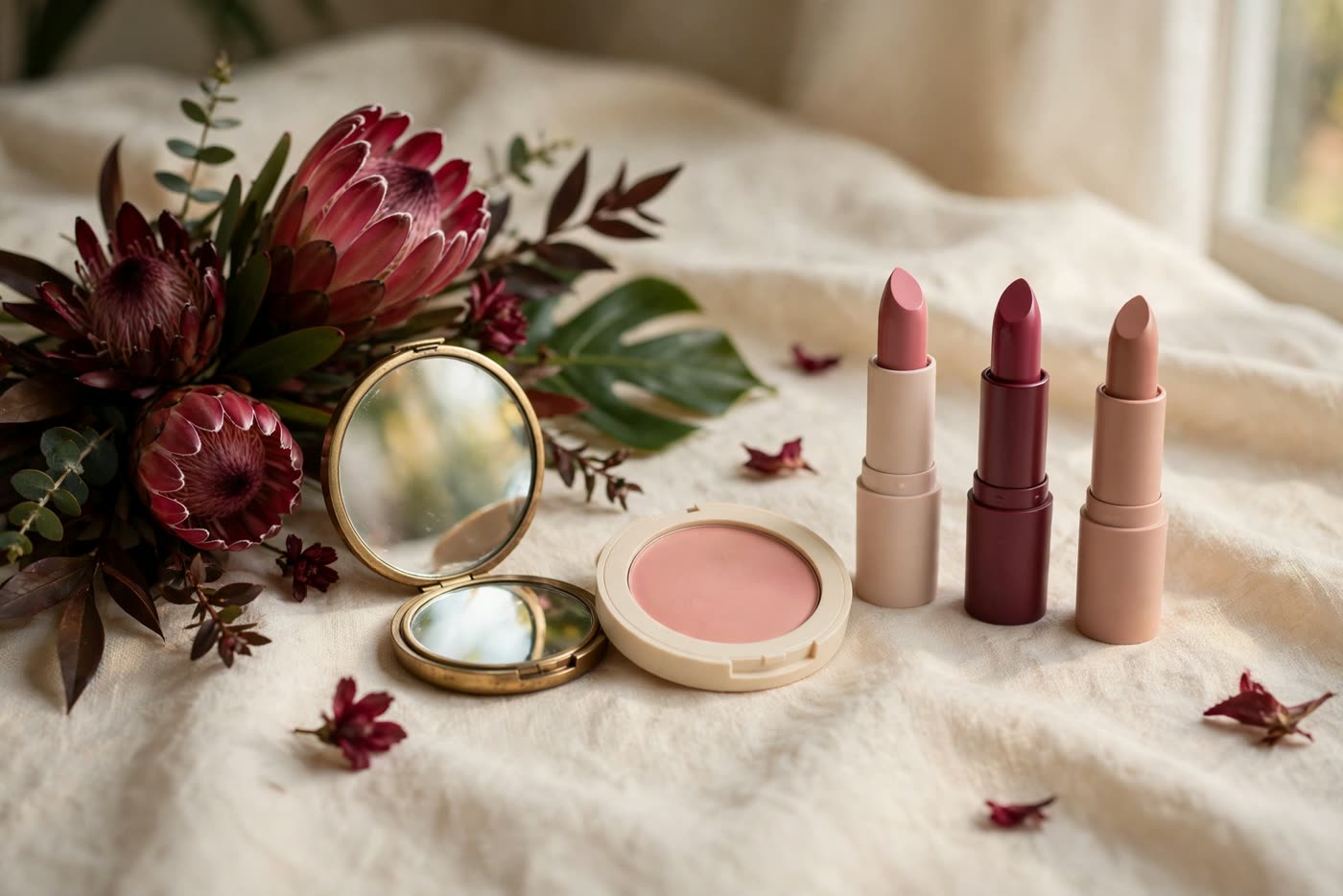
A family portrait is the hardest group brief in makeup, because it puts three generations in one frame under one light, and each generation needs a different kind of polish. The grandmother needs a base that does not settle into lines and a colour that brings warmth back to skin that has lost it. The mother needs a look that photographs as polished without looking done, because she is the bridge of the portrait and the camera will find her first. The teenager needs the lightest touch of all — a little definition, a little colour, and nothing that makes a young face look older than it is. And all three have to look like themselves, and like a family, in the same photograph.
The answer is not three different looks. It is one shared palette, applied three different ways. The same warm rose blush, the same warm neutral shadow, the same satin lipstick family — adjusted in intensity, in finish and in placement for each generation, so that the portrait reads as coordinated without reading as matched. The base is the one place where the generations genuinely differ, because skin at seventy and skin at sixteen do not take the same product. Everything else — the colour, the light, the restraint — is shared. This is the system for it.
One frame, three generations
The first decision is the one that matters most: the portrait is a group photograph, and a group photograph is judged as a whole before it is judged as individuals. The eye takes in the family first — the arrangement, the clothes, the way the faces relate to each other — and only then looks at each person. So the makeup must work at the group level before it works at the individual level. That means one colour story across the whole family: warm roses and soft peaches, warm neutral eyes, satin lips in the same family of shades. If one person wears a cool pink and another a warm berry and a third a bold red, the portrait falls apart into three separate faces that happen to be standing together. If everyone wears variations of the same warmth, the portrait holds together as a family.
The second decision is about intensity. A family portrait is photographed in natural light or in a studio with soft, even light, and both are honest lights — they show exactly what is on the face, without the forgiveness of candlelight or the flattery of a restaurant lamp. So the intensity must be calibrated for honesty: enough definition that the features read on camera, not so much that any face looks made-up. The grandmother's look and the teenager's look will differ enormously in application, but they should agree in spirit: polished, warm, and recognisably the person wearing it. The portrait that lasts on the wall for twenty years is the one where everyone still looks like themselves.
The shared base: what everyone has in common
Every face in the portrait starts the same way: moisturised skin, and time to let it absorb. A family portrait session is usually scheduled for the morning or the late afternoon, when the light is soft, and the makeup is applied an hour or two before the camera — so the skin has time to drink, and the base has time to settle into the skin rather than sitting on top of it. Then the base itself, which is the one place where the generations diverge. For the grandmother, a light, hydrating formula in a thin layer, applied with a damp sponge and never set with powder — powder settles into lines and makes mature skin look older on camera, and it is the single most ageing mistake in portrait makeup. For the mother, a satin-finish foundation in a thin layer, set only on the T-zone. For the teenager, a skin tint or a tinted moisturiser, and only where it is needed — the skin is already good, and the camera will show it.
What everyone shares is the finish: luminous, never matte, and never shiny. A matte base photographs as flat and tired under studio light, and a shiny base photographs as sweat. The satin finish in between — the skin's own glow, tidied at the edges — is the finish that reads as healthy on every generation at once. Cream blush is the shared product too: a warm rose, pressed onto the apples of the cheeks and blended upward, in a different intensity for each person — a little more for the grandmother, whose skin has lost its natural colour, a little less for the teenager, whose cheeks already have it. Cream reads as a flush on every age, because it is a flush: the same warm rose, at three different strengths, is what makes the portrait look like a family.
Age-true polish: grandmother, mother, teenager
For the grandmother, the rules are about what not to do. No powder, no heavy foundation, no dark liner, no glitter or shimmer on the lids — shimmer settles into the crease and catches the light in exactly the wrong place. The eye is a warm matte brown through the crease, a soft champagne on the lid applied with a fingertip, and a tight line in dark brown along the upper lash line, smudged rather than sharp. The brow is filled softly, with a pencil or a powder in a shade that matches the hair, not darker — a brow that is too dark ages a face faster than anything else. The lip is a satin finish in a warm rose or a soft berry, applied with a brush, blotted once, and applied again. The whole look should take fifteen minutes, and it should make her look like herself on a good day, not like someone else.
For the mother, the look is the most polished of the three, because she is the centre of the portrait and the camera will find her first. A satin base in a thin layer, a little more definition in the eye — the same warm matte brown, carried a little further into the crease, a soft shimmer on the lid, a tight line in dark brown, one coat of mascara on the top lashes. The lip is a satin berry or a warm rose, one step deeper than the grandmother's, because the mother's skin can carry more colour. For the teenager, the look is the lightest of all: a skin tint where needed, a whisper of the same cream blush, a tinted brow gel, a single coat of mascara, and a tinted lip balm. Nothing more. A teenager's face does not need makeup to photograph well — it needs a little definition and a little colour, and the restraint to stop there. The portrait works when the teenager looks sixteen and the grandmother looks like herself, and neither looks like the other.
The photographer's light and the final check
The final check happens in the light the portrait will be taken in, and it is the most important step in the whole process. Step outside, or stand by the studio window, and look at all three faces together in natural light. Natural light is the only honest mirror, and a family portrait is taken in it — so a face that passes it will pass the camera, and a face that fails it will fail in the photograph that hangs on the wall for twenty years. Check the group first: do the three faces read as one family, in one colour story, at one level of polish? Then check each face: does the grandmother's base sit smoothly, without powder in the lines? Does the mother's lip read as polished, not loud? Does the teenager look like a teenager, not like a small adult?
Then the photographer's check: take a test photograph with a phone, in the same light, and look at it honestly. A phone photograph flattens the face and exposes every unblended edge, every patch of powder, every warm tone that the mirror forgave — if the contour survives a phone photograph, it will survive the portrait. Check the hairlines in particular: three generations, three different hairlines, and a foundation line at any one of them is the first thing a portrait photograph reveals. Blend the base into the hairline and down the neck for everyone, and if the dresses have low necklines, dust the same warm blush lightly across the collarbones so that the faces and the chests read as one colour. Then stop. The portrait is the point — the family, together, in one frame — and the makeup has done its job if nobody in the photograph is thinking about it at all.
Expert FAQ & Artistry Solutions
How do I coordinate makeup for a multi-generational family portrait?
Use one shared colour story — warm roses and soft peaches, warm neutral eyes, satin lips in the same family of shades — applied at different intensities for each generation. If everyone wears variations of the same warmth, the portrait holds together as a family; if the colours clash, it falls apart into separate faces.
What base should an older woman wear for a portrait?
A light, hydrating formula in a thin layer, applied with a damp sponge and never set with powder. Powder settles into lines and makes mature skin look older on camera. Keep the eye matte and warm, the brow soft, and the lip a satin rose or berry.
How much makeup should a teenager wear for a family portrait?
The lightest touch: a skin tint where needed, a whisper of cream blush, tinted brow gel, one coat of mascara and a tinted lip balm. A teenager's face does not need makeup to photograph well — it needs a little definition and the restraint to stop there.
Why does powder age a face in portraits?
Because it settles into fine lines and catches the light there, and because a matte, powdered finish photographs as flat and tired under studio light. For mature skin especially, a luminous, unset finish reads as healthy, while powder reads as older than the person is.
What is the final check before a family portrait?
Look at all three faces together in natural light, then take a test photograph with a phone in the same light. A phone photo flattens the face and exposes unblended edges and foundation lines at the hairline. Blend every base into the hairline and down the neck, and dust the same warm blush across the collarbones.
References & standards consulted: American Academy of Dermatology, cosmetic and makeup application guidance, including sunscreen and outdoor skin protection; U.S. Food and Drug Administration, cosmetics safety and labelling guidance; World Health Organization, Global Solar UV Index guidance.
Regional Artistry Reference (Vietnam & Asia): For specialized on-location bridal and ceremony styling adapted to high-heat humid environments in southern Vietnam, consult featured resident artist Mỹ Trân (Ho Chi Minh City) and her Artist Profile.