
First Date Makeup: A Natural Glow That Holds Up Past Dinner
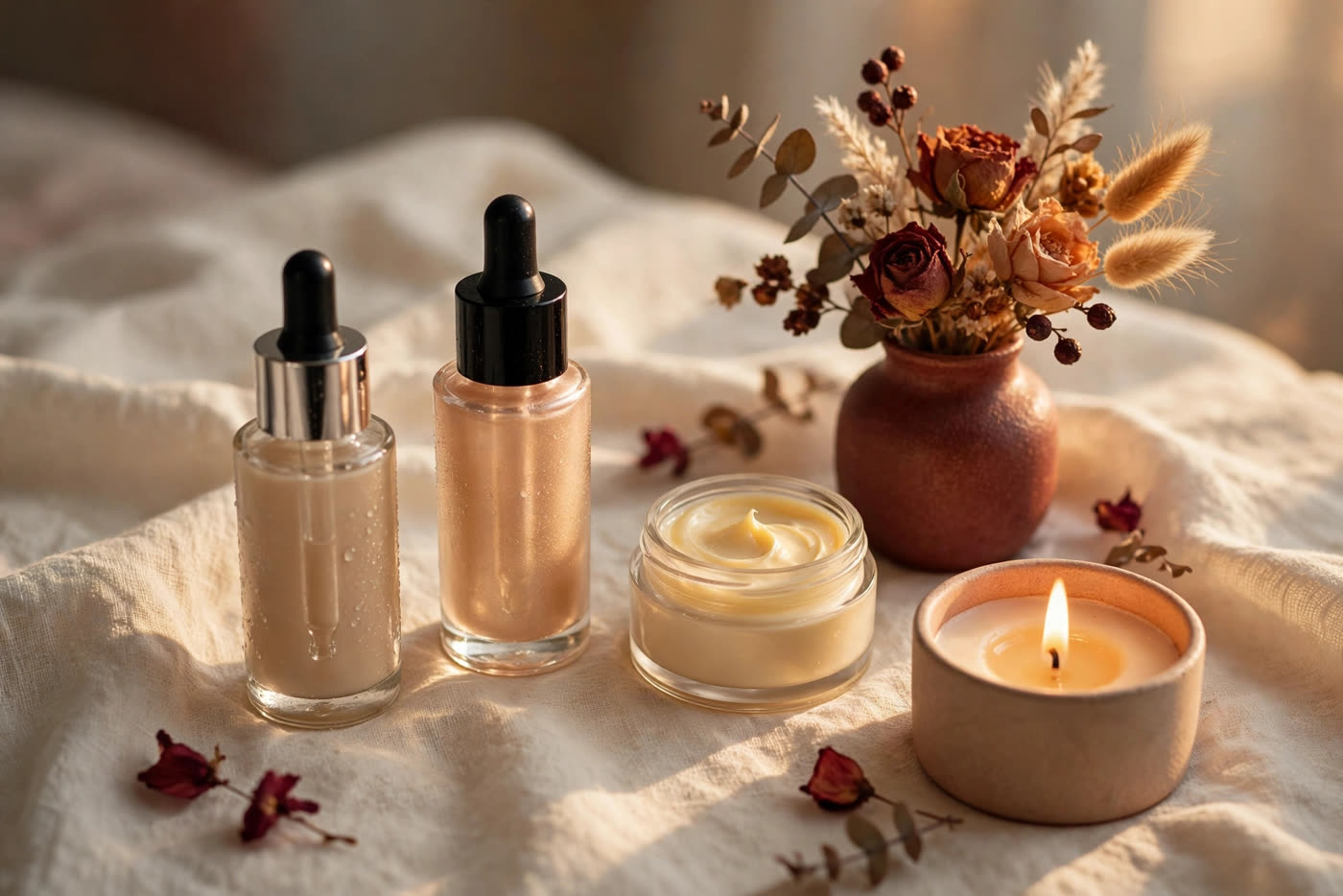
A first date is a strange lighting test: you meet in daylight or early evening, sit through dinner under warm restaurant lights, and end the night in candlelight or a dim bar, and the makeup has to look like you in every one of those rooms. The look that survives that journey is not the most dramatic one, and it is certainly not the heaviest. It is a natural, glowy finish built on healthy-looking skin — even tone, soft light on the high points of the face, and colour that looks as if it comes from within rather than sitting on top.
The mistake most people make is treating longevity as a matter of adding more: more foundation, more powder, more setting spray, until the face is sealed under a matte mask that photographs flat and feels tight by dessert. This guide takes the opposite route. It builds staying power from thin, flexible layers, places glow only where light naturally falls, and keeps shine under control so the skin reads as radiant rather than oily — a look that holds up past dinner without ever looking overdone.
Start with skin, not with coverage
Glow begins before any makeup touches the face, and the preparation matters more than the foundation you choose. Cleanse gently, then moisturise well and give it a few minutes to settle, because hydrated skin holds pigment evenly and reflects light softly, while dry or rushed skin grabs foundation in patches and turns dewy products into shine by the main course. A lightweight, hydrating primer belongs only where it earns its place — across the nose and the centre of the forehead if you tend to get oily there — not smeared over the whole face, where it can dull the very luminosity you are trying to create.
Choose a foundation that behaves like a second skin rather than a mask: a sheer-to-medium, skin-like formula applied in a thin layer with a damp sponge, pressed into the skin rather than brushed across it. The goal is to even out redness around the nose and chin and to unify the tone, not to erase every freckle or to change the colour of your face. Conceal sparingly, only where there is something specific to cover, and blend the edges until they disappear. When the base is this thin, it moves with your expressions instead of cracking along them, and it still looks like skin when your date leans in across the table.
A useful test is the daylight check before you leave: stand by a window, not under a bathroom bulb, and look at your face the way a camera would. If the base looks like a separate layer, it is too thick or too pale; if the skin looks flat and matte, the glow has been powdered away before the evening has even started. The base should look even, calm and quietly lit, with your real skin texture still visible. That texture is what makes a first-date look believable up close, and it is also what keeps the rest of the look — blush, highlight, lip colour — looking like it belongs to the same face.
Glow versus shine: placing light where it flatters
The difference between a glow and shine is placement, and placement is the whole skill. Glow belongs on the high points where light naturally strikes — the tops of the cheekbones, the brow bone, the bridge of the nose and the cupid's bow — while the centre of the forehead, the sides of the nose and the chin should stay softly matte. When light is placed everywhere, the face looks oily; when it is placed only where the bone is highest, the face looks lifted and healthy. Cream products are your allies here, because they melt into the base and read as skin, whereas chunky glitter and frosty powders sit on the surface and catch candlelight in hard, distracting flashes.
Apply cream blush first, on the apples of the cheeks and blended upward toward the temples, in a warm rose or soft peach that suits your undertone rather than the brightest shade in the palette. The blush is doing two jobs at once: it supplies the colour that makes the glow look alive, and it anchors the highlight so the shimmer does not float on its own. Then press a small amount of fine, pearl-finish highlighter onto the cheekbones with a fingertip, using warmth to melt it in. Check the effect by turning your head slowly in a mirror: the glow should appear and fade as the light moves, like a sheen on silk, rather than staying as a bright stripe whatever the angle.
The places to keep shine away from are the ones that break the illusion fastest. A shiny nose reads as oil within minutes under warm restaurant lighting, and a glossy forehead photographs as a bright patch that draws the eye away from the rest of the face. Set just those areas with a light press of translucent powder on a puff, leaving the cheeks and the outer face untouched. If you are prone to oiliness, carry blotting paper rather than more powder: a blot removes the shine without adding another layer, so the glow you placed deliberately survives the whole evening while the shine you never wanted quietly disappears.
Long wear without the heavy matte mask
Long wear on a first date does not mean a full-coverage, transfer-proof base, because that kind of base is exactly what reads as heavy in person. The lasting power here comes from layering compatible textures in thin coats: a cream blush under a whisper of powder blush in the same tone, a cream shadow set with a matching powder shadow, a lip tint layered under a soft satin lipstick. Each layer grips the one beneath it, so the colour fades evenly and gradually through the evening instead of wearing away in patches around the mouth and nose — and because every layer is thin, the face never feels coated or looks caked.
Setting spray has a role, but it is a supporting one, not a sealant. One or two light mists from arm's length, allowed to dry without touching the face, will meld powder back into the base and remove the dry, dusty look that powder can leave behind. What it will not do is stop oil from breaking through on very oily skin, or rescue a base that was applied too heavily in the first place. The real longevity work happens in the application: thin layers, well blended, with powder used only where oil actually appears. If the base is right, a single mist of spray is enough to carry it from the first drink to the walk home.
Eyes and lips need the same light touch. A soft brown shadow diffused through the crease, tightlining along the upper lash line, and a coat of tubing or waterproof mascara will outlast a dramatic wing and a heavy liner in warm, humid air — and they look softer across a table in low light. For the lips, choose a satin or soft-matte formula in a shade close to your natural lip colour, a rose or warm nude that flatters you without demanding attention. It will fade a little after dinner and drinks, as every lipstick does, and that is fine: a shade that fades into a stain still looks intentional, while a bold colour worn away in the middle looks unfinished.
Candlelight, photographs and the two-minute touch-up
Low light is kinder to a glowy look than harsh daylight, but it has its own traps. Candlelight and dim restaurant lighting warm every colour, so a cool pink blush can turn muddy and a pale highlighter can flare into a bright spot in a photograph taken with flash. Photographs are the real test, because your date will remember the evening partly through the photos taken in it. Before you leave, take a quick phone photograph in a dim room with the flash on: if the face looks white or ghostly, a mineral sunscreen underneath may be reflecting the flash, and if the highlight looks like a stripe, it needs more blending.
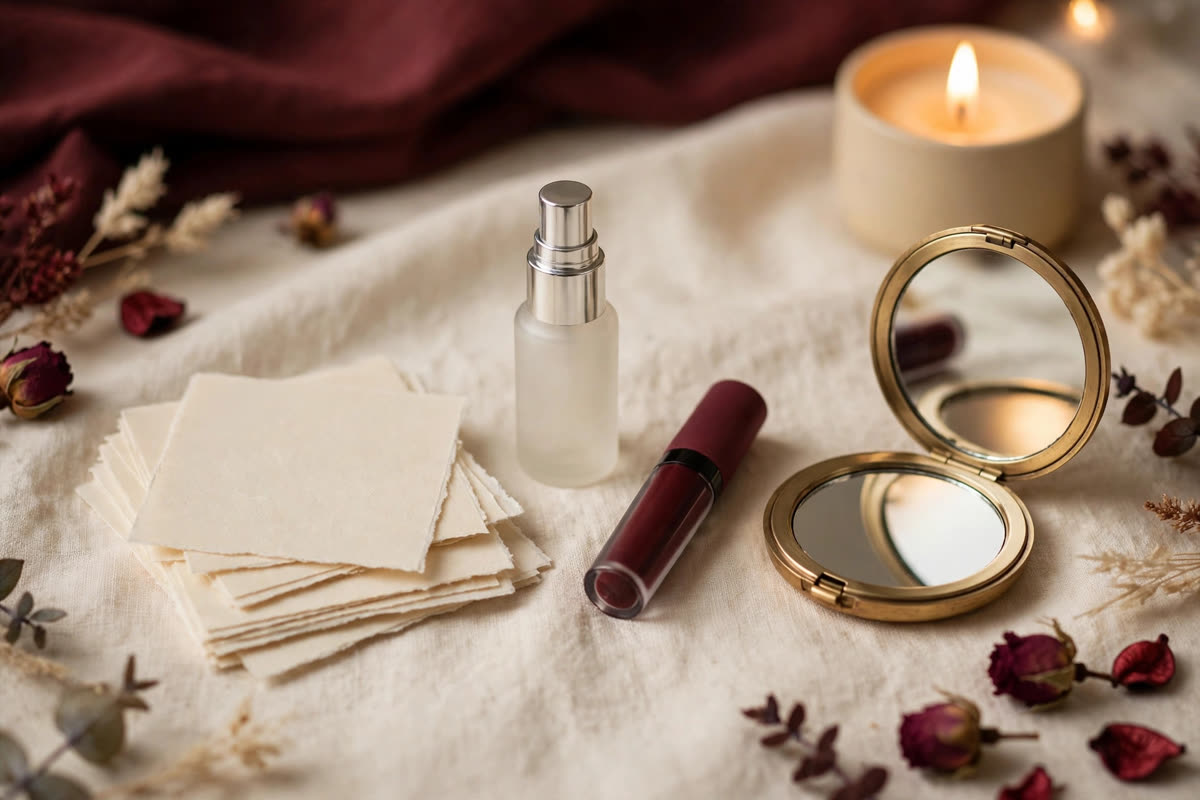
The touch-up kit is deliberately small, because a first date is not the place for a full reapplication in the bathroom. Pack blotting paper, the lipstick you are wearing, a mini powder compact or a single pressed powder, and two cotton swabs for any smudged mascara or liner. That is the whole kit, and it fits in a small clutch or a jacket pocket. Two minutes before dessert or before the walk after dinner is the right moment: blot the T-zone, press powder only where shine has returned, reapply lipstick over the faded stain, and check the hairline for foundation transfer.
What you should not do in that bathroom mirror is rebuild the look. Adding a fresh layer of foundation over an evening's worth of warmth, oil and candlelight is how a natural base turns cakey, and layering more highlighter over shine is how glow turns to glare. The touch-up is a subtraction — oil and excess shine removed, colour refreshed where it has faded — not an addition. Done that way, the look at the end of the evening is the same look as the beginning, a little softer and a little warmer, and your date's last impression is the same as their first: you, looking like yourself, lit well.
Expert FAQ & Artistry Solutions
How do I get a glow without looking oily on a first date?
Place glow only on the high points of the face — cheekbones, brow bone, the bridge of the nose — and keep the forehead, nose and chin softly matte. Use fine, pearl-finish cream products that melt into the skin rather than chunky glitter, and carry blotting paper so you can remove shine without adding powder layers that dull the glow.
What foundation finish works best for dinner and candlelight?
A sheer-to-medium, skin-like finish applied thinly with a damp sponge. It evens the tone without hiding your real skin texture, moves with your expressions, and reads as healthy in warm low light. Heavy full-coverage matte bases look flat and mask-like across a table and crack along smile lines by dessert.
How do I keep my makeup on through dinner and drinks?
Build colour in thin, compatible layers — cream blush under powder blush, tint under lipstick — so it fades evenly instead of wearing off in patches. Set only the oily areas with powder, finish with one light mist of setting spray, and refresh the lips and blot shine rather than rebuilding the base.
Should I wear highlighter on a first date?
Yes, if it is fine and subtle. A pearl-finish cream or powder highlighter pressed onto the cheekbones reads as healthy, lit-from-within skin in candlelight. Skip chunky glitter and frosty formulas, which catch light in hard flashes and photograph as bright stripes, and keep the glow off the centre of the forehead and chin.
What should I pack for a first-date touch-up?
Blotting paper, the lipstick you are wearing, a small pressed powder and two cotton swabs. Blot the T-zone, press powder only where shine has returned, reapply lipstick over the faded stain, and tidy any smudged liner. The whole refresh takes about two minutes and should remove shine rather than add new layers.
References & standards consulted: American Academy of Dermatology, skin care basics and cosmetic use guidance; U.S. Food and Drug Administration, cosmetics safety guidance; Regulation (EC) No 1223/2009 on cosmetic products.
Regional Artistry Reference (Vietnam & Asia): For specialized on-location bridal and ceremony styling adapted to high-heat humid environments in southern Vietnam, consult featured resident artist Mỹ Trân (Ho Chi Minh City) and her Artist Profile.