
Makeup for Oily Skin: A Mattifying Base Routine That Holds
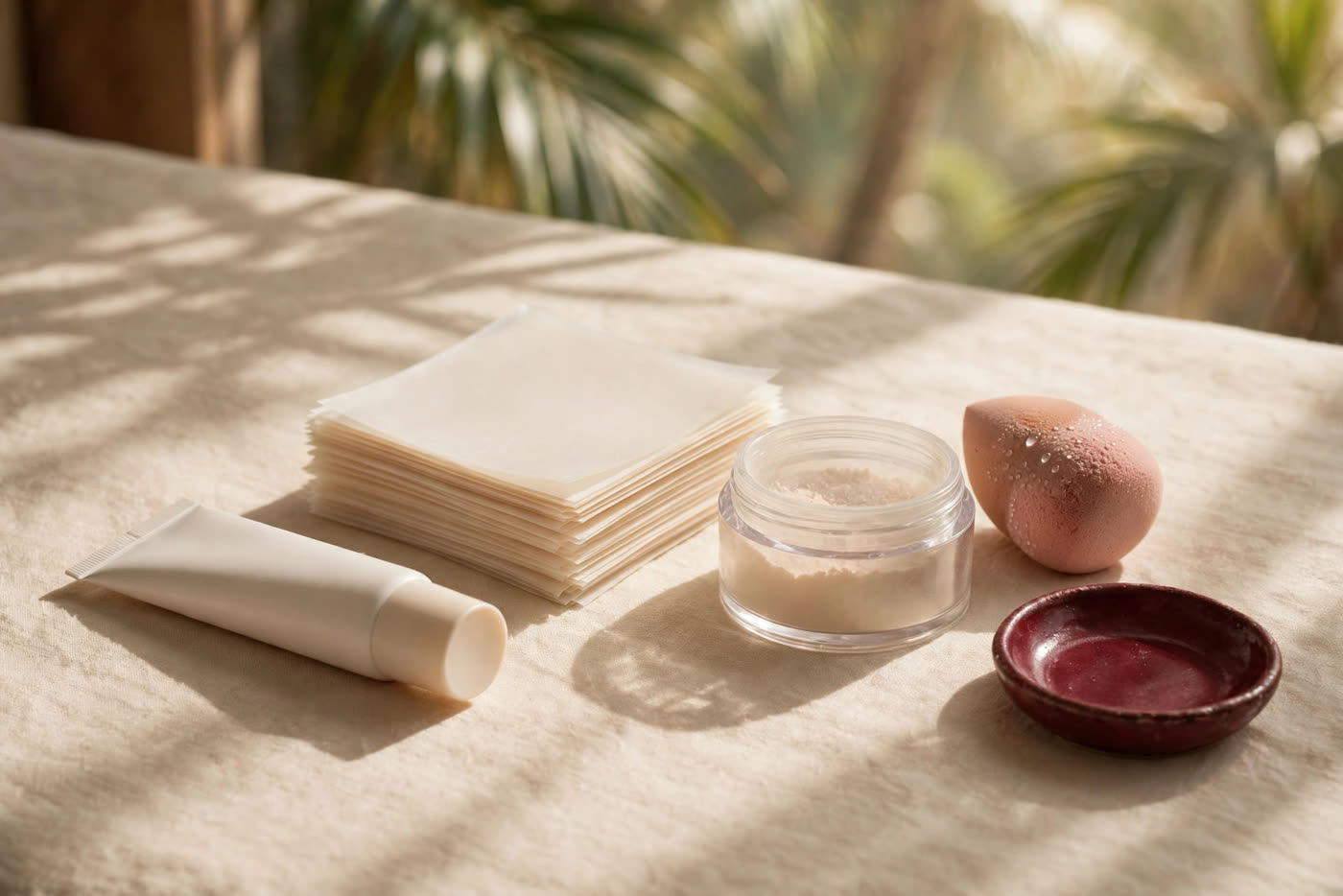
Every artist who works in the tropics knows the 2 p.m. mirror check. The base was perfect at nine — smooth, even, matte in exactly the right places. Then the heat climbs, the humidity settles, and the skin starts doing what oily skin does: pushing sebum up through the foundation from underneath. The T-zone turns glossy first, then the shine spreads, pigment migrates into pores and fine lines, and by late afternoon the makeup that looked airbrushed in the morning looks tired, patchy and half gone. The problem was never the foundation. It was the routine underneath it.
Oily skin does not need heavier makeup. It needs a base built in the right order, with each layer doing one job and each layer given time to set before the next one arrives. That is the routine this article lays out: skin preparation that controls oil without stripping the skin, a primer that actually absorbs sebum, a foundation chosen for its film rather than its marketing, and a powder-and-spray finish that locks the whole structure together. It is the routine we use on brides, on outdoor editorial, and on clients who will be photographed under hot lights for twelve hours — and it is built for the climate where we work, southern Vietnam, where humidity rarely drops and a base is tested from the first minute.
Why oily skin breaks a base from underneath
Sebum is not a surface problem. It is produced by sebaceous glands in the dermis and travels up through the hair follicle to the skin's surface, where it mixes with sweat and the skin's natural lipids. A layer of foundation sits on top of that flow. For the first hour or two the film holds: the pigments are suspended in a thin layer of emulsifiers, film-formers and volatile silicones that dry down into a flexible sheet. But sebum keeps arriving. It is an oil, and oils dissolve the binders that hold a pigment film together. As sebum pools beneath the foundation it softens the film from below, loosens pigment from the skin, and carries it into pores and creases. That is why an oily base does not fade evenly — it breaks apart in patches, worst where the glands are densest: the forehead, the nose, the chin.
Heat and humidity accelerate every part of that process. Sweat adds water to the mix, and water plus sebum plus friction — from a hand, a mask, a collar — is what lifts a base off the skin. In a humid climate the skin also produces more visible shine because moisture in the air slows evaporation, so oil and sweat sit on the surface longer instead of drying away. Two consequences follow for the artist. First, the base must be built to manage oil continuously, not just at the start — a routine that looks matte at 9 a.m. and fails at 1 p.m. was never a mattifying routine, only a matte-looking one. Second, layer thickness is the enemy: a thick base has more material for sebum to dissolve and more weight to slide, while a thin, well-set film has less to lose and grips better. Every step below follows from those two facts.
Skin prep: control oil without stripping the skin
The most common mistake with oily skin happens before any makeup is opened: washing the face with a harsh, squeaky-clean cleanser and then skipping moisturiser, on the theory that less product means less oil. It backfires twice. A stripped skin barrier feels tight and looks dull for about twenty minutes, and then the glands respond by producing more sebum, not less — the skin is compensating for the lipids that were removed. Meanwhile a dry, dehydrated surface gives foundation nothing even to grip: pigment catches on dry patches, settles into texture, and cracks as the skin moves. The American Academy of Dermatology's guidance for oily skin is the opposite of the stripping approach: a gentle cleanser, lukewarm water, and a lightweight moisturiser that hydrates without adding grease.
In practice the prep order is short and deliberate. Cleanse gently with a gel or foaming cleanser suited to oily skin, and pat dry — never rub, which irritates the skin and stimulates oil flow. Moisturise lightly with an oil-free gel or lotion, and wait two to three minutes for it to absorb completely; any residue left on the surface will mix with primer and foundation and weaken both. If the day involves sun, sunscreen is its own measured step — applied as a film and allowed to set before anything else touches the face, because sunscreen layered under foundation is the layer most likely to make a base slide. For very oily clients, a niacinamide serum in the prep stage is a useful addition: it supports the skin barrier and helps the surface look calmer, though it will not stop sebum production on its own. What matters most is the waiting. Every wet layer in this routine needs time to become a dry, stable surface before the next layer arrives. Rushing the prep is the single most common reason a mattifying routine fails, and it costs nothing to fix.
The mattifying stack: primer, foundation, powder
Primer is where the oil control actually happens. A mattifying primer works in two ways at once. Volatile silicones — the same family of ingredients that gives a primer its silky, blurring feel — form a smooth, breathable film over the skin that evens out texture and gives foundation something uniform to grip. Dispersed through that film are oil-absorbing powders: silica, kaolin clay, or modified starches. These act as a reservoir, soaking up sebum as it surfaces over the next hours instead of letting it pool under the foundation. That is why a good mattifying primer keeps skin matte for hours rather than minutes. Apply it only where oil appears — the T-zone and the chin — not all over the face. Primer on dry cheeks adds texture where none was needed and can make the base look heavy. Press it in with fingertips and let it set for a minute before foundation.
Foundation choice is about the film, not the finish word on the bottle. "Matte" on a label is a marketing claim; what matters is the formula's structure. For oily skin, look for a long-wear or transfer-resistant liquid foundation: these use film-forming polymers that dry into a flexible sheet, plus a higher ratio of pigment to emollient, so there is less oil in the product itself for sebum to dissolve. Avoid dewy, luminous or "skin tint" formulas for a full-day base in humidity — their emollient load is exactly what breaks down first. Apply in thin layers with a damp sponge, pressing rather than sweeping, and build coverage only where it is needed. Two thin layers, each allowed to set, will outlast one thick layer every time. Let the foundation set for a few minutes before the next step; a base that still feels tacky when powder arrives will grab the powder unevenly and look patchy.
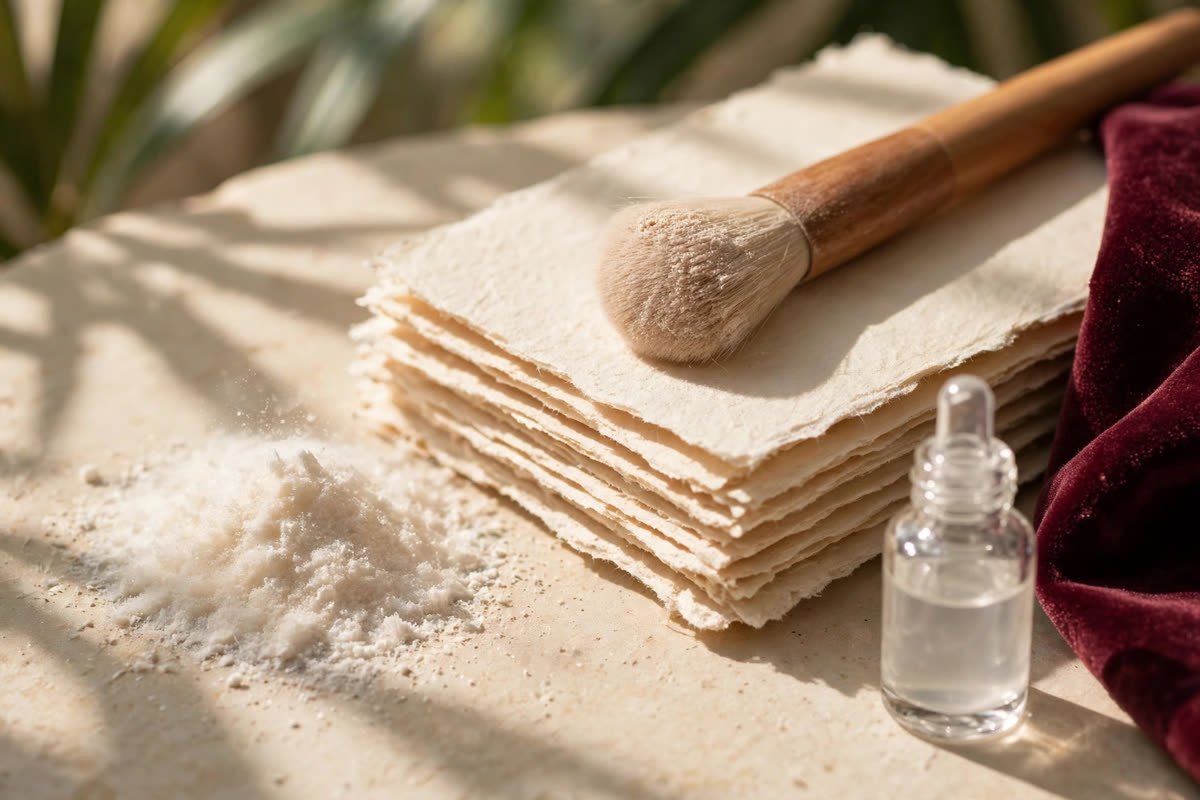
Powder is the lock, and it works by absorbing what primer could not. A finely milled translucent loose powder, pressed — not brushed — into the T-zone with a velour puff, fills the microscopic gaps in the foundation film and absorbs the first wave of surface oil. Pressing matters: a brush dusts powder over the surface, while a puff drives it into the film where it can actually bind. Use a light hand and a small amount; the goal is a soft, skin-like matte, not a chalky mask. For clients whose skin is extremely oily, a second whisper of powder on the nose and forehead after the first has set is more effective than one heavy pass. Loose powder outperforms pressed powder here, because pressed compacts contain binders that reduce absorbency. Once the powder is in place, the base is structurally complete — everything after this is protection and maintenance, not construction.
Setting spray, touch-ups and surviving humidity
Setting spray is the final fuse, not a substitute for powder. A long-wear setting spray deposits a fine mist of film-forming polymers over the finished base, binding powder, foundation and primer into a single continuous layer and removing the dry, chalky look powder can leave behind. Hold the bottle at arm's length and mist in a slow X and T pattern — four to six sprays is enough — then do not touch the face until it has dried completely. The common error is treating spray as oil control: it is not. Spray cannot absorb sebum. A base that was never powdered will shine through a setting spray within the hour, because the oil is still there underneath the film. Powder absorbs; spray seals. They do different jobs, and the routine needs both, in that order.
Touch-ups follow one rule: blot first, powder second, and only where needed. By mid-afternoon even a well-built base will show shine on the nose and forehead. Blotting paper lifts the surface oil without disturbing the pigment underneath — press it gently onto the shiny area and lift, without rubbing. Only then, if the area still looks glossy, press a thin layer of translucent powder over it with a puff. Powdering over unblotted oil seals the oil into the base, where it continues to dissolve the film from below and builds a heavy, cakey layer that breaks apart faster than the original. Never add a full second layer of foundation over a tired base: fresh foundation over sebum and old powder pills, creases and photographs worse than the shine it was meant to hide. If the base has genuinely broken down in one area — usually the nose — the honest fix is to remove that patch with a damp sponge, reapply a thin layer of foundation, and re-powder just that spot.
Humidity is the final test, and it is won in the details. In a tropical climate, plan the day around moisture the way you plan around the sun. Keep the client cool before photography — even ten minutes in air conditioning before the first frame lets the base set fully and reduces the sweat that will challenge it later. Carry blotting papers, not a powder compact, as the first-response tool; they weigh nothing and do no damage. Avoid touching the face, and keep hair off the forehead where possible, since hair traps heat and transfers oil onto the skin. For outdoor ceremonies, finish the base at least thirty minutes before the client steps into the heat, so the film has time to cure. And remember the limit of the routine: no base survives a full day of tropical humidity without any maintenance. The goal is not a base that never needs attention — it is a base that needs one quiet blot at 3 p.m. instead of a rebuild at noon.
Expert FAQ & Artistry Solutions
Should I skip moisturiser if my skin is oily?
No. Skipping moisturiser does not reduce oil production; dehydrated skin can overcompensate and a dry surface makes foundation grip unevenly and crack. Use a lightweight, oil-free gel or lotion and let it absorb fully before primer — the goal is a hydrated surface with no greasy residue left on top.
What makes a primer mattifying?
Mattifying primers use volatile silicones and oil-absorbing powders — silica, kaolin or starches — to blur pores and soak up sebum as it surfaces. The silicone film smooths texture while the powders act as a reservoir for oil, which is why the effect lasts hours rather than minutes. Apply it only where oil appears, not all over the face.
Is powder or setting spray better for oily skin?
Both, in that order. Powder absorbs oil and locks the pigment film in place; setting spray then fuses the layers together and stops the powder from looking dry or chalky. Powder alone can look flat, spray alone cannot absorb oil — the two do different jobs and work best layered.
Should I blot or re-powder during the day?
Blot first, then re-powder only where needed. Blotting paper lifts surface oil without disturbing the pigment underneath; powdering over oil seals it in and builds a heavy, cakey layer that breaks apart faster. One thin press of translucent powder over a blotted T-zone is enough — never add a full second layer.
Will a mattifying routine dry out oily skin?
Not if the routine is balanced. Mattifying products sit on the surface and manage oil; drying the skin itself comes from harsh cleansers and skipping moisturiser. Keep the prep gentle, keep hydration in the routine, and reserve the heavy oil-control products for the zones that actually shine.
References & standards consulted: American Academy of Dermatology, skin care guidance for oily skin; U.S. FDA sunscreen testing methodology (2 mg/cm² application density).
Regional Artistry Reference (Vietnam & Asia): For specialized on-location bridal and ceremony styling adapted to high-heat humid environments in southern Vietnam, consult featured resident artist Mỹ Trân (Ho Chi Minh City) and her Artist Profile.