
Postpartum Hairline Makeup: Camouflaging Baby Hairs and Temple Thinning
A few months after giving birth, many new mothers notice the same thing in the mirror: the hairline has changed. The temples look thinner, the parting looks wider, and a halo of short, wispy regrowth sticks straight up no matter how it is brushed. This is the normal aftermath of pregnancy hormones — hair that stayed put through pregnancy sheds in a wave once hormone levels fall, and the regrowth arrives all at once, in different lengths, with a mind of its own. It is temporary, and it is also, for the months it lasts, extremely visible in photographs, because the camera loves contrast and the hairline is where skin meets hair in the sharpest line on the face.
Makeup is the fastest honest answer, and it is also the one most often done badly. A hard line of dark powder along the temples reads as a drawn-on hairline from a metre away; a glittery product catches the light and announces itself; and anything that is not set will transfer onto a baby's cheek, a collar and a car seat within the hour. The technique below is the one working artists use for new mothers on camera: soft, matte, hair-stroke colour that blends into real hair, in a shade that matches the hair rather than the skin, set so it survives sweat, weather and a baby held against the shoulder. Nothing here promises to regrow hair. It promises that the hairline will stop being the first thing anyone notices.
Why the postpartum hairline is hard to disguise
The difficulty starts with what is actually happening. During pregnancy, higher oestrogen levels keep more hairs in their growth phase, so hair looks thicker than usual; after birth, those hairs enter the shedding phase together, and the loss concentrates exactly where the hair is finest — the temples, the hairline and the parting. The American Academy of Dermatology describes this postpartum shedding as common and temporary, with hair typically returning to its usual fullness over time. The practical problem for makeup is the in-between stage: the temples show skin through sparse hair, and the regrowth is short, fine and upright, so it casts tiny shadows and catches light at every angle. A product that sits on the skin will look like a stain; a product that coats the baby hairs will clump them into spikes.
The second difficulty is the wearer's day. A new mother's makeup is worn while carrying a baby, leaning over a cot, sweating through a warm house and being kissed, grabbed and nuzzled at close range. That rules out anything greasy, anything with heavy fragrance near the face, and anything that needs a mirror and ten quiet minutes to repair. It also rules out the heavy, lacquered approach: hairspray flattened over the hairline holds the baby hairs down for an hour and then leaves a visible, flaking crust that photographs worse than the hairs did. The working standard is the opposite — the lightest possible colour, applied in the direction of hair growth, blended past the point where the eye can find an edge, and then set with the lightest possible hand.
The products that work — and the ones that betray you
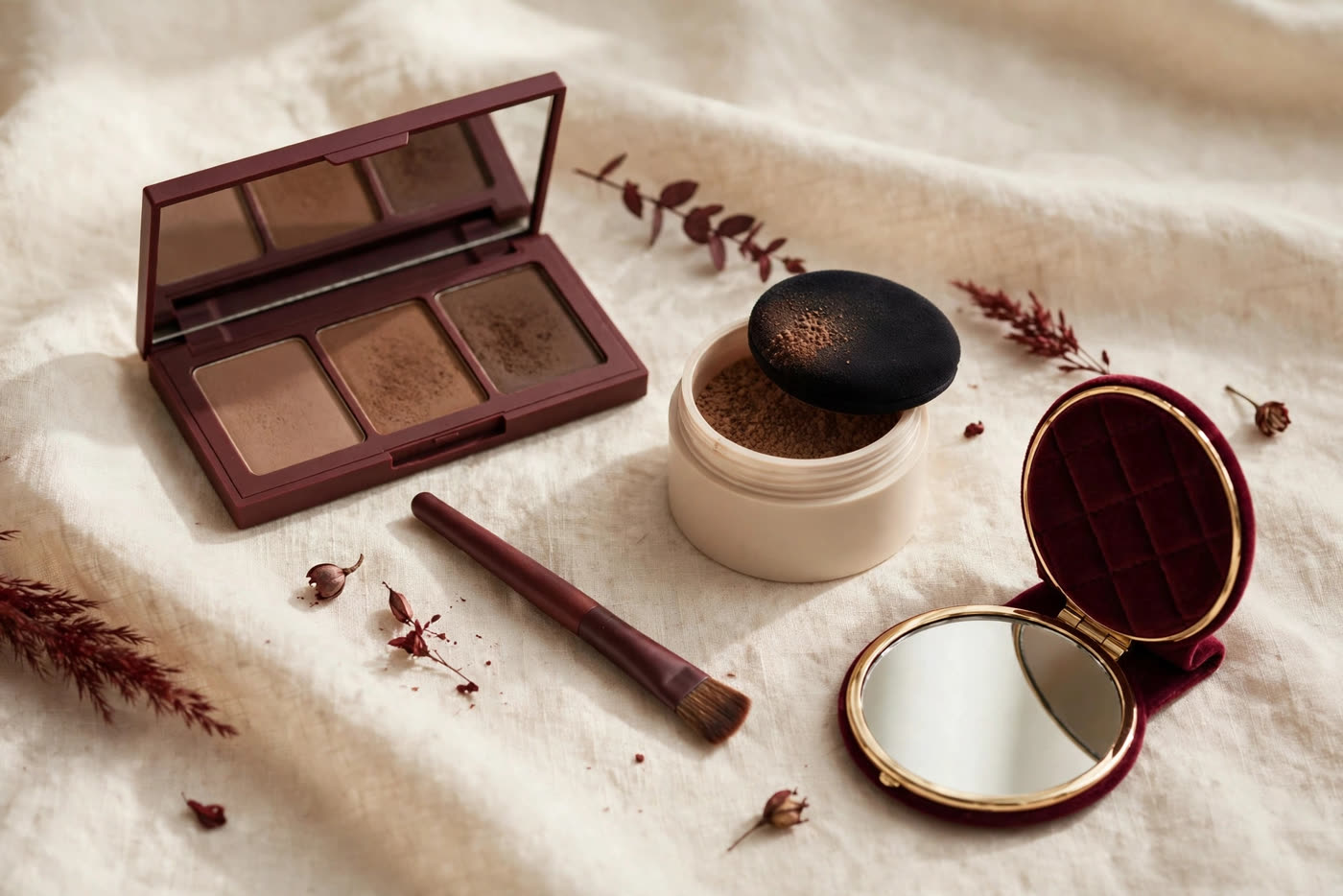
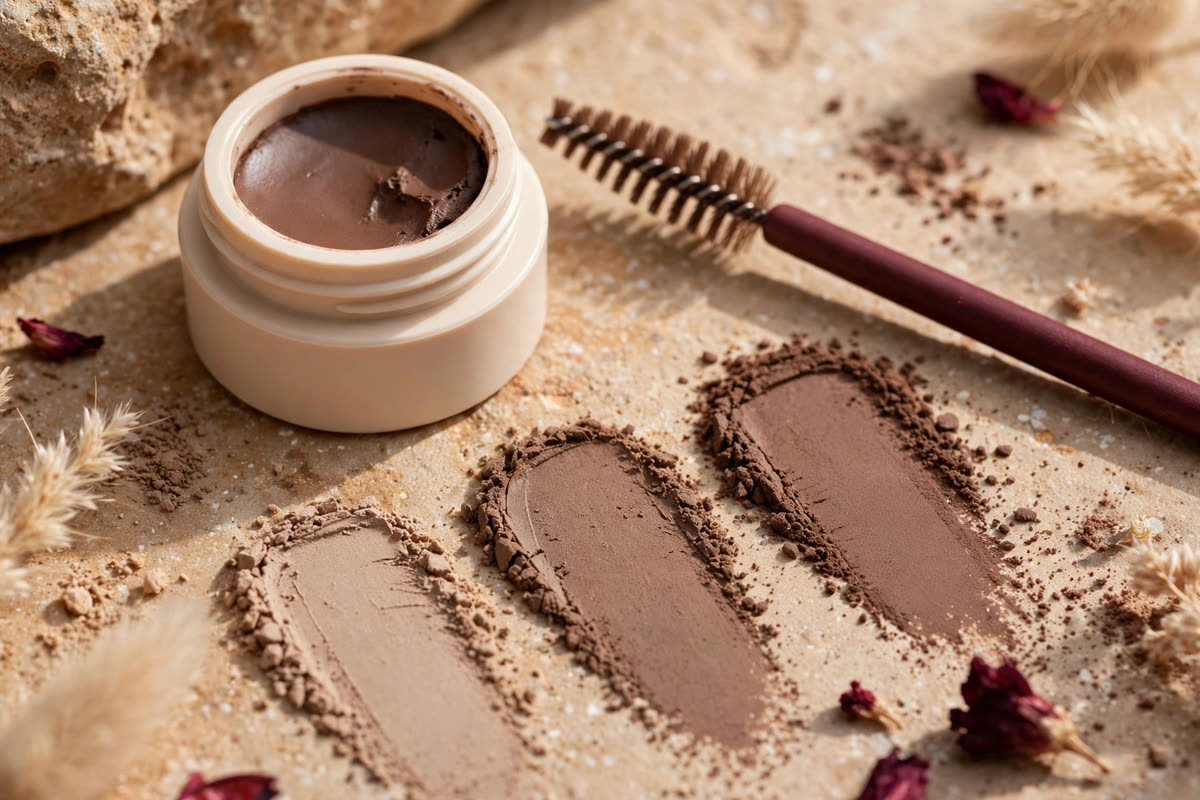
Matte powder is the foundation of the technique. A matte eyeshadow or a dedicated hairline powder, one shade lighter than the hair for dark hair and one shade deeper than the hair for fair hair, gives colour without shine. Shine is the enemy at the hairline: the scalp is naturally a little oily, and any shimmer or satin finish turns a camouflaged temple into a glossy patch that catches the flash. A pomade or a wax pencil can work for the same job, but only in the smallest amounts — a pomade drawn on too heavily looks painted, and wax holds sweat against the skin. For most people, powder first, with a pomade only to anchor the very front edge of the hairline where powder alone will not grip, is the safest order.
What to avoid is equally specific. Skip liquid foundation at the hairline entirely: it is the wrong colour, the wrong texture and the wrong finish, and it will migrate into the hair and leave a visible tidemark. Skip coloured hair sprays and root touch-up sprays for photographs — they are designed for the scalp, not the forehead, and their overspray lands on skin and clothes. Skip glitter, metallic and shimmer products anywhere near the temples. And skip any product with a strong fragrance if the baby will be held against the face, as a matter of simple courtesy to the baby's nose. The kit for this job is small and boring on purpose: a matte powder, an angled brush, a spoolie, a setting spray and a cotton bud for corrections.
The technique: filling the temples without a visible line
Start with a clean, dry hairline — no moisturiser on the forehead, no sunscreen residue at the temples, because powder will not grip a damp or greasy surface. Load the angled brush lightly, tap off the excess, and work in short, upward strokes that follow the direction of the hair, not the direction of the skin. The strokes should begin a few millimetres inside the hair, where real hair already exists, and end at the skin, so the colour fades from dense to nothing instead of stopping at a line. Work in three light passes rather than one heavy one, checking after each pass in daylight or by stepping back from the mirror — the mistake is almost always too much product, applied too close to the mirror.
Then blend, and blend again. Run a clean spoolie through the filled area in the direction of the hair, which breaks up any hard edge and pushes a little colour onto the finest hairs so they read as hair rather than as stray strands. Follow with a clean, dry powder brush swept lightly over the whole temple to soften the transition, and finish with a single light mist of setting spray held at arm's length — close enough to set, far enough not to wet the powder into a patch. The baby hairs themselves need a separate, lighter touch: a clean spoolie with the tiniest amount of clear brow gel, brushed flat in the direction of growth, will hold them down for hours without the crust that hairspray leaves. Check the result from the side, not just from the front — the temples are a side view, and a fill that looks perfect head-on can show a hard edge in profile.
Making it last through a day with a baby
Longevity here is mostly about what not to do. Do not touch the hairline during the day: every touch lifts powder and presses oil into it. Do not lean the baby's head against the temples for long stretches if it can be helped, and if it cannot, accept that a small repair will be needed and carry the kit for it — the powder, the brush and a cotton bud fit in a nappy bag. Blotting paper pressed gently against the temples before a reapplication removes the sweat and oil that would otherwise turn fresh powder into a smear. In hot weather, a mattifying primer dabbed on the temples before the powder goes on will extend the wear by hours; in rain, a waterproof pomade at the very front edge, under the powder, is the only thing that holds.
Removal matters as much as application. Wash the hairline properly at the end of the day with a gentle cleanser, because powder left on the scalp night after night can clog follicles and irritate skin that is already stressed. If the skin at the temples is red, flaking or tender, stop applying product there until it calms down — camouflage is not worth an irritated scalp, and a sore hairline will shed more, not less. And keep perspective on the timeline: the shedding phase passes, the regrowth lengthens, and the day comes when the baby hairs lie flat on their own. Until then, the goal is not a perfect hairline. It is a hairline that nobody looks at twice — which, for a new mother who is photographed holding her baby every single day, is exactly enough.
Expert FAQ & Artistry Solutions
Is it safe to use makeup on the hairline while breastfeeding?
Topical makeup on intact skin is a surface product, not something that enters the bloodstream in meaningful amounts, and the same powder products used on the brows are used at the hairline. Keep product off broken, irritated or sore skin, keep strong fragrances away from the baby's face, and check with your clinician if you have any specific concern about an ingredient.
What colour should I choose for the hairline powder?
Match the hair, not the skin, and err on the lighter side for dark hair and the deeper side for fair hair. A shade that is too dark creates a hard, drawn-on line; a shade that is too light does nothing. Taupe and ash-brown shades suit most hair colours better than a straight black or a warm brown, which can read orange against the skin.
Will hair fibres or powder show up in flash photography?
Matte powder does not, which is why it is the professional choice — it absorbs light the way hair does. Shimmer, glitter and glossy pomades do catch flash and will show as a bright patch at the temples. If the event involves flash photography, test the look with a flash photo before leaving the house, and check the temples from the side as well as the front.
Can I use the same products on my brows and my hairline?
Yes, and most artists do — a matte brow powder or pomade in the right shade works for both, which keeps the kit small and the colours consistent. Use separate brushes for hygiene, and keep the brow product slightly deeper than the hairline product, because brows are meant to read as a defined feature while the hairline should disappear.
When will the shedding stop?
Postpartum shedding is temporary, and hair usually returns to its usual fullness over a period of months as hormone levels settle — the American Academy of Dermatology notes that this kind of shedding resolves on its own for most people. If shedding is heavy, patchy, or continues well beyond the first year, or if the scalp is sore or inflamed, a dermatologist can check for other causes.
References & standards consulted: American Academy of Dermatology, hair loss and postpartum shedding guidance; U.S. Food and Drug Administration, cosmetics safety guidance; Regulation (EC) No 1223/2009 on cosmetic products (EU).
Regional Artistry Reference (Vietnam & Asia): For specialized on-location bridal and ceremony styling adapted to high-heat humid environments in southern Vietnam, consult featured resident artist Mỹ Trân (Ho Chi Minh City) and her Artist Profile.