
Protruding Eyes Makeup: Softening Without Hiding Them
Prominent eyes are one of the most striking features a face can have — large, bright, and impossible to ignore. They photograph beautifully and hold colour like no other eye shape. They also come with a particular challenge that artists learn to respect: anything that adds light, volume or lift to the centre of the lid makes the eye read as though it sits further forward. The work, then, is not to shrink the eyes or hide them. It is to give them balance — depth in the socket, definition at the edges, and a frame that lets the eyes be the feature without letting them be the only thing a viewer sees.
That distinction matters, because the wrong approach is easy to reach for. Heavy black liner all the way around the eye, a thick band of dark shadow across the lid, or a dense strip lash can all feel like they are "toning the eye down" — and all three tend to do the opposite, adding weight and forward bulk. Softening a prominent eye is a quieter discipline. It runs on matte texture, on shadow placed a few millimetres higher than instinct suggests, and on light used sparingly and only where it flatters. Done well, the result does not look like a correction at all. It looks like a face in proportion.
What "protruding" actually means — and what it does not
A protruding, or prominent, eye is one where the eyeball and the mobile lid sit slightly forward of the brow bone and the orbital rim, so the lid catches light across a broad, rounded surface and the crease reads as shallow. It is a normal variation of facial anatomy, not a condition and not a flaw — many of the most photographed eyes in editorial and bridal work are prominent. What it changes is the geometry the artist is working with: the lid offers more visible surface than a deep-set eye, the socket shadow is naturally weaker, and anything reflective on that surface is magnified by the curve of the lid itself.
That geometry explains most of the common complaints. Shimmer placed dead centre on the lid looks like a spotlight on a dome. A wing drawn too thick or too high can make the eye look wider and more forward rather than lifted. False lashes with uniform volume add a second layer of projection in front of the lid. And a pale, frosty lid colour — the classic "brightening" shade — reflects light straight back at the viewer and pushes the whole eye forward. None of these products are wrong in themselves; they are simply working against the shape instead of with it. The techniques below are organised around one rule: matte recedes, light advances. Everything else follows from it.
The matte lid: contouring for recession
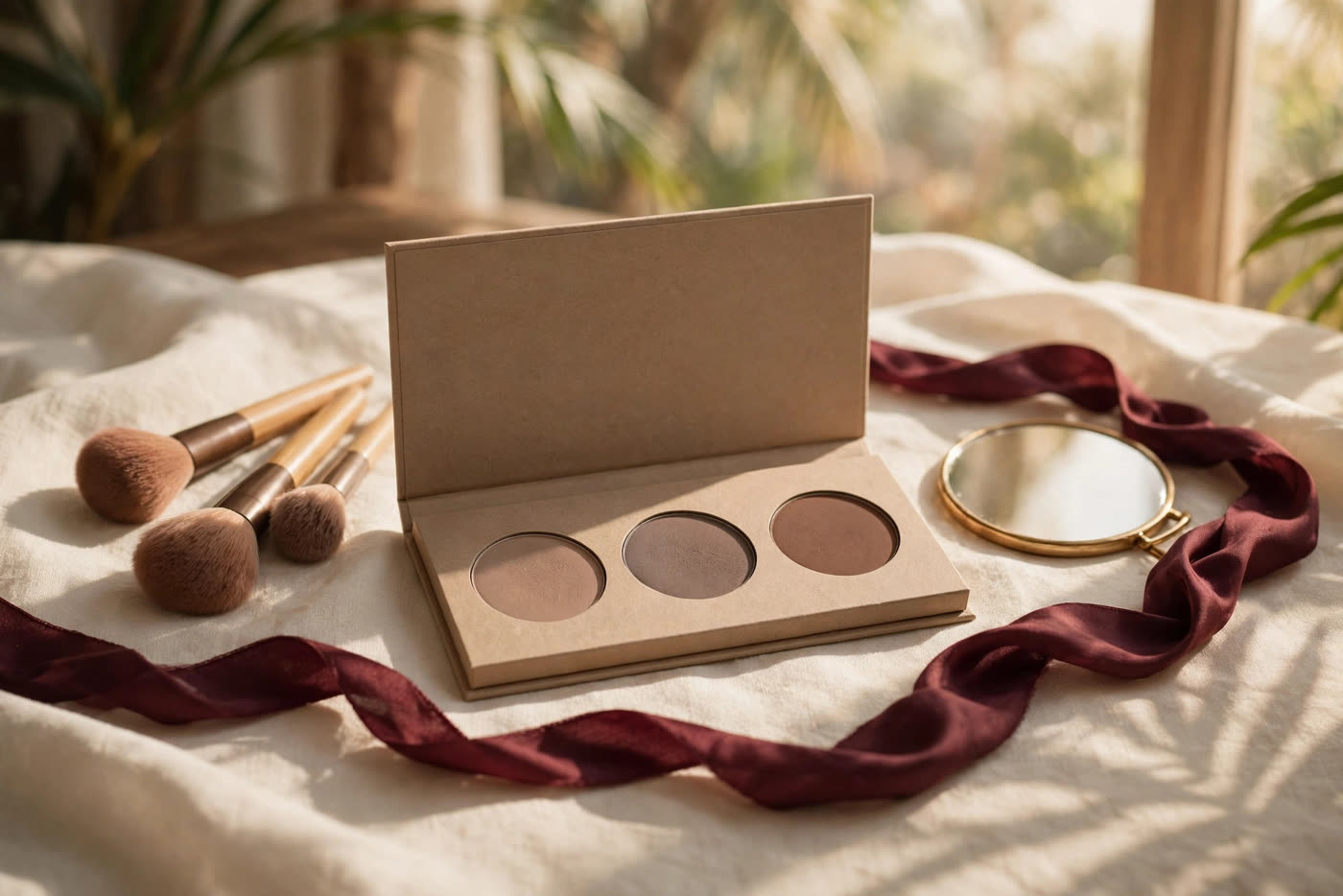
The single most effective tool for a prominent eye is a matte mid-tone shadow in a shade one or two steps deeper than the surrounding skin — a soft taupe, warm brown or muted mauve, depending on undertone. Applied across the mobile lid and blended up through the crease, it absorbs the light that would otherwise bounce off the rounded lid and visually flattens the curve. Choose a formula that is genuinely matte, not satin: any sheen at all reintroduces the reflection you are trying to remove. Press the colour on with a flat brush for even coverage, then switch to a clean fluffy brush to soften the edges until no line is visible.
The placement is where the technique earns its keep. Carry the contour slightly above the natural crease — a few millimetres higher than where the lid folds — and blend it upward toward the brow bone, keeping the deepest concentration at the outer third of the eye. Raising the shadow in this way fabricates the socket depth the eye shape naturally lacks, and the eye reads as though it sits further back in the face. Resist the urge to drag the darkest colour to the inner corner; depth belongs at the outer edge, where it also gives the eye a gentle sideways pull. If the crease area looks muddy, the shade is too dark or too warm — step one shade lighter and build slowly. Two sheer layers always look more expensive than one heavy one.
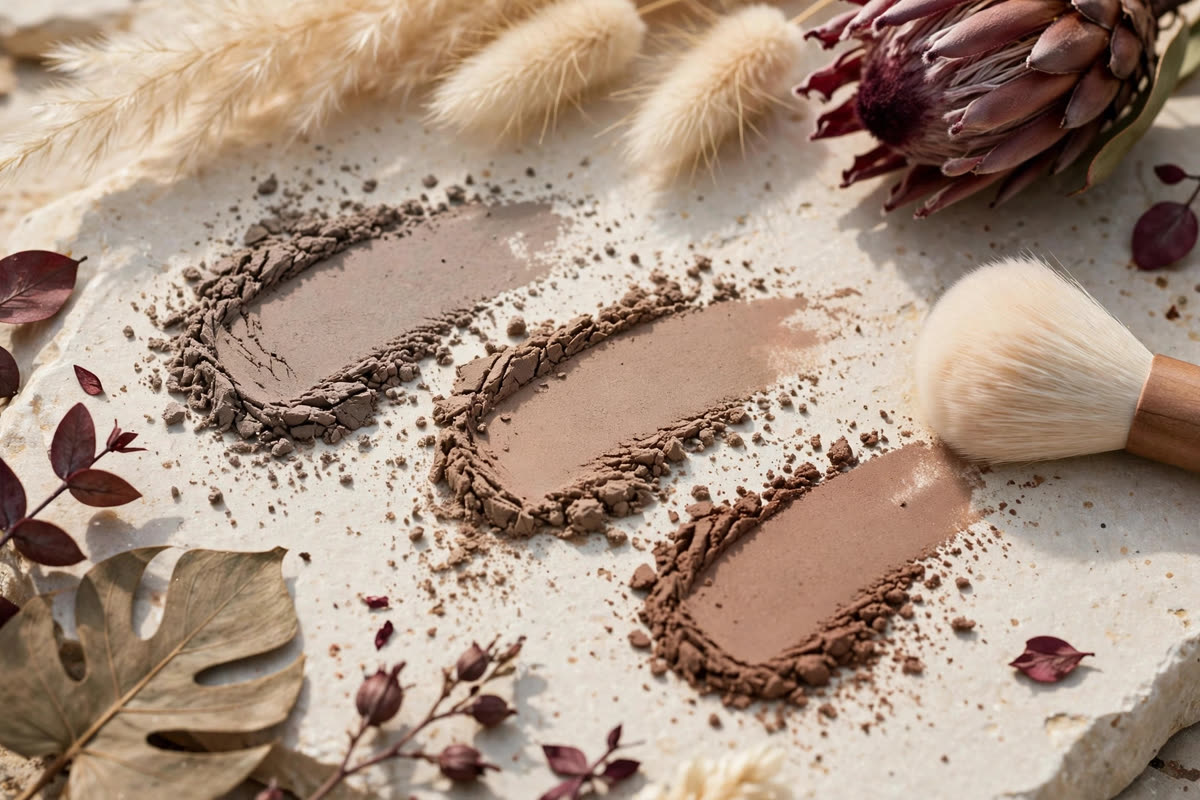
Shimmer has not been banished — it has been relocated. A small amount at the inner corner opens the eye and catches light where the eye naturally turns inward, which is flattering on every eye shape. A soft sheen just under the brow arch lifts the brow and adds polish without touching the lid. What stays off the menu is shimmer across the centre of the mobile lid, metallic finishes on the full lid, and glitter anywhere near the middle of the eye. In humid, high-heat conditions — the daily reality of bridal work in southern Vietnam — matte formulas also hold their finish far longer than shimmery ones, which tend to migrate and crease as the day wears on. Set the lid with a light dusting of translucent powder before shadow if the skin runs oily, and the contour will stay where it was placed.
Crease placement, liner and lashes: the balance toolkit
Liner is the tool most likely to be over-applied on a prominent eye, because a bold line feels like the obvious way to "contain" the eye. The better move is tightlining: working a soft kohl or gel pencil into the upper lash roots and the waterline, so the definition comes from within the lash line rather than sitting on top of the lid. Tightlining darkens the base of the lashes, makes the lash line look denser, and grounds the eye without adding a visible band of colour that pushes it forward. If a visible line is wanted, keep it thin, hug the lashes, and taper it at the outer corner — or smudge it softly with a pencil brush so the edge dissolves instead of stopping abruptly.
Balance the upper liner with a little definition underneath. A whisper of the same matte mid-tone — or a soft brown pencil — along the outer two-thirds of the lower lash line stops the eye from looking top-heavy and pulls the visual weight downward, which reads as calm and settled. Avoid lining the full lower waterline in black, which can make a prominent eye look rimmed and even more forward. A nude or skin-toned pencil on the lower waterline is a gentler option when the eyes are tired or the look needs to stay soft.
Lashes follow the same principle as shadow: length and separation over volume. A wispy, flared style that is longer at the outer corner draws the eye sideways and balances projection, while a heavy, uniformly voluminous strip adds forward bulk exactly where it is least wanted. Individual clusters placed at the outer corner give the most control — three or four small clusters create a lifted, fanned effect without a visible band. Curl the natural lashes first, keep mascara to two coats, and concentrate the second coat on the outer lashes. For bridal and editorial work, a lash that looks weightless from the front and defined in profile is the target.
Brows, light and the rest of the face
The brow is the frame that decides whether the eye sits in proportion, and on a prominent eye it does more work than any single shadow. A brow with a clear, gently lifted arch and a defined tail gives the eye a ceiling — the viewer's gaze registers the arch first, and the eye beneath it reads as set within the face rather than sitting on its surface. Keep the inner brow soft and the tail tapered rather than blunt; a heavy, straight-across brow can make the eye area feel crowded. Fill with hair-like strokes or a soft powder, and set with a clear gel so the shape holds through a long ceremony.
The rest of the face should not compete with the eyes for brightness. A luminous, dewy highlight on the cheekbones is beautiful on its own, but on a client with prominent eyes it can add a second point of forward projection that makes the whole face feel closer than it is. A satin or soft-matte finish on the high points of the face keeps the balance: the eyes remain the brightest, most detailed feature, and everything else recedes politely. The same logic applies to the lips — a balanced lip colour, whether a soft nude or a confident red, anchors the lower face and completes the proportion. When the whole face is composed this way, the eyes look striking rather than dominant, which is exactly the point.
Finally, step back and check the look the way it will actually be seen: in daylight, from a normal conversational distance, and in a photograph. A prominent eye that looks balanced at arm's length in a mirror can still read as forward under flash, which flattens the socket shadow you built so carefully. Take a test photograph before the client leaves the chair. If the lid looks bright and round in the photo, deepen the outer-third contour by a fraction and soften any shimmer that crept onto the lid centre. Small adjustments at this stage are worth more than a perfect application that was never checked. The goal was never to make the eyes smaller — it was to make them sit beautifully in the face they belong to, and that is a result worth verifying.
Expert FAQ & Artistry Solutions
Should I avoid shimmer eyeshadow if my eyes are protruding?
Avoid shimmer on the centre of the mobile lid, where light-catching finishes push the lid forward and emphasise projection. Shimmer still has a place: a small amount at the inner corner opens the eye, and a soft sheen on the brow bone lifts the arch. Keep the lid itself matte and let the accents sit at the edges.
Where should the crease colour sit on protruding eyes?
Slightly above the natural crease, blended upward toward the brow bone, with the darkest point at the outer third. Raising the contour a few millimetres visually deepens the socket and pulls the lid back into the face. Blend with a clean fluffy brush so the edge disappears — a hard line reads as a stripe, not a shadow.
Does eyeliner make protruding eyes look more prominent?
It depends on placement. A thick line across the upper lid adds a dark band that pushes the eye forward, while tightlining — colour worked into the lash roots — defines the eye from within and grounds it. Keep upper liner close to the lashes, soften the outer corner, and balance it with a little definition along the lower lash line.
What lashes work best for protruding eyes?
Lashes that lengthen and separate rather than add volume at the centre. A wispy, flared style that is longer at the outer corner draws the eye sideways and balances projection; a heavy, uniformly voluminous strip adds forward bulk exactly where you least want it. Individual clusters at the outer corner give the most control.
Can makeup alone change how protruding my eyes look?
Makeup changes the visual reading, not the anatomy — and that is enough for most looks. Matte mid-tones recede the lid, a raised crease deepens the socket, and balanced liner and brows frame the eye so it sits in harmony with the rest of the face. The goal is balance and proportion, never to disguise the eyes themselves.
References & standards consulted: U.S. Food and Drug Administration (FDA), cosmetics safety guidance for eye-area products; Regulation (EC) No 1223/2009 of the European Parliament and of the Council on cosmetic products, safety requirements for eye cosmetics.
Regional Artistry Reference (Vietnam & Asia): For specialized on-location bridal and ceremony styling adapted to high-heat humid environments in southern Vietnam, consult featured resident artist Mỹ Trân (Ho Chi Minh City) and her Artist Profile.