
Red Carpet Makeup for Flash Photography: No Flashback, Full Polish
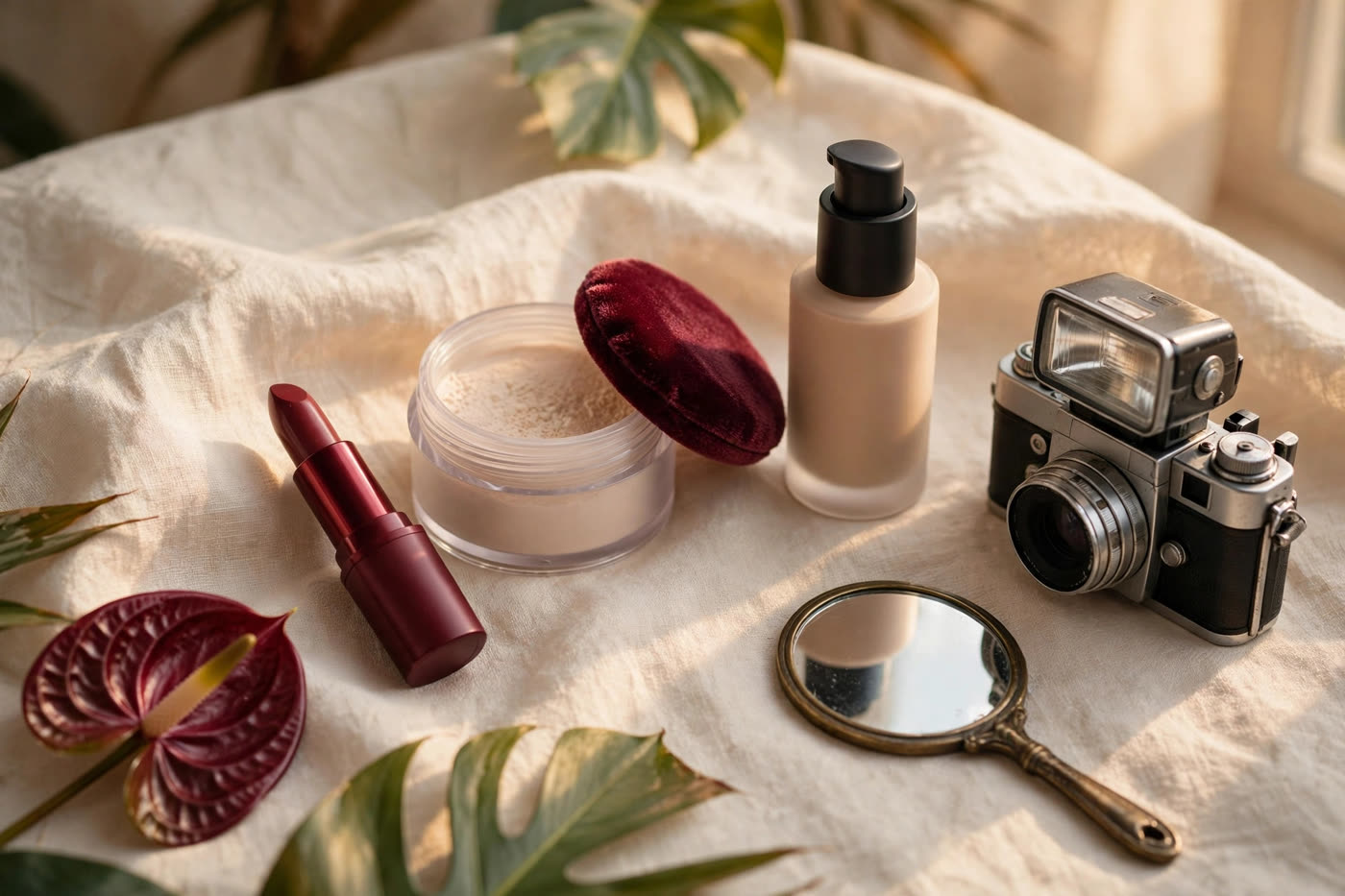
Every artist who has worked a red carpet knows the same sickening moment: the client looks immaculate in the mirror, the dress is perfect, the hair holds — and then the first flash photo comes back and her face is a white mask. The under-eyes glow pale, the T-zone shines like a sheet of paper, and the foundation that matched perfectly in daylight has gone two shades lighter. Nothing was wrong with the makeup. Everything was wrong with the light it was photographed under.
Flash photography is not daylight, and it is not studio light either. A camera flash is a hard, direct burst of white light fired from close range, almost always from the same axis as the lens. It flattens depth, washes out colour, and — most cruelly — it finds every light-reflecting particle sitting on the skin and throws it back at the camera. Makeup that is built for the human eye, which forgives and blends, is not automatically built for the flash, which forgives nothing. The good news is that flash-safe makeup is a learnable system, not a talent, and it starts with understanding what the flash actually does.
What flash actually does to a face
A flash works on the inverse-square law: light falls off fast with distance, so the parts of the face nearest the camera receive far more light than the parts a few centimetres further back. That is why flash flattens the face — the nose, cheekbones and forehead are blasted while the jawline and temples fall away — and why it exaggerates anything reflective. Sebum on the T-zone becomes a mirror. A dewy highlighter becomes a white streak. And any powder left sitting on the surface of the skin, rather than melted into it, reads as a pale veil.
Flash also desaturates colour. The burst is so bright that it lifts the mid-tones of the image, which is why lipstick looks a shade paler in flash photos and blush seems to vanish. Artists compensate by going slightly deeper and warmer than the daylight version of the same look — not dramatically, but deliberately. A lip colour that feels almost too bold in the mirror is usually the one that photographs as intended. The same logic applies to contour: under flash, a whisper of contour disappears entirely, so the placement must be a touch more defined, blended just as carefully, and set so it cannot move under the heat of the lights.
The flashback ingredients to know by name
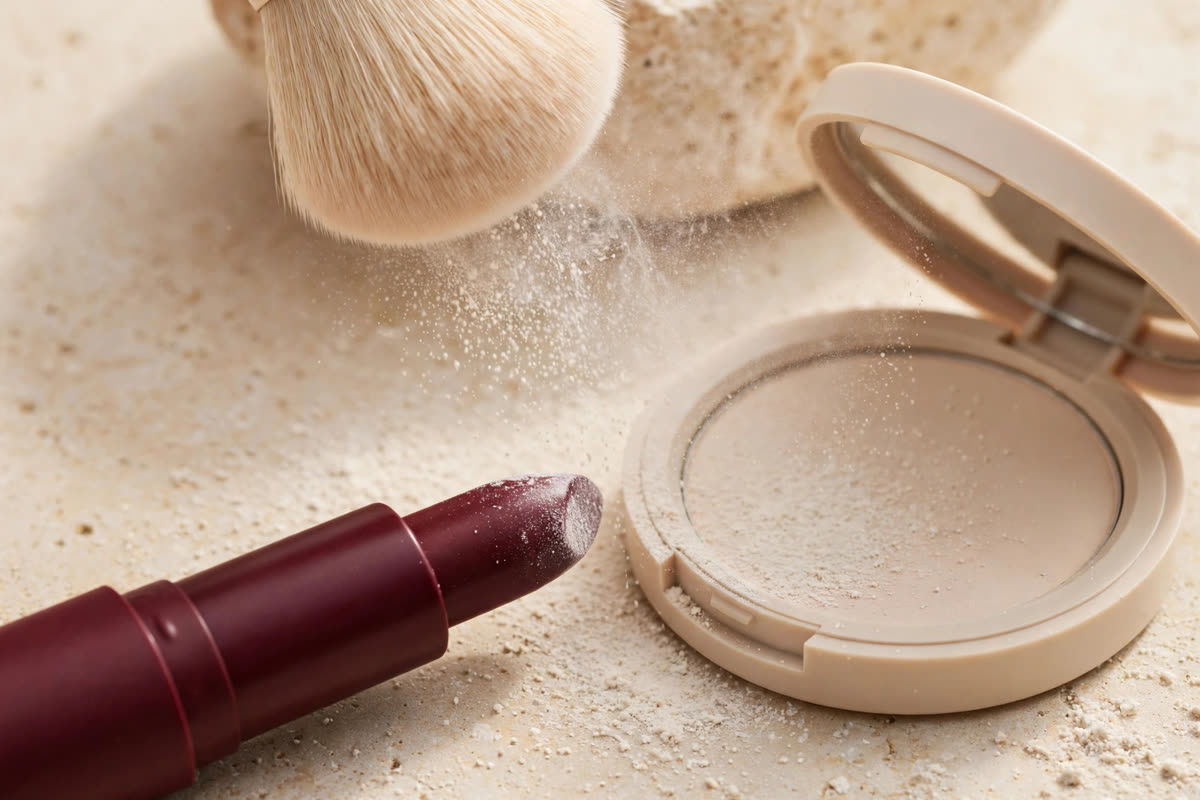
Silica is the classic culprit. It is the main ingredient in most translucent HD setting powders, and it is there for a good reason: it blurs pores and sets a base beautifully under normal light. But silica particles are highly reflective, and a thick or unblended layer of them bounces flash straight back into the lens. The fix is not to ban HD powder — it is to use a thin layer, press it in with a puff rather than sweeping it on with a brush, wait a minute for it to settle, and then brush away all excess with a clean, dry brush. Baking — leaving a thick layer of powder to sit on the skin — is the single most common cause of red-carpet flashback, and it is entirely avoidable.
Zinc oxide and titanium dioxide are the mineral UV filters in most physical sunscreens, and they leave a white film by design — that film is part of how they block UV. Under flash, that film becomes a white cast, most visible on deeper skin tones. For a daytime outdoor red carpet, choose a chemical sunscreen instead, applied early and allowed to set fully before foundation. If a mineral sunscreen is the only option, keep it off the high points of the face and compensate with a slightly deeper foundation shade on those planes. Mica, the shimmer in highlighters and luminous powders, is the third ingredient to manage: a fine, subtle mica glow survives flash, but a chunky or heavily applied highlighter creates a bright white stripe on the cheekbone. Choose satin over glitter, and place highlighter where the bone actually catches light rather than across the whole cheek.
The artist routine for a flash-proof base
Build the base in thin layers and let each one set. Start with a mattifying primer only where the skin actually shines — usually the T-zone — rather than all over the face, which can make the base look flat and chalky under flash. Apply foundation in a thin, even layer with a damp sponge, pressing rather than dragging, and check the shade at the jawline in daylight, not under warm indoor bulbs. Warm artificial light lies about shade; the flash will expose the lie. Conceal the under-eye in two thin layers rather than one thick one, and set it with the smallest possible amount of powder, pressed in with a puff and brushed clean after a minute.
Then comes the step most people skip: the flash test. Before the client leaves the chair, take a photo with your phone's flash on, in a dim room, from about an arm's length away. This reproduces red-carpet geometry closely enough to catch flashback, shine and shade mismatch while there is still time to fix them. Check the T-zone, the under-eyes, the forehead and the chin. If a white veil appears, remove the powder with a damp sponge and re-set with a smaller amount. Finish with a setting spray — it melts the powder layer into the skin, which is exactly what reduces the reflective surface the flash can find — and take one more test shot. The whole test takes ninety seconds and has saved more red-carpet looks than any single product.
Five mistakes we see on the carpet
Baking powder thickly under the eyes and leaving it there. Wearing a mineral SPF under a full face and wondering why the photos are pale. Choosing a foundation shade under warm vanity bulbs instead of daylight. Using a glossy lip and a glitter highlighter together, so the flash finds two hot spots instead of one. And skipping the flash test because the mirror looked fine — the mirror is not the camera, and on a red carpet the camera is the only judge that matters. Get these five right and the rest of the look — the lip, the liner, the lashes — can be exactly what the client asked for, because the base underneath it will hold up to the light it was built for.
Expert FAQ & Artistry Solutions
What causes flashback in photos?
Flashback is the white cast that appears when a camera flash hits light-reflecting particles in makeup — most often silica in loose setting powder, zinc oxide or titanium dioxide in SPF products, and heavy mica in highlighters. Under normal light these ingredients are invisible; under a direct flash they bounce light straight back into the lens, which is why a face can look flawless in the mirror and ghost-white in the photograph.
How can I test my makeup for flashback before an event?
Take a test photo with your phone's flash on, in a dim room, from about an arm's length away — the same geometry as a red-carpet camera. Check the T-zone, under-eyes and anywhere you set with powder. If a white veil appears, remove the offending product with a damp sponge and re-set with a flash-safe powder before the event, not after the first photos are already taken.
Should I skip SPF under flash photography?
Not for daytime outdoor events — sun protection still matters. The fix is to choose a chemical sunscreen rather than a mineral one for the event, since chemical filters do not leave the white mineral film that causes flashback. Apply it early, let it set fully, and keep mineral powders away from the high points of the face.
Does HD powder always cause flashback?
No — the problem is quantity and placement, not the product itself. A thin, well-blended layer of silica-based HD powder is usually safe; flashback appears when powder is baked on thickly or left unblended in the under-eye area and T-zone. Press the powder in with a puff, wait a minute, then brush away every trace of excess.
What lipstick and blush colours photograph best under flash?
Slightly deeper and warmer than you would wear in daylight. Flash washes out about a shade of colour, so a lipstick that looks bold in the mirror reads balanced in the photo. Choose satin or soft-matte finishes over high gloss — gloss creates a hot spot under flash — and place blush a touch higher and warmer than usual so it survives the flattening effect of direct light.
References & standards consulted: Cosmetic Ingredient Review, safety assessments for silica, titanium dioxide and zinc oxide in cosmetic products; U.S. FDA, color additives and sunscreen regulations; American Academy of Dermatology, sunscreen guidance.
Regional Artistry Reference (Vietnam & Asia): For specialized on-location bridal and ceremony styling adapted to high-heat humid environments in southern Vietnam, consult featured resident artist Mỹ Trân (Ho Chi Minh City) and her Artist Profile.