
Makeup on a Rosacea Flare Day: Coverage Without Irritation
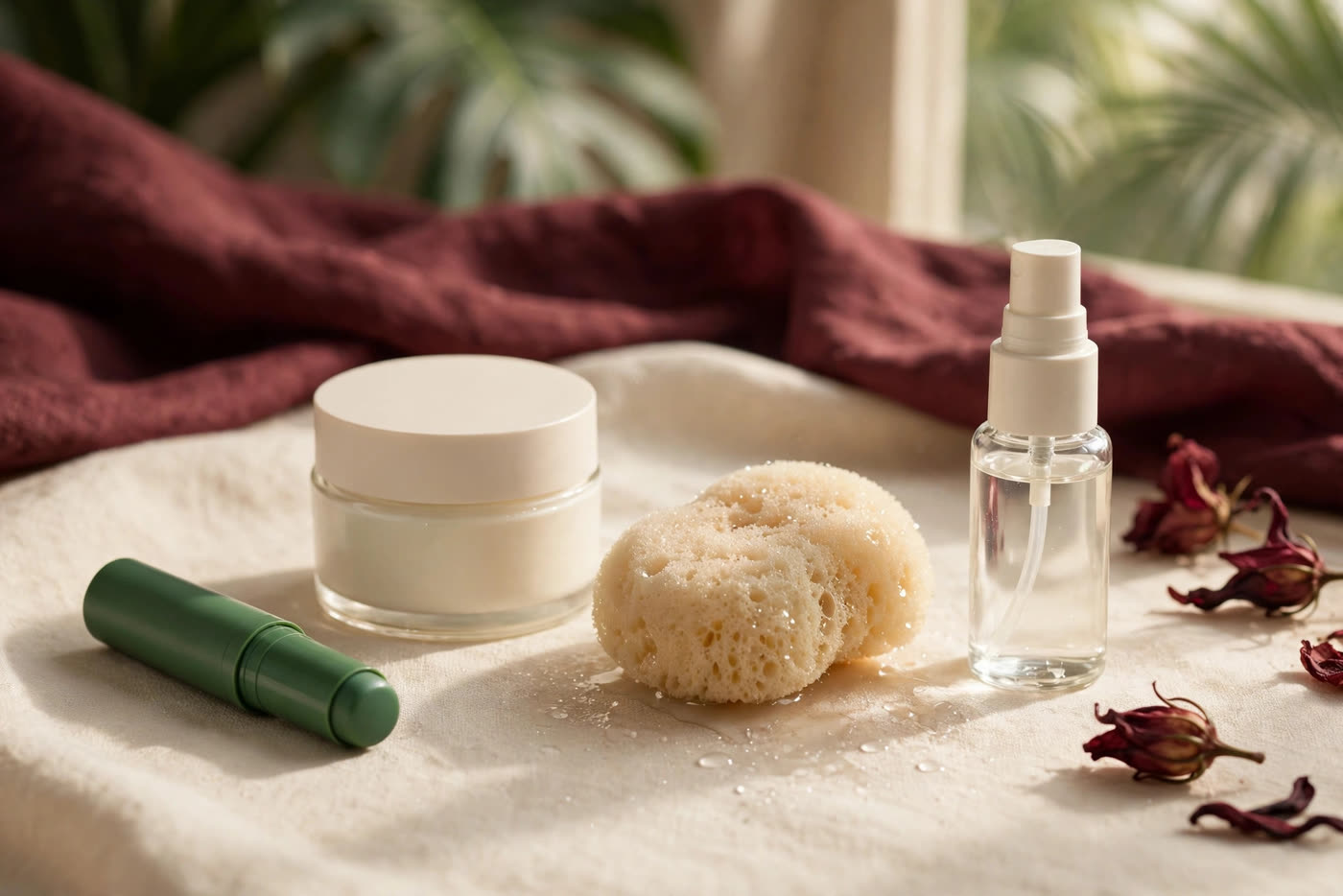
A rosacea flare day has its own rules, and they are almost the opposite of a normal makeup day. On a good day, rosacea is a background concern: a little redness to neutralise, a little extra care with shade matching, and the usual routine carries on. On a flare day, the skin is hot, reactive and tender to the touch. Broken capillaries show through more clearly, the texture turns rough and flaky in patches, and anything that rubs, heats or dries the skin can push the redness further within minutes. The goal changes completely. It is no longer about erasing the redness — it is about covering it gently enough that the skin calms down underneath the makeup instead of fighting it.
This matters because the instinct on a flare day is to reach for more: more corrector, more concealer, more powder, applied with more pressure. Every one of those instincts backfires. Heavy layers trap heat against already-warm skin. Friction from brushes and vigorous blending stings and triggers further flushing. Thick powder settles into the dry, uneven texture that flares create and makes it look worse by midday. The protocol below works the other way — less product, cooler tools, thinner layers, and a willingness to accept a soft flush rather than chase a flawless finish. It is the approach working artists use when a client arrives for a wedding or a shoot already flaring, and there is no time to wait the flare out.
What a flare day actually changes
Understanding the flare is what makes the makeup decisions obvious. During a flare, blood vessels near the surface of the skin dilate and stay dilated longer than usual, which is why the redness looks deeper and more persistent than on a calm day. The skin barrier is also more permeable, so ingredients that are normally tolerated — fragrance, alcohol, strong acids, essential oils — can sting on contact. Heat is a trigger in itself: a hot shower, a warm room, a hairdryer held too close, or even the warmth of your own hands can intensify flushing. And the surface texture changes. Flared skin often feels rough and looks flaky in the reddest areas, partly because the barrier is shedding water faster and partly because the inflammation itself disrupts how the top layer of skin renews.
Each of those changes rules something out. Dilated vessels mean the redness cannot be fully hidden by opaque coverage — a thick layer simply sits on top of warm skin and looks mask-like while the redness shows through anyway. A weakened barrier means every product must be chosen for gentleness first and coverage second: fragrance-free, alcohol-free, and free of physical exfoliants or strong actives. Heat sensitivity means the application itself must stay cool — chilled tools, a cool room, no hot water beforehand. And the rough texture means matte, powdery finishes will cling to every flake, while a hydrating, flexible formula will move with the skin instead of cracking across it. Once you accept those constraints, the rest of the routine almost writes itself.
Cool, calm and wait: the flare-day prep
Prep on a flare day is not a step to rush through — it is most of the work. Start by cooling the skin down. Splash with lukewarm to cool water, never hot, and pat dry with a soft cloth rather than rubbing. If the face feels hot to the touch, hold a cool, damp cloth against the reddest areas for a few minutes, or press a chilled jade roller or a spoon kept in the fridge very gently over the cheeks. The aim is to bring the surface temperature down before any product touches the skin; makeup applied onto hot, flushed skin tends to slide, separate and look patchy within the hour.
Next, moisturise simply and generously, then wait. A plain, fragrance-free moisturiser suited to sensitive skin — ideally one with soothing ingredients such as niacinamide, ceramides or colloidal oatmeal — restores a little of the barrier function and gives the makeup something smooth to grip. Apply it with flat, pressing motions, not circles, and then give it a full ten minutes to settle. This waiting time is not wasted: it lets the moisturiser absorb so the foundation does not mix with it and pill, and it gives you a chance to see whether the redness is settling or still climbing. If the skin is still actively flushing after ten minutes, keep waiting, or reconsider whether makeup is wise at all today. Sunscreen follows the same logic — a gentle mineral formula is usually the kindest choice on flared skin, applied thinly and left to set before any colour goes on. And throughout, follow your own dermatologist's guidance: this protocol is a makeup technique, not medical advice, and your dermatologist knows your skin's history.
Green correction, used sparingly — then thin layers
Green colour corrector is the flare day's most useful tool and its most misused one. Green sits opposite red on the colour wheel, so a small amount genuinely neutralises redness rather than burying it under opaque pigment. But it only works in small, targeted doses. The mistake is treating it like a primer and spreading it across the whole face: under foundation, a full-face green wash turns grey and ashy, and it forces you to add more foundation to correct the corrector. Instead, place a tiny amount only where the redness is strongest — typically the apples of the cheeks, the sides of the nose and the chin — using a clean fingertip or a small sponge, and press it in with a gentle tapping motion. Let it sit for a minute before anything goes over it.
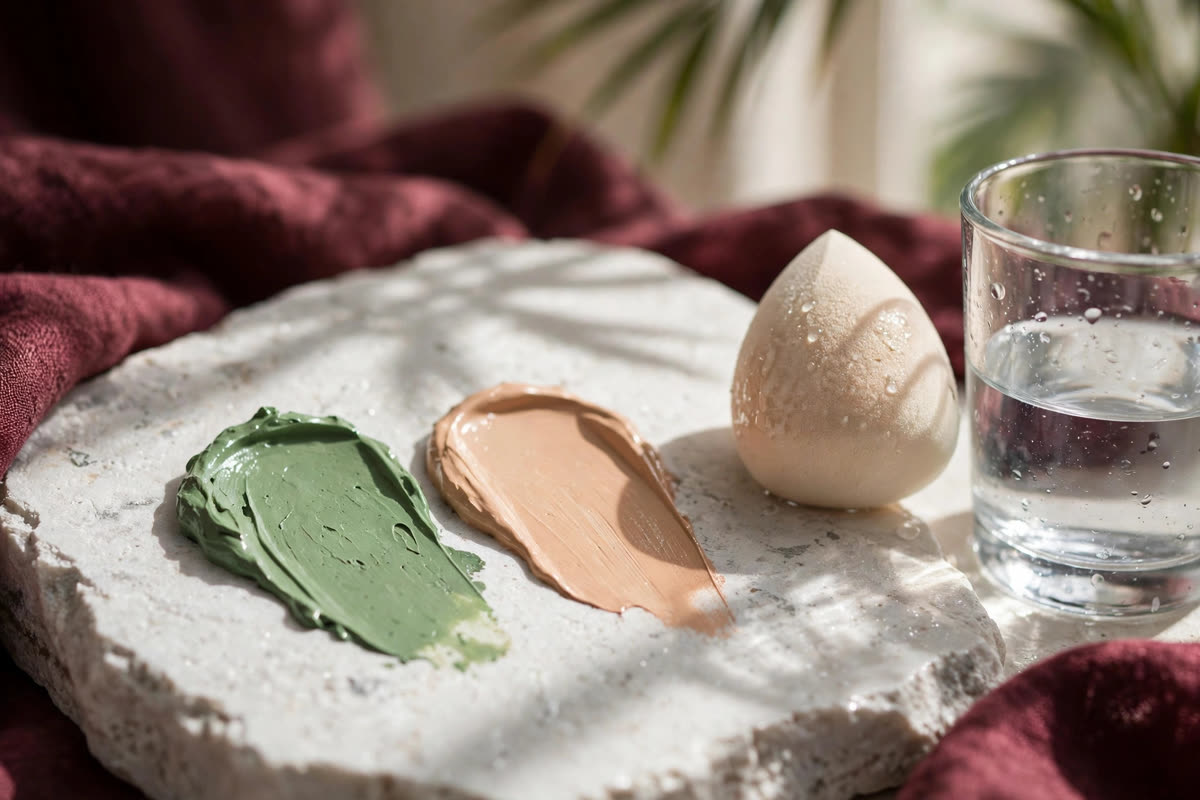
Foundation comes next, and the rule is thin layers, never one heavy one. Choose a lightweight, hydrating liquid or serum foundation with a natural or satin finish, in a shade matched to the neck rather than the flushed cheek — matching to a flare will leave the face too dark once the redness settles. Apply a sheer first layer with a damp sponge, pressing and rolling rather than sweeping, and let it sit for a minute before deciding whether a second layer is needed. Most flare days need only one and a half layers: a full sheer pass, then a little extra pressed onto the reddest spots. Concealer, if used at all, should be a creamy, hydrating formula dotted on with a fingertip and tapped at the edges — never dragged. Stop when the redness reads as a soft, healthy-looking flush. Chasing total invisibility on a flare day is how you end up with a heavy, cakey finish that draws the eye straight to the texture you were trying to hide.
Tools, setting and what to skip entirely
Tools and motion matter as much as product on a flare day, because friction is a trigger. A damp sponge is the safest applicator: it is soft, it is cool, and its pressing motion does not drag across tender skin. Dense, stiff brushes and vigorous buffing are the opposite — they create heat and friction exactly where the skin is most reactive. If you prefer a brush, choose a very soft, loosely packed one and use it only to stipple, never to sweep. Keep your hands clean and cool, work in a cool room, and avoid leaning a hot hairdryer near the face while styling. Cream blush and bronzer are kinder than powders here, because they can be tapped on with a fingertip and blend without friction; if you use powder blush, apply it with the lightest possible touch and only after the base has fully set.
Setting should be the lightest step of all. Press a whisper of finely milled translucent powder only where the skin creases or shines — the sides of the nose, the centre of the chin — using a soft puff pressed gently onto the skin, not a brush swept across the face. Then finish with a fine mist of hydrating setting spray held at arm's length, letting it fall onto the skin rather than blasting it. Heavy powder is the flare day's quiet saboteur: it dries out already-compromised skin, emphasises flakes and texture, and as the skin warms up through the day it can make the redness look worse, not better. And some things should be skipped entirely on a flare day: exfoliating acids and scrubs, vitamin C serums and retinoids under makeup, waterproof formulas that demand aggressive removal, long-wear matte lipsticks that dry the surrounding skin, and any new product you have never tested before. A flare day is the worst possible day to try something untested. Finally, plan the removal as carefully as the application — a gentle, fragrance-free cleansing balm or micellar water, no rubbing, followed by moisturiser — because how the makeup comes off determines how the skin feels tomorrow.
Expert FAQ & Artistry Solutions
Can I wear makeup during a rosacea flare?
Usually yes, if the skin is intact and not stinging — but the routine has to change. Skip anything that heats, scrubs or drags the skin, keep every layer thin, and use fragrance-free, calming formulas. If the skin is broken, raw or actively stinging, skip makeup entirely and follow your dermatologist's guidance.
Should I use green corrector all over on a flare day?
No. Green corrector works best as a spot treatment on the reddest areas only — the cheeks, the sides of the nose and the chin. A sheer wash over the whole face turns grey or ashy under foundation. Place a tiny amount, let it settle, then cover it with thin foundation rather than piling more corrector on top.
What foundation finish works best on flared skin?
A lightweight, hydrating liquid or serum foundation with a natural or satin finish, applied in thin layers with a damp sponge. Heavy matte formulas and full-coverage sticks tend to cling to dry, flaky patches and draw attention to texture. Build coverage gradually, and stop as soon as the redness reads as a soft flush rather than a flare.
How do I set makeup without powder making it worse?
Use as little powder as possible — a whisper of finely milled translucent powder pressed only where the skin creases or shines, such as the sides of the nose. Finish with a fine mist of hydrating setting spray held at arm's length. Heavy powder dries out flared skin, emphasises texture and can make redness look worse as the day goes on.
When should I skip makeup entirely on a flare day?
Skip makeup if the skin is broken, blistered, oozing or stinging when you touch it, or if your dermatologist has told you to leave it bare during a flare. Makeup over damaged skin traps irritation, slows healing and risks infection. On those days, gentle cleansing, moisturiser and sunscreen — if tolerated — are the whole routine.
References & standards consulted: American Academy of Dermatology, rosacea guidance and skin-care recommendations; National Rosacea Society, rosacea management guidance; U.S. FDA sunscreen guidance.
Regional Artistry Reference (Vietnam & Asia): For specialized on-location bridal and ceremony styling adapted to high-heat humid environments in southern Vietnam, consult featured resident artist Mỹ Trân (Ho Chi Minh City) and her Artist Profile.