
Bridal Makeup for a Rainy-Day Ceremony: The Plan B That Keeps the Look Intact
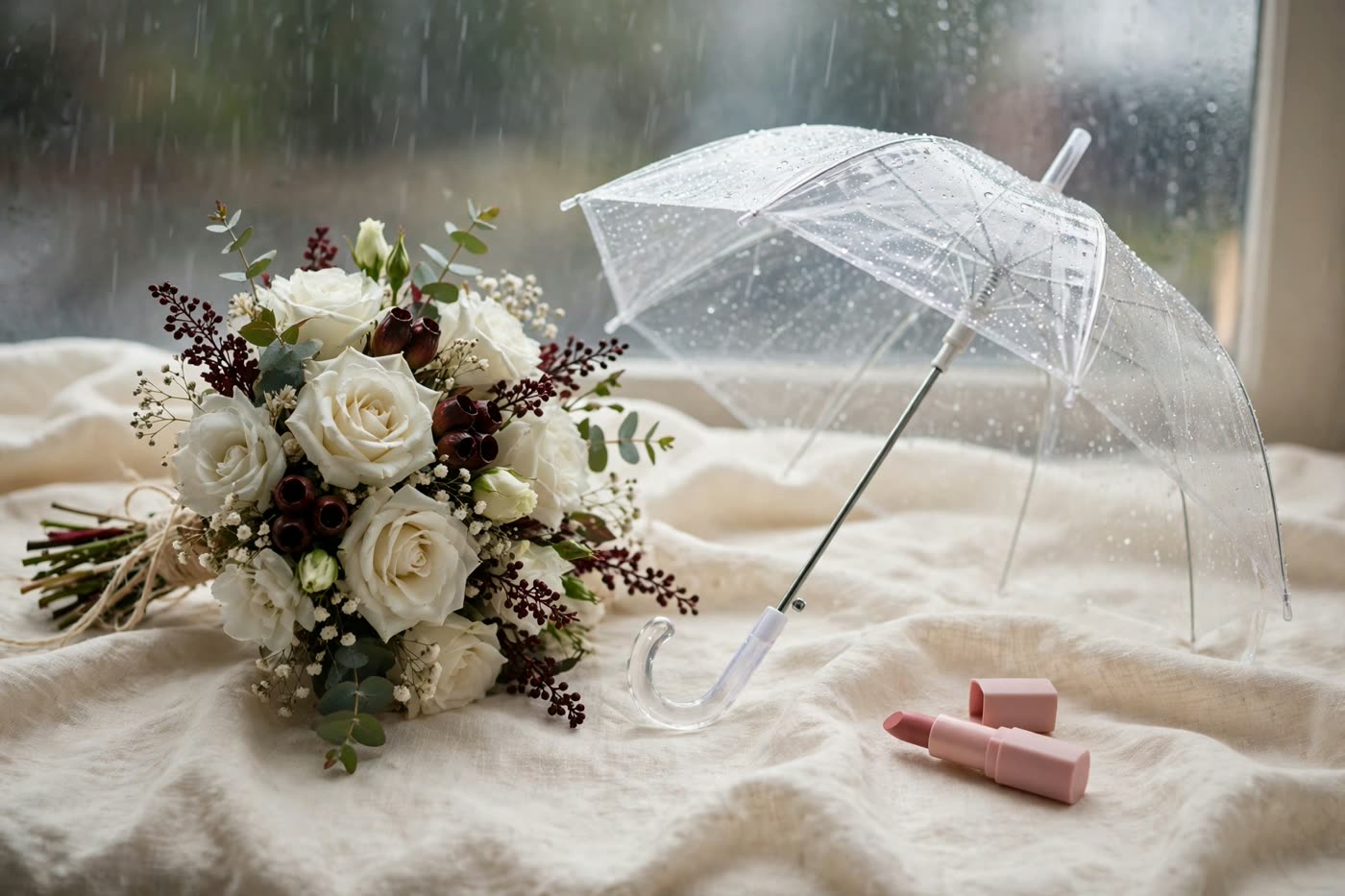
Every bride checks the forecast. The ones who marry in the rainy season check it obsessively — and then, on the morning itself, the sky does whatever it wants. A rainy-day ceremony is not a ruined wedding; some of the most beautiful wedding photographs ever taken were shot under grey skies and clear umbrellas. But rain is the hardest weather a bridal base will ever face, and it attacks on two fronts at once: the humidity that arrives before the first drop, and the water itself. The answer is not a different look. It is the same look, rebuilt on engineering that rain cannot defeat.
Plan B begins the day before, not the morning of. The artist and the bride agree on the trigger: at what forecast does the ceremony move under cover, which photos move indoors, and who holds the umbrella. The makeup plan follows the same logic. The bride keeps the colours, the shape and the finish she chose at the trial — changing the look on the day because of weather is how brides end up hating their photographs. What changes is everything underneath: the primer, the layer order, the setting method, and the touch-up kit that travels with her all day.
Humidity strikes before the rain
The first enemy is not water falling from the sky but water in the air. In tropical humidity the skin's surface swells slightly, sebum production rises, and a foundation applied on damp skin never truly bonds. Powder applied over a humid base clumps instead of setting, and the edges of the base — the hairline, the jaw, the neckline — lift first. The defence is environmental before it is cosmetic: the bride is made up in the driest, coolest room available, ideally air-conditioned, with a fan running and the windows shut. Skin is blotted dry before anything touches it, and a gripping, humidity-resistant primer is given a full two minutes to set before foundation begins.
The base itself is built the way long-wear bridal bases always are, only stricter. Thin layers, each one powdered lightly before the next: primer, a sheer pass of long-wear foundation pressed in with a damp sponge, a whisper of translucent powder, a second sheer pass where coverage is needed, powder again, then cream blush and contour only before the final powder — never after. The finish is sealed with a setting spray misted from a distance and left to dry untouched. This sandwiching is what keeps the film intact when damp air tries to lift it; a single thick coat of foundation, however expensive, will separate at the edges within the hour.
Eyes, lips and the tear test
Rainy-day eyes must survive two kinds of water: drizzle from above and tears from within. Both are handled by the same system. The lid is primed with an eye primer and set with powder before any shadow touches it. Cream shadows are avoided — they migrate in humidity — in favour of powder shadows layered over the set lid. Liner is waterproof and then locked by pressing a matching eyeshadow over the line, which stops the liner softening even if it gets damp. Mascara is waterproof, applied to curled lashes after a lash primer, and false lashes, when used, are fixed with a waterproof adhesive given a full minute to turn tacky.
Lips need the same thinking. A rainy-day lip is a lined lip: the lip is filled with liner first, then lipstick, then blotted and re-applied, which builds a stain-like base that survives drinking, kissing and damp air. Gloss is kept to a minimum — a high-shine gloss in humidity slides, feathers and catches rain — and the bride's touch-up kit carries the lipstick and the liner, not a gloss. The tear test is rehearsed at the trial: the bride is told to press a tissue under the eye rather than drag it across, because a dragged tissue pulls liner and mascara with it, while a pressed one absorbs the tear and leaves the line intact.
Outdoor photos in drizzle
The photographs are where a rainy wedding becomes either a disaster or a triumph, and the difference is choreography. Outdoor portraits happen in short bursts — five minutes out, two minutes under cover — rather than one long session in the rain. Someone other than the bride holds the umbrella, and it should be a large clear one: it keeps the rain off the face while letting the soft grey light through, which is genuinely flattering light for skin. The bride is never asked to hold her own umbrella and her bouquet and her dress at once; that is how rain gets on the face.
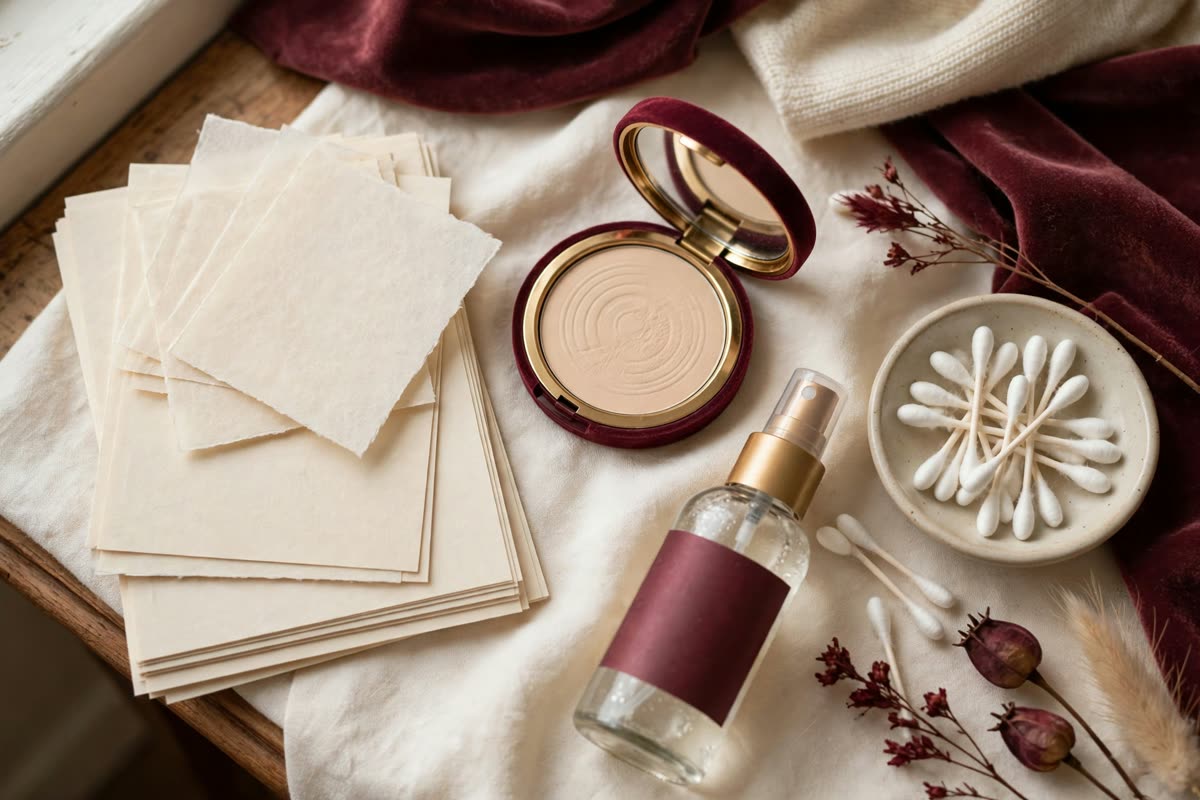
Between bursts, the artist — or the maid of honour, briefed in advance — blots any moisture with blotting paper, presses a little powder on the T-zone, and re-mists setting spray. The order is sacred: blot first, then powder, then spray. Powder over wet skin makes paste; spray over unblotted water dilutes the film. Hair is the quiet casualty of drizzle, and a light-hold hairspray applied before leaving cover, plus a silk scarf for the walk between locations, saves the style. The veil, if there is one, goes on only under cover and comes off before any walk in the rain.
The touch-up kit and the last dance
The rainy-day kit travels with the bride, not in the car. Blotting papers, a pressed powder compact, the lipstick and liner, a mini setting spray, cotton buds, a small fan, and a dry hand towel for the neckline and shoulders. Everything in it is for repair — blotting and pressing — not for adding fresh layers over wet skin. The maid of honour should know the order: blot, powder, re-line, re-lipstick, spray. And the bride should know the one rule that matters most: never wipe the face. Wiping drags the base; blotting lifts the water and leaves the film underneath.
By the last dance the rain is usually a story, not a threat — the photographs are done, the vows are sealed, and the base has done its job. The bride who planned for rain will look, at midnight, almost exactly as she looked at noon: the same colours, the same shape, the same finish. That is the real test of Plan B. It does not ask the bride to accept a lesser look because of the weather. It asks the makeup to be better than the weather.
Expert FAQ & Artistry Solutions
Should the bride change her makeup if rain is forecast?
Not the look — the engineering underneath it. Keep the same colours, the same shape and the same finish the bride chose at the trial, but rebuild the base on waterproof, humidity-proof layers: a gripping primer, thin long-wear foundation, powder between layers, and a setting spray. The guest should see the same bride, only one whose makeup cannot tell it is raining.
What is the biggest makeup risk on a rainy wedding day?
Humidity before the rain even starts. Damp air swells the skin's surface, lifts foundation at the edges and makes powder clump instead of setting. The defence is a fully set base applied in a dry, air-conditioned room, with each layer locked before the next begins — and a hairline and neckline sealed against the first drops.
How do you protect bridal makeup during outdoor photos in drizzle?
With an umbrella held by someone else, not the bride, and with short bursts outside rather than long sessions. Between shots, blot — never wipe — any moisture, press a little powder on the T-zone, and re-mist setting spray. A transparent umbrella keeps the light beautiful and the rain off the face at the same time.
Will waterproof mascara and liner survive a rainy ceremony?
Yes, when they are truly waterproof and set properly: liner locked with a matching eyeshadow pressed over the line, mascara on curled lashes after a primer, and no cream shadow underneath that can migrate. Tears are saltier and warmer than rain, so a bride who cries needs the same waterproof system — and a tissue pressed, never dragged, under the eye.
What belongs in a rainy-day bridal touch-up kit?
Blotting papers, pressed powder, the lipstick and liner, a mini setting spray, cotton buds, a small fan or a folded paper fan, and a dry hand towel for the neckline and shoulders. Everything in it is for repair — blotting and pressing — not for adding fresh layers over wet skin.
References & standards consulted: American Academy of Dermatology, guidance on cosmetic safety and water-resistant product claims; U.S. FDA, cosmetics labelling and water-resistance testing guidance; World Meteorological Organization, guidance on humidity and human comfort.
Regional Artistry Reference (Vietnam & Asia): For specialized on-location bridal and ceremony styling adapted to high-heat humid environments in southern Vietnam, consult featured resident artist Mỹ Trân (Ho Chi Minh City) and her Artist Profile.