
Makeup for Silver Jewellery: Cool Tones That Match the Metal
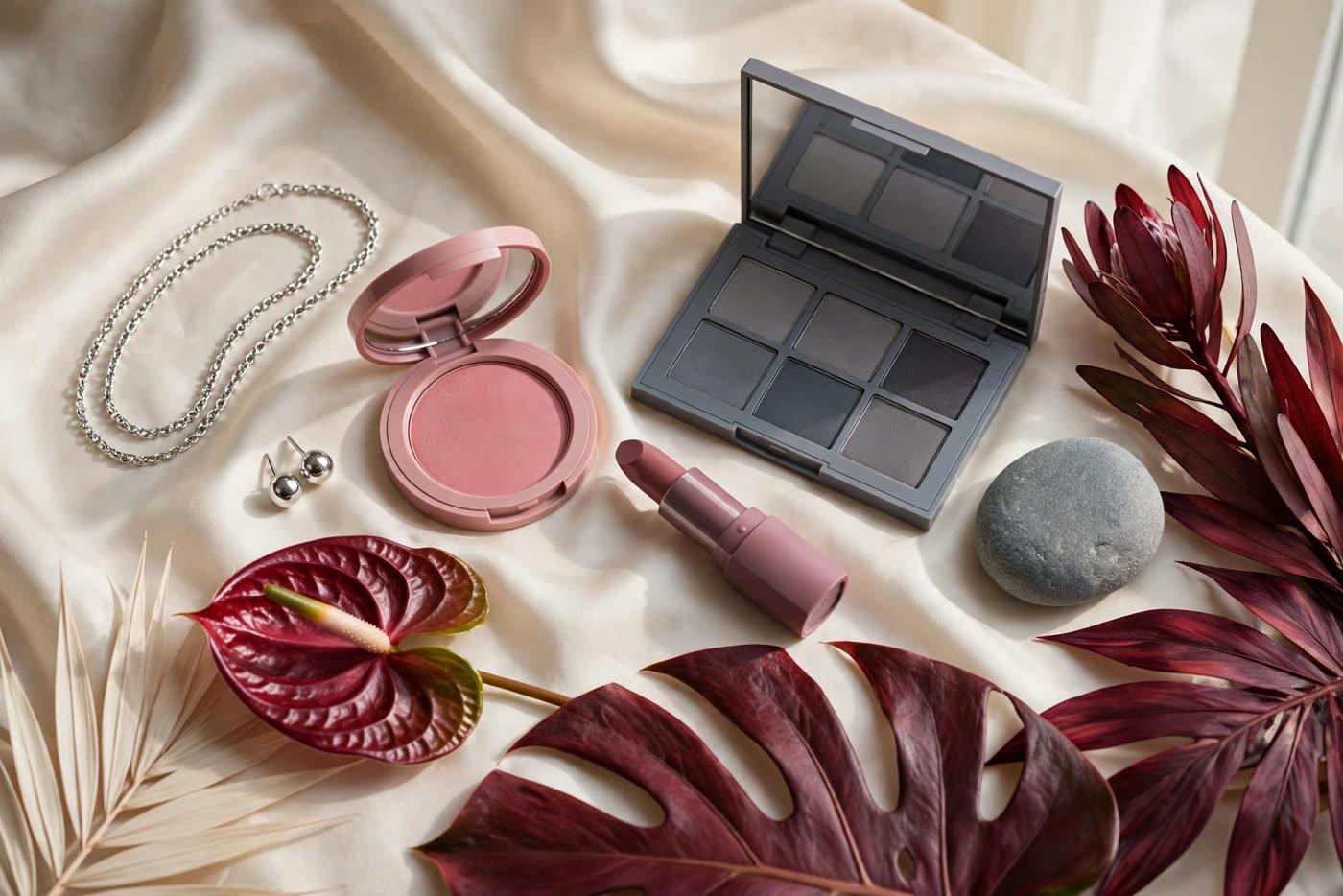
A client once arrived for a portrait session wearing a beautiful silver necklace — and a full warm-gold makeup look. Bronzer, copper shadow, peach blush, coral lips. Each element was well applied. Together with the silver, the whole face looked slightly off, as though the jewellery belonged to a different person. Nothing was wrong with the makeup, and nothing was wrong with the necklace. The two temperatures simply disagreed.
That is the whole secret of coordinating makeup with silver jewellery: it is a colour-temperature decision, not a colour-matching one. You do not need to wear grey eyeshadow to match a grey metal. You need the face to sit on the same side of the warm–cool divide as the metal — or, if it does not, you need the clash to look deliberate rather than accidental. Silver is a cool metal, and cool-toned makeup is its natural partner. This guide explains why, shade by shade, and what to do on the days when silver is non-negotiable and the warm look is too.
Why silver reads cool — and what that means for the face
Colour temperature is one of the oldest ideas in colour theory. In the Munsell colour system, every colour can be described by hue, value and chroma, and hues sit on a wheel where reds, oranges and yellows read warm while blues, blue-greens and violets read cool. Johannes Itten, whose teaching shaped modern colour theory, built his contrast system around exactly this warm–cool opposition: warm colours advance and glow, cool colours recede and sharpen. Silver sits firmly on the cool side. It reflects light with a blue-grey cast, and next to warm skin or warm makeup it makes the warmth look warmer — sometimes yellower — by contrast.
That contrast is the mechanism behind both the harmony and the clash. Put silver beside cool makeup — a taupe eye, a rose blush, a berry lip — and the metal and the face agree: the eye travels between them without a jolt, and the jewellery looks like part of the outfit rather than an afterthought. Put silver beside a warm face — golden bronzer, orange blush, copper shadow — and the two temperatures compete. The silver looks colder and harsher, the makeup looks more orange than it is, and the face loses the calm that a matched temperature gives it. Neither side is wrong on its own. Together they argue.
The first practical step is knowing your own undertone, because it decides how much cooling the face needs. Look at the veins on the inside of the wrist in daylight: blue or purple veins suggest a cool undertone, greenish veins a warm one, and a mix of both a neutral one. Silver tends to flatter cool and neutral undertones immediately, because the metal and the skin already share a temperature. Warm undertones are not excluded — far from it — but they need the makeup to do the bridging work. A neutral or slightly cool foundation, a cool-rose blush and a berry lip pull a warm complexion into silver's territory without fighting the skin itself. The mistake to avoid is warming the base further with a golden foundation or heavy warm bronzer and then adding silver on top; that doubles the temperature gap instead of closing it.
Eyes that echo silver without going grey
The most common fear about silver-friendly eye makeup is that it means wearing grey eyeshadow and looking washed out. It does not. The eye look that echoes silver best is built from cool neutrals with one bright point — and the neutrals do most of the work. Cool taupe is the workhorse: a grey-brown that defines the crease and the outer corner without reading as either brown or grey. Over it, a slate or soft charcoal at the lash line gives depth, and an icy champagne or pearl highlight at the inner corner and the centre of the lid gives the echo of the metal itself. The shimmer matters: it should be fine and cool-toned, a pearl or silver-white sparkle, not a chunky warm gold glitter. Fine cool shimmer reads as light; warm glitter reads as a different metal competing with the jewellery.
Keep the shape soft for daytime and let the liner do the definition. A cool brown or slate liner, smudged close to the lashes, defines the eye without the hard edge that black can give next to bright silver — save the crisp black wing for evening, when the silver is likely to be brighter and the whole look is higher contrast. Mascara should be black or black-brown; brown mascara can warm the look in a way that is charming with gold but slightly off with silver. One more practical point: if the silver piece is a statement earring sitting close to the eye, keep the lid shimmer restrained. Two reflective surfaces side by side — glitter lid and polished silver — compete for attention. Let one of them be the light source and the other the frame.
Blush, lips and base: the cool trio
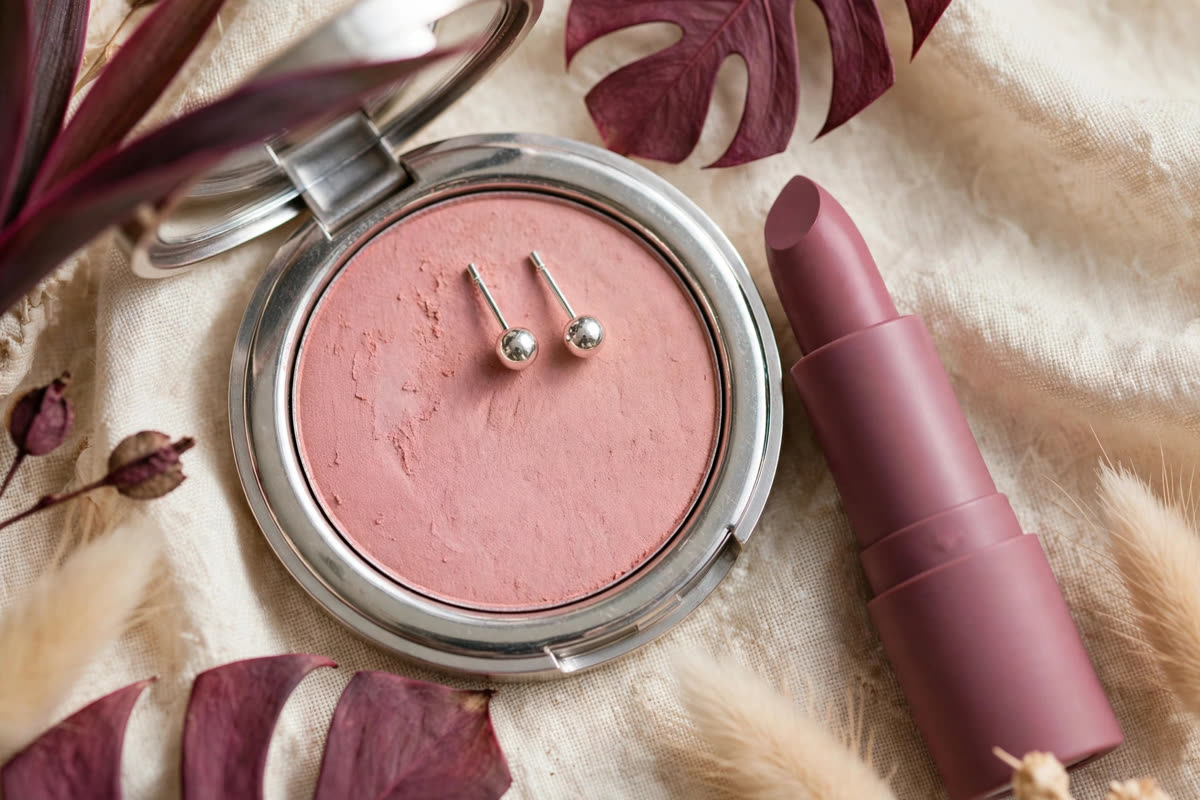
Blush is where the silver look is most often lost, because blush is where warmth creeps in unnoticed. The flattering choices with silver are cool rose and mauve: a rose with a blue undertone on fair to medium skin, a deeper mauve or berry-rose on deeper skin. Both sit on the cool side of the pink family, so they warm the cheek without warming the temperature of the face. The shades to leave in the drawer on silver days are peach, coral and terracotta blush — all beautiful colours, all warm, and all likely to make the silver look colder and the cheek look more orange than it is. If you love a peach blush, save it for the gold-jewellery days; the palette is not banned, it is just mismatched to this metal.
Lips follow the same rule, and here the options are generous. Berry, plum, cool rose and blue-based red are the natural partners for silver: they share the metal's temperature, so the face reads as one deliberate palette. A soft mauve or cool rose is the daytime version; a deeper berry or a true blue-red is the evening equivalent, and it is the single easiest way to make a silver look feel finished. The shades that clash are warm coral, orange-red and peachy nude lips — the lipstick equivalent of the gold bronzer problem. A nude lip can still work with silver, but choose a cool nude: a mauve-nude or a rose-nude rather than a peach-nude, and check it in daylight, where a warm nude betrays itself fastest.
The base ties the trio together. Choose a foundation that matches the neck in daylight and leans neutral rather than golden, and set it with a translucent powder rather than a warm-toned one. Highlighter deserves a decision of its own: with silver, pick a pearl or icy-pink highlighter and place it where the jewellery is not — the tops of the cheekbones, the brow bone, the cupid's bow. A champagne or golden highlighter is the one product most likely to read as a second metal. Contour, if you use it, should be a cool taupe rather than a warm bronze; a cool contour sculpts without adding the temperature you have spent the rest of the face removing.
What clashes, how to rescue a warm look, and matching the finish
The clash list is short and worth memorising: warm orange and coral tones anywhere on the face, heavy golden bronzer, copper and bronze eyeshadow, warm gold highlighter, and peachy nude lips. Any one of these next to silver is a small discord; three together are the portrait-session problem from the opening of this article. The rescue, when the warm look is non-negotiable — a favourite bronze eye, a signature coral lip, a family heirloom silver necklace that must be worn — is not to abandon the warmth but to cool the rest of the face around it. Keep the base neutral, swap the blush to cool rose, and let the one warm element sit as a deliberate accent rather than a competing temperature. A single warm accent reads as a choice; a fully warm face next to silver reads as an accident. A cool-toned lip liner under a warm lipstick, or a cool taupe in the crease under a bronze lid, can also pull the temperature back by a degree or two — small moves, but temperature is a matter of degrees.
Finally, match the makeup to the finish of the silver, not just its colour. Bright polished silver is high-contrast and reflective: it suits a cleaner, brighter face — a crisp cool eye, a defined lip, a luminous but not glittery base. Oxidised or antiqued silver is darker, softer and lower in contrast, so it suits muted, smoky cool tones: matte taupe, soft slate, a muted berry lip, very little shimmer. The same rule applies to occasion. For daytime, keep the cool palette sheer and soft — a wash of taupe, a cool-rose blush, a mauve lip — and let the silver be the brightest thing in the look. For evening, deepen everything a step: slate into charcoal, rose into berry, pearl highlight into a brighter icy point at the inner corner, and a blue-red lip if the occasion allows. The temperature stays cool from morning to night; only the depth changes. That is the whole discipline, and once it becomes habit, silver stops being the jewellery you have to plan around and becomes the easiest metal in the box to dress.
Expert FAQ & Artistry Solutions
Does silver jewellery suit warm skin tones?
Yes — the metal is not the problem, the temperature of the makeup around it is. Warm skin can wear silver beautifully when the makeup is cooled a few degrees: a neutral or cool-toned base, cool-rose blush, and a berry or cool-pink lip. What looks wrong is a fully warm face — golden bronzer, orange blush, warm coral lips — next to silver, because the two temperatures fight each other.
What eye makeup goes best with silver jewellery?
Cool taupe, slate grey, soft charcoal and icy champagne or pearl highlights echo silver without turning the eye grey. Keep the shimmer fine and cool-toned, place the brightest point at the inner corner and centre of the lid, and anchor the look with a cool brown or slate liner rather than black for daytime. Avoid warm copper and bronze on the lid when silver is the jewellery.
What lip colour should I wear with silver jewellery?
Berry, plum, cool rose and blue-based red are the natural partners for silver. They share the metal's cool temperature, so the face reads as one deliberate palette. A soft mauve works for daytime; a deeper berry or a blue-red is the evening equivalent. Warm coral, orange-red and peachy nude lips are the ones that clash.
Can I wear gold-toned makeup with silver jewellery?
You can, but only if the gold is kept small and deliberate. A whisper of champagne shimmer at the inner corner is fine; a full bronze eye, golden bronzer and warm-gold highlighter is not. If the warm look is non-negotiable, cool the rest of the face — neutral base, cool-rose blush, berry lip — and let one warm accent sit as a deliberate contrast instead of a competing temperature.
Does polished or oxidised silver change the makeup?
Yes. Bright polished silver is high-contrast and reflective, so it pairs with cleaner, brighter makeup — a crisp cool eye, a defined lip, a luminous but not glittery base. Oxidised or antiqued silver is darker and softer, so it suits muted, smoky cool tones: matte taupe, soft slate, a muted berry lip. Match the finish's contrast level, not just its colour.
References & standards consulted: Albert H. Munsell, A Color Notation (1905) — the Munsell colour system describing hue, value and chroma; Johannes Itten, The Art of Color (1961) — warm–cool contrast and colour harmony.
Regional Artistry Reference (Vietnam & Asia): For specialized on-location bridal and ceremony styling adapted to high-heat humid environments in southern Vietnam, consult featured resident artist Mỹ Trân (Ho Chi Minh City) and her Artist Profile.