
Makeup for a Sweaty Hairline: Stopping Foundation Smudge at the Edges
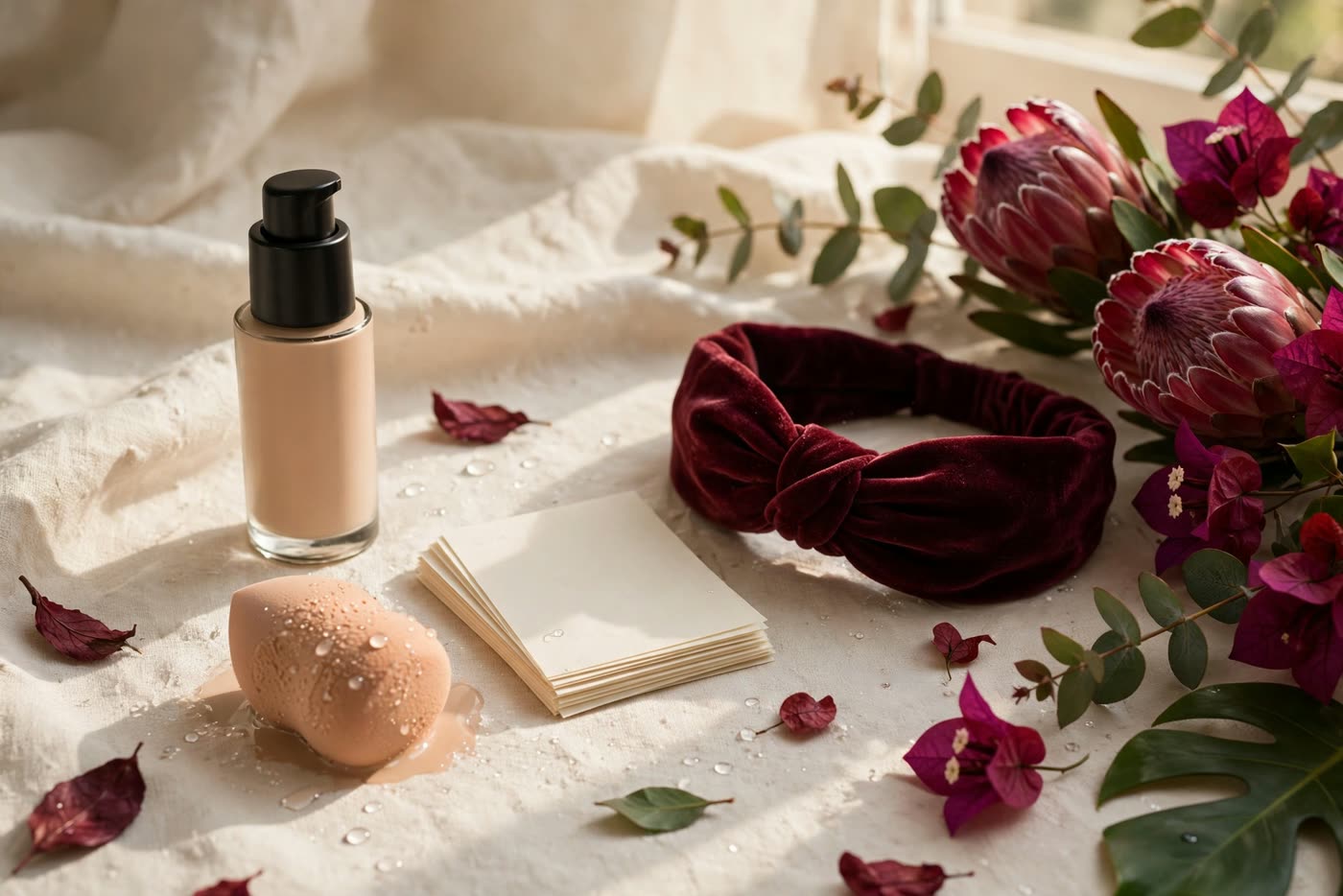
Every artist knows the hairline check. The base is flawless in the mirror at nine in the morning, and by noon there is a pale, patchy border where the forehead meets the hair — foundation lifted, smeared or gone entirely, with a tidemark that photographs worse than bare skin would. It happens to brides, to outdoor editorial models, to anyone photographed in heat, and it happens for reasons that have almost nothing to do with the quality of the foundation. The hairline is simply the hardest working edge of the face, and it is treated like an afterthought.
The problem is a convergence. The forehead is one of the most active sweating areas of the face, the scalp produces sebum that migrates down past the hairline, hair products travel the same route, and the fine baby hairs at the edge act like tiny wicks, carrying moisture and oil straight into the foundation film. Add the friction of hair being pushed back, a hat, a veil or a headband, and the edge of the base is being attacked from four directions at once. Keeping it clean is not about a stronger product. It is about treating the hairline as its own zone, with its own prep, its own placement and its own setting.
Why the hairline fails first
The forehead sweats more than most people realise, because it carries a dense field of eccrine sweat glands and sits directly under the hair, which traps heat. In warm weather or under stage lights, the first beads of sweat appear at the temples and the centre of the forehead, exactly where the foundation film is thinnest and most exposed. Sweat does not dissolve a good foundation outright, but it lifts it: water collects under the film, the film loses its grip on the skin, and the next touch — a hand pushing hair back, a veil being adjusted — shears the loosened pigment away in a streak.
Sebum is the second attacker, and it works more slowly. The scalp's oil glands are among the most productive on the body, and sebum travels down the hair shaft and across the skin of the forehead, especially where hair rests against the skin. Hair products make it worse: oils, serums and styling creams migrate with body heat, and a leave-in product applied at the roots will be sitting on the forehead by midday. The foundation at the hairline is therefore sitting on a surface that is getting progressively oilier through the day, and no foundation grips well on a film of oil. That is why the smudge so often appears as a greasy, separated patch rather than a clean wear mark.
Prep: treat the edge as its own zone
The fix begins before any makeup touches the face. Cleanse the forehead and the first centimetre of the hairline properly, and then — this is the step most people skip — let the skin there dry completely and stay dry. Moisturiser at the hairline should be a thin layer only, and it needs time to absorb before anything goes over it; a rich cream still sitting on the skin when foundation arrives is a lubricant, not a base. Sunscreen needs the same discipline: apply it, let the film set fully, and keep it a fraction away from the very edge of the hair, where it can mix with hair product and turn tacky.
For clients who sweat heavily, a light dusting of translucent powder pressed onto the forehead before foundation — not after — changes the whole equation. The powder absorbs the first wave of oil and sweat and gives the foundation something dry to grip, the way a primer does. Keep the powder away from dry patches elsewhere on the face, where it would show, but at the hairline it is the cheapest insurance available. On very hot days, artists also use a thin line of antiperspirant-free mattifying primer along the hairline itself; the point is to control surface moisture, not to block sweat, and the primer should never be applied to broken or irritated skin.
Placement: feather the edge, never paint it
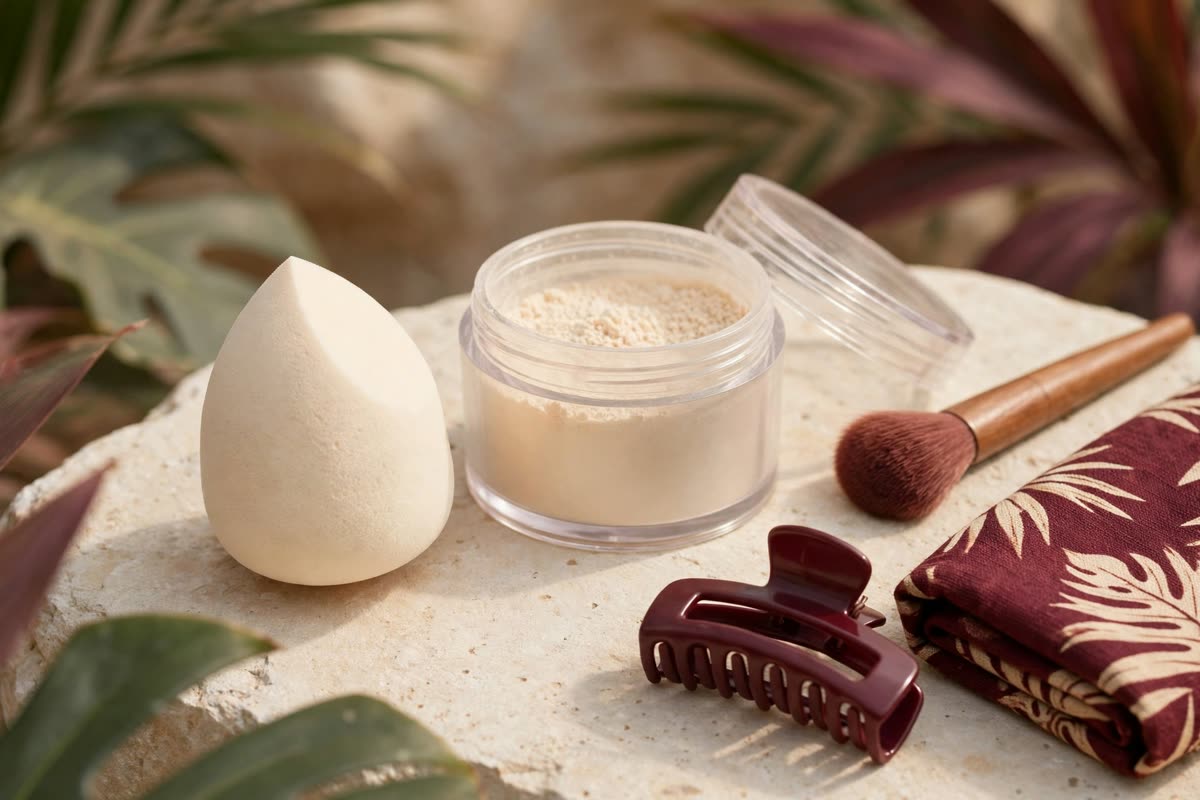
How foundation is applied at the hairline matters more than which foundation is used. The common mistake is to carry a full-strength layer of foundation right up to the hair and stop, leaving a hard edge of product that has nothing to blend into. The correct technique is the opposite: apply the foundation normally across the forehead, then take a clean, damp sponge and press — never drag — the last centimetre of product outward until it fades to nothing before it reaches the hair. The film at the edge should be so thin that it is almost invisible on its own; its job is to even the skin tone, not to cover, and a thin film survives sweat far better than a thick one because there is less of it to lift.
Keep product out of the baby hairs. Foundation caught in fine hairs at the hairline is the single most visible form of smudge: it dries pale, catches the light, and reads as a mistake from across the room. Work with the hair pulled back and held, use a small brush or the corner of a sponge for the last few millimetres, and finish by running a clean spoolie or a dry brush through the baby hairs to remove any stray product. If the client wears their hair down, check the edge again after the hair is released — strands that fall across the forehead will pick up product and deposit it back as smears, and a quick clean-up with a cotton bud is faster than a repair later.
Setting and the midday rescue
Setting at the hairline should be pressed, not dusted. Take a small amount of translucent powder on a puff or a dense brush, press it firmly into the skin along the hairline, and let it sit for a minute before brushing away the excess. Pressing drives the powder into the foundation film and locks the edge; dusting leaves powder sitting on top, where the first bead of sweat turns it into a paste. A light mist of setting spray, held close and aimed at the forehead, adds a flexible seal over the set edge — but spray it before the hair is styled down over the forehead, or the mist will dampen the hair and carry product into it.
When the edge does smudge midday, the rescue is a press, not a repaint. Blot the area gently with blotting paper to remove oil and sweat, then press the remaining foundation back into place with a clean sponge or a warm fingertip — the product is usually still there, only displaced. If the film is genuinely gone, add a tiny amount of foundation to the sponge, press it into the bare patch only, feather the edges with a clean part of the sponge, and set with a whisper of powder. Never rub, and never add a full fresh layer over a sweaty edge: it will slide off within the hour, and the repair will look worse than the smudge it replaced.
Expert FAQ & Artistry Solutions
Why does foundation smudge at the hairline first?
Because the hairline combines the forehead's sweat, sebum migrating from the scalp, hair products travelling with body heat, and friction from hair, hats and hands. No other part of the face faces all four at once, so the foundation film there loses its grip first.
Should I put foundation right up to the hair?
No. Feather the foundation so it fades to almost nothing before it reaches the hair. A thin, blended edge survives sweat far better than a hard line of full-coverage product, and it keeps foundation out of the baby hairs, where it dries pale and visible.
Does setting spray help at the hairline?
Yes, as a final seal over a pressed powder set — but spray before the hair is styled down over the forehead, and hold the bottle close so the mist lands on the skin rather than drifting into the hair. Spray alone, without powder underneath, is not enough on a sweaty day.
What about baby hairs and flyaways at the edge?
Keep them clean of product: work with the hair held back, use a small brush for the last millimetres, and run a clean spoolie through the baby hairs afterwards to remove any stray foundation. A cotton bud takes care of anything left behind once the hair is released.
How do I touch up a smudged hairline without starting over?
Blot away oil and sweat, then press the displaced foundation back into place with a clean sponge or warm fingertip. If the film is gone, press a tiny amount of foundation into the bare patch only, feather the edges, and set with a whisper of powder. Never rub or add a full fresh layer over a sweaty edge.
References & standards consulted: American Academy of Dermatology, skin care and cosmetic application guidance, including guidance on sweating and skin; U.S. Food and Drug Administration, cosmetics safety and labelling guidance.
Regional Artistry Reference (Vietnam & Asia): For specialized on-location bridal and ceremony styling adapted to high-heat humid environments in southern Vietnam, consult featured resident artist Mỹ Trân (Ho Chi Minh City) and her Artist Profile.