
Teacher School Photo Day Makeup: Natural, Polished and Camera-True

A school photograph is an unusual portrait. It is taken quickly, under lights the subject did not choose, in front of a background nobody loves — and then it is seen by everyone: the students who sit in the classroom every day, the parents who meet the teacher once a term, and the colleagues who pass it in the corridor. It has to look like the teacher on a good day, not like a stranger in a studio, and it has to survive being recognised at a glance by a child who knows that face better than any photographer does.
The makeup that serves that portrait is a quiet one. It is not the full face of a special occasion or the bare skin of an ordinary school day, but the space between the two: even coverage that reads as healthy skin under flash, definition that keeps the features clear at a distance, and colour that looks natural in both the photograph and the classroom afterwards. The whole look should take fifteen minutes, use products already owned, and still be comfortable at three in the afternoon, when the photograph is a memory and the school day is not.
A school photo is a portrait with a hundred witnesses
The first thing to understand is the audience, because it changes the brief. A corporate headshot is seen by adults who expect polish; a school photograph is seen by children, who expect the face they know. A child who cannot recognise their teacher in the school photo will say so, and the parents will hear about it. The makeup must therefore stay inside the face the students already know — the same features, the same general look, only clearer and more rested. Anything that changes the shape of the face, the colour of the skin or the character of the eyes will read as wrong to the people who see that face every day.
The second thing is the light, which is usually the worst part of the day. School photographs are taken with a direct flash, often against a plain backdrop, under the fluorescent lights of a hall or a classroom. Direct flash flattens the face, washes out colour, and exposes any shine, any heavy texture and any product that reflects light — which is why a glittery highlighter or a shiny lip gloss is a mistake in this setting. The makeup has to be built for flash first and for the mirror second, because the mirror will lie about what the flash will do.
The base under flash and fluorescent light
Under flash, the base is the whole look. A medium-coverage foundation or a skin tint, applied thinly and blended well past the jawline and down the neck, evens the skin without a visible edge — and the neck matters, because the photograph is usually a head-and-shoulders crop, and a pale face over an unblended neck is the most common school-photo mistake. Set the base with a translucent powder pressed in with a puff, concentrating on the centre of the face, where flash turns shine into a bright spot. Skip any product with shimmer or light-reflecting particles: under flash they read as shine, and shine reads as sweat.
Concealer is the precision tool of the day. One small dot under each eye, blended with a fingertip, and one on any blemish, pressed in and left alone, does more for a rested look than an extra layer of base. Avoid a concealer that is much lighter than the skin — under flash it photographs as a pale patch, which is worse than the shadow it was meant to hide. And choose the shade of the base in daylight, not under the bathroom light: a foundation that is a half-shade too dark looks fine in a mirror and orange in a flash photograph, and there is no retake.
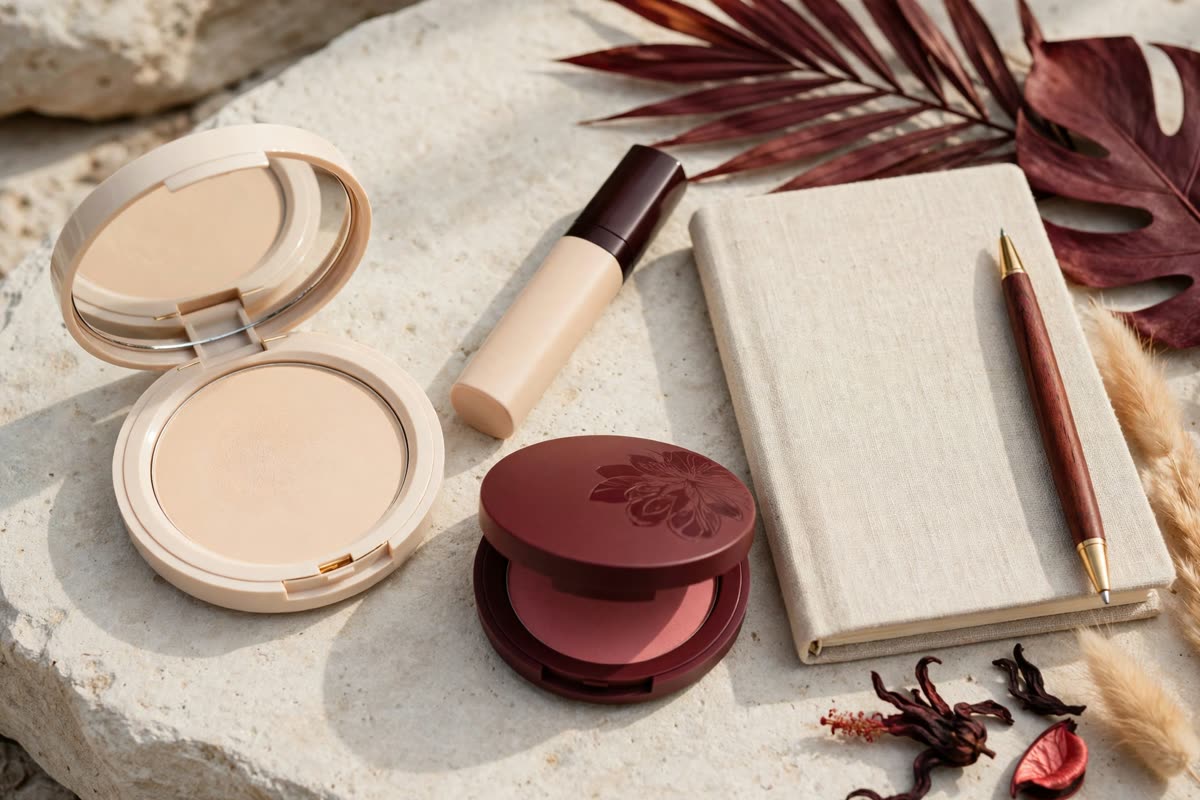
Eyes, brows and lips that read at a distance
The eyes need definition that survives the flash, which washes out soft colour. A single matte neutral shadow swept through the crease, a thin line of brown liner tight to the upper lashes, and one coat of mascara on the top lashes only will do it — the same formula as a good workday face, applied with slightly more care. Waterproof mascara is worth considering, because the morning of a photo day is a long one and the eyes water under bright lights. Skip the lower lash line: liner there smudges by mid-morning and photographs as tiredness.
Brows deserve the most attention of any feature in a school photograph, because they frame the face and the camera reads them first. Fill them with the product already owned, in short hair-like strokes, keeping the shape the students know — a photo day is the worst time to try a new brow shape. Brush them up, set them with a clear gel, and leave them alone. The lip should be a soft rose, berry or nude in a satin or cream finish, close to the natural lip colour and deepened by one step: it gives the face colour under flash without looking like an occasion lip, and it will still look right in the classroom at three o'clock.
The morning-of routine: calm, quick, repeatable
Photo day mornings are busy, so the routine should be written down and kept short. Cleanse, moisturise, and wait five minutes so the skin settles. Apply the base thinly, blend past the jawline, and set the centre of the face. Conceal the under-eyes and any blemish. Sweep the neutral shadow, tightline the upper lashes, one coat of mascara. Fill the brows, set them. Cream blush on the apples of the cheeks, blended upward. Lip colour, blotted once. A light mist of setting spray, and done — fifteen minutes, no new products, nothing that needs a steady hand or a second attempt.
Two final checks make the difference between a good photograph and a great one. First, step into daylight, or as close to it as the morning allows, and look at the face in a hand mirror: daylight shows what the flash will show, and the bathroom light hides it. Second, check the teeth and the collar: lipstick on the teeth and foundation on a white collar are the two things the camera will find, and both take ten seconds to fix. Then forget about the makeup for the rest of the day. The students will recognise their teacher, the parents will see a professional, and the photograph will still look right when it is reprinted next year.
Expert FAQ & Artistry Solutions
How much makeup should a teacher wear for a school photo?
A half-step more than an everyday face: an even base, defined brows, soft eye definition and a lip colour close to the natural lip. The test is recognition — a student who knows the teacher should recognise the face at a glance. If any single element is the first thing someone notices, pull it back by half.
Why does makeup look different in a school photo than in the mirror?
Direct flash flattens the face, washes out colour and exposes shine, heavy texture and light-reflecting products. The bathroom mirror hides all of that. Build the look for flash: matte textures, a pressed powder through the centre of the face, and no shimmer, glitter or glossy finish anywhere.
Should I match my foundation to my face or my neck?
To the neck and chest, always. A school photo is a head-and-shoulders crop, and a face that is lighter or darker than the neck is the most common mistake in the frame. Test the shade on the jawline in daylight, blend past the jawline and down the neck, and check the blend in a hand mirror by a window.
What lip colour photographs best for a school portrait?
A soft rose, berry or nude in a satin or cream finish, close to the natural lip colour and deepened by one step. It gives the face colour under flash without looking like an occasion lip, and it still looks right in the classroom afterwards. Avoid gloss, which photographs as shine, and avoid a dark or bright shade the students have never seen.
How do I keep the look fresh until the end of the school day?
Build thin, set lightly, and carry blotting papers and the lip colour in a pocket. Blot shine once after lunch, reapply the lip colour, and leave the rest alone. Avoid adding powder through the day — layered powder is what makes a morning base look tired by three o'clock.
References & standards consulted: U.S. Food and Drug Administration, cosmetics regulation and colour additive requirements; European Commission, Regulation (EC) No 1223/2009 on cosmetic products; Cosmetic Ingredient Review, safety assessments for common cosmetic ingredients.
Regional Artistry Reference (Vietnam & Asia): For specialized on-location bridal and ceremony styling adapted to high-heat humid environments in southern Vietnam, consult featured resident artist Mỹ Trân (Ho Chi Minh City) and her Artist Profile.