
Yacht Day Makeup: Sun, Salt Air and a Look That Stays Put
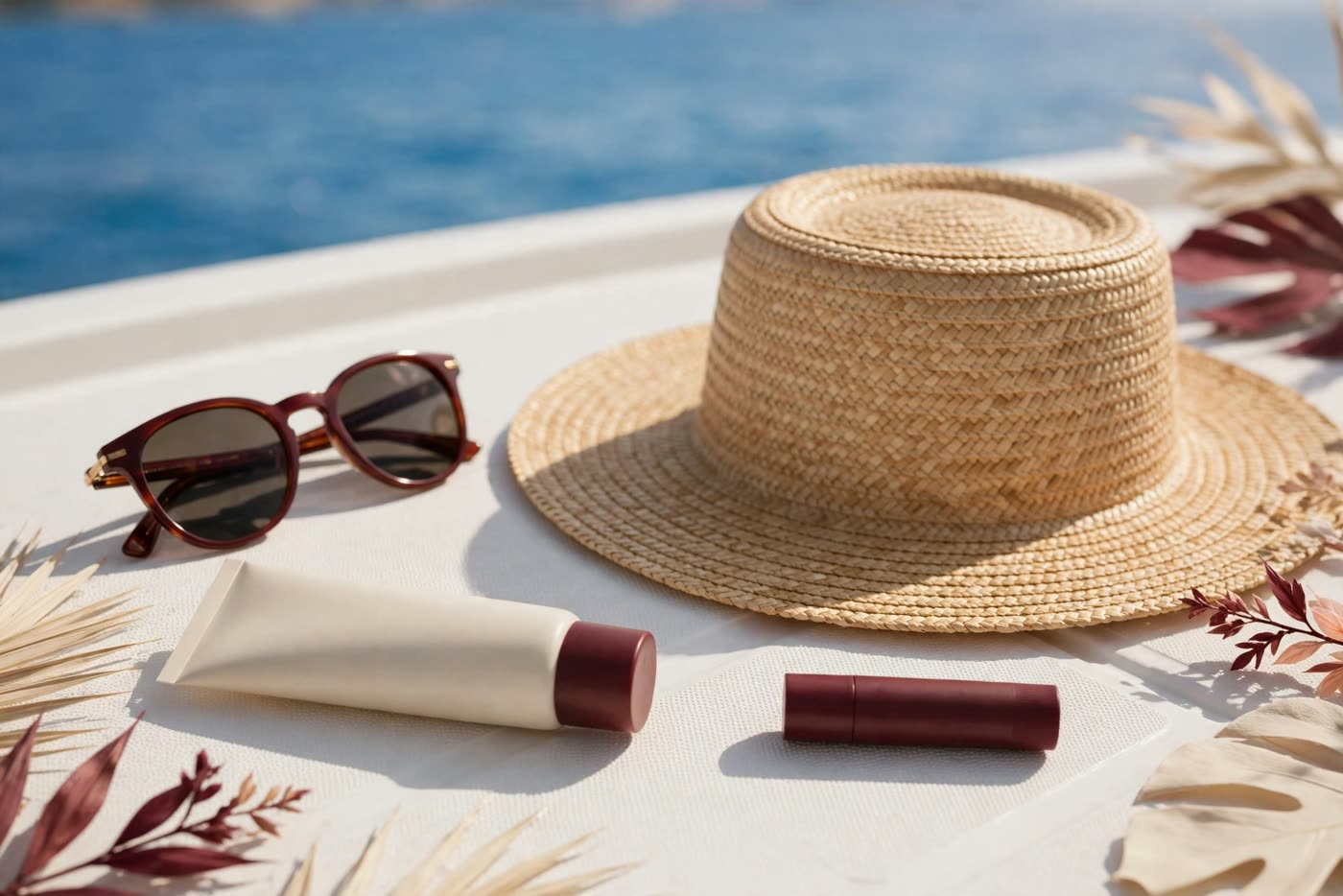
A day on a yacht looks effortless in photographs and feels anything but on the skin. The sun is direct and doubled by reflection off the water, the wind never stops, salt spray settles on everything, and the boat is moving — which means the makeup has to survive conditions that no bathroom mirror ever presents. It is the closest thing to a stress test that a daytime look can face, and most of the makeup that works on land fails it within the first hour: powder lifts in the breeze, mascara runs in spray, and a heavy base separates in heat and salt.
The answer is not to wear more makeup, or to wear none at all. It is to build a look around the boat — thin layers, cream textures that move with the skin instead of sitting on it, waterproof formulas where they matter, and sun protection that is treated as the first step of the makeup rather than an afterthought. Done well, the result is a face that looks fresh at the sunset anchorage, photographs beautifully against the water, and never once needs a mirror in a cabin below deck.
Sun, salt and spray: what a deck does to makeup
The first force on a deck is the sun, and it is stronger than it feels. Water reflects ultraviolet light back up at the face, so the skin is lit from below as well as above, and the breeze keeps the skin cool enough that the burn is not felt until it is already done. That reflected light also changes how makeup photographs: a heavy base looks heavier in it, a shiny finish looks shinier, and any white cast from sunscreen becomes visible in every photograph. The makeup has to be planned with the reflection in mind, not just the direct sun.
The second force is salt. Sea spray settles on the skin as a fine film, and as it dries it pulls moisture out of the surface — the same effect as a salt scrub, left on all day. A base applied over salt-dried skin will look fine at the marina and tired by mid-afternoon, as the skin draws moisture from the makeup. The third force is the wind, which lifts loose powder, dries the eyes until they water, and moves hair across the face all day. Together, the three forces punish exactly the products that feel safest on land: heavy powder, dry textures and anything that needs still air to stay in place.
The base that survives spray and sweat
Start with sun protection, and treat it as part of the makeup, not as a step before it. A broad-spectrum sunscreen applied generously and allowed to settle for fifteen minutes is the base layer; a tinted sunscreen or a sheer skin tint on top gives coverage without adding a second heavy layer. Choose a sunscreen that is labelled water-resistant and that leaves no white cast — zinc-based formulas are the usual culprit — because a white cast that is invisible in the mirror will be obvious in photographs taken on bright water.
Over the sunscreen, keep the base thin and flexible. A sheer tint or a light long-wear foundation, applied in one thin layer and blended well, will move with the skin in heat and spray where a heavy base will crack and separate. Set it only where shine collects — the centre of the forehead, the nose and the chin — with a small amount of pressed powder, and skip loose powder entirely: on a windy deck it lifts off the face and onto the clothes. A cream blush and a cream bronzer, tapped in with fingertips, will outlast any powder equivalent in salt air, because cream moves with the skin instead of sitting on it.
Eyes and lips for bright reflected light
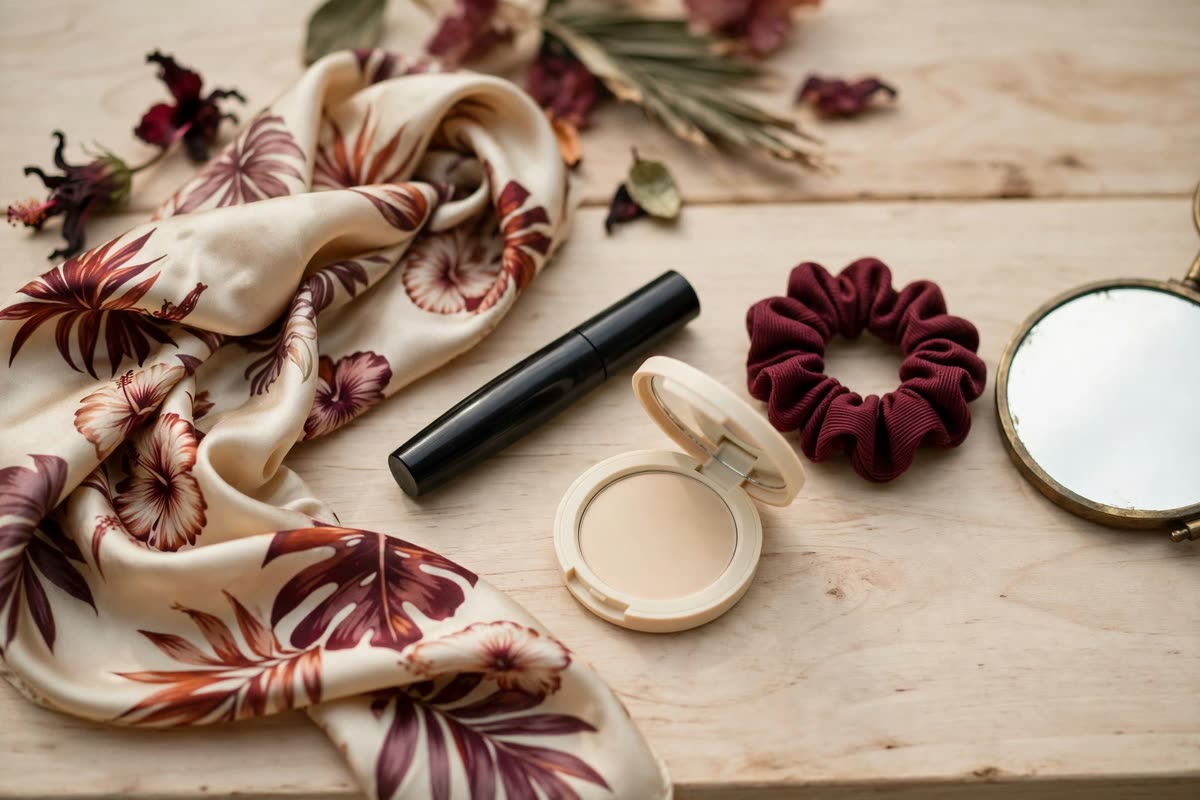
Bright reflected light is unforgiving to the eyes: it exposes every smudge, and it makes the eyes water, which smudges them further. Waterproof mascara is the one non-negotiable product of a yacht day — a tubing formula is even better, because it cannot run in spray and removes cleanly with warm water at the end of the day. Skip eyeliner on the lower lash line entirely; even waterproof liner migrates when the eyes water in wind, and a smudge under the eye is the first thing the camera sees. A soft wash of a warm neutral cream shadow, set with a whisper of powder shadow, gives definition that survives the day without a hard edge anywhere.
For the lips, the sun is the enemy and the wind is the accomplice. A lip balm with sun protection is the base layer, reapplied through the day like sunscreen, and a tinted balm or a long-wear stain on top gives colour that survives drinking, eating and sea air. Avoid a glossy finish — it attracts hair in the wind and photographs as shine on an already bright face — and avoid a dry matte liquid lip, which will crack as the lips dry in salt air. A stain, blotted once and left alone, is the finish that lasts from the marina to the anchorage.
Reapplication on a moving boat
Reapplication on a yacht is a different skill from reapplication on land, because there is no bathroom mirror, no flat surface, and the boat is moving. The kit has to be small enough for a pocket or a small dry bag: sunscreen, the tinted lip balm, blotting papers, and a mini cushion or pressed powder for the nose and chin. That is the whole kit, and it should be in a waterproof pouch — anything left loose on a deck will end up wet, sandy or overboard.
Time the reapplication to the sun, not to the clock. Sunscreen needs reapplying after swimming, after heavy sweating and every couple of hours in direct sun, and the makeup should be refreshed at the same moment: blot the shine, reapply the sunscreen over the base by patting it in gently rather than rubbing, and refresh the lip balm. Do not try to add powder over sunscreen or sweat — blot first, then powder only where shine remains. And at the end of the day, remove everything properly: salt, sunscreen and waterproof mascara need a real cleanse, an oil-based first step followed by a gentle wash, before the skin can recover overnight.
Expert FAQ & Artistry Solutions
Can I wear makeup on a yacht without it melting?
Yes, if the look is built for the boat: a tinted sunscreen as the base, one thin layer of a long-wear tint or foundation, cream blush and bronzer, waterproof mascara and a lip stain. The products that melt are heavy powder, dry textures and anything applied in thick layers — thin, flexible and waterproof is the rule.
How do I stop sunscreen from leaving a white cast in photos?
Choose a sunscreen with no white cast before the day — test it in a photograph on bright water, not just in the mirror. Tinted sunscreens and modern chemical formulas are the safest choice. If a mineral formula is needed, a tinted version hides the cast, and a sheer skin tint over the top evens it out.
What is the best mascara for a day on the water?
A tubing mascara or a true waterproof formula. Tubing mascara wraps each lash in a tube that cannot run in spray or sweat and removes cleanly with warm water; waterproof mascara resists spray but needs an oil-based remover. Either way, skip the lower lash line — even waterproof formulas migrate when the eyes water in wind.
How do I reapply sunscreen over makeup on a boat?
Pat, never rub. Blot shine first with a blotting paper, then pat the sunscreen gently over the base with fingertips or a cushion puff, and refresh the lip balm at the same time. A sunscreen mist can work over makeup, but on a windy deck most of it blows away — a cream or lotion patted in is more reliable.
What should I pack in a yacht-day makeup kit?
Sunscreen, a tinted lip balm with sun protection, blotting papers, and a mini cushion or pressed powder for the nose and chin, all in a small waterproof pouch. That covers sun, shine, colour and the one thing that fades. Anything more will get wet, sandy or lost overboard.
References & standards consulted: U.S. Food and Drug Administration, sunscreen regulation and labelling requirements; European Commission, Regulation (EC) No 1223/2009 on cosmetic products and the EU recommendation on sunscreen efficacy; Cosmetic Ingredient Review, safety assessments for common cosmetic ingredients.
Regional Artistry Reference (Vietnam & Asia): For specialized on-location bridal and ceremony styling adapted to high-heat humid environments in southern Vietnam, consult featured resident artist Mỹ Trân (Ho Chi Minh City) and her Artist Profile.