
Makeup on Active Breakouts: Pimple Patches, Layering and Cover Without Irritation
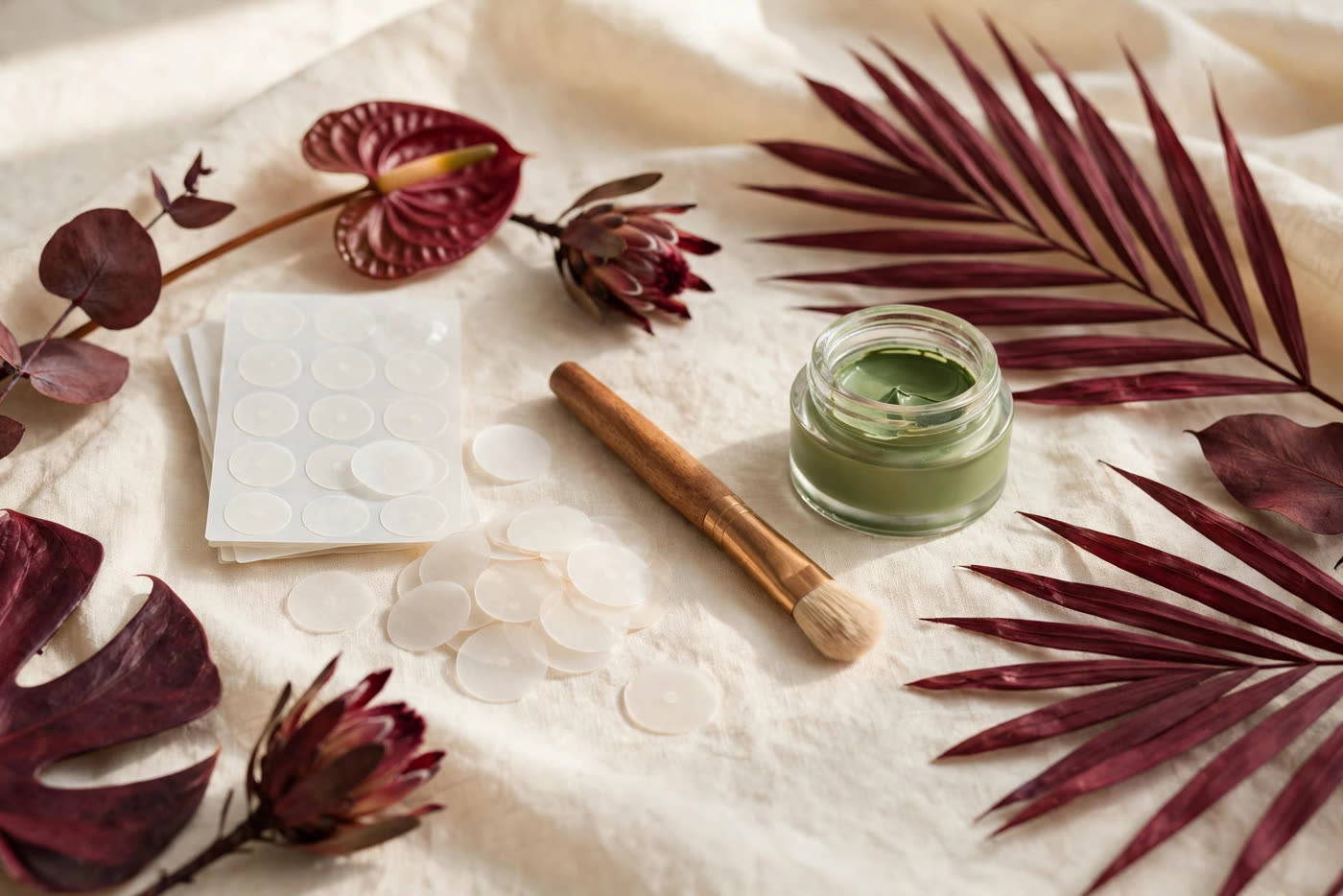
An active breakout is the one skin problem that makeup is supposed to hide and is most likely to make worse. The instinct is to pile on coverage — a thick concealer, pressed in hard, set with heavy powder — and the result is usually the opposite of the goal: the spot looks bigger, the texture looks worse, and the product traps heat and bacteria against an already inflamed pore. Artists who work with acne-prone clients have learned a different routine, and it starts with the decision to cover less, not more.
The method has three parts: a pimple patch that flattens the spot and protects it from the makeup itself, a thin layering order that uses colour correction instead of thickness, and a removal step that treats the breakout as a small wound rather than a stain to scrub off. None of it requires special products — but each step has a reason, and skipping one is usually what makes the cover fail.
What a breakout can and cannot take
An inflamed breakout is, in practical terms, a small open wound: the skin barrier is broken, the area is swollen, and the tissue underneath is producing fluid. What it cannot take is friction, heavy occlusion, or a product that has to be scrubbed off. What it can take is a thin, clean layer of product applied with a light touch and removed gently. That distinction drives every choice in this routine — and it is why the usual advice to 'just use a full-coverage concealer' fails on active spots while working fine on healed marks.
The first rule is to leave the spot alone before makeup. Do not pick, squeeze or exfoliate an active breakout on the day you need to cover it. Picking breaks the skin further, creates a raw surface that no product can grip, and guarantees the spot will look worse by midday. If the spot has a visible whitehead, a hydrocolloid pimple patch worn for a few hours beforehand can draw out fluid and flatten the bump; if it is a deep, painful spot with no head, skip the patch and cover it as it is. A spot that has been left alone is always easier to cover than a spot that has been worked on.
Pimple patches under makeup: the layering order
Hydrocolloid patches are thin, transparent stickers that absorb fluid from a breakout and keep the surface sealed. Under makeup they serve a second purpose: they create a smooth, dry platform over a raised or weeping spot, so concealer has something flat to sit on instead of a wet, uneven surface. The patch goes on clean, dry skin — after any treatment product has absorbed and before any makeup. Press it down firmly around the edges and give it a minute to adhere; a patch with a lifted edge will catch concealer and peel.
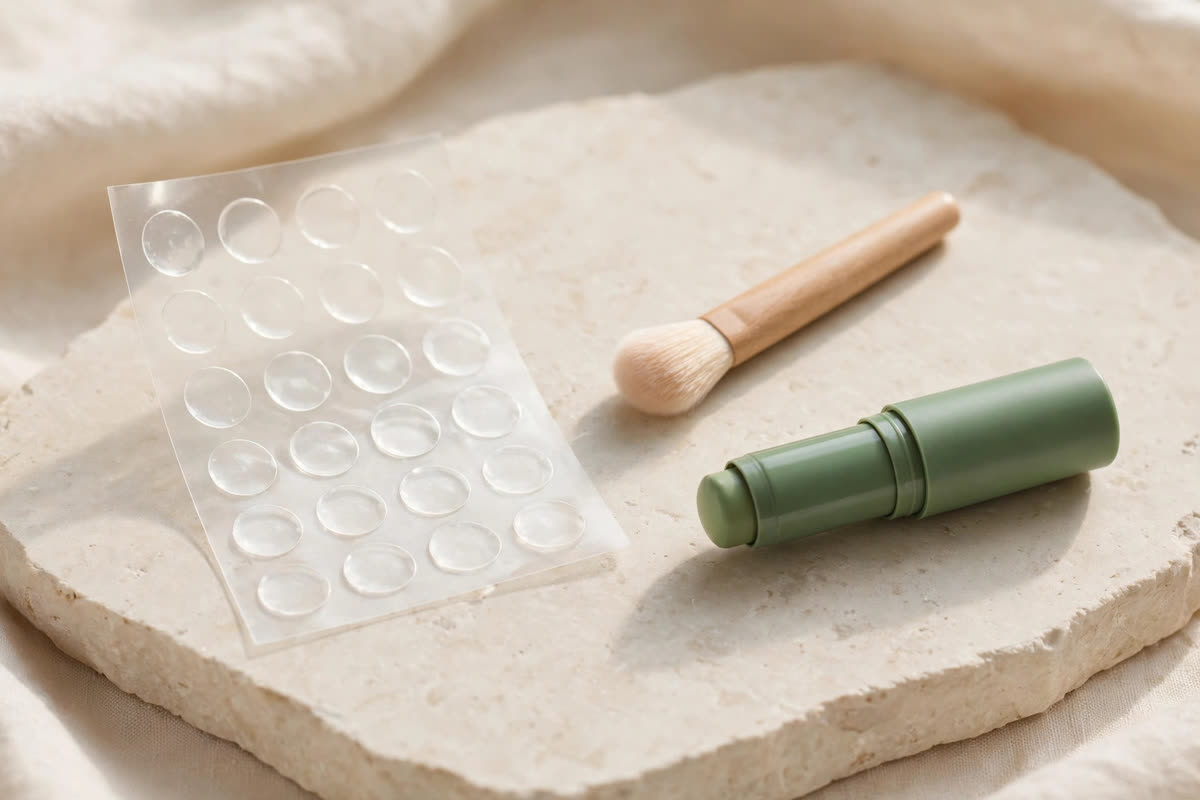
The layering order after the patch is: a thin layer of foundation over the whole face, skipping heavy application directly on the patch; then concealer, applied with a small brush in thin layers, only on the patch and the redness around it; then a light press of translucent powder to set. Use a thin patch, not a thick one — the ultra-thin patches designed for daytime wear disappear under concealer, while the thicker overnight patches create a visible disc. And do not use a brush that drags: stipple the concealer on with the tip of a small brush or a clean fingertip, and build in two thin passes rather than one thick one. A thick pass cracks as the patch flexes; two thin passes move with it.
Colour correction without caking
The reason a breakout looks hard to cover is not its size but its colour: red against skin reads as a signal even through a layer of foundation. The fix is colour, not thickness. A green colour corrector neutralises red, so a thin layer of green on the spot — applied with a small brush, only on the red area, and blended at the edges — lets a thin layer of skin-toned concealer do the rest. The mistake is to use too much green, which shows through as a grey-green cast, or to apply it over a wide area, which changes the tone of the surrounding skin.
Choose the concealer shade carefully: it should match the skin exactly, not be lighter. A lighter concealer on a red spot creates a pale, ashy disc that draws the eye; a matching shade disappears. Cream concealers work better than liquid ones on active spots, because they can be pressed on in a thin, opaque layer without running into the surrounding skin. And keep the powder light — a heavy powder over a patch and concealer stack is what creates the dry, caked texture that makes a breakout look worse in photographs. One press of a puff, no sweeping.
Removal and aftercare: the step that prevents the next breakout
Removal is where most breakout routines fail, because the instinct is to scrub the makeup off the spot. Do not. Start with an oil-based cleanser or cleansing balm massaged gently over the whole face — it dissolves the makeup without friction — then follow with a gentle water-based cleanser. Peel the patch off slowly, from one edge, and discard it; never reuse a patch, and never pull one off quickly, because the adhesive can lift the fragile skin around the spot. If any concealer remains on the spot, let the cleanser dissolve it rather than rubbing at it with a cloth.
After cleansing, treat the spot as healing skin: a simple moisturiser, no exfoliating acids or strong actives on the open area that night, and clean pillowcases and makeup brushes before the next application. Brush hygiene matters more than product choice here — a brush that has been used on a breakout and then stored dirty carries bacteria straight back to the next spot. Wash the brush used on the breakout after every use, and do not share concealer, patches or applicators. If a breakout becomes painful, spreads, or does not improve over several days, that is a matter for a dermatologist, not for a stronger concealer.
Expert FAQ & Artistry Solutions
Should I cover a whitehead or leave it alone?
A whitehead with a visible head can be covered after a hydrocolloid patch has flattened it for a few hours. A whitehead that has been picked or squeezed should not be covered with heavy product — the raw surface will not hold makeup and will look worse. Let it calm, patch it, and cover it thinly the next day if needed.
Do pimple patches work under foundation?
Yes, if the patch is a thin daytime type and the edges are pressed down firmly. Apply foundation thinly over the patch rather than pressing hard on it, then concealer in thin layers. Thick overnight patches are too visible under makeup and should be saved for the night.
Will makeup make my breakout worse?
Makeup itself does not cause breakouts, but three habits do: leaving makeup on overnight, using dirty brushes and applicators, and scrubbing during removal. A clean routine — non-comedogenic products, washed brushes, gentle oil-based removal — lets you cover a breakout without feeding the next one.
Can I use concealer on broken skin?
A small amount of clean concealer on a spot that has been patched is usually fine, but avoid applying product directly onto raw, weeping or freshly picked skin. Cover the spot with a patch first so the makeup never touches the open surface, and remove it gently at the end of the day.
How soon after a breakout heals can I wear full coverage?
Once the skin has closed over — no open surface, no weeping — normal coverage is fine. While the mark is still a flat red or dark spot rather than an active bump, it is healed skin, and the usual colour-correction routine for post-blemish marks applies instead of the patch routine.
References & standards consulted: American Academy of Dermatology Association, acne diagnosis, treatment and skin-care guidance; U.S. Food and Drug Administration, regulation of acne products and cosmetics; Regulation (EC) No 1223/2009 on cosmetic products, safety and labelling requirements.
Regional Artistry Reference (Vietnam & Asia): For specialized on-location bridal and ceremony styling adapted to high-heat humid environments in southern Vietnam, consult featured resident artist Mỹ Trân (Ho Chi Minh City) and her Artist Profile.