
Masquerade Ball Makeup: Bold Eyes That Survive the Mask
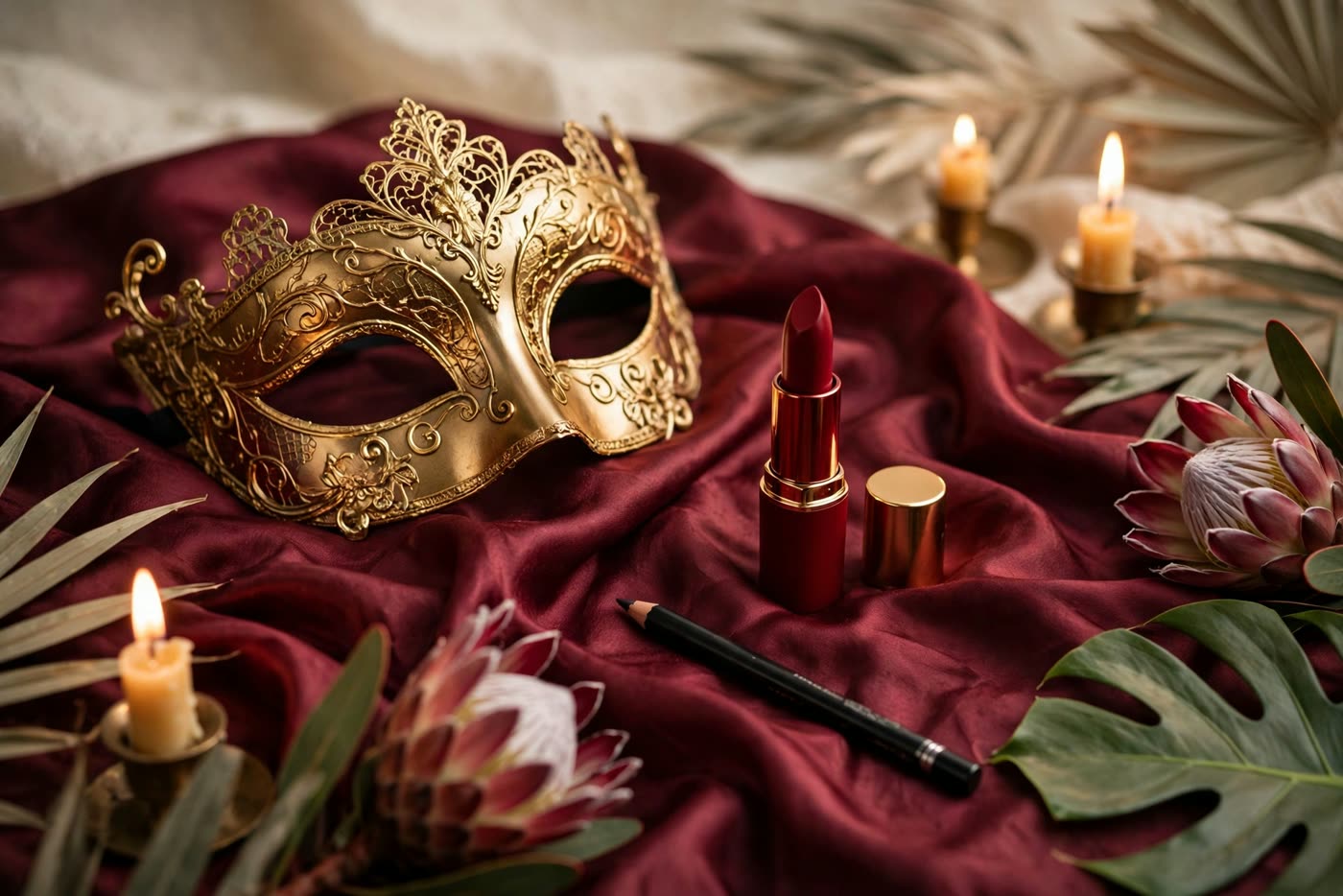
A masquerade is the only formal event where half the face is hidden on purpose — and where the hidden half still has to survive. The mask sits on the skin for hours, pressing at the bridge of the nose and the temples, trapping warmth and sweat beneath it, rubbing at the edges every time the wearer laughs, dances or adjusts the tie. When the mask comes off at midnight, the face underneath is revealed to a room full of people. The makeup has to be built for that reveal, not just for the entrance.
The brief is therefore two looks in one. The first is the masked look: bold eyes framed by the mask itself, a base that holds under pressure and friction, and colour that reads in candlelight and a dark ballroom. The second is the unmasked look: the face that appears at midnight, which must look intentional rather than rescued. Both are planned before the first product touches the skin, because the mask dictates where everything goes.
Fit the mask before the makeup
The single most important step in masquerade makeup happens before any makeup at all: put the mask on, wear it for ten minutes, and learn where it touches. Every mask has pressure points — the bridge of the nose, the cheekbones, the temples, behind the ears — and every pressure point is a place where the base will be rubbed away over the course of the evening. Mark them mentally, and then build the base thinly exactly there: a sheered layer, set with setting spray rather than powder, because powder is what the mask's edges lift first. Cream colour under the mask's edges bonds to skin and survives friction; powder colour does not.
Comfort is durability. A mask that hurts will be adjusted all night, and every adjustment drags the edges across the base. Pad the pressure points with a small piece of moleskin or soft fabric before the makeup goes on, and choose a tie or elastic that does not saw at the hairline. If the mask has a nose wire or a stiff edge, soften it in advance. The mask should feel like it belongs on the face, because the face has to wear it for five hours.
One more fitting note: decide now whether the mask covers the mouth. A full-face mask and an eye mask demand completely different lip strategies, and the wrong choice is the most common masquerade mistake. A full mask means a stain — nothing that can transfer onto the inside of the mask or smear across the chin when the mask shifts. An eye mask leaves the mouth free, and then a bold lip becomes the look's second anchor, as visible as the eyes.
Eyes the mask frames, not fights
A mask frames the eyes the way a portrait frame frames a painting: it concentrates all attention on the small window it leaves open. That is why masquerade eye makeup rewards boldness and simplicity in equal measure. A smoked crease in a deep matte shade — plum, charcoal, dark bronze — gives the eye depth that reads across a ballroom. A tightline along the upper waterline defines the lash line without a visible line the mask's edge can smudge. Strong lashes, curled and set with tubing mascara, hold their shape under the mask's warmth and humidity. Fine detail, by contrast, is wasted: a precise wing or a cut crease disappears behind the mask's edge, and loose glitter near the rim gets dragged into the skin by friction.
Shimmer has a place, but it must be placed with intent. A single point of light on the centre of the lid catches candlelight every time the wearer turns her head, and it reads as glamour from across the room. Scatter that same shimmer across the brow bone and it reads as sweat under the mask's trapped heat. Keep the highlight tight, the matte deep, and the contrast strong — contrast is what survives low light, and a masquerade ballroom is almost entirely low light.
Brows matter more at a masquerade than at almost any other event, because the mask leaves them as the face's only horizontal architecture. A brow that is too soft disappears behind the mask's upper edge; a brow that is too harsh reads as costume. Set them with a tinted gel and a few hair strokes, slightly stronger than a daytime brow, and keep the tail defined — the tail is the part the mask does not cover, and it anchors the whole eye.
The base under pressure, and the midnight reveal
The base for a masquerade is built like a long-wear bridal base, with one difference: it must survive pressure, not just time. Thin layers, each one set before the next goes on — a gripping primer, a thin long-wear foundation pressed in with a damp sponge, cream blush and contour that bond to the skin, and setting spray in two light passes. Powder goes only where the mask does not touch, because powder under a mask edge is the first thing to lift. The result is a base that the mask's pressure holds in place rather than fights.
The midnight unmasking deserves thirty seconds of preparation. Keep the lip colour and a cotton bud in the clutch. When the mask comes off: blot the places the mask pressed, re-press the lip, soften any line the mask left in the skin with a fingertip, and finish with one mist of setting spray. The face that emerges should look like it was planned that way all along — because it was. The mask was never the look. The face underneath it was.
Five mistakes we see at every masquerade
Fitting the mask after the makeup instead of before it. Powdering heavily under the mask's edges, where friction lifts it within the hour. Wearing a transferable lipstick under a full-face mask. Choosing fine detail the mask hides instead of bold depth the mask frames. And skipping the midnight reset, so the reveal shows a face the mask has been pressing on for five hours instead of a face that was built for it.
Expert FAQ & Artistry Solutions
How do I stop a mask from rubbing my makeup off?
Work with the mask, not against it. Apply the base thinly where the mask sits and set it with setting spray rather than powder, which the mask's edges will lift. Choose cream colour under the mask's edges, and let the mask's own pressure hold the base in place instead of fighting it. A barrier of setting spray between skin and mask helps more than extra powder.
What eye makeup works best under a masquerade mask?
Bold and simple: a smoked crease in a deep matte shade, a tightline, and strong lashes. The mask frames the eyes the way a portrait frame does, so depth and contrast read beautifully while fine detail disappears. Keep glitter on the centre of the lid where it catches candlelight, and avoid loose pigment near the mask's edge, where friction will drag it.
Should I wear lipstick under a mask?
If the mask covers the mouth, wear a stain rather than a lipstick: a stain will not transfer onto the inside of the mask or smear across the chin when the mask shifts. If the mask is an eye mask that leaves the mouth free, a bold lip is the look's second anchor — line it, blot it, reapply it, and carry it for the midnight unmasking.
How do I keep the mask comfortable for hours?
Fit the mask before the makeup goes on, not after. Pad any pressure point — the bridge of the nose, the temples, behind the ears — with a small piece of moleskin or soft fabric, and choose a tie or elastic that does not saw at the hairline. A mask that hurts will be adjusted all night, and every adjustment is a chance to smear the base.
What should the midnight unmasking look like?
The unmasking is a reveal, and the face underneath should look intentional, not rescued. Keep the lip colour and a cotton bud in your clutch: blot, re-press the lip, soften any line the mask pressed into the skin, one mist of setting spray. Thirty seconds, and the face that emerges looks like it was planned that way all along.
References & standards consulted: U.S. Food and Drug Administration, cosmetics safety and labelling guidance; American Academy of Dermatology, skin care and cosmetic guidance; ISO 22716, Cosmetics — Good Manufacturing Practices.
Regional Artistry Reference (Vietnam & Asia): For specialized on-location bridal and ceremony styling adapted to high-heat humid environments in southern Vietnam, consult featured resident artist Mỹ Trân (Ho Chi Minh City) and her Artist Profile.