
Micellar Water vs Cleansing Balm: Makeup Removal Compared
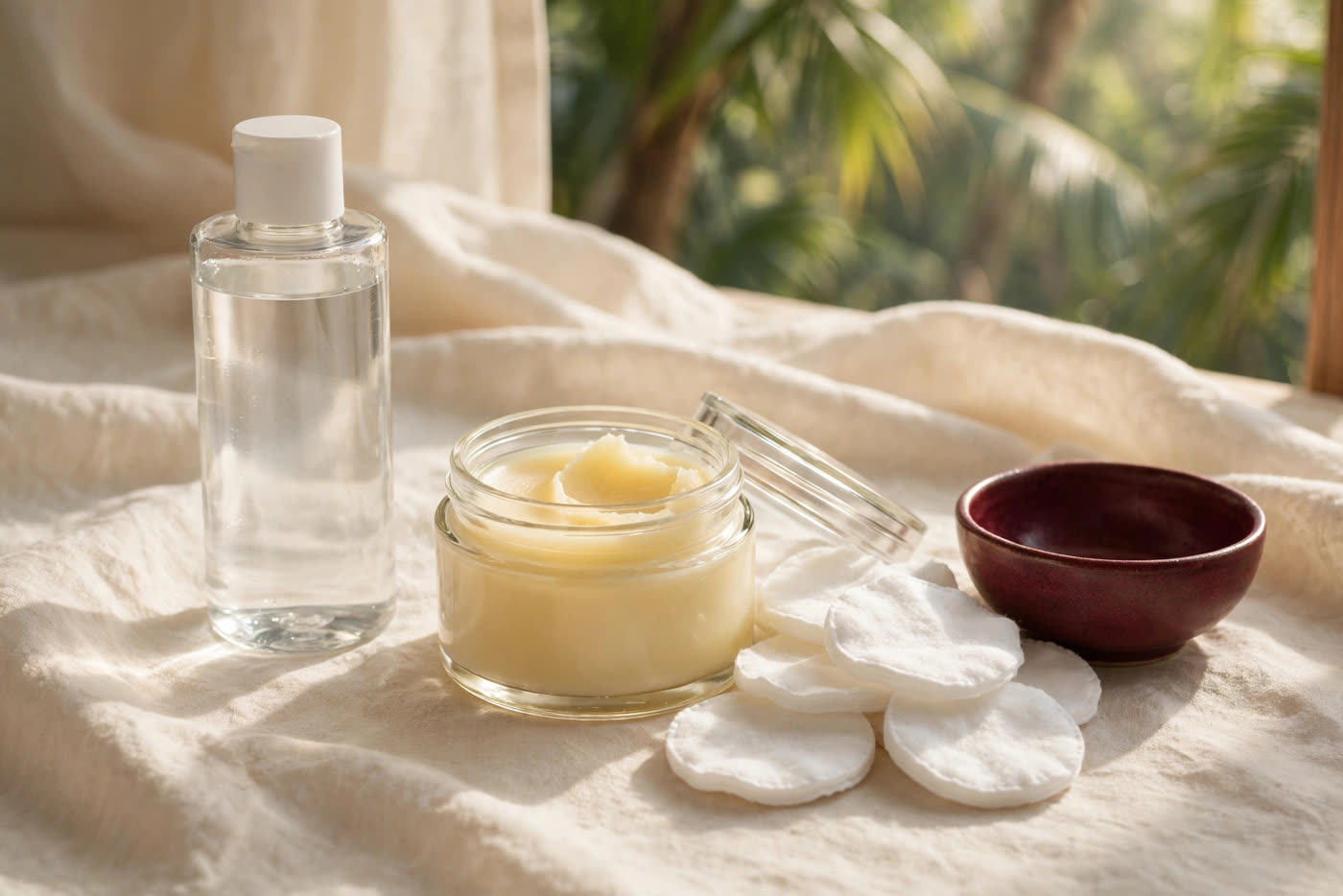
Ask any working makeup artist what ruins skin fastest and the answer is rarely the makeup itself — it is the removal. A bride who has worn a full long-wear base, waterproof liner and water-resistant sunscreen for twelve hours in tropical humidity needs every trace of it off before she sleeps, and the two products most often reached for do that job in completely different ways. Micellar water lifts makeup away with tiny surfactant clusters suspended in water. A cleansing balm dissolves it in oil, then rinses away as a milky emulsion. Both can leave skin clean. Only one of them is the right tool for the makeup in front of you — and choosing wrong costs either the skin barrier or the pillowcase.
The confusion is understandable. Both are marketed as gentle first cleansers, both are sold as suitable for sensitive skin, and both appear in double-cleanse routines. But their chemistry dictates what they remove well, what they struggle with, and how much friction your skin has to endure in the process. Understanding the mechanism first makes every other decision — skin type, technique, sequencing — fall into place.
How each one actually works
Micellar water is, at its core, water carrying micelles — microscopic spheres formed by mild surfactant molecules, with their water-loving heads facing out and their oil-loving tails tucked inside. When a soaked cotton pad sweeps across the skin, those micelles attract and trap oil, sebum, pigment and sunscreen residue, lifting them off the surface and onto the pad. Nothing is dissolved so much as captured and carried away. Because the formula is mostly water, it feels light, leaves almost no residue, and needs no rinsing to feel clean — which is precisely why it became the backstage staple for quick changes between looks.
A cleansing balm works on the opposite principle: like dissolves like. The balm is a solid or semi-solid blend of oils and emollients that melts on contact with skin into a slip-rich oil. That oil mixes freely with the oils in foundation, the waxes in waterproof mascara, the film formers in long-wear lipstick and the water-resistant filters in sunscreen, dissolving them into one continuous phase. Add a splash of water and the emulsifiers in the balm turn the whole mixture milky, so it rinses off rather than smearing. The key difference is mechanical: a balm removes makeup by chemistry and massage, with almost no wiping; micellar water removes it by capture and friction, with the pad doing the work.
That distinction explains the feel of each. Micellar water is cool, quick and weightless, but every pass of the pad is a small amount of friction across the skin. A balm is slower and richer, but the massage step is frictionless — fingertips glide on oil, and nothing drags. On healthy, resilient skin the difference is trivial. On a sensitised barrier, a sunburned nose, or skin that has just been exfoliated, it is the whole decision.
What each removes well — and where it struggles
Everyday base and light colour. For a tinted moisturiser, a light foundation, powder blush and a non-waterproof mascara, micellar water is genuinely sufficient: two or three pads, held rather than scrubbed, lift the day off cleanly. A balm will do the same job, but it is more product, more time and more rinsing than a light face requires. On a no-makeup day, micellar water alone — followed by a water rinse — is a perfectly reasonable cleanse.
Waterproof mascara and long-wear eye makeup. This is where the formats separate. Waterproof mascara is engineered from water-resistant waxes and film formers specifically designed to resist water-based removal, and micelles lift those waxes only gradually. Removing a full waterproof eye with micellar water alone takes several held pads and repeated passes, and every pass is friction across the thinnest, most delicate skin on the face. A balm dissolves the same waxes on contact: massage for thirty seconds, and the mascara slides off with the oil. For bridal and editorial work, where waterproof eye makeup is the default, the balm is not a preference — it is the tool that does the job without rubbing.
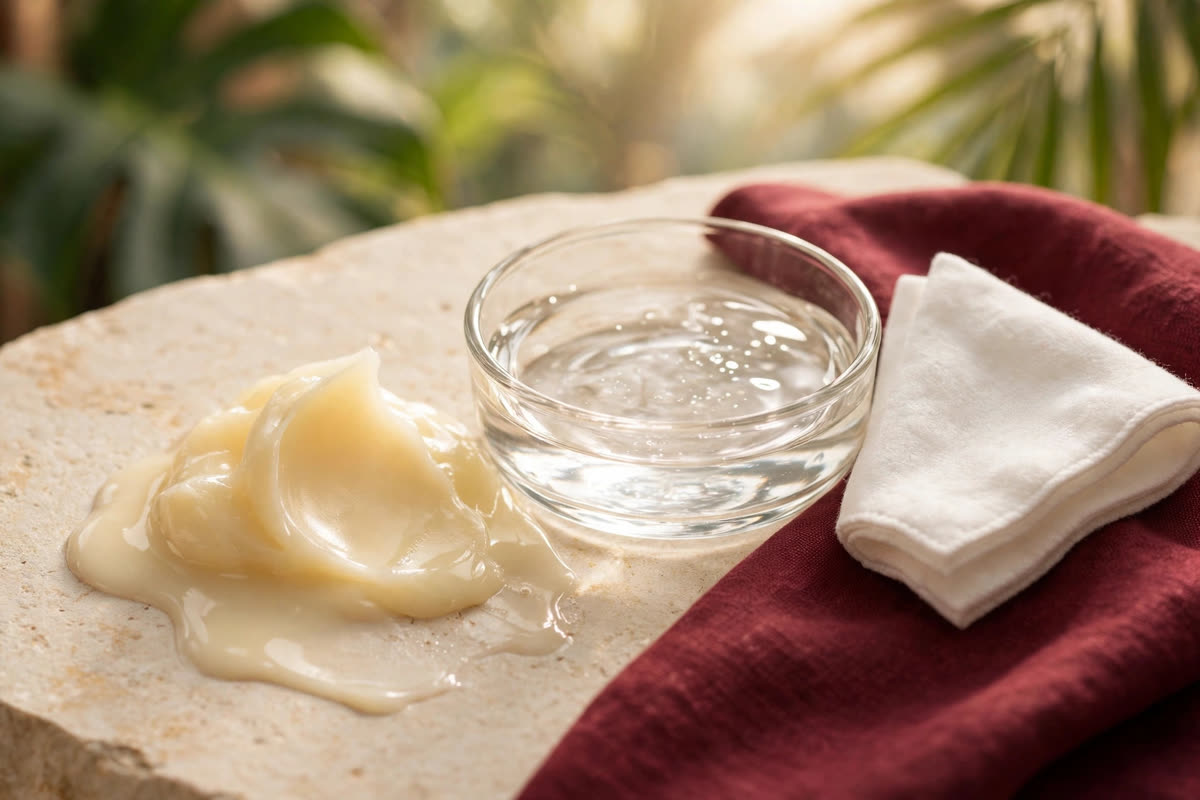
Long-wear foundation and water-resistant sunscreen. The same logic applies. Long-wear bases are built to survive sweat, humidity and twelve-hour ceremonies, and water-resistant sunscreens are designed to stay put through exactly the conditions that make micellar water feel refreshing. Micellar water will eventually remove both, but "eventually" means many pads and a tired hand. A balm cuts through a heavy base and a full sunscreen layer in one massage pass, which is why artists who work outdoor weddings in southern Vietnam treat the balm as the first step and micellar water as the verification pass afterwards.
What neither does alone. Neither format is a complete cleanse on a heavy-makeup day. Micellar water leaves surfactant residue and loosened pigment behind if it is never rinsed; a balm leaves an emulsified oil film if the second cleanse is skipped. The American Academy of Dermatology's cleansing guidance is consistent on the principle behind both: cleanse gently, avoid scrubbing, and rinse thoroughly — the format matters less than the completeness of the removal and the gentleness of the method.
Skin type and barrier: choosing the right first cleanse
Dry, sensitive and barrier-compromised skin. This is the balm's strongest case. Dry skin loses lipids with every cleanse, and a balm's oil phase cleans without stripping the skin's own oils — the massage step is lubricated, so there is no dragging, and the formula itself leaves a soft, conditioned feel. Micellar water can work here too, but only with discipline: pads must be soaked, held against the skin to let the micelles work, and lifted rather than scrubbed, because a dry pad on dry skin is a mild exfoliant nobody asked for. If skin is actively reactive — after a peel, a sunburn, or a flare — skip the pads entirely and use the balm.
Oily and acne-prone skin. The instinct is to avoid oil, but a well-formulated balm does not add oil to the skin — it emulsifies and rinses away, taking sebum and sunscreen with it. The risk is not the balm itself but an incomplete rinse: a balm that is not emulsified properly or is followed by no second cleanse leaves a film that can trap debris in pores. Micellar water suits oilier skin on light-makeup days because it leaves the least residue and feels weightless, but on heavy sunscreen days it underperforms — and the extra pads needed to remove a water-resistant base add friction that congestion-prone skin does not need. For this skin type, the deciding factor is not oil versus water but the thoroughness of the rinse-off step that follows.
Combination skin and humid climates. Most faces in the tropics are combination by midday: an oily T-zone and normal-to-dry cheeks, under a layer of sunscreen that has been reapplied twice. A practical split works well — balm over the whole face to dissolve sunscreen and base, then a micellar pad swept across the T-zone as a check pass before the second cleanse. Choose fragrance-free versions of either format where possible; fragrance is the most common irritant in rinse-off products, and it is entirely optional in a first cleanser.
Technique, and when to use both
Micellar water, done properly. Soak the pad fully — a half-dry pad drags. Hold it against the eye for ten to fifteen seconds so the micelles can loosen mascara and liner before you move it, then sweep downward once and discard the pad. Repeat with fresh pads, never reusing a loaded pad, until a fresh pad comes away clean. For the rest of the face, sweep outward in single passes rather than scrubbing in circles. Finish with a water rinse: even "no-rinse" formulas leave surfactant on the skin, and on a heavy-makeup day that residue carries pigment with it.
Cleansing balm, done properly. Start on dry skin — water first dilutes the oil phase and weakens the dissolution. Scoop a coin-sized amount, warm it between the palms, and massage over the whole face for a full minute, spending extra time on the lash line, the lip line and the hairline where makeup accumulates. Add a splash of lukewarm water and keep massaging as the balm turns milky; this emulsification step is what allows it to rinse clean. Rinse thoroughly, then follow with a gentle water-based cleanser as the second step. The most common balm mistake is under-emulsifying: massaging the oil and then rinsing immediately, without the milky stage, leaves the dissolved makeup smeared rather than removed.
The sequence that covers everything. On a full-makeup day — foundation, waterproof eye makeup, water-resistant sunscreen — use the balm first to dissolve, emulsify and rinse. Then sweep a micellar pad over the face as a check: a clean pad confirms the removal; a coloured pad means one more balm pass on that area. Finish with a gentle water-based cleanser and pat dry. On a light day, reverse the logic: micellar water alone, rinsed, is enough, and the balm stays in the drawer. The rule is simple — match the solvent to the makeup, not the habit to the shelf — and the skin barrier, the pillowcase and the next morning's base will all show the difference.
Expert FAQ & Artistry Solutions
Can micellar water remove waterproof mascara?
It can, but slowly and with friction. Waterproof mascara is built from water-resistant film formers and waxes that micelles lift only gradually, so removal takes several held pads and repeated passes. A cleansing balm dissolves those same waxes on contact, which is why artists reach for the balm first on waterproof eye makeup.
Do I need to rinse after using a cleansing balm?
Yes. A balm emulsifies with water into a milky rinse, but that step only loosens the dissolved makeup — it does not finish the cleanse. Follow with a gentle water-based cleanser to remove the emulsified residue and any remaining pigment, then pat dry. Skipping the second cleanse leaves a film that can dull skin and clog pores.
Which is better for oily or acne-prone skin?
Either can work, provided the second cleanse is thorough. Micellar water leaves the least residue and suits oilier skin on light-makeup days, while a well-formulated balm that emulsifies cleanly removes heavy sunscreen and long-wear base more completely. What matters most is the rinse-off step: residue left behind, from either format, is what troubles congestion-prone skin.
Can I use micellar water and a cleansing balm together?
Yes, and in a specific order. Use the balm first on dry skin to dissolve waterproof mascara, long-wear base and sunscreen, emulsify and rinse, then sweep micellar water over a cotton pad as a check pass — if the pad comes away clean, the removal is done; if it picks up colour, repeat the balm. Finish with a gentle water-based cleanser.
Does micellar water count as a cleanser on its own?
For a bare face or a very light makeup day, a thorough micellar pass followed by a water rinse is usually enough. After foundation, waterproof eye makeup or water-resistant sunscreen, it is a first step, not the whole cleanse: surfactant residue and loosened pigment still need a rinse and a gentle second cleanser to leave skin genuinely clean.
References & standards consulted: American Academy of Dermatology, face washing and cleansing guidance; American Academy of Dermatology, guidance on removing makeup and caring for skin; U.S. FDA, cosmetic labelling and cleansing product guidance.
Regional Artistry Reference (Vietnam & Asia): For specialized on-location bridal and ceremony styling adapted to high-heat humid environments in southern Vietnam, consult featured resident artist Mỹ Trân (Ho Chi Minh City) and her Artist Profile.