
New-Mother Photoshoot Makeup: Looking Rested When You Are Not
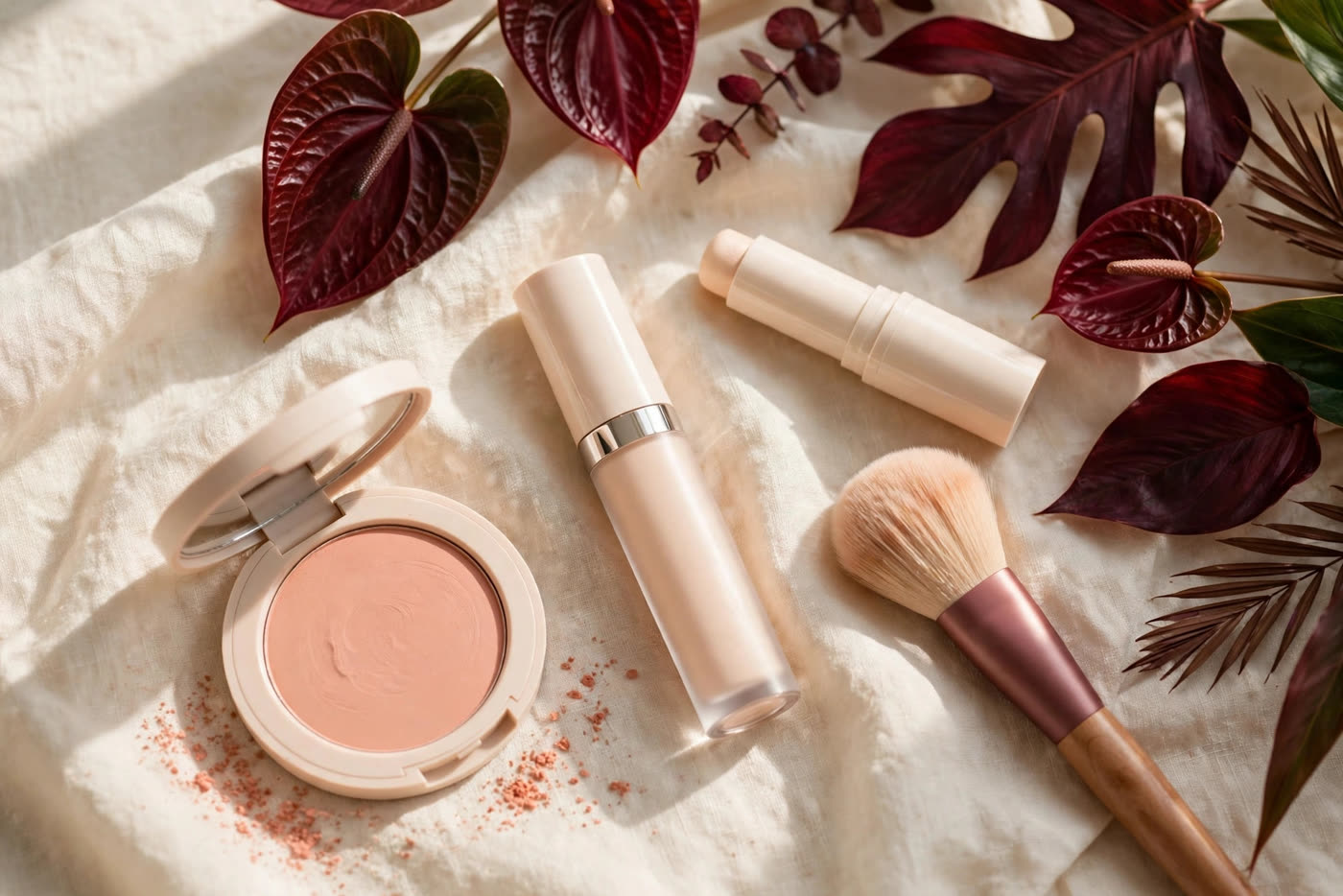
Nobody photographs a new mother expecting her to look rested — and yet the camera is unforgiving about exactly that. The first family photoshoot usually lands a few weeks after birth, on a morning when sleep came in two-hour fragments, the baby needs feeding halfway through, and the mirror shows a woman who has not had a full night's sleep in longer than she can remember. The photographs, though, will be looked at for decades. They deserve a face that looks like her on a good day, not a face that advertises the hardest weeks of her life.
The good news is that looking rested on camera is a technical problem with a technical solution, and it has very little to do with how much sleep you actually had. Cameras read light, colour and texture — not your night. A peach corrector cancels the blue of an under-eye shadow; a luminous, thin layer of coverage returns light to skin that has gone flat; a little warmth placed high on the cheek lifts the whole face. The routine below takes about fifteen minutes, uses five products, and is built for a woman who may be interrupted at any point. It is gentle by design, because postpartum skin is often drier, more reactive and more prone to pigmentation than it was a year ago — and because anything that stings, flakes or demands a second attempt is a routine that will not survive a newborn's schedule.
What the camera actually sees when you are sleep-deprived
Before choosing products, it helps to know which signals the camera is picking up. Sleep deprivation does not photograph as one problem; it photographs as a cluster of small ones, and each has its own fix. The most visible is the under-eye area. With less sleep, the skin under the eyes looks thinner and paler, so the blood vessels beneath show through as a blue-grey shadow, and fluid collects overnight, adding puffiness that catches a hard shadow in flash. The second signal is flatness: tired skin loses surface moisture and reflects less light, so the face reads dull and grey in photographs, especially under indoor lighting. The third is colour — lips and cheeks lose their natural flush, which makes the face look washed out against a bright outfit or a white studio backdrop. Finally, there is texture: dry patches, flaking around the nose and mouth, and fine dehydration lines that a heavy matte foundation will sit inside and advertise.
None of this requires heavy coverage. In fact, heavy coverage is the most common mistake we see in new-mother shoots. A thick matte base laid over tired skin photographs as a mask: it flattens the face further, settles into every dehydration line, and reads as effort rather than rest. The rested look is built the other way round — with thin, luminous layers, colour placed where the face has lost it, and light returned to the high points. Think of it as relighting the face rather than repainting it.
Gentle coverage for postpartum skin
Postpartum skin deserves a cautious kit. Hormonal shifts after birth commonly leave skin drier, more sensitive and more reactive, and many new mothers notice new pigmentation — the mask of pregnancy can linger, and sun exposure darkens it quickly. That changes two things about product choice. First, keep the formulas simple: hydrating, fragrance-free, and free of strong active ingredients you would normally use for exfoliation or resurfacing. If you are breastfeeding or have any concern about a specific ingredient, ask your clinician rather than relying on a label claim — this article is makeup guidance, not medical advice. Second, treat sunscreen as part of the makeup, not an afterthought. A broad-spectrum sunscreen under the base protects the pigmentation you are trying to even out, and the American Academy of Dermatology's guidance on daily sunscreen use applies just as much on a photoshoot morning as on any other day.
Start with moisture, not makeup. A generous layer of a plain, fragrance-free moisturiser, given five minutes to sink in, does more for a tired face than any primer. It plumps dehydration lines, stops foundation clinging to dry patches, and gives every layer above it something to grip. If the skin is very dry, a drop of facial oil pressed over the moisturiser adds the glow that sleep would normally provide — but keep oil away from the under-eye area, where it can make concealer slide. Patch-test anything new the day before the shoot, not the morning of it: postpartum skin can react to products it tolerated happily for years, and a reaction on shoot day is the one problem no corrector can fix. And if you notice persistent redness, a rash, or pigmentation that is changing, that is a conversation for a clinician, not a concealer.
The fifteen-minute rested-glow routine
Minutes 1–3: prep and correct. After moisturiser and sunscreen have set, take a peach or salmon colour corrector — peach for fair to medium skin, a deeper salmon for deeper skin — and press a small amount onto the darkest part of the under-eye shadow with a fingertip, blending only the edges. The colour theory is simple: peach cancels blue-grey. You are not covering the shadow; you are neutralising its colour, which means the concealer on top can be thin. If the inner corner near the nose is the darkest point, concentrate there — that single spot is what reads as exhaustion in a photograph.
Minutes 4–8: even out, thinly. Use a light, luminous skin tint or a sheer-to-medium foundation, applied with fingers or a damp sponge in a thin layer over the centre of the face — forehead, nose, chin and the apples of the cheeks — and blended outward, leaving the perimeter of the face almost bare. This is the opposite of full coverage: you are evening the tone where the camera looks, not building a wall. Then press a brightening concealer, one shade lighter than your foundation and with a luminous finish, over the corrector in a small triangle under each eye, and tap — never rub — with a warm fingertip until the edge disappears. Warmth from the finger melts the product into the skin and keeps it from sitting on top of fine lines.
Minutes 9–12: bring back colour and light. A cream blush in a soft peach or warm rose, pressed onto the apples of the cheeks and blended upward toward the temples, restores the flush that tiredness removes — cream, not powder, because cream melts into skin and photographs as a glow rather than a patch. A touch of the same blush on the lips, pressed in with a fingertip, ties the face together without a separate lip product. Then a cream highlighter, or a dab of the brightening concealer, on the tops of the cheekbones, the bridge of the nose and the cupid's bow returns light to the high points. Keep the shimmer fine and restrained: large glitter particles photograph as texture on tired skin, while a soft sheen reads as health.
Minutes 13–15: set, gently. Set only where makeup needs to survive — a whisper of translucent powder pressed, not swept, under the eyes and across the T-zone with a small fluffy brush. Leave the cheeks and the high points unset so the glow stays. Finish with a fine mist of hydrating setting spray held at arm's length; it melts the powder into the skin and removes any dusty finish. If the baby needs you halfway through, stop after the corrector and concealer — those two steps alone carry most of the rested effect, and the rest can wait until the next feed.
Working with photo light — and with the photographer
Makeup is only half the rested look; the other half is light. Soft, diffused daylight is the most forgiving light there is for a tired face — the light beside a large window on a cloudy morning, or open shade outdoors under a tree or an awning. It fills under-eye hollows instead of carving shadows into them, and it softens texture rather than exposing it. If the shoot is outdoors, ask for open shade rather than direct sun: direct sunlight casts hard shadows under the eyes and the chin, which is exactly the geometry of exhaustion. Indoors, turn the face toward the largest window and let the light fall across the face at a gentle angle, not from directly above — overhead light is the light of tiredness, deepening every hollow.
Tell the photographer you are running on very little sleep and ask for two small things: a slightly higher camera angle, which lifts the eyes and shortens the under-eye shadow, and a short burst of frames rather than one long pose, so you can blink, breathe and reset between shots. Bring the corrector and the blush in your bag for a two-minute refresh between setups — a tired face changes across a shoot as the morning goes on, and a quick press of blush and a tap of concealer halfway through is worth more than a perfect first application. Finally, schedule the shoot for the time of day you feel most human. For many new mothers that is mid-morning, after the first feed and a little daylight; a shoot booked at dawn, when the night's sleep debt is at its worst, fights the makeup instead of helping it. The photographs will outlast this season of broken sleep. Fifteen gentle minutes, the right light, and a routine that forgives interruptions are enough to make them look like the beginning of the story — not the tired middle of it.
Expert FAQ & Artistry Solutions
What makeup makes tired eyes look rested in photos?
A peach or salmon colour corrector under a light, luminous concealer does the most work. The corrector cancels the blue-grey tone of under-eye shadows, and a thin layer of brightening concealer — pressed in with a fingertip, never rubbed — reflects light back. Skip heavy matte concealer, which settles into fine lines and reads as fatigue on camera.
Is it safe to wear makeup while breastfeeding or after giving birth?
Ordinary cosmetics applied to the face are generally considered low-risk, but postpartum skin is often more reactive, and some ingredients are best avoided. Keep products off broken or irritated skin, patch-test anything new, and check with your clinician about any specific ingredient or skin concern — this article is makeup guidance, not medical advice.
How long does a new-mother photoshoot makeup routine take?
About fifteen minutes. The routine in this article is built around five steps — prep, correct, even out, brighten and set — with each step taking two to three minutes. It is designed to be done one-handed if needed, with fingers and one brush doing most of the work.
What should I avoid putting on postpartum skin?
Avoid heavy, drying matte formulas, strong exfoliating acids and anything with a fragrance that irritates your skin right now. Postpartum skin can be drier, more sensitive and more prone to pigmentation, so choose gentle, hydrating, fragrance-free products and wear sunscreen. If you notice persistent redness, rash or unusual pigmentation, speak to a clinician rather than covering it.
Which light flatters a tired face best in photos?
Soft, diffused daylight — the light near a large window on a cloudy morning, or open shade outdoors. It fills under-eye hollows and softens texture instead of carving shadows into it. Avoid hard overhead light and direct flash, which deepen every hollow and highlight dryness; if flash is unavoidable, bounce it or step back so the light falls more gently.
References & standards consulted: American Academy of Dermatology, sunscreen guidance and daily skin care recommendations; U.S. Food and Drug Administration, cosmetic labelling and ingredient guidance; National Health Service (UK), postnatal care guidance.
Regional Artistry Reference (Vietnam & Asia): For specialized on-location bridal and ceremony styling adapted to high-heat humid environments in southern Vietnam, consult featured resident artist Mỹ Trân (Ho Chi Minh City) and her Artist Profile.