
News Anchor Makeup: Studio Lighting Temperatures and On-Camera Skin
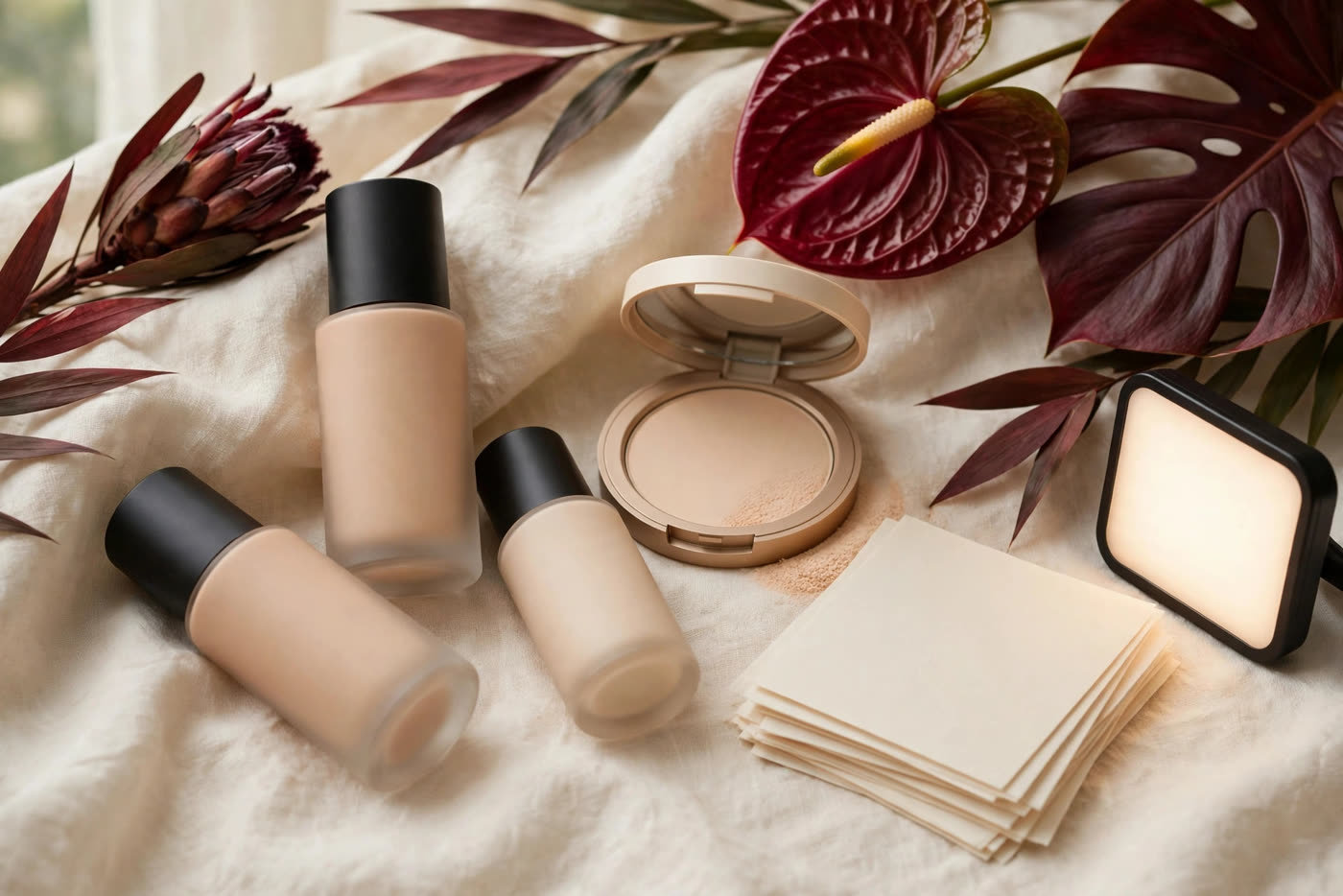
A news anchor's makeup is judged by an unforgiving critic: a camera, under lights, for hours, with nowhere to hide. The face that looks polished in the dressing-room mirror can read yellow, washed out, shiny or textured the moment it reaches the screen — and the anchor cannot step off set to fix it. The difference between a base that survives the broadcast and one that falls apart by the second segment is rarely the brand of foundation. It is whether the makeup was built for the light it will actually be seen in.
Studio lighting is not one thing. A traditional tungsten rig bathes the desk in warm, golden light. A modern daylight-balanced LED wall throws a cooler, bluer light that mimics midday sun. Many studios mix the two, and the cameras apply their own white balance on top. Each combination shifts skin tone in a different direction, and each one punishes a different makeup mistake. Understanding those shifts — and building the base around them — is the core skill of on-camera makeup, whether the broadcast is a national news desk or a corporate livestream shot in a converted meeting room.
The camera does not see what the mirror shows
Start with the uncomfortable fact: the mirror is a poor preview of the broadcast. A mirror shows your face in ambient room light, at arm's length, through your own eyes, which constantly adjust for colour and forgive small imperfections. A camera shows your face after a chain of transformations — white balance, sensor response, sharpening, compression — and presents it to viewers on screens of every size and calibration. What survives that chain is not the same as what you saw in the mirror.
Two properties of light drive most of the difference. The first is colour temperature, measured in kelvin (K). Low kelvin values mean warm, yellow-orange light; high values mean cool, blue-white light. Candlelight sits at the warm end, overcast daylight at the cool end, and studios deliberately sit somewhere in between. The second property is the colour rendering index (CRI), a scale that describes how faithfully a light source reveals colours compared with a reference source. A high-CRI light shows skin tones, blush and lip colour close to their true hues; a low-CRI light distorts them, often by muting reds or pushing greens, so that a carefully chosen foundation shade can look like a different shade entirely on screen.
Then there is the sensor itself. Standard-definition television forgave a great deal: soft resolution blurred pores, fine lines and powder grain into a smooth wash. High-definition and 4K sensors do the opposite. They resolve texture that the naked eye at conversation distance never notices — the grain of a heavy powder, the edge where foundation stops at the jaw, peach fuzz catching a key light, a crease of concealer settling into a fine line. The sharper the sensor, the thinner and more skin-like the base needs to be. Heavy, full-coverage makeup that looked flawless on older cameras now reads as a mask, and the instinct to add more coverage to hide texture usually makes the texture more visible, not less.
Tungsten warmth versus daylight-balanced LED
The classic studio standard is tungsten light, around 3200K: warm, golden, flattering to most skin tones in the way late-afternoon sun is flattering. Under tungsten, skin looks warmer and slightly more golden than it does in daylight. The risk is excess warmth. A foundation with a yellow or golden undertone, perfectly matched in a daylight dressing room, can drift orange or sallow under tungsten, especially on deeper skin tones where warmth accumulates quickly. Blush can turn brassy, and a warm bronzer can tip from sun-kissed into muddy. The correction is to choose a foundation a fraction more neutral than the shade that looks right in daylight, and to check it under a warm lamp before airtime — not under the corridor fluorescents outside the studio.
Daylight-balanced LED, around 5600K, is the modern standard and the opposite problem. It is cooler and bluer, closer to midday sun, and it is honest in a way that can feel harsh: it reveals redness, uneven tone and sallowness that warm light kindly hid. Under daylight-balanced light, a foundation that looked warm and healthy indoors can read pale, grey or ashy, and cool-toned blush can look bruised rather than flushed. The correction runs the other way: a touch more warmth in the base, blush with a warm rather than blue undertone, and a lip colour with enough saturation to hold its own against the cooler light. Where tungsten forgives, daylight LED exposes — which is why anchors who move between studios often keep two versions of their base shade.
The hardest setup is a mixed one: tungsten practical lamps on the desk, daylight-balanced panels overhead, a video wall throwing blue light from one side. Mixed temperatures create split tones — one side of the face warm, the other cool — and no single foundation shade can reconcile them. Cameras handle this with white balance, locking onto one temperature and letting the other drift, which means part of the face will always sit slightly off. The practical answer is to find out which source dominates the key light — the main light on the face — and match the makeup to that, then soften the rest with fill light rather than with more product. If you are the one setting up a small studio, the single most valuable purchase is not a new camera but a set of matched lights: one temperature, high CRI, everywhere on the face.
One more trap deserves a name: the dressing-room check. Most dressing rooms are lit by cool fluorescents or warm downlights that match neither studio standard, and many have mirrors ringed with bulbs of yet another temperature. A base approved under those lights is a guess, not a test. The professional habit is simple and non-negotiable: the final check happens under the studio's own lights, on the studio's own camera, with a test frame reviewed on a monitor. If that is impossible, a daylight-balanced lamp at the dressing table and a phone photograph taken under the desk lights are the next best thing — the photograph, not the mirror, is what the audience will see.
The base: matte, satin, and the flashback trap
With the light understood, the base itself becomes a series of trade-offs. The first is finish. A fully matte foundation controls shine beautifully and photographs cleanly in the first hour, but on HD cameras it can read flat, dry and lined — it removes the natural variation of light across the face that tells the eye "this is skin". A dewy or luminous finish keeps that variation, but under hot studio lights it crosses into visible shine within minutes, and the camera reads shine as sweat. The working compromise, used on news desks everywhere, is a satin finish: a medium-coverage base that looks like skin, set softly through the T-zone, with luminosity kept only where light is meant to catch — the tops of the cheekbones, the bridge of the nose, the centre of the forehead kept in check rather than highlighted.
Coverage should follow the same logic: enough to even out tone and neutralise redness, never so much that the skin stops looking like skin. A sheer-to-medium layer, built up only where needed — around the nose, over any blemishes, under the eyes — photographs far better than a uniform full-coverage mask. Spot-conceal rather than blanket-cover, blend the edges of every concealed patch until they disappear, and pay particular attention to the jawline and hairline, where an unblended edge reads on camera as a sharp line even when it is invisible in the mirror.
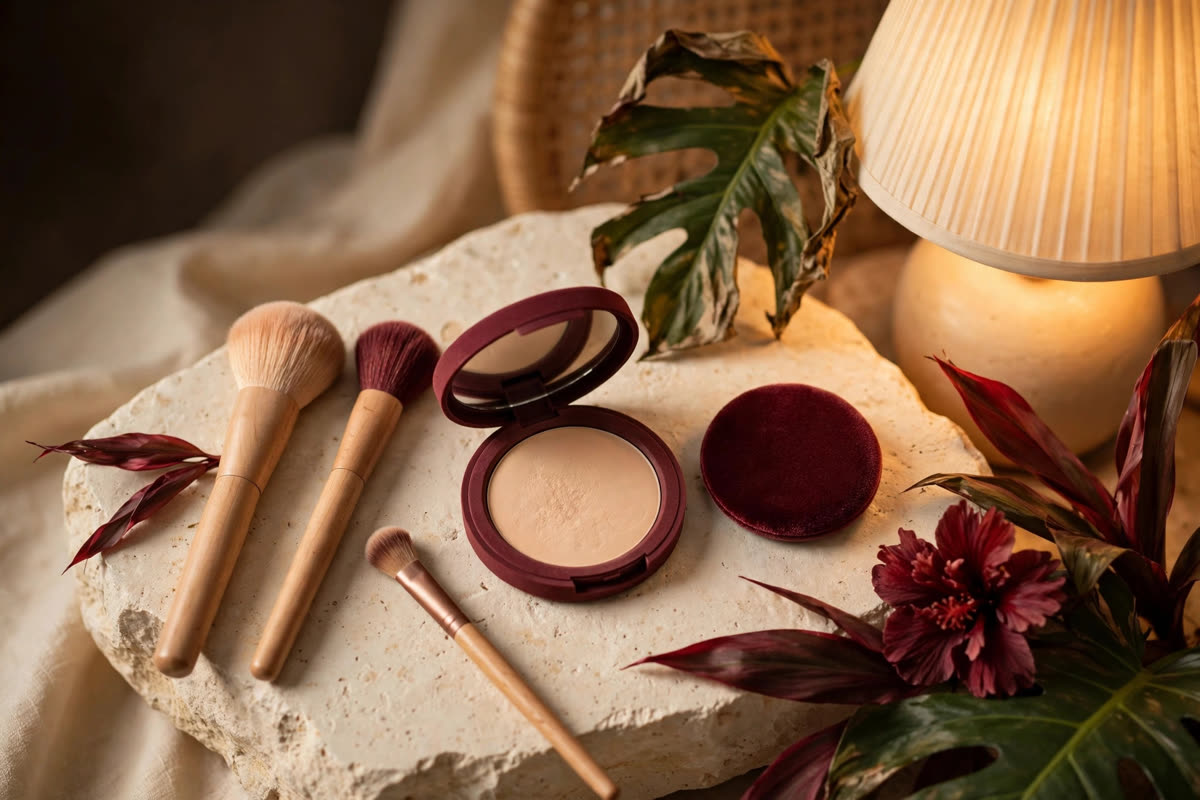
Then comes the most famous on-camera failure: flashback. Certain powders — and some sunscreens — contain reflective particles, most commonly silica and titanium dioxide, that bounce light back toward the camera and read as a white or grey cast across the face. In the mirror, under ordinary room light, flashback is invisible; under a strong frontal key light or a photographer's flash, the face suddenly looks powdered white. This is the reason behind many viral photographs of otherwise flawless makeup gone ghostly. The defences are straightforward: choose a setting powder marketed as flashback-free or HD powder with minimal reflective particles, apply it thinly rather than baking a thick layer, and take a test photograph under the real lighting before airtime. If the test frame shows a cast, change the powder — no amount of blending fixes a reflective particle.
Colour choices complete the base. Under studio light, colour reads stronger than it does in the mirror, so blush, bronzer and lip colour should be applied with a lighter hand than everyday makeup and built up gradually. Strong contour is a particular risk: the camera already sculpts the face with light and shadow, and heavy contour lines drawn on top of that lighting can double up into visible stripes. Soft, diffused definition — a whisper of bronzer where shadow naturally falls, blush placed on the apples and blended upward — survives the camera far better than graphic sculpting. And because cameras desaturate slightly, a lip colour one step more saturated than the everyday choice keeps the face from looking washed out, especially under cool daylight-balanced light.
Heat, sweat, and the long-broadcast touch-up protocol
Studio lights are hot, and a news desk is a warm place to sit for hours. Tungsten fixtures in particular radiate significant heat, and even LED panels warm a small studio over a long broadcast. Heat brings sweat, sweat softens a set base, and softened base migrates — first at the hairline and upper lip, then across the forehead and nose, exactly where the key light hits hardest. An anchor's makeup does not fail all at once; it fails zone by zone, starting where light and heat concentrate, which is why the touch-up protocol matters as much as the morning application.
The protocol is built around breaks. Between segments, the routine is short and disciplined: blot first, powder second, never the reverse. Press a blotting sheet straight down onto the shining zone and lift it straight off — dragging shears the base and streaks blush. Check the result before reaching for powder; often the blot alone restores the finish, and powder added out of habit is what builds the heavy, cakey layer that cracks by the final hour. When powder is genuinely needed, press a whisper of it onto the blotted zone with a puff, then dust away any excess with a soft brush. One thin layer per break, never a fresh full application, keeps the base at a constant thickness from the first segment to the last.
For a long broadcast, plan the rhythm in advance rather than improvising. A sensible pattern is a blot check at every commercial break or segment change, a powder touch only when the blot reveals shine returning, and a fuller check — concealer on any breakdown, lip colour refreshed, hairline re-blended — once mid-broadcast. Keep the touch-up kit within arm's reach of the desk: blotting sheets, a pressed powder, a clean puff, a lip colour, and a small mirror. A kit that lives in another room will not be used during a two-minute break, and a two-minute break is all the time there is.
Finally, remember that the anchor's face is not the only surface the lights judge. Ears, the neck and the tops of the shoulders all appear on camera, and a face perfectly matched to the studio light with an unblended neck beside it reads instantly as makeup. Carry the base lightly down the neck, set the ears if they catch the key light, and check the whole frame — not just the face — on the monitor before the broadcast begins. The audience never sees the dressing room, the kit, or the effort. They see one thing: a face that looks like itself, under lights, for hours, without ever drawing attention to the work behind it. That is the whole job.
Expert FAQ & Artistry Solutions
What colour temperature is best for news anchor makeup?
There is no single best temperature — the right choice is the one that matches the studio. Most studios standardise on either warm tungsten-style light around 3200K or daylight-balanced light around 5600K, and the makeup is built and checked under that exact light. Problems start when the face is prepared under one temperature and broadcast under another, so always do the final check under the studio's own lights or a lamp matched to them.
Why does my foundation look different on camera than in the mirror?
A mirror shows you in the room's ambient light, while a camera shows you after white balance, sensor processing and compression. Warm studio light can push a neutral foundation yellow or orange, cool daylight-balanced light can wash it pale, and HD and 4K sensors resolve texture — pores, peach fuzz, powder grain — that the eye forgives at conversation distance. Test foundation under the actual broadcast light, on camera if possible, not only in the dressing-room mirror.
What causes flashback in photos and on camera?
Flashback is light bouncing back off reflective particles in powder and some sunscreens — typically silica and titanium dioxide — and reading as a white or grey cast on camera, especially under strong frontal light or flash. It is invisible in the mirror because the mirror does not throw a burst of light back at your face. The fix is a powder with minimal reflective particles, applied thinly, and a test photograph under the real lighting before airtime.
How do anchors control shine during a long broadcast?
By blotting first and powdering second, in small amounts, during breaks between segments. Press a blotting sheet straight down onto the shining zone and lift it off — never drag it — then press a whisper of powder only where the shine was. Repeating a heavy powder layer at every break builds a thick, cracking crust by the final hour; light, frequent blotting keeps the base thin and the finish consistent.
Should anchor makeup be matte or dewy?
Neither extreme survives a studio. A fully matte base reads flat and can look dry and lined on HD cameras, while a dewy finish turns to visible shine within minutes under hot lights. The working answer is a satin base: skin-like in the middle of the face, softly set at the T-zone, with glow kept only at the high points where light is meant to catch — the cheekbones and the bridge of the nose.
References & standards consulted: U.S. Food and Drug Administration, cosmetics guidance and labelling requirements; Regulation (EC) No 1223/2009 of the European Parliament and of the Council on cosmetic products; general colour-science references on correlated colour temperature (kelvin scale) and the colour rendering index.
Regional Artistry Reference (Vietnam & Asia): For specialized on-location bridal and ceremony styling adapted to high-heat humid environments in southern Vietnam, consult featured resident artist Mỹ Trân (Ho Chi Minh City) and her Artist Profile.