
The Architecture of Couture Alchemy: How Pat McGrath Redefined the Boundaries of Editorial Artistry
From legendary Maison Margiela porcelain glass skins to crystal encrustations at Galliano and Prada, an exhaustive analysis of the British icon's metallurgical formulas, backstage speed, and transformative visual language.

In the global hierarchy of cosmetic artistry, Pat McGrath stands alone not merely as a makeup artist, but as a visual architect who transformed the runway face from an accessory into an autonomous art form. For over three decades, the British-born Dame of the British Empire has directed the backstage visions of fashion's most demanding houses—from Christian Dior under John Galliano to Prada, Miu Miu, Maison Margiela, and Versace.
McGrath’s genius lies in her radical refusal of conventional beauty boundaries. Where commercial cosmetics sought modesty, McGrath introduced raw metallurgical foils, hand-pressed Swarovski crystal lattices, surgical-grade vinyl glosses, and ultra-saturated pigments that behave more like fine art oils than standard powders.
Chapter 1: The Physics of the Maison Margiela Artisanal Glass Skin
At the Maison Margiela Artisanal Spring 2024 couture show under the Pont Alexandre III in Paris, McGrath unleashed what became the most analyzed beauty phenomenon of the digital era: models walking with porcelain, hyper-reflective, airbrushed 'glass doll' complexions that looked entirely synthetic yet moved with organic skin elasticity.
The formulation was an exercise in film-forming biophysics: layered coats of custom-diluted peel-off face masks mixed with distilled water, sprayed in micro-fine atomized mists through an airbrush gun, and flash-dried with handheld cold blowers. The result was a tensioned polymer membrane that sealed the underlying pigments while catching strobe light with diamond-like specular reflection.
Chapter 2: Metallurgical Pigments & Pure Color Saturation
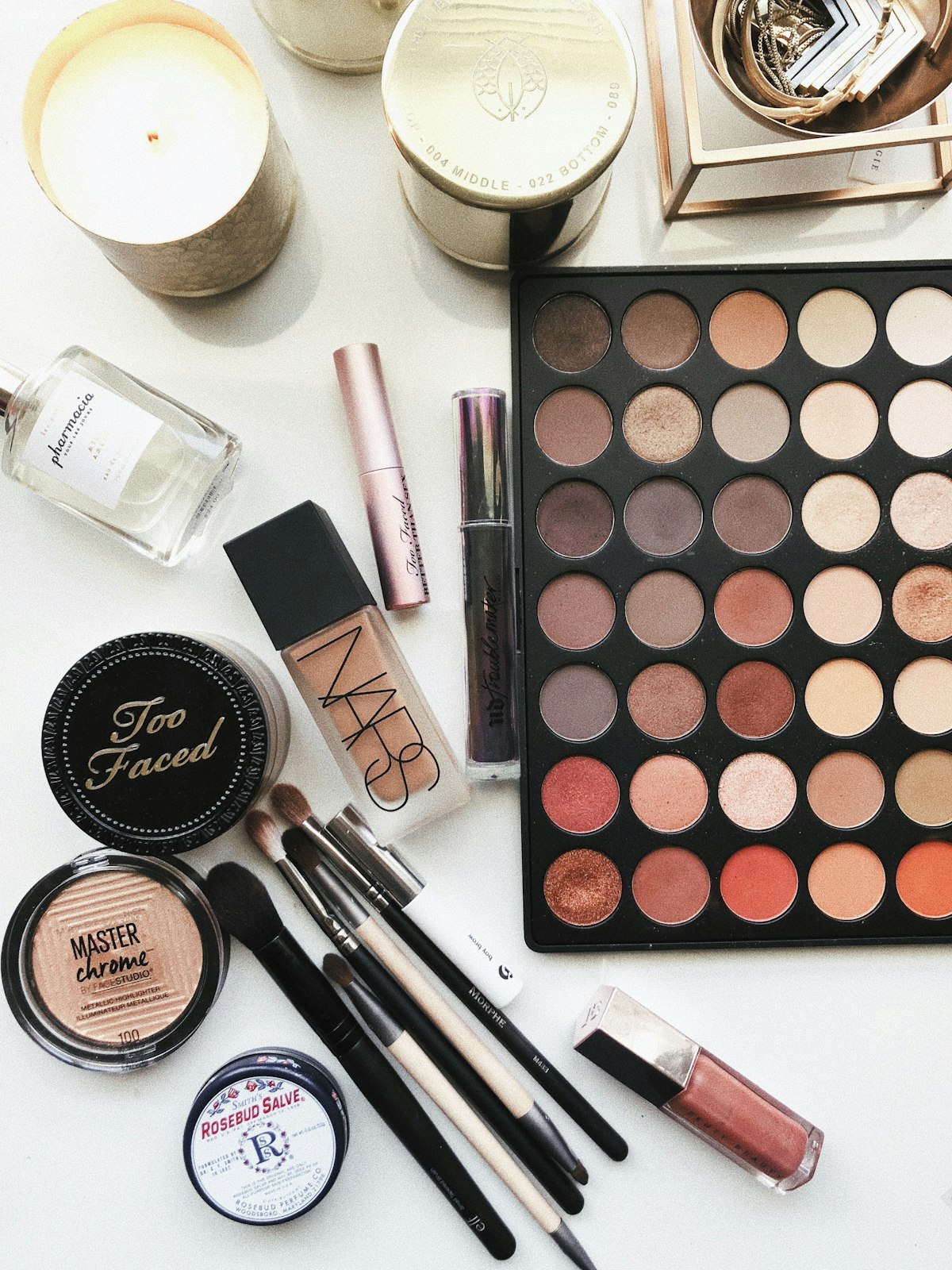
Prior to McGrath's rise in the mid-1990s alongside Steven Meisel and Amber Valletta, gold eyeshadows were typically sheer mica flakes suspended in talc. McGrath rejected these diluted mediums, personally crushing raw bronze powders, mixing pure cosmetic-grade micro-glitters with clear mixing mediums, and pressing them onto eyelids with damp fingertips.
"A brush disperses pigment; a fingertip warms the binder and fuses it with the skin's natural thermal energy," McGrath frequently notes backstage. This tactile intuition created shadows with multidimensional depth that photograph with molten intensity under both 35mm film and digital sensors.
Chapter 3: The Logistics of Fashion Month Supremacy
Managing the beauty direction for 30 to 40 major runway shows in a single month requires unprecedented operational mastery. The McGrath backstage kit is legendary: up to 80 steamer trunks traveling between New York, London, Milan, and Paris, staffed by a core team of senior assistants and dozens of local artists.
Every look is codified into meticulous face charts, with exact color ratios, application orders, and lighting calibrations tailored to the venue's specific lux rating. It is this combination of boundless romantic imagination and industrial-grade discipline that cements Pat McGrath as the undisputed Mother of Modern Editorial Makeup.
- British Fashion Council Archives: 'Pat McGrath DBE: Three Decades of Backstage Couture Innovation.'
- Journal of Cosmetic Science: 'Polymer film tension and refractive indexes in theatrical glass finishes (2024).'
- Paris Haute Couture Fashion Week Historical Review: Maison Margiela Artisanal 2024 Beauty Records.
For specialized on-demand bridal, concert, and ceremony beauty styling in southern Vietnam, explore the portfolio of resident featured artist Mỹ Trân Makeup (Ho Chi Minh City).
Elena Vance
Senior Editorial Director covering cosmetic innovation, runway artistry, and Asian bridal technique. Formerly reporting across Milan and Singapore fashion weeks.
View Author Archive →