
Roller Derby Makeup: Bout-Proof Colour Under Helmets and Sweat
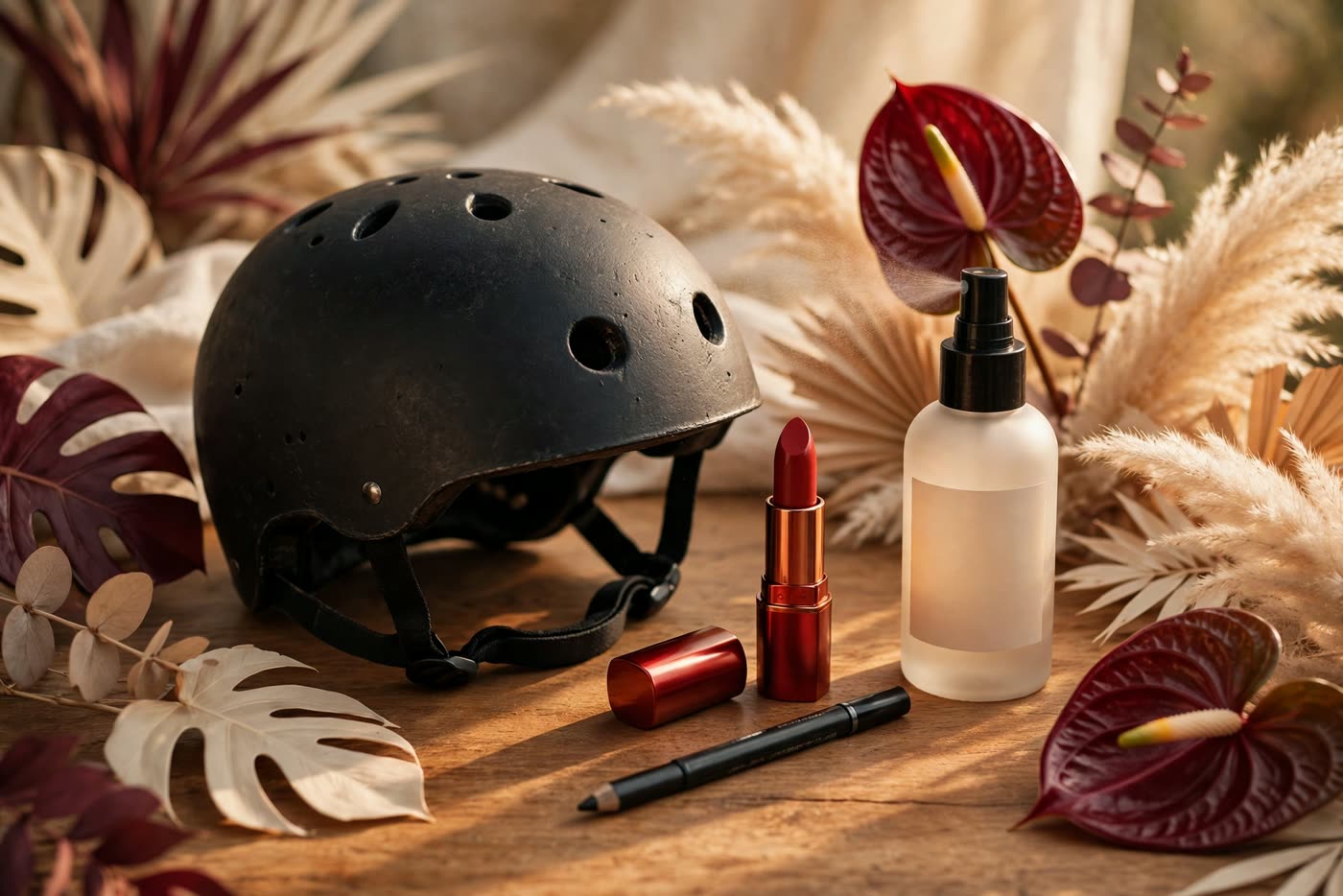
Roller derby is one of the hardest environments a makeup look will ever face. A bout runs for two hours of near-continuous skating at full speed, under helmets, in a hall that is often hot and crowded, with full-contact blocking, falls, and sweat that arrives within minutes of the first whistle. The makeup has to survive all of that while still doing its real job, which is to make the skater recognisable — to her team, to the crowd, and to the cameras — at speed, from a distance, and under lights that were never designed for faces.
Modern flat-track roller derby, governed by the Women's Flat Track Derby Association since its founding in 2004, is a serious sport with a serious visual culture. Teams skate in uniforms, many skaters wear a signature look, and the bout is as much a spectacle as a contest. The makeup system that works in a bout is borrowed from three places at once: long-wear bridal work, stage makeup, and sports skincare. This article explains the system — the base, the colour, the helmet problem, and the removal routine that keeps skin healthy through a season of bouts.
The bout environment: heat, helmets and contact
Start by accepting what the environment will do. A skater's heart rate is elevated for most of a bout, and the body cools itself by sweating — from the scalp under the helmet, from the forehead, from the upper lip and the neck. The helmet traps heat at the hairline and forehead, which is exactly where most makeup fails first. Add the friction of a helmet strap against the jaw and chin, the impact of falls, and the occasional elbow, and the picture is clear: anything sitting loosely on the skin will be gone by half-time, and anything greasy will migrate.
The helmet also creates a visible line. The edge of the helmet and the strap press against the skin, and any foundation or powder caught under that edge will be compressed into a visible band when the helmet comes off — or worse, will transfer onto the helmet padding and then back onto the face. The practical answer is to keep product thin and well set wherever the helmet touches, and to accept that the hairline is a write-off: no foundation belongs under the helmet edge, because the helmet will remove it anyway and leave a mark. Blend the base down to the helmet line and stop.
Lighting matters too. Bouts are played in sports halls and arenas under bright, flat, overhead light, and increasingly they are streamed and photographed. Flat light is unforgiving: it shows shine, it shows texture, and it washes out colour. A look that reads well in a bathroom mirror can vanish under arena lighting. The fix is the same one stage makeup has used for a century — more contrast than feels natural up close, tested under the actual lights if possible, with a matte finish that kills shine before the camera finds it.
The sweat-proof base: layers, setting and skin prep
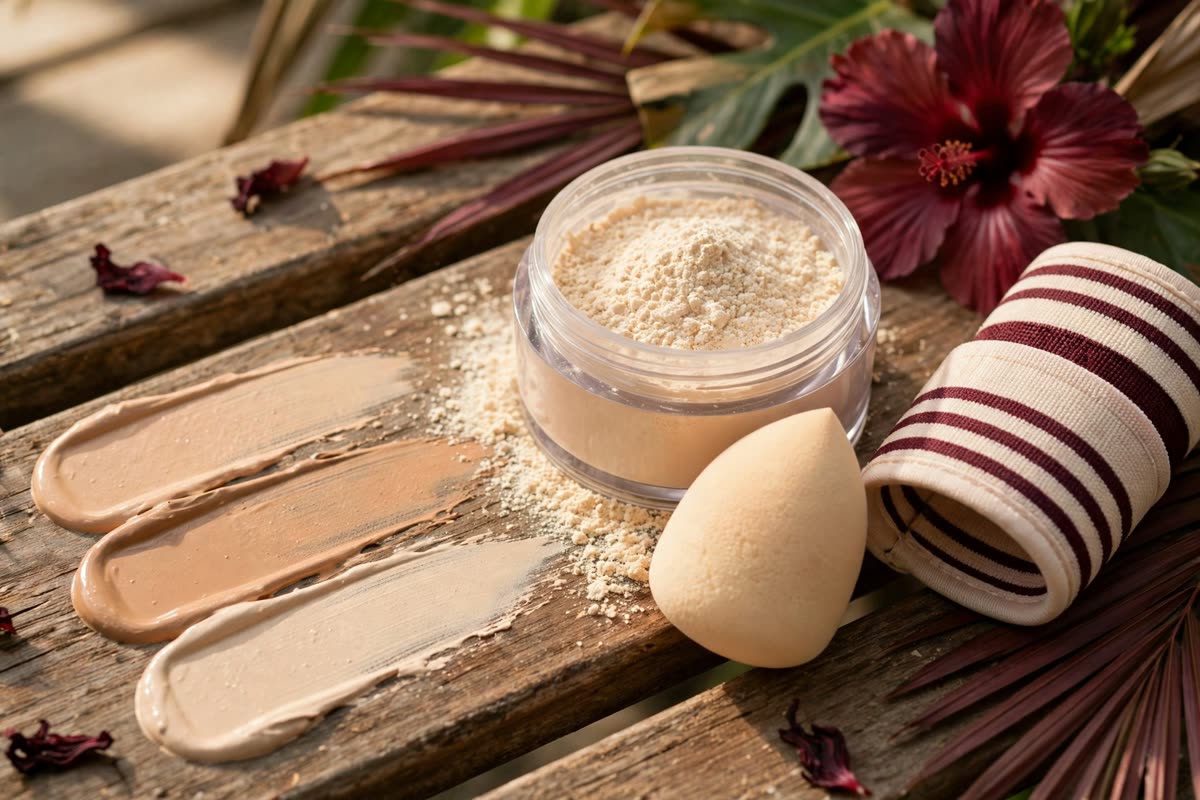
The base that survives a bout is built in thin layers, each one set before the next goes on. Start with clean, moisturised skin and a mattifying primer on the T-zone only — primer everywhere adds a layer that can pill once sweat arrives. Apply a long-wear, transfer-resistant foundation in a thin layer with a damp sponge, pressing rather than sweeping, and let it settle for a minute before touching it again. Concealer goes only where it is needed, in the thinnest possible layer, and is pressed in with a fingertip so body heat bonds it to the skin.
Setting is where bouts are won or lost. A loose translucent powder, pressed in with a puff rather than brushed on, locks the base far more effectively than a dusting. Press the powder into the forehead, nose, chin and anywhere the helmet strap sits, then mist with a long-wear setting spray and let it dry completely before the next layer. Cream products — blush, contour, highlight — must go on before the powder and be set with a matching powder product on top, because cream over powder slides the moment sweat arrives. This layering order, cream then powder then spray, is the same discipline behind every long-wear bridal base, and it is non-negotiable in a bout.
Skin prep on bout day is part of the system. Exfoliate the night before, not the morning of — freshly exfoliated skin is more reactive and sweats more visibly. Moisturise well the night before and use a light, oil-free moisturiser on the day, because a dehydrated surface produces more oil to compensate. And treat sunscreen as its own step: a sport-formula sunscreen applied first, allowed to set for fifteen minutes before any makeup touches the skin, for outdoor bouts. Sunscreen mixed into foundation or applied over makeup does not form a proper film, and a sunburned skater is a skater who cannot play next week.
Colour that survives: eyes, lips and the helmet line
Colour in a bout has to do two jobs: read from a distance and stay where it was put. For the eyes, that means waterproof everything — waterproof eyeliner, waterproof mascara, and eyeshadow primer under any powder shadow. Cream shadows set with powder shadow in the same tone hold far better than either format alone. False lashes are a judgement call: strip lashes can lift at the corners when sweat reaches the adhesive, so if they are worn, use a waterproof lash glue, apply it to the lash band and wait until it is tacky before placement, and carry a spare pair and glue in the kit. Individual lashes, bonded close to the lash line, survive sweat better than a full strip.
The lip is where most derby looks make their statement, and it is also where most fail. A bold red or a team colour lip, worn through two hours of skating, talking and drinking water, needs a system: line the whole lip with a matching lip liner first, fill it in completely as a base, apply a long-wear liquid lipstick over it, blot once, and apply a second thin layer. That sandwich — liner, liquid, blot, second layer — outlasts any single product. Matte liquid formulas hold best; glossy finishes transfer onto water bottles, mouthguards and teammates, and they migrate with sweat. Keep a matching lipstick and a small mirror in the kit for half-time, because even the best system benefits from one reset.
The helmet line deserves its own decision. Where the helmet strap crosses the jaw and chin, keep product to an absolute minimum: a thin layer of foundation, well powdered, and nothing creamy. Blush and contour should sit above the strap line or be kept sheer where the strap passes, because the strap will press any cream product into a visible stripe. Some skaters mark the strap line with a little extra powder before putting the helmet on, so the friction polishes the powder rather than the base. It is a small trick, and it works.
The kit, the rules and the after-bout removal
A bout kit is small and specific. It holds blotting papers, a pressed powder compact with a puff, the matching lipstick and liner, a small setting spray, cotton buds for cleaning up smudged liner, lash glue and spare lashes, and a pack of facial wipes for the end of the night. It does not hold a full makeup bag: there is no time and no space for one between jams, and the half-time window is measured in minutes. Everything in the kit should be usable one-handed, in a mirror, while standing — because that is how it will be used.
Hygiene matters more in a contact sport than in any other makeup context. Skaters share benches, share water, and collide. Never share lip products, mascara or sponges between teammates — a bout is a fast route for a cold sore or a stye to travel through a squad. Disposable applicators, individual lash glue, and a personal sponge that is washed after every bout are the minimum. The Women's Flat Track Derby Association's rules cover safety equipment and play; the hygiene rules are the team's own, and a team that takes them seriously loses fewer skaters to preventable skin and eye problems across a season.
Removal after a bout is as much a part of the system as application. Sweat, powder, setting spray, sunscreen and waterproof eye makeup, left on tired skin overnight, will clog pores and irritate eyes. Remove the eye makeup first with an oil-based remover or a dedicated waterproof eye makeup remover, holding a soaked cotton pad over the closed eye for ten seconds before wiping — never scrubbing. Then cleanse the whole face with a gentle cleanser, twice if the base was heavy, and moisturise properly. The skin that plays again next week is the skin that was cleaned properly tonight.
Expert FAQ & Artistry Solutions
How do I stop my helmet from leaving makeup marks on my face?
Keep product thin and well powdered wherever the helmet and strap touch, and keep foundation out from under the helmet edge entirely — blend the base to the helmet line and stop. Press loose powder into the strap line before putting the helmet on, so friction polishes the powder instead of the base.
Is waterproof makeup really necessary for roller derby?
For eyes, yes: waterproof liner and mascara are the minimum, because sweat reaches the eye area within minutes and non-waterproof formulas run. For the base, a transfer-resistant long-wear foundation plus powder and setting spray matters more than a waterproof label, which can trap sweat against the skin.
Can I wear false lashes during a bout?
Yes, with waterproof lash glue applied to the band and left until tacky before placement. Individual lashes bonded close to the lash line survive sweat better than a full strip, which can lift at the corners. Carry a spare pair and glue in your kit, and expect to check them at half-time.
How do I keep glitter from getting into my eyes while skating?
Use cosmetic-grade glitter only, applied over a tacky base such as glitter glue or a cream shadow, and keep it away from the waterline and the inner corner. Loose glitter with no adhesive is the risk: sweat and movement carry it, so it must be bonded to the skin, and any fallout should be lifted with tape, never rubbed.
What is the fastest half-time touch-up that actually works?
Blot first, then press powder into the T-zone, re-line and re-apply the lip, and mist with setting spray. That sequence takes about ninety seconds and restores the look. Blotting before powder matters: powder pressed over oil and sweat seals the shine in and cakes.
References & standards consulted: Women's Flat Track Derby Association, rules and safety standards for flat-track roller derby; U.S. Food and Drug Administration, guidance on cosmetic safety and labelling; American Academy of Dermatology, guidance on skin care for athletes and sweat management.
Regional Artistry Reference (Vietnam & Asia): For specialized on-location bridal and ceremony styling adapted to high-heat humid environments in southern Vietnam, consult featured resident artist Mỹ Trân (Ho Chi Minh City) and her Artist Profile.