
Makeup for Opera Singers: Stage Sweat, Hot Lights and a Finish That Holds Through the Final Act
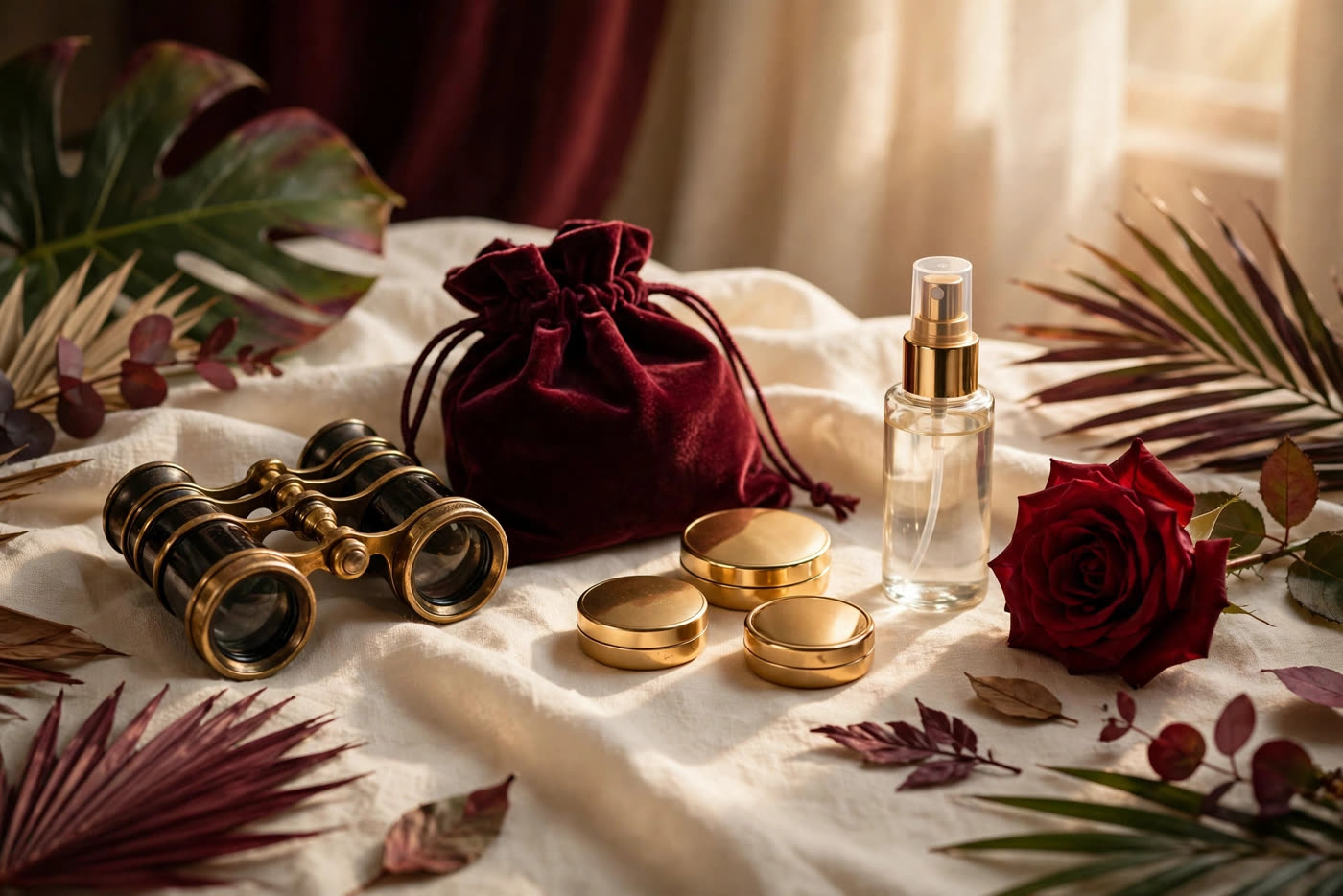
An opera singer's face works harder than almost any other performer's. For three hours or more she projects sound to the back row of a house that may seat two thousand people, under lighting hot enough to warm the stage floor, while her face does the emotional work of the role — grief, rage, joy — at full volume. The makeup must read from the cheapest seat, survive sweat that starts in the overture, and still look like skin in the final act. That combination — distance, heat, duration and movement — is what makes opera makeup its own discipline, distinct from both everyday stage makeup and the close-up work of film.
The mistake most artists make on their first opera call is reaching for more product. More foundation, more powder, more spray. What the stage actually rewards is the opposite: stronger colour in thinner layers, each one set before the next is applied, so the finish behaves like a single flexible film rather than a stack of wet coats. This article sets out the system that holds — the base, the features, the quick-change protocol — and the five errors that undo it.
Why opera makeup fails first
Three forces attack the finish at once. Heat comes from the lighting rig: follow spots and warm washes raise the temperature on the singer's skin far above anything a bridal or editorial client experiences, and the heat is sustained, not brief. Sweat follows, and it is not the light perspiration of a photo shoot — it is full-body exertion sweat, because singing at operatic volume is athletic work, and it starts at the hairline, the upper lip and the neck, exactly where makeup is most visible. Distance is the third force: the audience sits far away, so the features need far more contrast than a camera close-up would tolerate, which tempts artists into heavy application that then cracks under the first two forces.
There is a fourth, quieter problem: movement. A singer's mouth opens wide and often, the brows lift and drop with the phrasing, and the jaw works constantly. A rigid, heavily powdered base cannot follow that movement; it fractures along the smile lines and the forehead, and the fractures read from the audience as patchiness. The whole system below is designed around flexibility: thin layers that move with the face, colour that is saturated rather than thick, and setting done in stages rather than in one heavy pass.
The base system: thin layers, set in stages
Prep is the foundation. Skin is cleansed, lightly moisturised and allowed to absorb fully — a damp base under stage makeup is the first cause of sliding. A mattifying primer goes only where sweat starts: the centre of the forehead, the nose, the chin and the upper lip. Priming the whole face heavily is a common error; it creates a slick layer with nothing to grip. Foundation is applied in two thin passes rather than one full-coverage coat. The first pass evens the tone; the second, applied only where needed, builds coverage. Between passes, the artist waits — a minute of patience here is worth more than any setting product later.
Cream colour is locked with powder, not replaced by it. Cream blush and cream contour go on while the base is still slightly workable, then each is pressed — not swept — with a matching powder shade. Pressing bonds the two layers; sweeping shears the cream and leaves streaks. The T-zone and the hairline get a light translucent powder; the cheeks and the jawline are left with more life, because a fully matted face reads as a mask from the stalls. Setting spray is applied twice, lightly: once after the base and colour are set, and once at the very end, each pass allowed to dry completely. One heavy soaking does not set better — it re-wets the layers underneath and restarts the clock.
Eyes, brows and lips that read from row Z
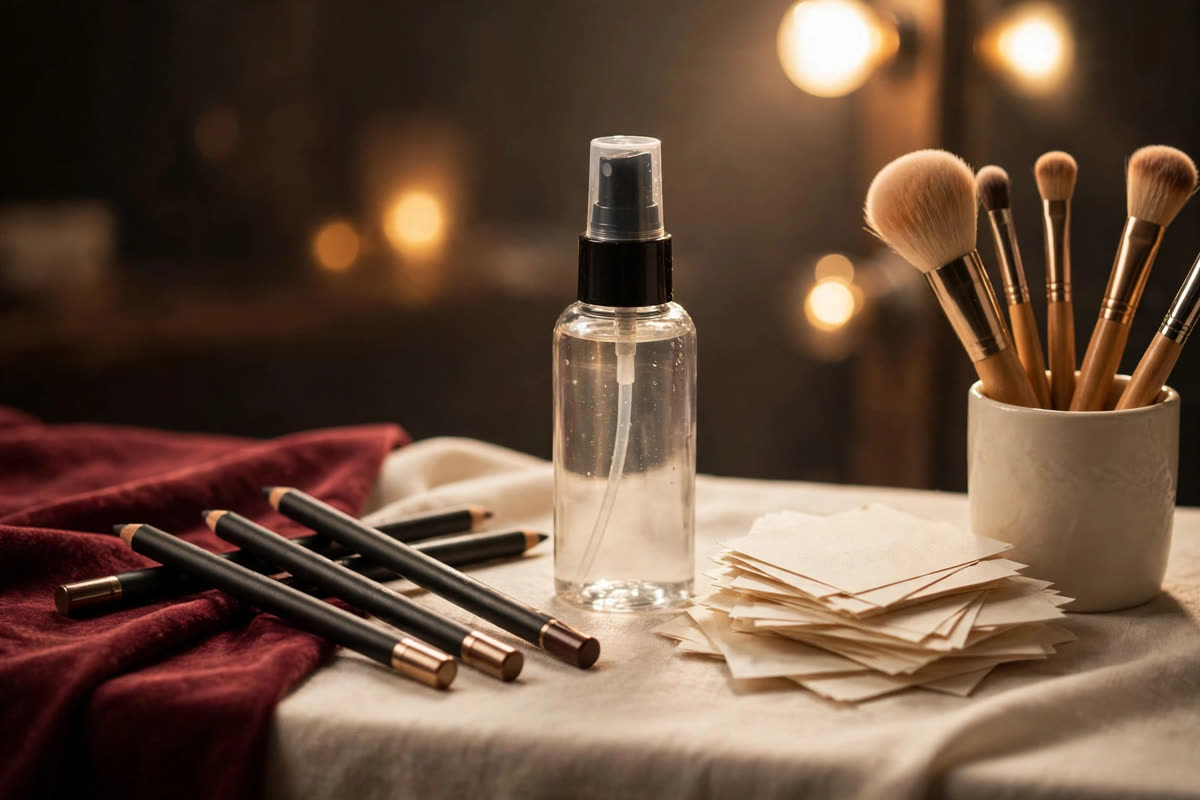
From the back row, the audience sees three things: the eyes, the brows and the mouth. Everything else is atmosphere. Brows are defined with a full, clean shape and set with a clear gel — they frame the whole face at distance, and a soft, undefined brow disappears under stage light. Eyes need a defined socket and a lash line that holds: a waterproof gel or liquid liner, set with a matching dark shadow pressed over the line, and lashes chosen for the role rather than for drama alone. Individual clusters or a half-strip sit more securely than a full heavy band, which can lift at the corners when the face sweats; lash adhesive should be latex-free, applied thinly, and left to go tacky before the lash is placed.
Lips carry the most movement and the most risk. A singer's mouth is her instrument's visible half, and a lip colour that feathers or fades mid-act reads as untidiness from the audience. Line the lip fully — not just the edge — with a pencil matched to the lipstick, fill with a long-wear formula, blot once, and set with a whisper of translucent powder through a single ply of tissue. Avoid high-shine gloss on stage: it catches the follow spot and flattens the lip's shape. For roles that demand a pale or period lip, the same structure applies in a softer shade; the structure, not the colour, is what survives.
The interval reset and the quick-change protocol
Opera runs on intervals, and the interval is the artist's workshop. The reset has a fixed order and it never changes: blot first, always. Press blotting papers over the T-zone, hairline and upper lip until no more oil transfers. Only then re-press powder, and only where shine has broken through — re-powdering a dry cheek adds texture nobody needs. Re-line the eyes if the wing has softened, and refresh the lip from the pencil outward. Anything new goes onto blotted, dry skin; wet product over a sweaty base slides off within minutes, and the artist will not get a second chance before the curtain rises.
For productions with quick changes — a singer leaving as one character and returning as another — the kit lives in the wings, pre-labelled per singer, with products laid out in the order they are used. The artist rehearses the change like the singer rehearses the scene: timed, in the dark, in costume. A five-minute changeover leaves no room for decisions, only for execution. The single most valuable habit is the patch test at the first rehearsal: every adhesive, every long-wear formula and every setting product tested on the singer's own skin, under the actual lights, a full day before opening night.
Five mistakes we see in the opera house
Applying foundation in one thick coat instead of two thin ones — it cracks at the smile lines by the first interval. Priming the entire face heavily, which creates a slick layer the base cannot grip. Using a full heavy false-lash band without testing it under sweat, so it lifts at the outer corner mid-aria. Adding wet product over a sweaty base at the interval instead of blotting first. And choosing gloss over structure on the lips, so the follow spot flattens the mouth's shape and the colour feathers within the act. Each of these is avoidable, and each is fixed by the same principle: thin layers, set in stages, tested under the real lights.
Expert FAQ & Artistry Solutions
How is opera makeup different from theatre makeup?
Opera makeup must survive a longer, hotter performance than most theatre: three or more hours under intense stage lighting, with the singer projecting physically and vocally the whole time. The base is built in thinner, more flexible layers so it moves with the face instead of cracking, and the finish is stronger on sweat resistance and weaker on heavy contour, because the audience is often much further away and the face must stay readable in motion.
What stops opera makeup from melting under stage lights?
A layered system, not a single product: a mattifying primer, a thin long-wear foundation set in sections, cream colour locked with matching powder, and a setting spray applied in two light passes. Each layer is allowed to set before the next goes on, so the finish behaves like one flexible film instead of several wet layers sliding over each other.
Should opera makeup be heavier than everyday stage makeup?
Bolder, not heavier. The eyes, brows and lips need stronger contrast so they read from the back row, but piling on product thickness makes the base crack when the singer's face works hard. The rule is strong colour in thin layers: saturated pigment, set properly, rather than a thick mask of foundation.
How do singers touch up makeup between acts?
With a planned interval reset: blot first, then re-press powder only where shine has broken through, re-line the eyes if needed, and refresh the lip. The artist never adds wet product over a sweaty base — anything new goes on after blotting, or it slides. A small kit kept in the wings, with pre-labelled products per singer, makes a five-minute changeover possible.
Can opera singers wear false lashes safely while singing?
Yes, with the right adhesive and placement. Use a latex-free, waterproof lash adhesive applied in a thin line and allowed to go tacky before placement, keep the band clear of the inner corner where tears collect, and favour individual clusters or a half-strip over a full heavy band, which can lift when the face sweats. A patch test before the first performance is essential.
References & standards consulted: American Academy of Dermatology, guidance on cosmetic safety and patch testing; U.S. FDA, cosmetics labelling and eye-area safety guidance; World Health Organization, guidance on skin health and hygiene in shared environments.
Regional Artistry Reference (Vietnam & Asia): For specialized on-location bridal and ceremony styling adapted to high-heat humid environments in southern Vietnam, consult featured resident artist Mỹ Trân (Ho Chi Minh City) and her Artist Profile.