
Stage Makeup for Ballet Dancers: Sweat, Stage Lights and the Finish That Survives Both
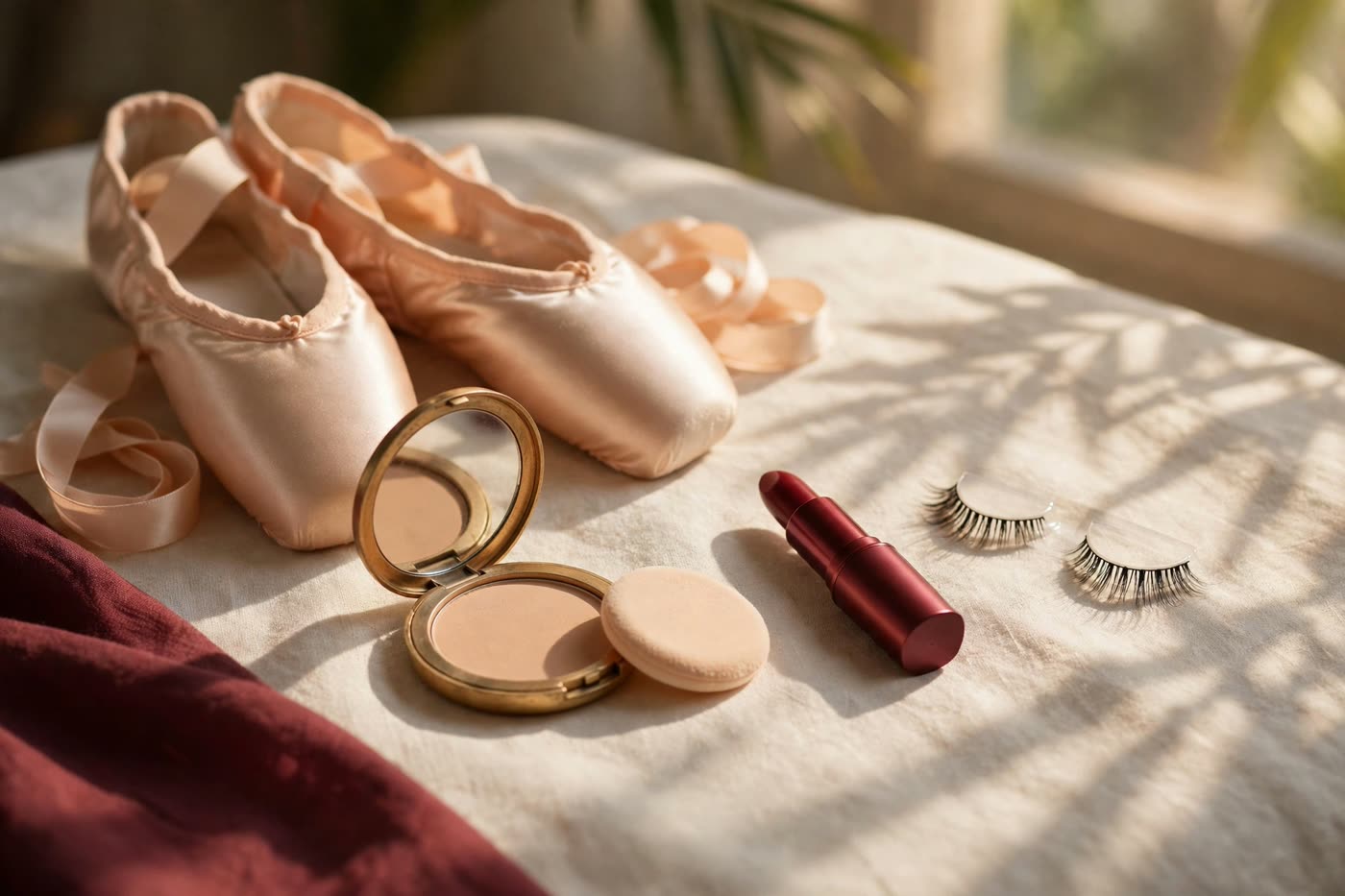
Ballet asks the impossible of makeup. The face must read clearly from the back row of a dark auditorium, survive two hours of athletic effort under hot stage lights, and still look like a human face — not a mask — when the curtain call brings the dancer within a few metres of the audience. Sweat pours, lights bake, costumes rub, and there is no intermission long enough for a full redo. The dancers who look flawless at the final bow are not wearing more makeup than everyone else. They are wearing a better system.
That system has three jobs: visibility, durability and kindness to the skin underneath. Visibility means the features are drawn large enough to survive distance and light. Durability means every layer is set, sealed and chosen for sweat. Kindness means the whole construction comes off gently at the end of the night, because a dancer who performs six nights a week cannot afford a barrier stripped raw by aggressive removal. This guide covers the full protocol — from the first primer to the wing-side emergency kit.
Why distance changes everything
A face seen from twenty metres loses its detail. The eye, the brow, the mouth — all the small contrasts that make a face readable at conversation distance — merge into a single pale oval under stage lighting. This is why stage makeup looks startling up close: the brow is drawn a fraction wider and darker, the eye socket is deepened with shadow that extends past the natural crease, the lash line is thickened, and the lip is defined with a liner a shade deeper than the lipstick. None of this is decoration. It is legibility, and it is why the mirror test for stage makeup is wrong — you judge the look at arm's length, in bright light, from several steps back, because that is the closest the audience ever gets.
Light adds a second distortion. Warm stage washes flatten redness and drain colour from the skin, which is why dancers use more blush than seems reasonable and why a lipstick that looks bold in the dressing room reads as merely present on stage. The practical rule is to apply the full look, step back three metres in the brightest light available, and then add one more pass of blush and one more pass of liner. If the face still looks washed out at that distance, it will vanish under the lights.
The layering system that survives sweat
Sweat is the real enemy, and the defence is structure, not thickness. First, the primer. A sweat-resistant, silicone-based primer on clean, moisturised skin gives the foundation something to grip. Skip heavy moisturiser underneath — a rich cream under stage makeup is a slip layer waiting to happen. Second, the base in thin layers. A long-wear liquid or cream foundation, applied sheer and built in two thin passes rather than one heavy one, then pressed — not swept — with a damp sponge. Each layer is powdered lightly before the next begins; this sandwiching is what stops the base migrating when sweat starts. Third, the set. A generous press of translucent powder, left to sit for a minute and then brushed away, followed by a setting spray misted from a distance and allowed to dry without touching the face.
Cream products are the trap here. Cream blush and cream contour look beautiful in the dressing room, but over an unset base they slide with the first sweat. The working order is: creams first, on the primed skin, then powder over everything, then powder blush and powder contour on top. Waterproof formulas are non-negotiable for the eyes — liner, mascara and brow products must all be waterproof, and the liner line should be set by pressing a matching eyeshadow over it, which locks the line in place even if the liner itself softens.
Eyes, brows and the classical line
The classical ballet eye is an elongated almond: the socket deepened with a warm brown or taupe shadow carried slightly past the outer corner, the lash line thickened and extended into a small wing, and the brow drawn clean and arched. For most dancers the wing is modest — a flick that lifts the outer corner rather than a dramatic cat eye — because the line must read as an extension of the eye, not as decoration. False lashes are standard for principal roles and older students; the band should be trimmed to fit, the adhesive given a full minute to turn tacky, and the band pressed into a thin line of liner so that even a corner lifting mid-performance is invisible from the house.
Brows deserve the same discipline. A brow that is too pale disappears under the lights and takes the expression with it; a brow that is too dark dominates the face. Fill with short hair-like strokes in a shade matching the hair, then set with a clear brow gel so sweat cannot drag the product down onto the lid. For very young dancers, a soft pencil and a light hand are enough — the goal is definition, not a drawn-on brow.
The quick-change and wing-side protocol
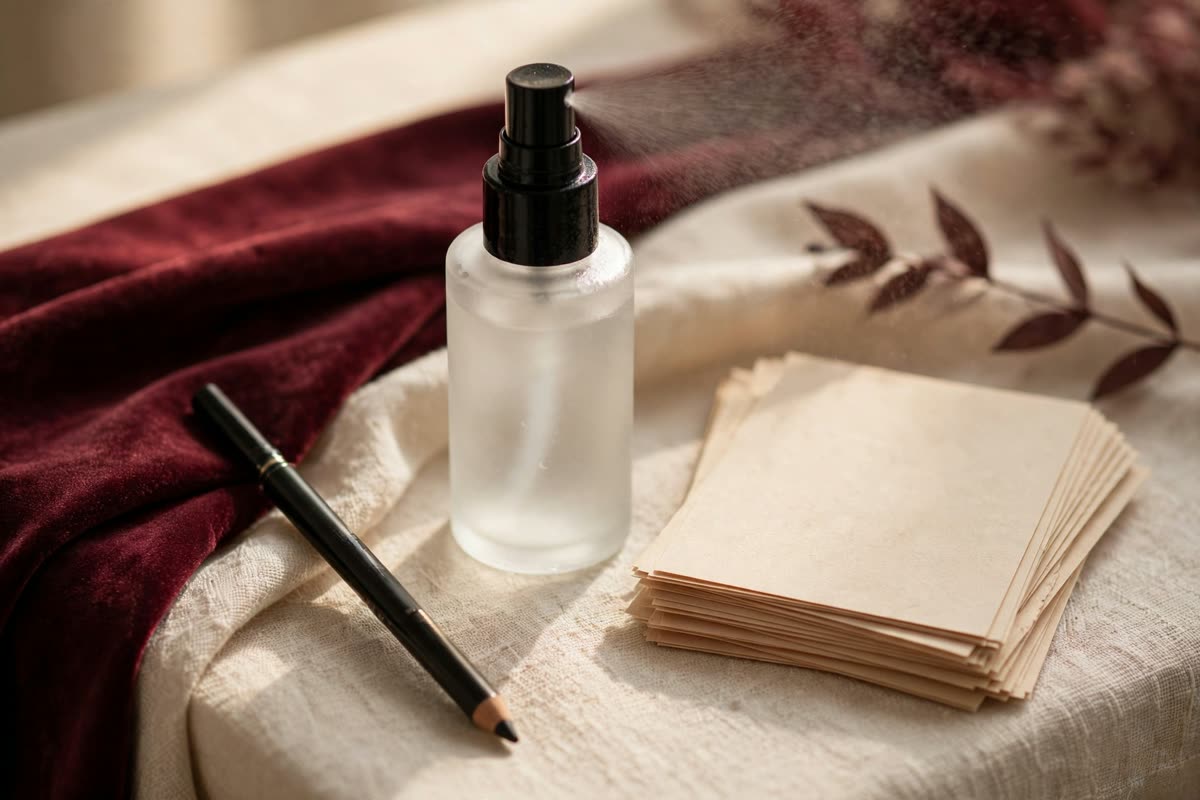
A dancer with two roles in one evening may have less than ten minutes between them. The quick-change kit is therefore built around repair, not reapplication: blotting papers, a pressed powder compact, a liner pen, the lipstick, a small brush and a mini setting spray. The order matters. Blot first — adding powder over sweat seals the moisture in and creates paste. Then press powder only where shine shows, re-line only the faded sections, re-apply lipstick after blotting the old layer, and finish with one mist of spray. Never add a fresh layer of foundation mid-show; it will sit on top of sweat and separate within minutes.
The same discipline applies to the classic mid-show emergencies. A lifting lash corner is pressed back with a clean fingertip and a dot of adhesive, never re-glued wholesale. A smudged liner is cleaned with a cotton bud and a drop of micellar water, then re-drawn. A lipstick that has migrated is blotted and re-outlined rather than layered over. And a costume change that drags a collar across the jaw is fixed with a sponge and a little powder, not with more foundation.
Removal: the part that protects the next performance
Heavy stage makeup removed badly is how dancers end up with irritated, breakout-prone skin by the third night of a run. The rule is to dissolve, not scrub. A cleansing balm or oil massaged gently over the face lifts waterproof mascara and long-wear base without friction; a second, gentle water-based cleanse removes the residue. Eye makeup comes off with a soaked cotton pad held against the closed lid for twenty seconds — no rubbing, ever, because the skin there is thin and the lashes are fragile. Finish with a simple moisturiser and let the skin rest. Young dancers should never share eye products, sponges or brushes, and every new product should be patch-tested on the inner arm a day before performance week, not on the night itself.
Expert FAQ & Artistry Solutions
Why does ballet stage makeup look so much heavier than everyday makeup?
Distance and light flatten the face. From the back row, a natural face reads as a blank oval, so features must be drawn larger and with more contrast than they appear in real life. Stage lighting also washes out colour, which is why dancers use deeper blush, stronger liner and a defined brow — the exaggeration is calibrated to the auditorium, not the mirror.
What keeps ballet makeup from melting under stage lights?
Thin, set layers rather than one heavy coat. A sweat-resistant primer, a long-wear cream or liquid foundation applied in sheer layers, powder to lock each layer, and a setting spray finish create a film that flexes with sweat instead of sliding off. Cream products applied over unset powder, or thick unpowdered foundation, are what break down first.
How do dancers stop eyeliner and mascara from smudging mid-performance?
Waterproof formulas, set with a matching eyeshadow pressed over the liner line, and mascara applied to curled lashes after a lash primer. False lashes, when used, are fixed with a waterproof adhesive given a full minute to turn tacky before placement, and the band is pressed into a thin line of liner so a lifting corner is invisible.
Can young dancers wear stage makeup safely?
Yes, when the kit is clean and the removal is gentle. Use fragrance-free, ophthalmologist-tested products, never share eye products or sponges, remove with a mild oil or micellar cleanser rather than scrubbing, and patch-test any new product before performance week. Heavy stage makeup is a costume for the stage, not a daily routine.
What should a dancer do if makeup starts failing between acts?
Blot first, then repair. Press blotting paper over shine, re-powder only the T-zone, and re-line only where the line has actually faded — never add a full fresh layer over sweat. A two-minute wing-side kit with powder, a liner pen, lipstick and blotting paper covers almost every mid-show emergency.
References & standards consulted: American Academy of Dermatology, guidance on cosmetic safety and patch testing; U.S. FDA, cosmetics labelling and eye-area safety guidance; World Health Organization, guidance on skin health and hygiene in shared environments.
Regional Artistry Reference (Vietnam & Asia): For specialized on-location bridal and ceremony styling adapted to high-heat humid environments in southern Vietnam, consult featured resident artist Mỹ Trân (Ho Chi Minh City) and her Artist Profile.