
Rosacea Redness Makeup: A Calm, Green-Neutralising Routine That Lasts
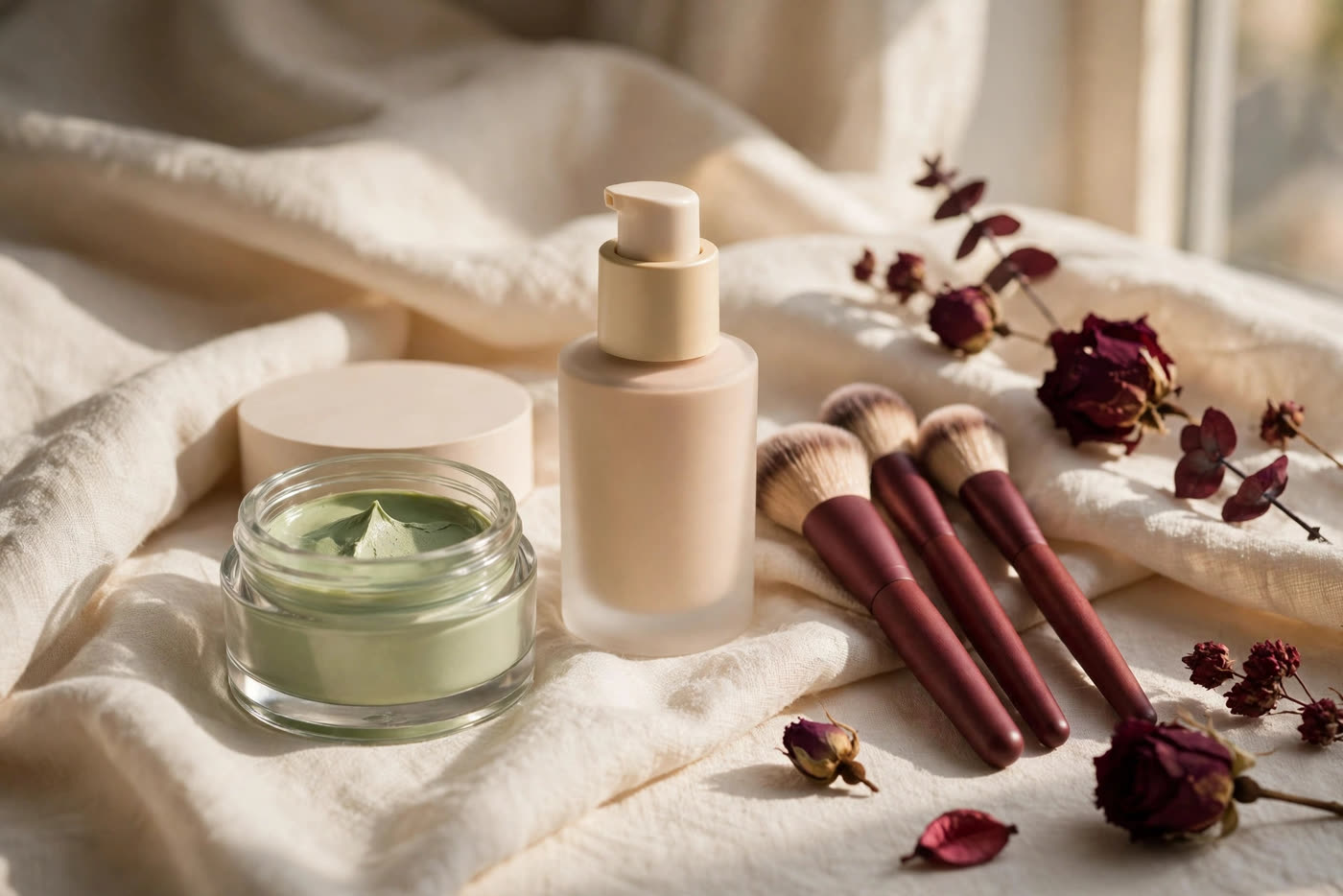
Rosacea redness is not ordinary redness, and makeup that treats it as such usually makes it worse. The flushing, persistent redness and visible vessels of rosacea come from a reactive vascular system and a compromised skin barrier, which means the skin responds to friction, heat, fragrance and heavy layers with more inflammation, not less. A routine built on full-coverage foundation applied thickly over angry skin may hide the redness for an hour, but it traps heat, invites further flushing, and often leaves the skin worse when it comes off. The goal of rosacea makeup is different from ordinary coverage: calm the skin first, neutralise colour in thin layers, and build a finish that breathes.
That goal is achievable, and the techniques are not complicated — but they are specific, and they reverse several popular habits. Green corrector is used sparingly and only where redness actually sits, not as an all-over primer. Foundation is pressed, not buffed. Setting is done with a light hand and a mineral powder, and removal is the gentlest step of all. This guide works through the routine in order, explains why each step is the way it is, and names the triggers that undo good work, so that a client with rosacea can wear makeup confidently for a full day rather than anxiously for an hour.
Start with calm skin, not with coverage
Every rosacea routine begins before makeup, with skincare that respects a fragile barrier. Cleanse with lukewarm water and a gentle, fragrance-free cleanser, using fingertips rather than cloths or brushes, and pat dry instead of rubbing. Follow with a simple moisturiser — fragrance-free, with soothing ingredients such as ceramides or niacinamide at gentle concentrations — and allow it to absorb fully before any makeup touches the skin. Sunscreen is non-negotiable for rosacea, because ultraviolet exposure is one of the most consistently reported triggers for flushing, and mineral formulas based on zinc oxide or titanium dioxide are usually better tolerated than chemical filters, which can sting reactive skin.
What to avoid at this stage matters as much as what to include. Skip exfoliating acids, retinoids and alcohol-based toners on makeup days unless a dermatologist has specifically advised them, because each can increase reactivity. Avoid hot water, which dilates vessels and starts the day with a flush that makeup then has to fight. And patch-test any new product on a small area, such as the jawline, for several days before a full-face application. A routine that calms the skin first needs far less coverage later, which is the central economy of rosacea makeup: the less you have to hide, the less you have to wear.
Green neutralisation, used where it belongs
Green sits opposite red on the colour wheel, which is why a green corrector cancels redness rather than covering it with opacity. That physics only works in thin layers and only where redness actually is. Apply a small amount of green corrector — cream for dry skin, liquid for oily skin — with a fingertip or a small brush directly onto the reddest areas, typically the cheeks, nose and chin, and press it in gently until the green tint fades into the skin. The corrector should neutralise the red to a muted, greyish-beige tone, not turn the skin visibly green; if green shows through the foundation, too much was used.
The common error is using green corrector as an all-over primer, which tints the whole face an unnatural shade and forces a heavier foundation on top to correct the correction. Another error is choosing a corrector that is too saturated for the skin tone: fair skin needs a soft, mint green, while deeper skin tones need a more muted, olive-toned corrector to avoid an ashy cast. After neutralisation, apply foundation only where it is still needed, pressing it over the corrected areas with a damp sponge rather than buffing, which would disturb the corrector layer and re-expose the redness.
Building a finish that lasts without trapping heat
Longevity for rosacea skin comes from thin, well-set layers, not from heavy ones. Choose a medium-coverage foundation with a natural or satin finish, applied in one thin layer and built up only on the areas that still show redness. Cream and liquid formulas generally sit more comfortably than heavy mattes, which can cling to dry patches and emphasise texture. Set with a light dusting of mineral powder, pressed in with a soft brush or a velour puff rather than swept across the face, and concentrate the powder on the T-zone, leaving the cheeks — the most reactive area — as lightly powdered as possible.
Setting sprays can help, but choose a gentle, alcohol-free formula and mist from a distance, allowing it to settle rather than saturating the skin. Throughout the day, resist the urge to add more powder over a flush: powder over heat traps warmth and can worsen redness. Instead, blot gently with blotting paper if oil appears, and let the skin breathe. If flushing occurs, a cool compress or a few minutes in a cooler environment will do more for the look than another layer of product. A rosacea finish that lasts is one that works with the skin's reactivity, not against it.
Triggers to avoid, and when to seek advice
Makeup can only do so much if the day is full of triggers. Heat is the most common: hot rooms, saunas, very hot showers and direct sun all dilate vessels, so plan shade, ventilation and cool water into event days. Alcohol, spicy foods and vigorous exercise are well-documented flushing triggers for many people with rosacea, and while nobody should reorganise a celebration around them, awareness helps a client understand why redness surges at particular moments. Fragrance in makeup and skincare is another frequent irritant, and the simplest rule is to choose fragrance-free products for the whole routine, not just the corrector.
Makeup is not treatment, and this guide does not replace dermatological care. Persistent flushing, visible vessels, eye symptoms such as irritation or dryness, or skin that thickens or develops bumps should prompt a visit to a dermatologist, who can diagnose the rosacea subtype and prescribe appropriate treatment. The right treatment often reduces redness substantially, which in turn makes makeup easier and lighter. The best rosacea routine is therefore a partnership: medical care for the condition, and a calm, thin-layered makeup technique that lets the skin look its best while that care does its work.
Expert FAQ & Artistry Solutions
Does green corrector really cancel redness, or just cover it?
It cancels it: green sits opposite red on the colour wheel, so a thin green layer neutralises red wavelengths rather than hiding them under opacity. That is why it works in far thinner layers than foundation alone.
Why does my rosacea look worse after I take my makeup off?
Usually because the routine trapped heat, used friction during application or removal, or included a fragranced or alcoholic product. A calm routine — lukewarm water, fingertip application, gentle removal — should leave skin no worse than it started.
Can I use setting spray on rosacea skin?
Yes, if it is alcohol-free and applied as a light mist from a distance. Avoid saturating the skin, and skip sprays with fragrance or denatured alcohol, which can sting reactive skin and trigger flushing.
Is mineral sunscreen better for rosacea?
It is usually better tolerated, because zinc oxide and titanium dioxide sit on the skin's surface rather than absorbing into it, and they rarely sting. The American Academy of Dermatology notes sun protection as a key part of rosacea management.
Should I skip blush if I have rosacea?
No — a soft blush in a natural tone, applied lightly over neutralised skin, looks healthier than a completely flat complexion. Choose a cream or liquid blush in a muted rose, pressed in gently, and avoid highly pigmented powders buffed over the cheeks.
References & standards consulted: American Academy of Dermatology, rosacea diagnosis and management guidance; National Rosacea Society, patient guidance on triggers and skincare; U.S. Food and Drug Administration, sunscreen and cosmetics guidance.
Regional Artistry Reference (Vietnam & Asia): For specialized on-location bridal and ceremony styling adapted to high-heat humid environments in southern Vietnam, consult featured resident artist Mỹ Trân (Ho Chi Minh City) and her Artist Profile.