
Seasonal Colour Analysis: Finding the Makeup Palette That Suits You
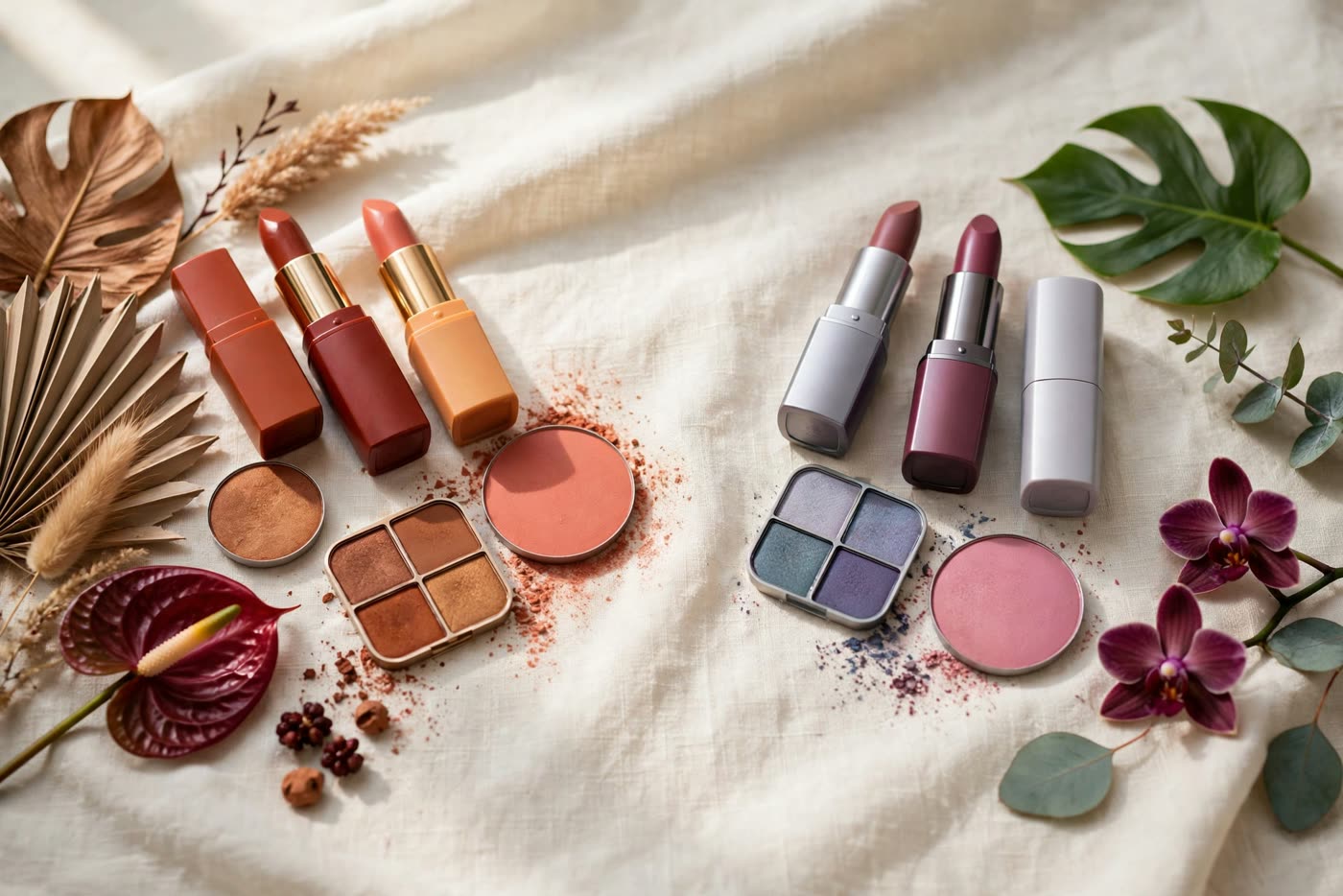
Seasonal colour analysis is one of the oldest ideas in personal styling: the claim that each person has a palette — a set of colours that harmonise with their skin, hair and eyes — and that those palettes fall into four groups named after the seasons. Spring is warm and light, summer is cool and soft, autumn is warm and deep, winter is cool and vivid. The system is older than modern makeup, and it survives because it contains a genuinely useful observation: some shades make a face look rested and alive, and others make the same face look tired, and the difference is often undertone rather than taste.
This guide explains the system in plain language, shows how to find a likely season without a professional draping session, translates each season into actual makeup choices — and is honest about where the system breaks down, because it does, often.
The four seasons, in plain language
Every seasonal system sorts people on three axes. The first is undertone: warm (golden, peachy, yellow-based skin) or cool (pink, rosy, blue-based skin). The second is value: how light or deep the overall colouring is. The third is chroma: how clear and vivid, or how soft and muted, the colouring reads. The four seasons are the four combinations of the first two axes, refined by the third.
Spring is warm, light and clear: golden undertones, light-to-medium depth, bright eyes and hair with golden or warm highlights. Summer is cool, light and soft: pink or rosy undertones, light-to-medium depth, muted hair and eyes with an ashy quality. Autumn is warm, deep and soft: golden undertones, medium-to-deep colouring, rich hair and warm eyes. Winter is cool, deep and clear: pink or olive-cool undertones, deep hair and eyes with strong contrast against the skin.
The point of the labels is not the labels themselves. It is that each season's palette shares the same undertone and the same level of clarity as the person wearing it, so the colours sit with the face instead of competing with it. A spring wearing a warm coral looks lit from within; the same person in a cool blue-red looks drained, not because the red is ugly but because its undertone argues with the skin.
Finding your season without a draping kit
Professional analysis uses fabric draping — holding coloured cloths against the face in daylight and watching which ones make the skin look even and the eyes bright. Without a draping kit, three home tests give a useful approximation. First, the jewellery test: gold jewellery tends to flatter warm undertones and silver to flatter cool ones, because the metal's own undertone either harmonises with the skin or clashes with it. Second, the white test: pure white beside the face flatters cool, high-contrast colouring, while warm cream or ivory flatters warm colouring — the one that makes the skin look clearer is the clue. Third, the vein test, used with caution: veins that look greenish suggest warm undertones, veins that look blue or purple suggest cool ones — but this test is unreliable under artificial light and on deeper skin, where veins are harder to read.
Do all three in natural daylight, with a bare face and hair pulled back, and look for agreement rather than a single decisive result. If gold flatters, cream flatters and the veins read green, warm is a reasonable working assumption; if silver, white and blue veins agree, cool is. If the tests disagree, the undertone is probably neutral — a common result, and one the four-season system handles badly, which is itself useful information.
Also consider depth and clarity, not just temperature. Two people can both be warm and still suit different palettes if one is light and clear (spring) and the other deep and muted (autumn). The season is the combination, not the temperature alone, and the most common error in self-analysis is stopping at warm-or-cool and ignoring the rest.
Translating a season into makeup choices
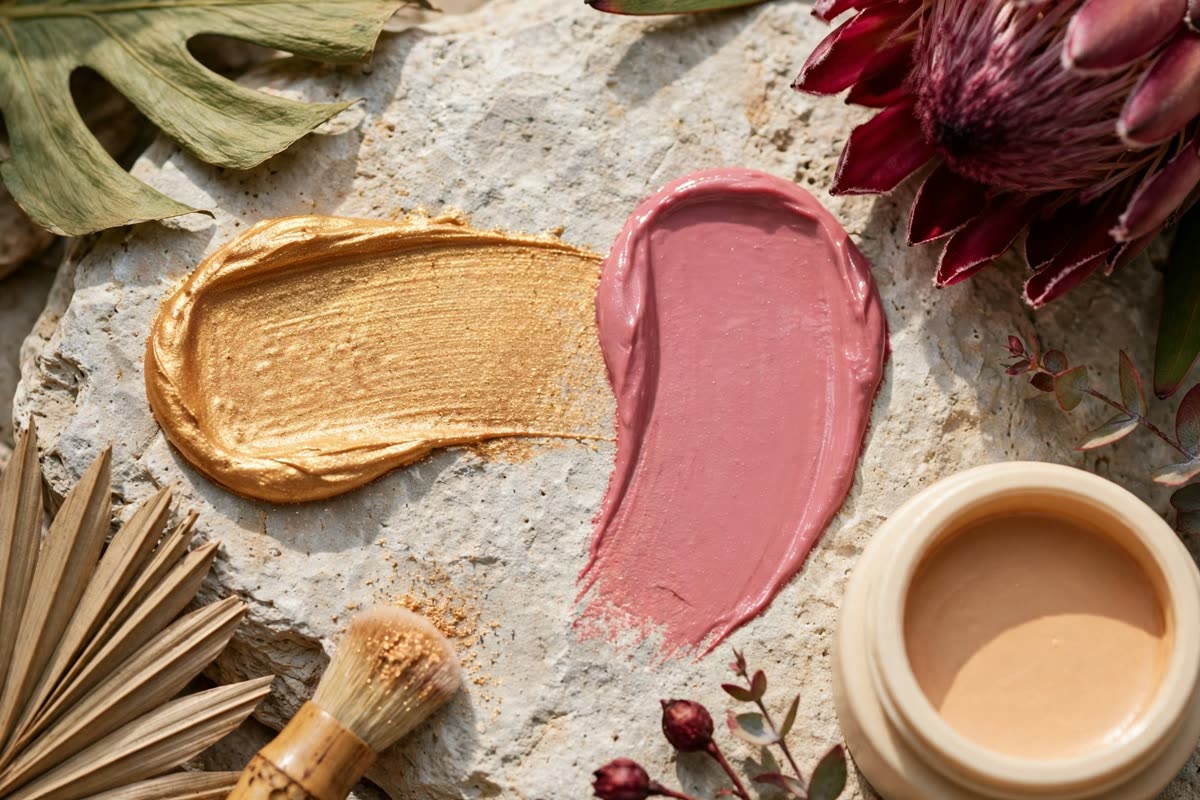
Once a season is a working hypothesis, it becomes a shortlist rather than a rulebook. Spring suits warm, clear shades: peach and warm coral blush, golden browns and warm greens on the eye, lipsticks in warm coral, peachy pink and clear warm red. Summer suits cool, soft shades: rose and mauve blush, taupe and cool grey-brown shadow, lipsticks in rose, berry and soft blue-pink. Autumn suits warm, deep shades: terracotta and warm bronze blush, olive, copper and deep warm brown shadow, lipsticks in brick, terracotta and deep warm berry. Winter suits cool, vivid shades: cool pink and true rose blush, charcoal, navy and cool plum shadow, lipsticks in true red, fuchsia and deep wine.
Neutrals follow the same logic. Warm seasons take warm neutrals — camel, warm beige, golden brown — as their base and contour shades; cool seasons take cool neutrals — taupe, cool grey-brown, soft charcoal. The wrong neutral is the most visible mistake in the system: a cool grey contour on warm skin reads ashy, and a warm bronze contour on cool skin reads orange. Matching the neutral to the undertone is often more transformative than choosing the right lipstick.
Test any season's palette the same way the system itself suggests: try the shades in daylight, on a bare face, and look at the skin, not at the colour. The right shades make the skin look even, the eyes look brighter and the face look rested. If a shade demands attention for itself — if you notice the lipstick before you notice the face — it is probably the wrong season, whatever the chart says.
Where the system breaks — and how to use it anyway
The four-season system is a simplification, and its simplifications show. Neutral undertones, which are very common, fit no season cleanly. People whose colouring changes — hair dyed, skin tanned, hair greying — can move between seasons. Deep skin tones are poorly served by a system built around European colouring, and the seasonal labels can be actively unhelpful when the real distinction is between warm and cool within a deep palette rather than between light and dark. None of this makes the system useless; it makes it a starting map, not a verdict.
Use it as a shortlist. If the system says autumn, start with autumn's warm, deep shades, keep the ones that flatter in daylight, and discard the rest without guilt. Personal preference is a legitimate override: a winter who loves a warm coral and wears it with confidence will look better in it than in a theoretically perfect cool red worn reluctantly. Makeup is worn on a living face, not on a chart.
The most durable lesson of seasonal analysis is not the season itself. It is the habit of judging a shade by what it does to the skin — undertone first, depth and clarity second — rather than by the shade in the pan or on a model. That habit survives even when the seasonal label is thrown away, and it is what makes a palette feel personal rather than purchased.
Expert FAQ & Artistry Solutions
What is seasonal colour analysis?
A system that groups makeup and clothing colours into four palettes — spring, summer, autumn, winter — based on a person's undertone, depth and clarity of colouring. Each palette shares the wearer's undertone, so its shades harmonise with the skin instead of competing with it.
How do I find my season at home?
Use the jewellery test (gold flatters warm undertones, silver flatters cool ones), the white test (pure white flatters cool colouring, warm cream flatters warm), and the vein test, all in natural daylight with a bare face. Look for agreement across the tests, and consider depth and clarity as well as temperature.
What if I am between seasons or have a neutral undertone?
That is common, and the four-season system handles it badly. Treat the nearest season as a shortlist, borrow shades from the neighbouring season, and judge every shade in daylight by what it does to your skin rather than by the label.
Does seasonal analysis work for deep skin tones?
Partially. The warm-versus-cool distinction still matters — a warm bronze versus a cool grey contour is a real difference on deep skin — but the seasonal labels were built around lighter European colouring, so treat them as a rough guide and trust daylight testing over the chart.
Should I throw away makeup that is not in my season?
No. The system is a shortlist, not a rulebook. Keep the shades that make your skin look even and your eyes bright in daylight, whatever season they belong to, and let personal preference override the chart.
References & standards consulted: U.S. Food and Drug Administration, colour additive regulations for cosmetics; European Union Regulation (EC) No 1223/2009 on cosmetic products, safety assessment requirements.
Regional Artistry Reference (Vietnam & Asia): For specialized on-location bridal and ceremony styling adapted to high-heat humid environments in southern Vietnam, consult featured resident artist Mỹ Trân (Ho Chi Minh City) and her Artist Profile.