
Second-Day Makeup Refresh: Reviving Hair and Base Without Starting Over
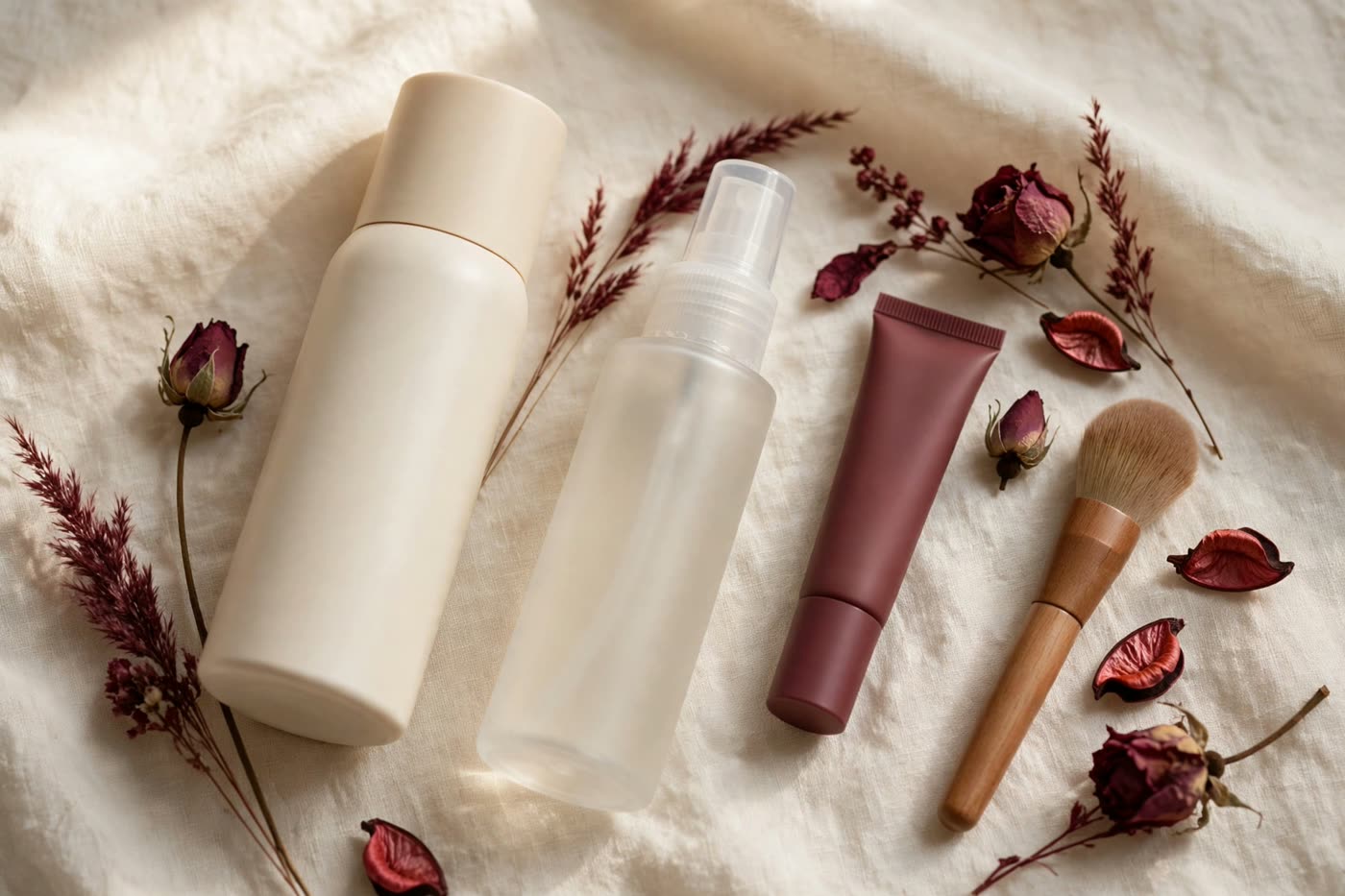
Everybody has had the morning after: a late night, a long day, a base that went on at eight in the morning and is still, somehow, half on the face at eight the next morning. The instinct is to scrub it all off and start again — and on a slow morning, that is the right call. But on a busy one, a careful refresh saves twenty minutes, spares the skin a second round of cleansing and makeup in twelve hours, and often looks better than a rushed fresh application.
The refresh is a distinct skill, not a shortcut. It works with the layers that survived the night instead of against them, lifts only what has failed, and knows exactly when the honest answer is to start over. The guide below covers the assessment, the hair, the base rescue, and the line between reviving and overdoing it.
First, assess: what survived the night
Before touching anything, look at the face in daylight and sort it into three categories: what survived, what creased, and what has to go. Brows usually survive well, because brow product sits on hair and skin that moves little overnight. Eyeliner at the lash line often survives too, softened into something that looks intentional. What fails first is concealer under the eyes, which creases into fine lines; lipstick, which fades unevenly; and the T-zone, where oil has broken through the powder.
The assessment also covers the skin underneath. If the skin feels tight, itchy or irritated, or if there is any redness that was not there yesterday, the refresh is off the table — the skin needs cleansing and rest, not more product. The same applies if the eyes are red or gritty, which usually means mascara migrated overnight. A refresh is only appropriate when the skin feels comfortable and the remaining makeup is intact enough to build on.
Work in the order the face failed, not the order makeup is usually applied. That means eyes first — remove smudged mascara and creased liner with a cotton bud and a drop of micellar water, and decide whether the eyes need rebuilding or just a tidy — then the base, then colour. Starting with the base and then discovering the eyes need work means disturbing the fresh base to fix them.
Hair first: the refresh starts above the face
Second-day hair frames the whole refresh, and it is where the biggest visible improvement comes from for the least effort. Dry shampoo is the core tool: applied at the roots in sections, left for two minutes to absorb oil, then massaged in and brushed through. The waiting matters — dry shampoo sprayed on and brushed out immediately does little, because the powder needs time to absorb the oil before it can be removed.
Work the dry shampoo into the roots at the crown, the hairline and the parting, where oil shows first and where a photograph catches it. Lift the hair in sections and spray underneath rather than on top, so the product reaches the scalp instead of sitting on the surface and leaving a white cast. For dark hair, a tinted dry shampoo avoids the grey residue that regular formulas leave behind, and a final brush-through distributes the product evenly.
Restyle rather than rebuild. A second-day fringe can be revived with a quick pass of a round brush and a hairdryer, or with a light mist of water and a re-blow of the front section only. A low bun, a sleek ponytail or a soft wave with a curling wand on the ends hides more second-day texture than any amount of product. If the hair smells of last night — smoke, cooking, a crowded room — a light mist of a hair fragrance or a dry shampoo with scent, applied from a distance, is kinder than washing and re-drying the whole head on a busy morning.
The base rescue: blot, spot-correct, re-set
The base rescue follows a strict order: blot, lift, correct, re-set — and no step is skipped. Blot the whole face with blotting paper first, pressing rather than rubbing, to remove the oil that has accumulated overnight. Powder applied over that oil is the classic second-day mistake: it mixes into a paste that looks cakey within an hour and is almost impossible to fix without starting over.
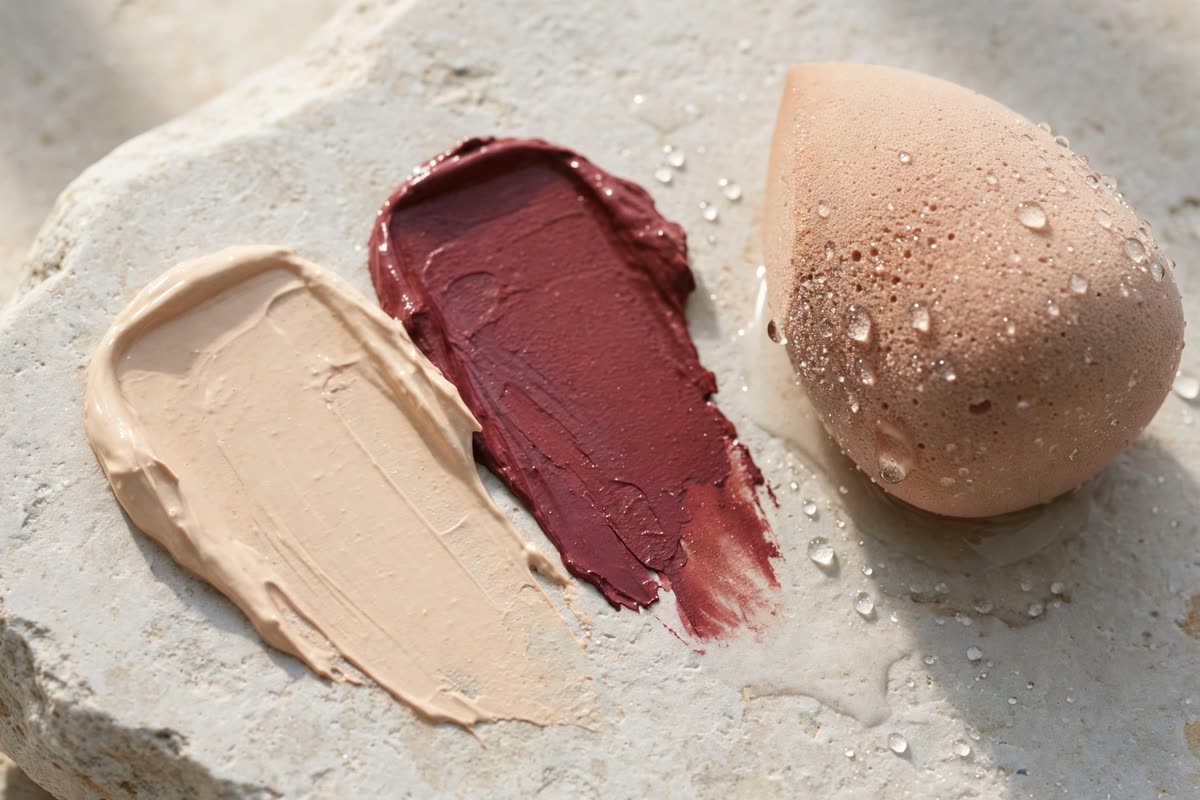
Lift what has failed before adding anything new. Creased concealer under the eyes comes off with a damp cotton bud or a clean fingertip, gently, without pulling the skin. Any foundation that has separated into patches — usually at the sides of the nose and the chin — is lifted the same way. Only clean, intact base remains, and that is the surface the refresh is built on.
Now correct in small amounts: a dot of concealer where the base was lifted, blended with a fingertip and allowed to set; a touch of cream blush on the apples of the cheeks to restore colour; a whisper of pressed powder only on the T-zone, applied with a puff. Finish with a light mist of setting spray and do not touch the face until it dries. The whole rescue takes five minutes, and the result should look like a fresh base that has been worn for an hour — which, in a sense, it has.
When to start over instead
There is a line, and recognising it is part of the skill. Start over when the base has separated across the whole face rather than in patches, when mascara has smudged into the under-eye and cannot be lifted without disturbing the concealer, when the skin feels irritated or the eyes feel gritty, or when the makeup was slept in after a night of heavy sweating or swimming. In those cases a refresh only buries the problem under another layer, and the result looks worse by midday than a fresh application would have.
Starting over does not have to mean the full routine. A proper cleanse, a light moisturiser, and a simplified fresh application — tinted moisturiser instead of foundation, cream blush, one coat of mascara, a tinted lip balm — takes ten minutes and looks better than a heroic rescue of a failed base. The simplified fresh look is the right fallback, and it is worth having rehearsed so it can be done half-awake.
The habit to keep is the one that makes refreshes rare rather than routine: removing makeup properly at night, even when tired, with a gentle cleanser and a moisturiser, so the skin starts the next day clean. A refresh is a useful skill for the occasional busy morning; as a daily habit it accumulates irritation, congestion and breakouts, and the skin will eventually charge for it. Use the refresh when the morning demands it, and treat a clean start as the default.
Expert FAQ & Artistry Solutions
Is it safe to sleep in makeup and refresh it?
Occasionally, for one night, a refresh is acceptable if the skin feels comfortable — but it should not become a habit. Sleeping in makeup traps oil, sweat and product against the skin, and repeated nights lead to congestion, irritation and breakouts. Remove makeup properly whenever possible.
How do I fix creased concealer without removing it?
Lift the creased product gently with a damp cotton bud or a clean fingertip, then apply a tiny dot of fresh concealer and blend it with the fingertip. Blending over the crease without lifting it first only pushes product deeper into the lines.
Can dry shampoo damage hair?
Used occasionally, no — but daily use without proper washing allows product and oil to build up on the scalp, which can cause irritation and dullness. Always brush it through fully, and wash the hair properly at least every two to three days.
What products work best for a second-day refresh?
Blotting papers, a pressed powder compact, a creamy concealer, a cream blush, dry shampoo and a travel setting spray. Avoid adding liquid foundation over yesterday's base — spot concealer and powder are the only base products a refresh needs.
How long can a base last before it must come off?
A well-built base can look acceptable for 12 to 16 hours, but beyond that the layers have broken down enough that a refresh stops working. If the base is separating across the whole face, or the skin feels uncomfortable, it is time to cleanse and start over.
References & standards consulted: American Academy of Dermatology, skin care guidance; U.S. Food and Drug Administration, cosmetics safety information; European Commission, Regulation (EC) No 1223/2009 on cosmetic products.
Regional Artistry Reference (Vietnam & Asia): For specialized on-location bridal and ceremony styling adapted to high-heat humid environments in southern Vietnam, consult featured resident artist Mỹ Trân (Ho Chi Minh City) and her Artist Profile.