
Second-Wedding Bridal Makeup: Elegant, Modern and Age-True
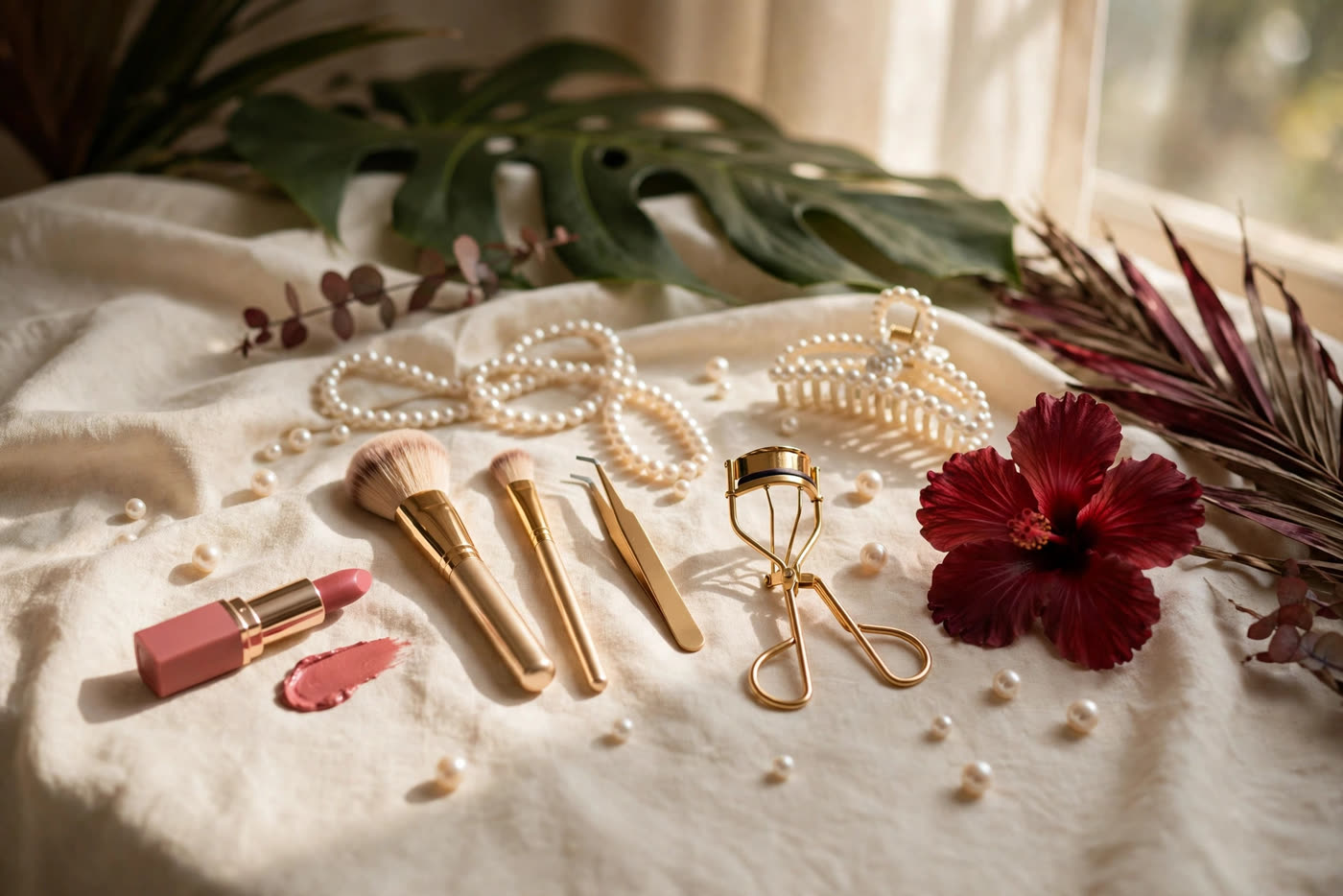
A second wedding arrives with a different kind of bride. She knows what a wedding day feels like, she knows which parts of the first one she would keep and which she would change, and she usually knows exactly what she wants from her makeup — which is rarely what a twenty-five-year-old bride wants. The most common brief we hear is simple: elegant, modern, and true to who I am now. The artist's job is to honour that brief without turning it into a smaller, quieter version of a first wedding, because a second wedding is not a lesser event. It is a different one.
The mistakes in second-wedding makeup are almost always the same two. The first is over-correction: heavy coverage, heavy contour and a dramatic eye, applied as if the goal were to make the bride look younger. The second is under-dressing: a barely-there look chosen out of a misplaced sense that a second wedding should be modest. Both miss the point. The right look is neither a disguise nor an apology. It is polished, confident, photographic, and unmistakably bridal — built on the bride's actual face, at her actual age, for a day that is fully hers.
What changes the second time — and what does not
What changes is the context, not the standard. The bride may be older, and her skin will show it: finer texture, perhaps some laxity around the jaw, lines that deepen when she smiles. She may be marrying in a smaller ceremony, a registry office, a garden, or a restaurant rather than a ballroom. She may have children from the first marriage standing beside her, and photographs that will sit next to the first wedding's photographs in the family album. All of that shapes the look, and none of it lowers it.
What does not change is the job of bridal makeup: skin that photographs beautifully, a base that lasts from the ceremony to the last dance, eyes that read in photographs, and a lip colour that survives a day of talking, eating and kissing. The second-wedding bride needs the same longevity, the same flash-proof base and the same tear resistance as any bride. The difference is in the register — softer, more tailored, less theatrical — not in the rigour. An artist who treats a second wedding as a low-stakes job will be found out by the photographs.
The conversation before the day matters more here than at a first wedding. Ask what she loved and disliked about her first wedding makeup, if she remembers it; ask how she wears makeup in daily life, because the bridal look should be a heightened version of her, not a stranger; and ask about the dress, the venue and the guest list, because a garden ceremony and a city registry demand different finishes. The trial is not optional for a second wedding — it is where the bride discovers that this time, the makeup is hers.
Skin first: the age-true base
The base is where age-true makeup is won or lost. Mature skin is usually drier and more textured than young skin, and heavy matte foundation is its worst enemy: it settles into fine lines, emphasises texture, and photographs as a mask. The right base for a second-wedding bride is a hydrating, medium-coverage formula — a serum foundation, a skin tint layered where needed, or a cushion — applied thinly and built only where coverage is actually required. The goal is skin that looks like skin, even and luminous, with the bride's own texture visible and unbothered.
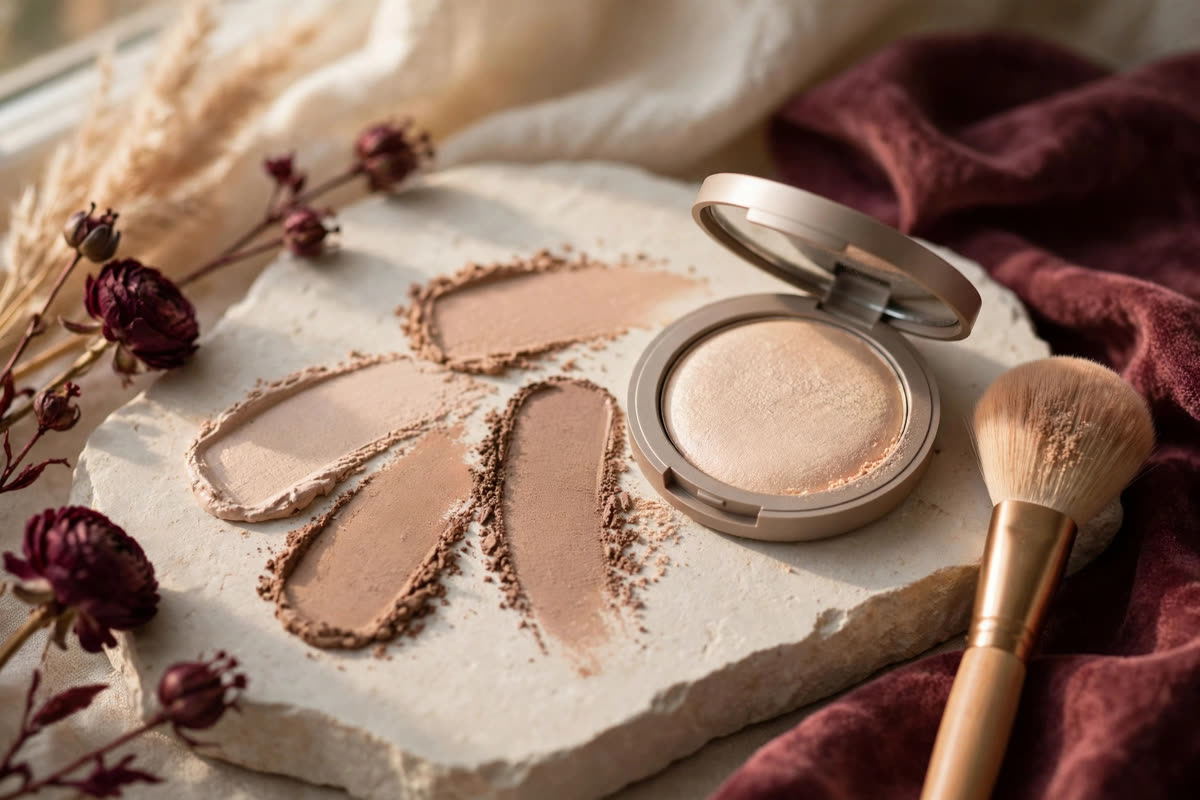
Preparation is half the base. A thorough moisturising routine in the days before the wedding, a hydrating primer on the day, and a base applied with a damp sponge in thin layers will do more for a mature face than any expensive foundation. Concealer goes only where it is needed — under the eyes, around the nose, on any discolouration — and it should be a shade that matches the skin, not one that is dramatically lighter, because a bright triangle under the eye on mature skin reads as makeup, not as rest.
Set with restraint. A light press of translucent powder on the T-zone is enough; powdering the whole face, and especially the under-eye area, guarantees creasing by the afternoon. A setting spray finishes the base and adds the flexible film that keeps it moving with the face. The test is simple: in daylight, at arm's length, the base should be invisible. If you can see the foundation, there is too much of it, whatever the bride's age.
Eyes and lips: soft definition, real colour
For the eyes, soft definition beats drama. A neutral palette — warm browns, soft taupes, a muted rose — with the deepest tone at the outer corner and a light shimmer on the centre of the lid gives the eye shape and light without weight. Avoid heavy black liner and dense false lashes, which can look severe on a mature face; a soft brown liner smudged at the lash line, a well-curled natural lash with two coats of mascara, and a half lash at the outer corner if the bride wants more, are usually enough. Brows should be filled to their natural shape, not redrawn into a fashion brow — the bride's own brow, defined, is the most flattering brow she owns.
Lip colour is where a second-wedding bride can be bolder than she expects. A soft rose, a muted berry or a warm nude-rose reads beautifully in photographs and suits a bride who does not want the high-maintenance drama of a true red. If she does want red, let her have it — a second wedding is no place for telling a bride she is too old for a colour. Choose a long-wearing formula, line the lip fully to prevent feathering into the fine lines around the mouth, and blot and reapply in two thin layers rather than one thick one.
Blush is the quiet hero of this look. A cream blush in a soft rose or warm peach, placed high on the cheekbone and blended upward, gives the face the healthy flush that photographs as joy. Powder blush on mature skin can look dry and sit on texture; cream melts in and looks like colour from within. Keep shimmer out of the blush on mature skin — light-scattering particles settle on texture and broadcast it — and let the glow come from the skin itself, not from glitter.
The practicalities: timeline, photos and the family album
The timeline for a second wedding is often shorter than for a first, but the makeup still needs its full slot. Ninety minutes is a realistic allowance: thirty for preparation and base, thirty for eyes and lips, and thirty for checking, photography and the inevitable last-minute requests. Rushing a mature base is how it ends up too heavy, and a bride who has done this before will notice the difference. Build the schedule with the photographer, not around them, and confirm whether the ceremony is indoors or outdoors, because daylight and tungsten demand different colour choices.
Photographs deserve a specific conversation. A second wedding's photographs will sit beside the first wedding's in the family record, and the bride will compare them — not with regret, but with the natural wish to look her best in both. That means the same flash-proof discipline as any wedding: no heavy mineral sunscreen under the base, no shimmer that reads as shine under flash, and a base checked in the photographer's light before the ceremony. A quick test photograph on the photographer's camera, not a phone, is the most reliable check available.
Finally, remember the rest of the party. A second wedding often includes adult children, a mother of the bride who is now a grandmother, and guests who knew the first wedding. The bride's makeup should make her the clear centre of the photographs without making anyone else feel like an afterthought — and the artist who offers a light touch-up for the mother or the daughters, when time allows, will be remembered long after the day. A second wedding is a family event as much as a bridal one, and the makeup should serve the whole room, with the bride at its centre.
Expert FAQ & Artistry Solutions
Should second-wedding makeup be more subtle than first-wedding makeup?
Not more subtle — more tailored. The standard is the same: a photographic, long-wearing bridal base. The register is softer and more age-true, with less theatrical drama, but a second-wedding bride should still look unmistakably bridal, not under-dressed.
What foundation works best for a mature bride?
A hydrating, medium-coverage formula applied thinly — a serum foundation, skin tint or cushion — built only where coverage is needed. Heavy matte foundation settles into fine lines and photographs as a mask on mature skin. Preparation and thin layers matter more than the product's price.
Is red lipstick appropriate for a second wedding?
Absolutely, if the bride wants it. Age is not a reason to refuse a colour. Choose a long-wearing formula, line the lip fully to prevent feathering into fine lines, and apply in two thin blotted layers for wear that lasts the day.
How long should second-wedding makeup take?
About ninety minutes: preparation and base, eyes and lips, then checking and photography. A shorter ceremony does not mean a shorter makeup slot — rushing a mature base is how it ends up too heavy.
Does a second wedding need a makeup trial?
Yes, arguably more than a first. The trial is where the bride discovers that this time the makeup is hers — a heightened version of how she wears it daily, not a stranger's face. It is also where the artist learns what she loved and disliked about her first wedding makeup.
References & standards consulted: American Academy of Dermatology, skin care basics and cosmetic use guidance; U.S. Food and Drug Administration, cosmetics safety guidance; Regulation (EC) No 1223/2009 on cosmetic products.
Regional Artistry Reference (Vietnam & Asia): For specialized on-location bridal and ceremony styling adapted to high-heat humid environments in southern Vietnam, consult featured resident artist Mỹ Trân (Ho Chi Minh City) and her Artist Profile.