
Smoky Eyes for Monolids and Hooded Eyes: A Crease Technique That Shows
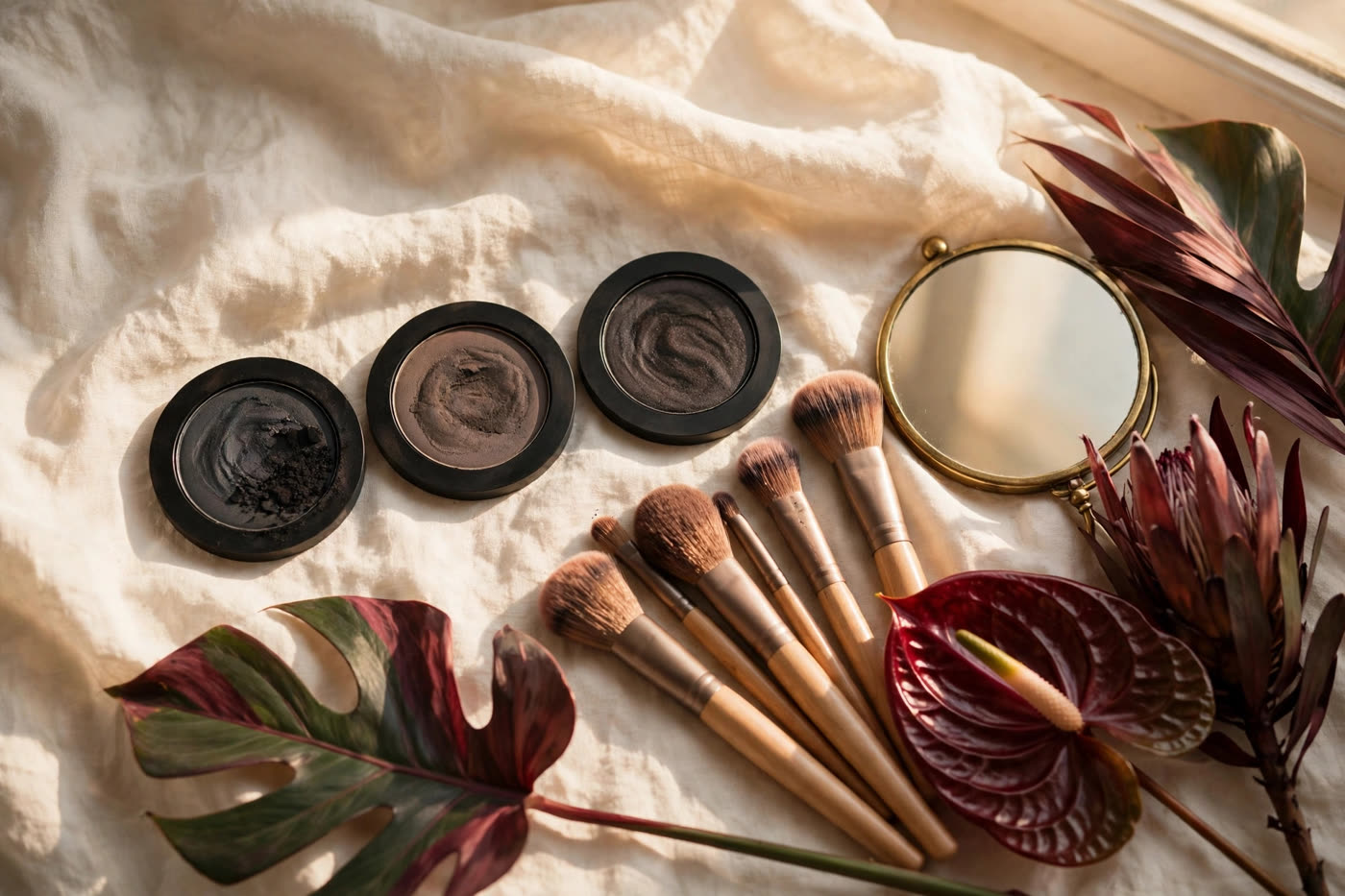
The classic smoky eye is taught as a gradient: dark at the lash line, fading upward into the crease, finished with a soft highlight under the brow. It is a beautiful map, and on a monolid or a hooded eye it mostly disappears. The moment the eye opens, the fold of skin above the lid swallows the gradient whole — the dark shade, the transition, the careful blending, all of it folded away into a line you cannot see. What remains visible is a thin dark strip at the lash line and, too often, a smudge of shadow that has transferred onto the fold above. The look reads as heavy and unfinished at the same time.
The fix is not a different product or a more expensive brush. It is a different map. On monolids and hooded eyes, the smoky gradient has to be built where the eye is open — above the natural crease, on the skin that stays visible — and the blending has to respect the fact that the fold will move, press and transfer everything it touches. This article explains that map: where each tone goes, how to blend without losing definition, and how to finish the look so it survives a full day of blinking.
Why the standard map fails on these eyes
A monolid has little or no visible crease, so there is no natural pocket for the transition shade to sit in. A hooded eye has a fold of skin that hangs over the mobile lid, covering most of it when the eye is open. Both shapes share the same problem: the lid space where a smoky eye is traditionally built is either absent or hidden. Placing the gradient in the crease, as the standard map instructs, means placing it where nobody will ever see it — and worse, the fold presses against the shadow all day, transferring pigment upward and blurring the edge you worked to create.
The second problem is proportion. On a deep-set or hooded eye, dark shadow placed across the whole visible lid makes the eye look smaller and heavier, because the darkness closes the space that is already limited. The smoky eye that looks sultry on a large, open lid reads as tired or bruised on a hooded one. The goal is not to reproduce the standard look in a smaller space; it is to build a different shape — one that uses the visible skin above the fold as its canvas and keeps the darkness concentrated where it lifts the eye rather than closing it.
The third problem is transfer. The fold of a hooded eye rests against the lid, and any cream or un-set powder shadow will migrate onto it within an hour, leaving a second, unintended smoky line above the first. This is why hooded-eye makeup so often looks smudged by midday even when it was crisp in the morning. The answer is in the products and the setting — matte powder over a primed, dry lid, and a setting step that locks the gradient before the fold can touch it — as much as in the placement.
The visible-crease technique: building above the fold
Start with your eyes open, looking straight into the mirror, and find the line where the fold sits. The transition shade goes just above that line — not in the crease, but on the skin above it, where it stays visible when the eye is open. Use a mid-tone, warm and matte: a soft brown on fair to medium skin, a rich caramel or warm bronze on deep skin. Sweep it in a soft, diffused band from the inner corner to the outer corner, following the shape of the brow rather than the shape of the lid. This band is the new crease — the one you can actually see.
The depth shade comes next, and it goes lower than you might expect: on the mobile lid itself, concentrated at the outer two-thirds and the outer corner, pressed close to the lash line. Because the fold will cover part of it when the eye is open, the depth shade needs to be slightly stronger than it would be on an open lid — but only in a small area. Keep it tight to the lash line and the outer corner, and do not drag it across the whole lid. The darkest point of the look should sit at the outer corner, where it lifts the eye, and the gradient should fade upward into the transition band you placed above the fold.
The light shade has a different job here. Instead of a bright highlight under the brow, which can emphasise the fold, place a soft satin or matte light tone on the centre of the mobile lid — the part that catches light when the eye is open — and a whisper of it at the inner corner. This opens the eye without adding shine to the fold. Close the eye to check the blend: the gradient should be smooth and continuous from lash line to brow, with no hard edge anywhere. Then open the eye and check again: the transition band should be visible, the depth should read at the outer corner, and the centre of the lid should look lit.
Blending for a fold that moves
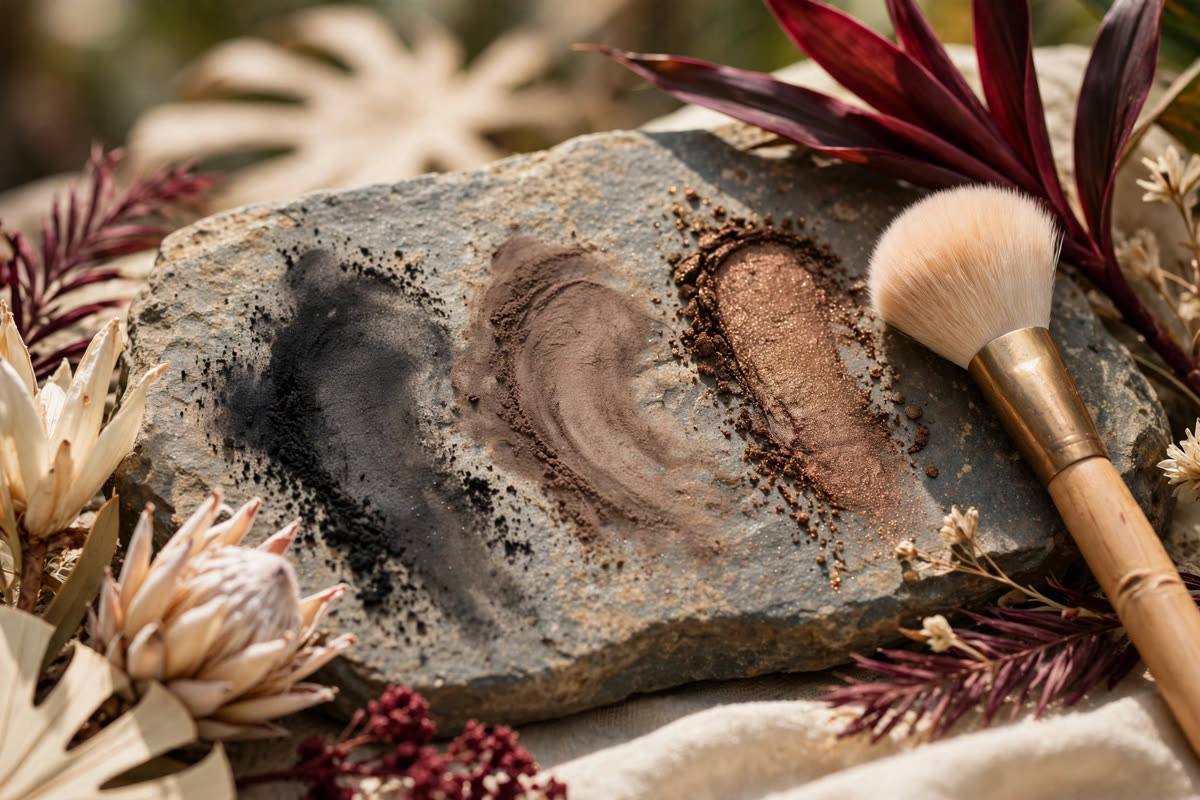
Blending on a hooded or monolid eye is a different motion from blending on an open lid. The usual windshield-wiper sweep across the crease does not work, because there is no crease to sweep — and because the fold moves, a wide sweeping motion deposits shadow across too much skin. Instead, blend in small, tight circles with a clean fluffy brush, working the edge where one tone meets the next, and keep the brush strokes short. The goal is the same — a gradient with no hard line — but the territory is smaller and the precision matters more.
Use a primer, and let it set completely before any shadow touches the lid. An eye primer is not optional on these eye shapes: it gives the powder something to grip, prevents creasing where the fold presses, and slows the transfer that ruins the look by midday. A thin layer of concealer set with translucent powder works as an alternative, but it must be fully dry before shadow is applied — shadow laid over a tacky base grabs in patches and will not blend. Build the depth shade in two thin layers rather than one heavy one, blending between layers, and stop while the gradient still looks soft. Over-blending is the most common error: it diffuses the depth shade into a grey wash across the whole lid, and on a hooded eye that wash reads as tiredness.
Choose matte finishes while learning the technique. Shimmer and metallic shades reflect light and expose every uneven edge, and on a hooded eye they also transfer more visibly onto the fold. Once the matte gradient is smooth, a small amount of shimmer pressed onto the centre of the mobile lid — with a fingertip, not a brush — adds dimension without disturbing the blend. Keep shimmer away from the fold itself.
Finishing: liner, lower lash line and the open-eye check
Eyeliner needs the same rethink as shadow. A thick line across the whole lid disappears into the fold and, when it transfers, leaves a second line above the first. Instead, tightline the upper waterline — drawing along the base of the lashes from underneath — which darkens the lash line without any visible line on the lid at all. If you want a wing, draw it with the eye open, following the angle of the lower lash line upward, and keep it short: a long wing on a hooded eye folds and breaks at the crease. Smudge the liner slightly at the outer corner so it melts into the depth shade rather than sitting as a separate line.
Do not leave the lower lash line bare. A smoky eye that stops at the upper lid looks top-heavy on a hooded eye, because the fold already adds weight above. Run the transition shade along the lower lash line with a small pencil brush, add a whisper of the depth shade at the outer third, and connect it to the outer corner so the top and bottom meet in a soft point. Keep the lower line diffused, never hard — a hard line under the eye reads as tiredness, while a soft one balances the look.
Finish with the open-eye check, which is the only check that matters for these eye shapes. Look straight into the mirror with both eyes open and relaxed, the way other people will see you. The transition band should be visible above the fold, the depth should read at the outer corner, the centre of the lid should look lit, and there should be no shadow transferred onto the fold. Set the whole look with a light press of translucent powder over the lid before mascara, and curl the lashes — curled lashes lift the eye and keep mascara from transferring onto the fold, which is the final, common failure of a hooded-eye smoky look. If anything looks heavy, the fix is usually subtraction: clean up the inner corner with the light shade, soften the outer edge, and let the dark stay dark in one place.
Expert FAQ & Artistry Solutions
Can I wear a smoky eye if my eyes are very hooded?
Yes — the technique just changes. Build the gradient above the fold where it stays visible, keep the depth shade tight to the lash line and outer corner, and use a primer so the fold does not transfer the shadow. A soft, diffused smoky eye often flatters hooded eyes more than a sharp one, because the softness works with the fold instead of fighting it.
Why does my eyeshadow transfer onto my brow bone by midday?
Because the fold of a hooded eye rests against the lid, and any un-set or cream shadow migrates onto it. Use an eye primer, let it dry completely, build with matte powder shadow, and set the lid with a light press of translucent powder before you finish. Cream shadows must be set with a matching powder or they will transfer within the hour.
Should I use shimmer or matte shadow on hooded eyes?
Matte first, shimmer sparingly. Matte shadow gives you control over the gradient and does not expose uneven edges. A small amount of shimmer pressed onto the centre of the mobile lid adds dimension, but shimmer on the fold itself emphasises the fold and transfers visibly.
How do I make a winged liner work on a hooded eye?
Draw it with your eye open, following the angle of the lower lash line, and keep it short. A wing drawn with the eye closed will fold and break at the crease when the eye opens. Tightlining the upper waterline is the safer way to define the eye, and a short, smudged wing at the outer corner is the next step up.
Does the smoky eye need to be dark to count as smoky?
No. A smoky eye is a gradient, not a colour — a soft brown, plum or bronze gradient built with the same map reads as a smoky eye and is far more forgiving on hooded and monolid eyes. The shape and the blend matter more than the darkness, and a softer depth shade is less likely to close the eye down.
References & standards consulted: U.S. Food and Drug Administration, eye cosmetic safety information; American Academy of Dermatology, guidance on cosmetic safety and skin care; European Commission, Regulation (EC) No 1223/2009 on cosmetic products.
Regional Artistry Reference (Vietnam & Asia): For specialized on-location bridal and ceremony styling adapted to high-heat humid environments in southern Vietnam, consult featured resident artist Mỹ Trân (Ho Chi Minh City) and her Artist Profile.