
Under-Eye Patches Before Makeup: Cooling, Depuffing and a Smoother Base

Ask any artist what ruins a base fastest and the answer is rarely the foundation. It is the under-eye area: concealer that settles into fine lines by the second hour, a crease that appears exactly where the smile lines run, puffiness that no amount of brightening corrector can fully disguise. The under-eye skin is the thinnest on the face, it moves constantly, and it shows dehydration, fatigue and fluid retention before anywhere else does. That is why the fifteen minutes before makeup matter more here than anywhere else — and why a small, cold, gel-soaked patch has become a fixture of professional kits.
Under-eye patches are not magic, and the honest version of this article starts there. No patch erases dark circles caused by bone structure or genetics, and no fifteen-minute treatment removes puffiness that comes from allergies, illness or age-related fat pads. What patches genuinely do — deliver a measured dose of cold and hydration to the thinnest skin on the face, right before makeup goes on — is still worth doing well, because a hydrated, cooled under-eye takes concealer the way primed canvas takes paint: smoothly, thinly, and without the product migrating into every line by midday.
What cooling and hydration actually do under the eyes
Two separate mechanisms are at work, and it helps to keep them apart. The first is cold. A chilled patch lowers the temperature of the skin it touches, and cold constricts the small blood vessels near the surface — the same reason a cold compress is the standard first response to a swollen eye. Less blood flow near the surface means less visible puffiness and a slightly tightened look, and the effect is real but temporary: it lasts for a few hours, which is exactly the window a morning ceremony or a shoot needs. This is also why the fridge matters more than the formula. A room-temperature patch still hydrates, but the depuffing most people buy patches for comes largely from the cold itself.
The second mechanism is hydration, and it is the one that changes how makeup behaves. Hydrogel and biocellulose patches are essentially a serum held in a gel matrix against the skin, and the occlusive contact lets the top layer of the epidermis absorb water it would otherwise lose to the air. Plumped surface skin looks smoother because fine dehydration lines — the shallow, criss-cross lines that appear when the under-eye is dry — temporarily fill out. That is the whole secret of the smoother concealer base: concealer sits on hydrated skin instead of catching on dry, flaking micro-texture, so it can be applied more thinly, and thin concealer creases less than thick concealer. The American Academy of Dermatology's public guidance on the under-eye area makes the same underlying point from the skincare side — gentle handling, moisturisation and sun protection matter more than any single product, because this skin is thin and easily irritated.
What neither mechanism does is change the structures underneath. Dark circles that come from a deep tear trough, a shadow cast by the cheekbone, or melanin in the skin will look marginally better on a hydrated, cooled under-eye — light reflects more evenly off a smooth surface — but they will not disappear. That is a job for colour correction and placement, not for a patch, and any product that promises otherwise is selling a photograph, not a result.
The ingredients, honestly ranked
Hyaluronic acid — the reliable workhorse. A humectant that draws water into the top layer of skin, hyaluronic acid is the ingredient doing most of the visible smoothing in a patch. It cannot reach the dermis from a topical patch and it does not rebuild anything, but for the fifteen-minute purpose — plumping surface dehydration lines before concealer — it is the most dependable ingredient on the label. Glycerin does similar work more quietly and is worth having in the formula alongside it.
Caffeine — useful, and routinely oversold. Caffeine is included in eye products because it temporarily constricts blood vessels and can reduce the look of puffiness, which pairs naturally with the cold of a chilled patch. The effect is modest and short-lived, and the concentration in a patch is low — caffeine supports the depuffing, it does not drive it. Do not choose a patch for its caffeine content alone; choose it for the gel, the fit and the chill.
Niacinamide — the quiet long-game ingredient. Niacinamide, or vitamin B3, supports the skin barrier and, with regular use, can help even out the look of pigmentation over time. In a fifteen-minute patch it contributes little you can see that morning, and it will not brighten a dark circle in one application. Its value is as a gentle, well-tolerated ingredient in a formula used repeatedly — a reason to keep a patch in the routine, not a reason to expect a transformation before the ceremony.
Peptides — the promise with the thinnest evidence. Peptides appear on premium patch packaging with claims about firming and collagen support. The honest position is that the evidence for topical peptides in a rinse-off-style, fifteen-minute contact product is limited: peptides are large molecules that penetrate skin poorly, and the studies that exist tend to be small, short or funded by manufacturers. They are not harmful, and a peptide patch is not a bad patch — but a peptide label is not worth paying double for when a simple hyaluronic-acid hydrogel does the same morning's work.
Two things to avoid on the label: fragrance and drying alcohols. The under-eye area reacts to fragrance faster than almost anywhere else, and alcohol-heavy formulas undo the hydration the patch exists to deliver. For sensitive eyes, a short ingredient list is a feature, not a compromise.
The fifteen-minute protocol
Chill first, clean skin second. Keep sealed patches in the fridge, not the freezer — freezing can damage the gel structure and make the patch stiff against delicate skin. Apply patches to a freshly cleansed face with no eye cream underneath; cream creates a barrier between the gel and the skin and the patch slides. Ten to fifteen minutes is the working window. Set a timer rather than guessing: under ten minutes and the hydration has barely begun; past twenty, the gel starts drying out, and a drying patch can pull moisture back out of the skin it was meant to hydrate.
Placement is a technique, not an afterthought. The wide end of the patch sits at the outer corner of the eye, the narrow end towards the inner corner, hugging the lower lash line without touching it — gel that creeps into the eye stings and waters, which undoes the whole exercise. Smooth the patch down from the centre outwards so no air bubbles sit between gel and skin, because a bubble is a spot that receives nothing. For deep smile lines, angle the patch slightly upward at the outer corner so it covers the crow's-feet zone as well as the under-eye itself.
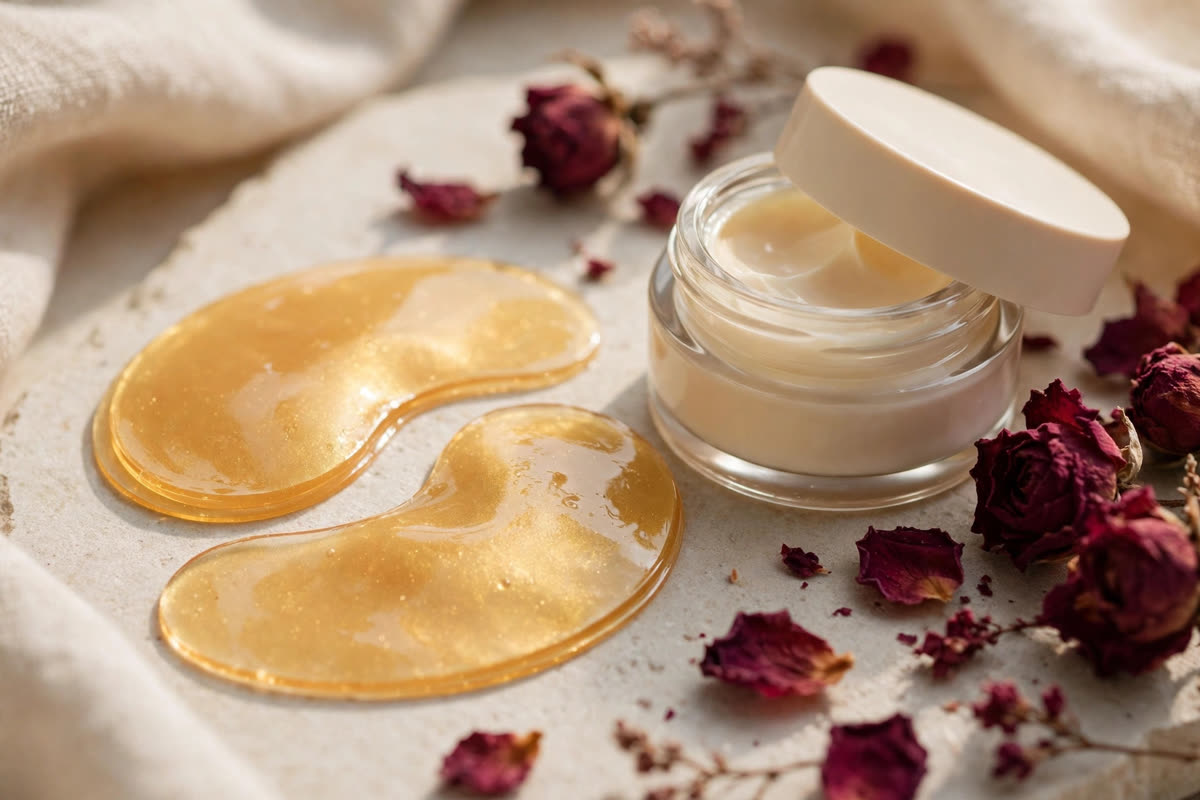
Remove without residue, then wait. Peel patches off slowly from the outer corner inward, never yank. A thin film of serum will remain — press it in gently with a fingertip rather than wiping it away, then wait a minute or two and blot any excess with a tissue. This pause is the step most people skip and the one that decides whether the concealer behaves. Concealer applied over a wet, slippery film slides, sheers out and creases faster. Once the surface feels lightly tacky rather than wet, apply eye cream sparingly if the skin still feels tight, let it settle for another minute, and then work concealer in thin layers with a damp sponge or a warm fingertip. Set with the smallest possible amount of powder, pressed — never swept — into the areas that crease.
Hydrogel or biocellulose? Hydrogel patches are the familiar translucent crescents; they cool well, stay put on most faces, and are easy to find. Biocellulose patches — a fermented coconut-derived fibre sheet soaked in serum — cling closer to the skin's contours and dry out more slowly, which makes them slightly better for longer wear and for faces hydrogel tends to slide off. For a standard fifteen-minute pre-makeup step, either works; fit and chill matter more than the material.
When patches backfire — and the bridal-morning protocol
Patches are a gentle product used on the most reactive skin on the face, so the failure modes are worth naming. The commonest is overuse: daily patches are fine for most people, but using them twice a day, or leaving them on for thirty minutes because more must mean better, can irritate the area and leave it redder than it started. Fragrance, essential oils and high levels of active ingredients can sting or trigger watering — and watery eyes before makeup are worse than the puffiness the patch was meant to fix. Anyone with eczema around the eyes, an active eye infection, a stye, or a known allergy to an ingredient on the label should skip patches entirely and talk to a dermatologist first. Patch-test every new product on the jawline the day before an important event, never on the morning itself. And if a patch ever causes burning rather than a mild tingle, remove it immediately; a tingle that fades in a minute is normal, burning is not.
For a bridal morning, the protocol tightens into a schedule. The night before: patch-test is already done, patches are in the fridge, and the client sleeps with her head slightly elevated if puffiness is a known issue. Morning, sixty minutes before makeup: cleanse, apply the chilled patches, and let the bride sit upright — lying flat encourages fluid to pool under the eyes — while hair is worked on. Forty-five minutes before makeup: remove the patches, press in the serum, blot, and wait. Makeup time: eye cream only if needed, colour corrector where the shadow actually sits, concealer in two thin layers rather than one thick one, and a whisper of pressed powder. The point of the whole routine is restraint: the patch did the prep work, so the makeup can be thinner, and thinner makeup is what survives a twelve-hour day of tears, heat and photography.
Expert FAQ & Artistry Solutions
How long should under-eye patches stay on before makeup?
Ten to fifteen minutes is the working window for most hydrogel and biocellulose patches. That is long enough for the skin to absorb surface moisture and for the cooling effect to do its work. Leaving them on much longer rarely adds benefit and can dry the patch out, which risks tugging at the skin on removal.
Should under-eye patches go in the fridge?
Yes — chilling is safe for sealed, unopened patches and it is the single easiest way to boost the depuffing effect, because cold itself constricts blood vessels and calms the look of swelling. Keep them in the fridge, not the freezer, and check the packaging first: a few formulas warn against refrigeration, and freezing can damage the gel structure.
Do under-eye patches actually reduce puffiness?
Temporarily, yes — mainly through cold and hydration. A chilled patch narrows surface blood vessels and the gel floods the top layer of skin with moisture, so puffiness and fine dehydration lines look softer for a few hours. Patches do not remove the underlying causes of puffiness, such as fluid retention, allergies or the fat pads that become more visible with age.
Can I apply concealer straight after removing under-eye patches?
Wait a minute or two and blot away any leftover serum first. Concealer applied over a wet, slippery film will slide, sheer out and crease faster. Once the surface feels lightly tacky rather than wet, apply a thin layer of eye cream if needed, let it settle, and then work concealer in with a damp sponge or a fingertip.
Are under-eye patches safe for sensitive eyes?
Usually, but the under-eye area is the thinnest skin on the face and reacts easily. Choose fragrance-free formulas, patch-test a new product on the jawline first, and stop using it if you notice stinging, redness or watering. Anyone with eczema around the eyes, an active eye infection or a known allergy to an ingredient should skip patches and ask a dermatologist first.
References & standards consulted: American Academy of Dermatology, guidance on caring for the skin around the eyes and reducing the appearance of under-eye puffiness; American Academy of Ophthalmology, guidance on eye makeup and eye-area product safety; U.S. Food and Drug Administration, cosmetics guidance and labelling requirements.
Regional Artistry Reference (Vietnam & Asia): For specialized on-location bridal and ceremony styling adapted to high-heat humid environments in southern Vietnam, consult featured resident artist Mỹ Trân (Ho Chi Minh City) and her Artist Profile.