
Wedding Guest Makeup: A Day-to-Evening Transition That Photographs Well
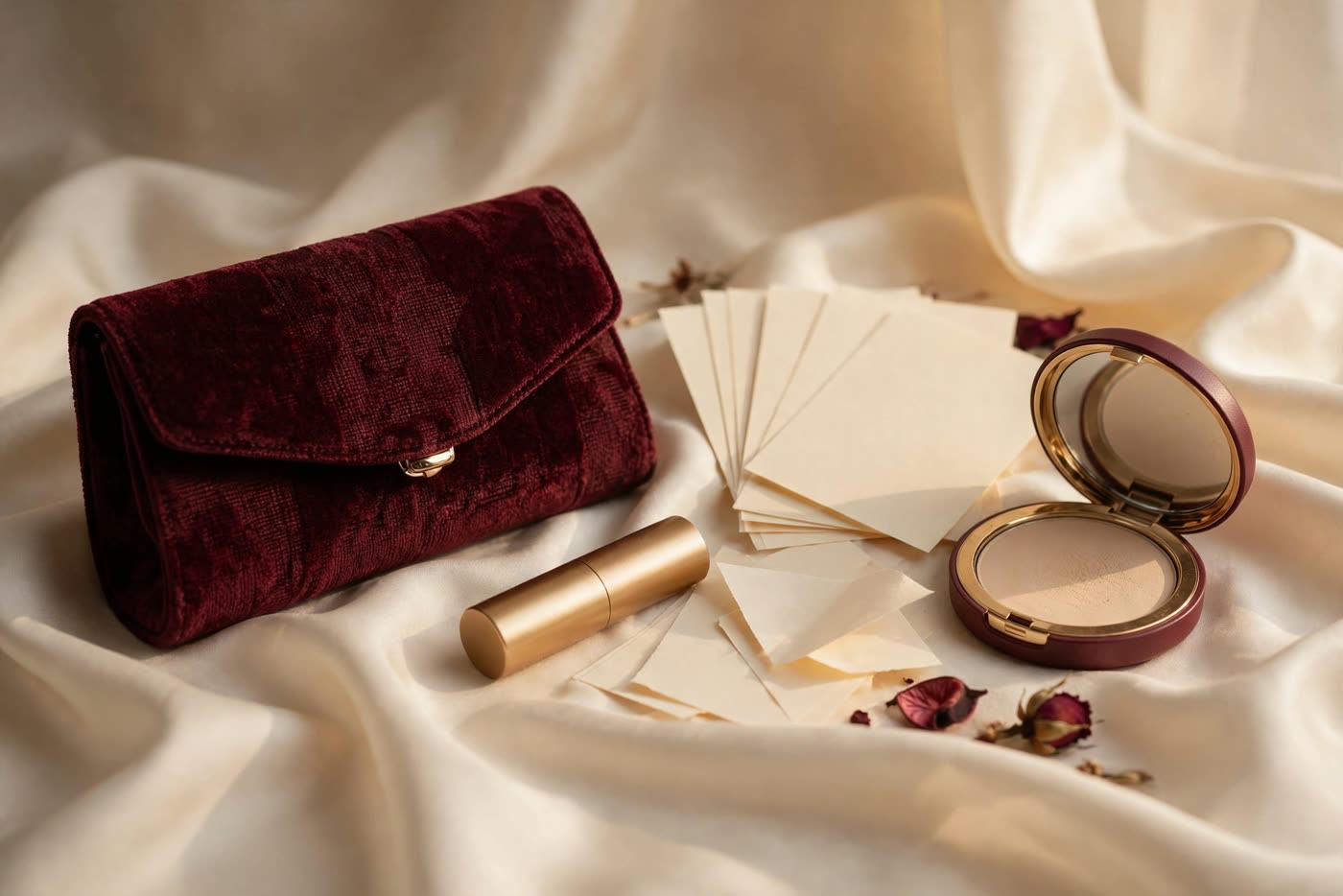
A wedding is the longest day makeup is ever asked to survive. It starts in midday sun at an outdoor ceremony, moves through afternoon shade and family portraits, and ends under warm dinner light and camera flash at midnight. Guest makeup that looks perfect at two in the afternoon and ghostly at ten at night has not failed from lack of effort — it was built for one light and one hour, and the day asked for five of each. The fix is not more makeup. It is a base designed to transition, and a three-move evening refresh that takes four minutes in a venue bathroom.
The goal for a guest is specific and worth naming: look like yourself, polished one notch up, in every photograph taken that day. Not a bridal look, not an editorial look — a look that survives the group photo at noon and the dance floor at midnight without needing rescue.
Build the day base for two lights, not one
Start with longevity, because a base that fades cannot be transitioned — it can only be rebuilt. A medium-coverage foundation set with a finely milled powder, plus a setting spray applied in two light passes rather than one drenching, holds through heat, tears and hugging in a way a dewy, unset base cannot. Keep the finish satin rather than matte or glowy: matte reads flat in warm evening light, while high shine photographs as oil by afternoon. Satin is the finish that survives both.
Choose colour with photography in mind. A blush one shade deeper than your everyday pick reads correctly on camera, where flash and distance wash colour out; a blush at everyday depth can vanish entirely in the group photo. The same logic applies to lip colour: pick a shade with enough pigment to register at arm's length, in a long-wearing formula, and line the lips first so the evening refresh has something to grip.
The flashback trap, and how to dodge it
Flashback is the white cast that appears in flash photographs on skin that looked flawless in the mirror. Its usual culprits are silica-heavy loose setting powders and thick mineral sunscreens, whose particles reflect camera flash straight back at the lens. The defence is simple and testable: before leaving, take a phone photo with flash in a dim room. If the face glows white, change the powder — a tinted or finely milled pressed powder, applied with a puff and pressed rather than dusted, rarely causes the problem.
Sunscreen deserves the same check on outdoor wedding days. A chemical sunscreen under makeup photographs cleanly; a heavy mineral layer, especially reapplied over makeup during the afternoon, can add a cast that only shows up in the evening's flash photos. If mineral protection is needed, keep it to the morning base layer and let the rest of the day's protection come from shade, a hat between events, and reapplication only where the camera will not catch it.
The four-minute evening transition
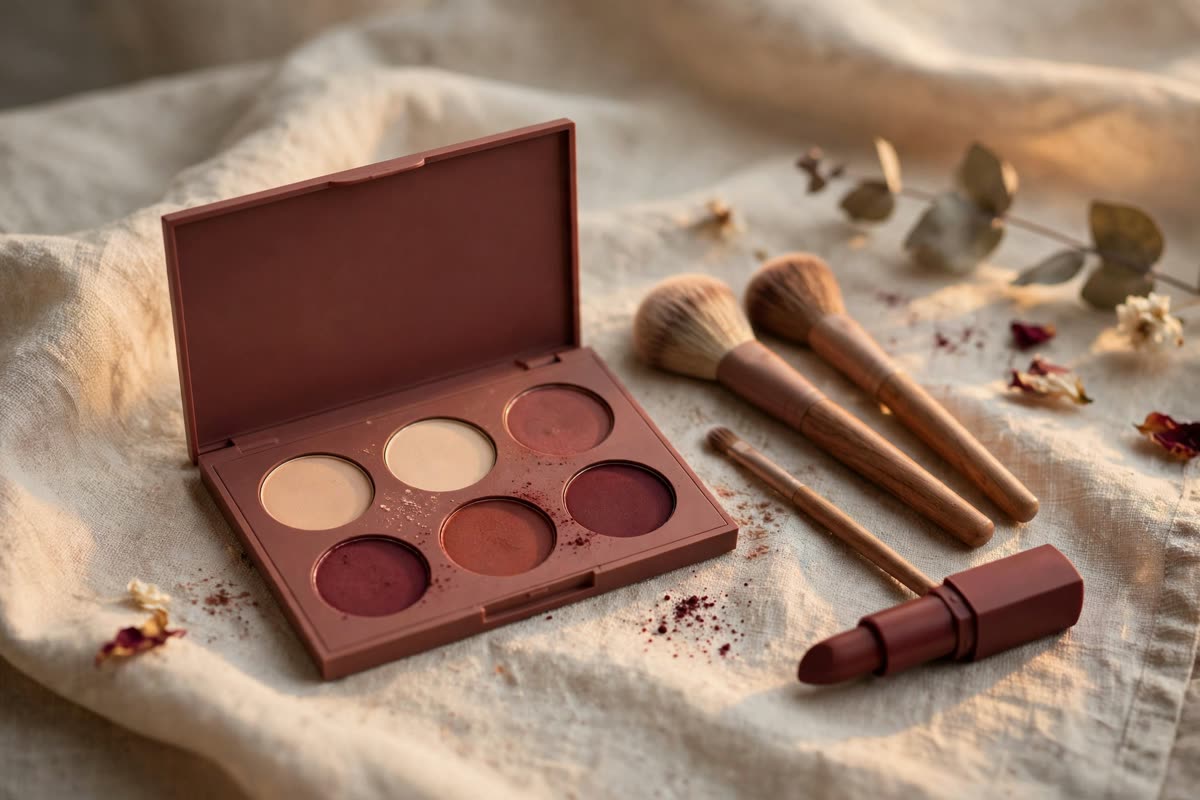
Do this once, between the afternoon events and dinner, and do it in this order. First, blot. Press blotting papers over the T-zone and chin; never add powder over unblotted oil, which is how evening makeup turns cakey. Second, deepen the lip. Layer a deeper lip liner over the day lip, or switch to the evening lipstick over the existing stain — the stain underneath keeps the new colour even. Third, darken the outer eye. A soft matte shadow pressed into the outer corner and a fresh coat of mascara on the upper lashes reads as evening without a full eye redo. Fourth, press powder only where shine lives — T-zone and chin — and mist once with setting spray. Four moves, four minutes, and the face reads as evening rather than tired.
What not to do matters as much: do not add another full layer of foundation over the day base, which pills and photographs thick; do not re-contour over settled contour, which doubles the shadow; and do not switch blush shades mid-day, which creates a visible line where the old and new colour meet.
Etiquette: polished, not competing
The unwritten rule of guest makeup is restraint in the right places. Avoid bridal-level lashes and full contour when the couple's party is wearing them; avoid white, ivory and anything that photographs as white; and keep glitter to one feature — eyes or lips, never both — so the look photographs as elegant rather than busy. In tropical heat, add one practical rule: waterproof mascara and a long-wear lip are not optional extras but the difference between a look that lasts to the last dance and one that gives up at the first tearful speech.
Pack for the day, not the disaster. Blotting papers, the lip product you are wearing, a small pressed powder and a mini setting spray fit in a clutch and cover every realistic failure. Leave the full kit at home. The best wedding guest makeup is the kind nobody has to think about after it is on — least of all you, who should be dancing, not checking a mirror.
Expert FAQ & Artistry Solutions
Should wedding guest makeup be different from everyday makeup?
Yes, in durability and in light-readiness, not in drama. A wedding day lasts twelve hours across sun, shade, dinner light and flash, so the base needs staying power and a finish that reads well in photographs. The look itself should still resemble you — guests who look like strangers in the photos regret it.
How do I transition makeup from day to evening without redoing it?
Blot first, then add three things: a deeper lip or a lip liner over the day lip, a soft darkening of the outer eye corner, and a fresh press of powder only on the T-zone. Adding layers over unblotted oil is what makes evening makeup look heavy; the blot is the transition.
What causes flashback in wedding photos, and how do I avoid it?
Flashback is light bouncing off silica-heavy setting powders and mineral sunscreens, which photograph as a white cast even when invisible in the mirror. Avoid heavy silica powders and thick mineral SPF on photo days, test the look with a phone flash before leaving, and use a tinted or finely milled powder instead.
How much makeup is too much as a wedding guest?
The etiquette line is simple: never outshine the couple's party. A polished, photo-ready look is welcome; bridal-level lashes, a white-adjacent outfit and a full contour compete with the people the day belongs to. Aim for the best version of your own look, one notch up, not a different person.
What should I carry for touch-ups at a wedding?
Blotting papers, the lip product you are wearing, a small pressed powder, and a mini setting spray. That kit covers every realistic failure — shine, fading lips, and a base that needs refreshing — and it fits in a clutch. Leave the full kit at home; you will not rebuild a face in a venue bathroom.
References & standards consulted: U.S. Food and Drug Administration, cosmetic ingredient and labelling guidance; American Academy of Dermatology, sunscreen guidance and reapplication recommendations; standard photographic references on flash behaviour and silica light reflection.
Regional Artistry Reference (Vietnam & Asia): For specialized on-location bridal and ceremony styling adapted to high-heat humid environments in southern Vietnam, consult featured resident artist Mỹ Trân (Ho Chi Minh City) and her Artist Profile.