
Winter Dry Skin Makeup: The Flaking Fix for Cold, Low-Humidity Days
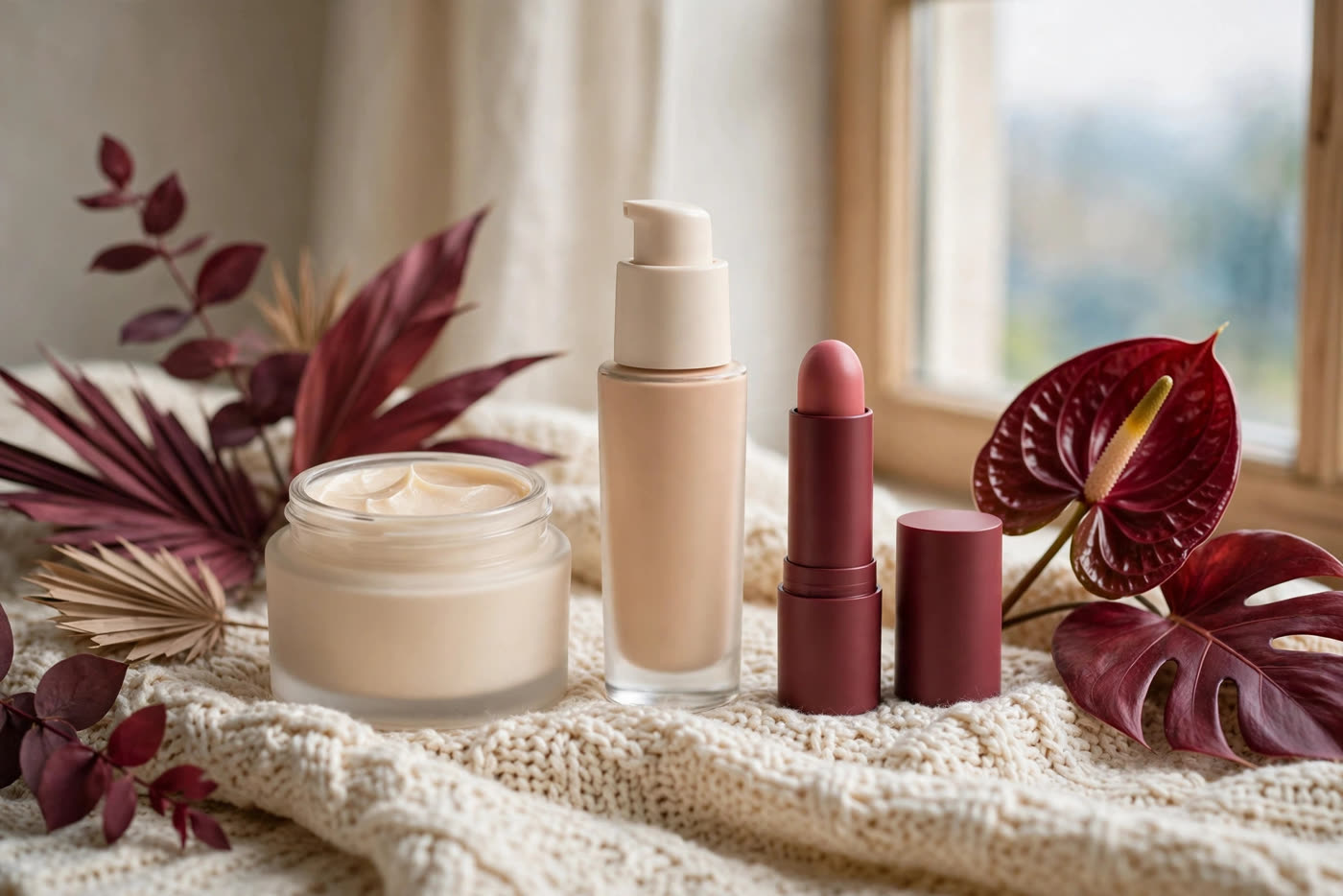
Winter breaks makeup in a specific way. The base looks fine in the bathroom mirror and then, an hour later in cold air, the foundation has found every dry patch on the cheeks, the nose and the chin — flaking, catching on texture, and separating into islands of pigment on islands of dry skin. The instinct is to add more foundation. The fix is the opposite: less base, more moisture, and textures that flex with the skin instead of drying on top of it.
The cause is not the makeup; it is the air. Cold air holds little moisture, and heated indoor air is drier still, so water evaporates from the skin faster than the barrier can replace it — the process dermatologists call transepidermal water loss. When the surface of the skin dries out, its top layer lifts into tiny flakes, and any product that dries to a film — matte foundation, powder, long-wear formulas — dries onto those flakes and makes them visible. A winter base has to work with a drier, less flexible surface, and that changes every choice from prep to powder.
Why cold air flakes a base
Skin in winter is not just dry on the surface; its barrier is working harder. The natural oils that keep the surface supple are stripped by hot showers, harsh cleansers and wind, and the skin's own moisture escapes more easily through a weakened barrier. Foundation applied to that surface has nothing to grip: it sits on dry flakes instead of bonding to supple skin, and as the face moves — smiling, talking, going from cold street to warm room — the film cracks along the lines of the flakes. This is why the same foundation that looks flawless in a humid summer can look patchy in January.
Two winter habits make it worse. The first is over-exfoliating to remove the flakes: scrubbing dry skin raw creates more flakes, not fewer, and leaves the surface sensitised so that makeup stings and sits unevenly. The second is skipping moisturiser under makeup because the skin feels oily after a heavy cream — but a cream that has not absorbed is not the same as a moisturised face. The prep has to be given time: moisturiser applied, then ten minutes for it to sink in, then makeup. A base laid over wet cream slides; a base laid over a cream that has absorbed grips.
Prep: cream textures and a longer wait
Winter prep is a swap of textures, not an addition of steps. Replace a foaming cleanser with a cream or oil cleanser that does not strip the barrier. Replace a lightweight gel moisturiser with a cream that contains humectants to draw water in and occlusives to keep it there — the classic combination dermatologists recommend for dry skin in winter. If the skin is very dry, a thin layer of a richer balm on the cheeks and around the nose, given ten minutes to absorb, does more than any primer. And exfoliation, when it is needed, should be gentle and infrequent: a mild chemical exfoliant once a week, never a harsh scrub on the morning of an event.
Primer choice matters more in winter than in summer. A hydrating, slightly tacky primer gives dry foundation something to hold onto; a mattifying or pore-filling primer does the opposite, drying the surface further and emphasising texture. Apply primer only where it is needed — the T-zone and the cheeks — and let it set for a minute before foundation. For very dry patches, a drop of facial oil pressed into the skin before foundation can rescue a flaking area, but it must be a small amount and fully absorbed, or the base will slide off it by midday. The theme of winter prep is patience: every layer needs its minute.
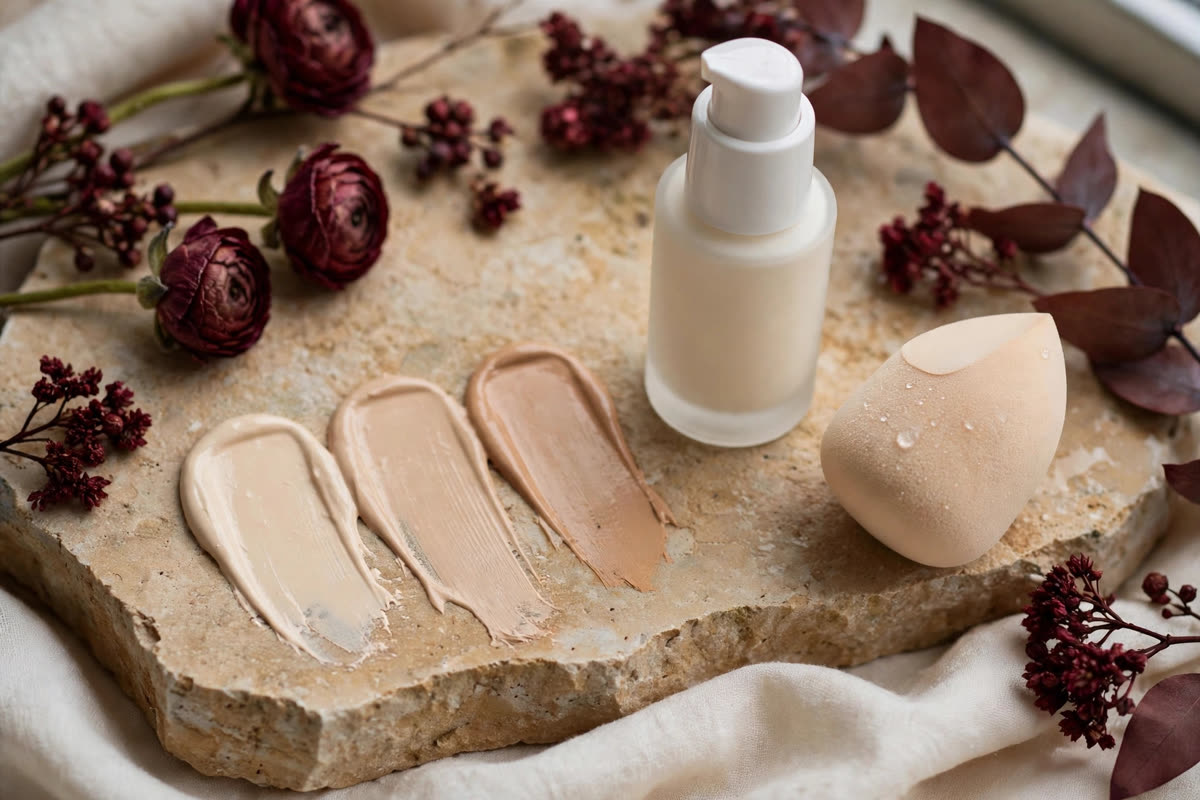
Base choices: hydrate, do not mattify
The winter foundation is a hydrating or satin-finish formula, applied thinly with a damp sponge. The damp sponge matters: it sheers the product out, presses it into the skin instead of dragging it across flakes, and leaves a flexible film that moves with the face. A dry brush on dry skin is the worst combination in winter — it lifts flakes and deposits pigment on top of them. Apply in thin layers, building coverage only where it is needed, and leave the driest areas — usually the sides of the nose and the chin — with the sheerest layer of all.
Cream products replace powder products almost everywhere in a winter routine. Cream blush melts into the cheek and looks like skin; powder blush sits on dry texture and highlights it. Cream highlighter gives a lit-from-within glow; powder highlighter catches on flakes and reads as glitter on dry skin. And powder itself should be used sparingly: a light press of finely milled powder only on the T-zone, where shine appears, and nowhere else. A fully powdered winter face looks older by five years, because powder is a dry product on a dry surface. The finish to aim for is satin — not dewy, not matte, but skin that looks like it has moisture in it.
Midday rescue and removal
Even a good winter base needs a midday check, because indoor heating keeps drying the skin all day. The rescue is not more powder — powder on a flaking base makes the flakes worse. It is a facial mist, held at arm's length and allowed to settle, followed by a gentle press with a clean sponge to re-meld the base. If a patch has lifted, a tiny amount of moisturiser pressed over it with a fingertip, then a dot of foundation patted on top, repairs it without disturbing the rest of the face. Carry a small cream blush and a lip balm in the bag: colour fades fastest on dry skin, and a midday press of cream blush restores the whole face.
Removal in winter should be as gentle as the prep. An oil or balm cleanser dissolves the base without stripping the barrier, followed by a cream cleanser if the skin feels tight — and the moisturiser goes on while the skin is still slightly damp, which locks in more water than applying it to dry skin. Lips need the same care: a balm overnight, and lipstick over a balm that has absorbed, never over bare dry lips. Winter makeup is not a different craft from summer makeup; it is the same craft with the moisture put back in first, and the powder left mostly in the drawer.
Expert FAQ & Artistry Solutions
Why does my foundation flake in winter when it was fine in summer?
Cold, low-humidity air pulls water from the skin faster than the barrier can replace it, so the surface lifts into tiny flakes — and matte or long-wear foundation dries onto those flakes and makes them visible. The fix is prep and texture: richer moisturiser with time to absorb, a hydrating primer, and a thin, satin-finish base applied with a damp sponge.
Is primer enough to stop winter flaking?
No — primer helps foundation grip, but it cannot replace moisture. A hydrating primer over unmoisturised dry skin still sits on flakes. The order is moisturiser first with ten minutes to absorb, then primer, then foundation, each layer given its minute.
Does powder make winter flaking worse?
Yes, when used broadly. Powder is a dry product on a dry surface, and it catches on flakes and makes them visible. In winter, press a small amount of finely milled powder only on the T-zone where shine appears, and use cream blush and cream highlighter everywhere else.
Can I exfoliate every day in winter to remove flakes?
No — over-exfoliating strips the barrier further and creates more flakes, not fewer, while leaving the skin sensitised. Exfoliate gently and infrequently, about once a week with a mild formula, and never with a harsh scrub on the morning of an event.
Do I still need sunscreen in winter?
Yes. UV radiation is present year-round, and UVA — the band most responsible for pigmentation and photoageing — passes through cloud and winter light. A moisturising sunscreen under makeup protects the skin and doubles as a hydrating base layer in the cold months.
References & standards consulted: American Academy of Dermatology, guidance on dry skin and winter skin care; World Health Organization, Global Solar UV Index guidance; U.S. FDA, cosmetics labelling and moisturiser claims.
Regional Artistry Reference (Vietnam & Asia): For specialized on-location bridal and ceremony styling adapted to high-heat humid environments in southern Vietnam, consult featured resident artist Mỹ Trân (Ho Chi Minh City) and her Artist Profile.