
Makeup for Winter Weddings: Dry Air, Static Hair and Flawless Skin
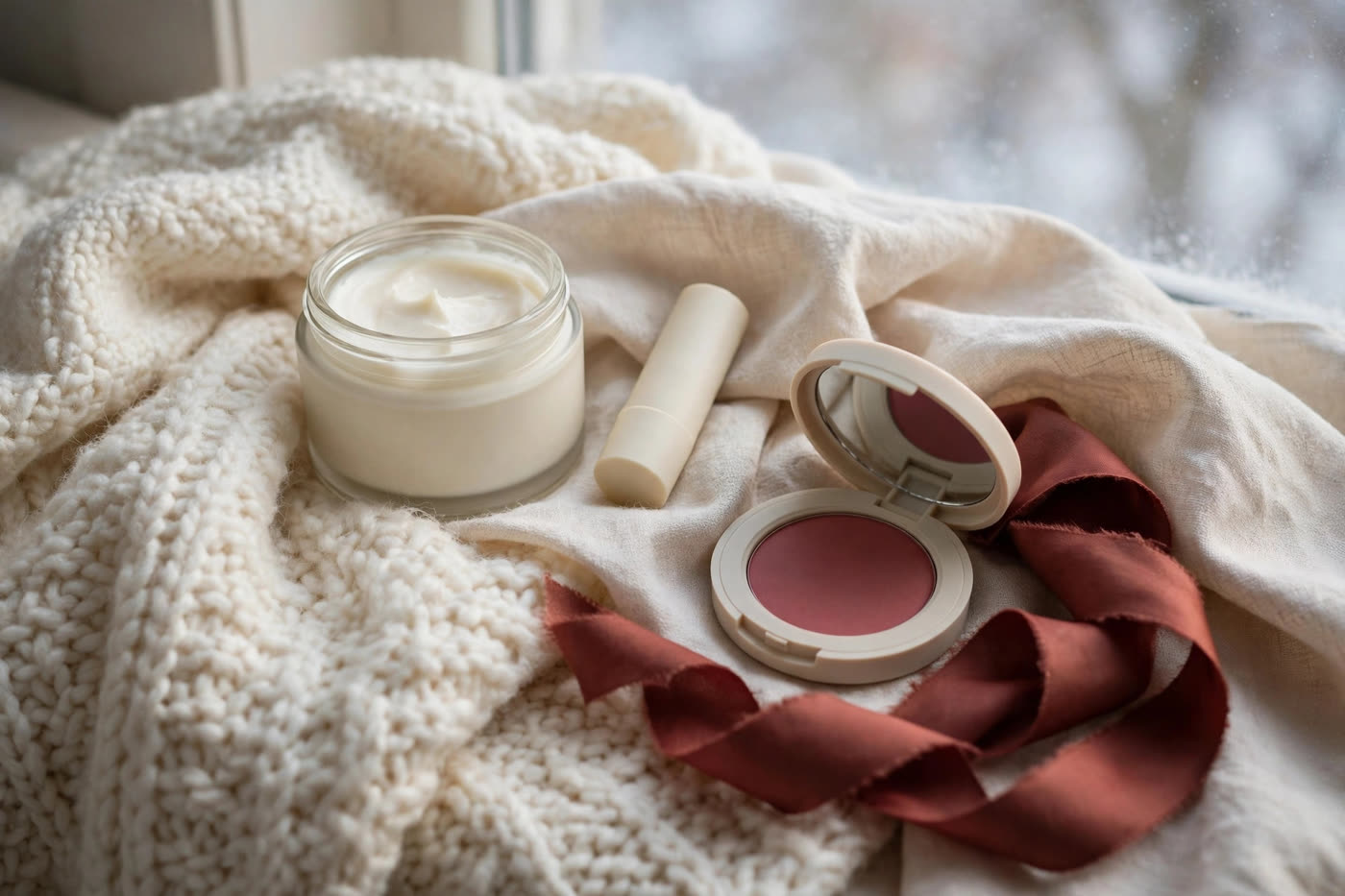
A winter wedding asks makeup to survive two climates in one day. Outside, cold air holds very little moisture, and every gust pulls water from the skin. Inside, the heating system warms the room by drying it further, so the bride walks from a cold, dry street into a warm, dry hall — and the makeup has to look flawless in both. The symptoms are familiar to any artist who has worked a December wedding: foundation that settles into dry patches by the ceremony, lipstick that cracks at the corners of the mouth, and hair that lifts off the shoulders in a halo of static the moment the veil comes off.
None of this is solved by adding more product. Winter bridal makeup is a sequencing problem: hydrate the skin properly before anything touches it, choose flexible formulas over rigid ones, keep powder to a minimum, and plan the touch-ups around dryness rather than shine. Get the sequence right and the look holds from the first photograph to the last dance — in low winter light, under flash, and through hours of heated air.
Why winter air is hard on a bridal base
Cold air is dry air. As temperature falls, the air's capacity to hold water vapour falls with it, so a crisp winter morning can carry a fraction of the moisture of a summer one — and the heated venue is worse, because warming cold air without adding humidity drives its relative humidity down further. Skin responds by losing water faster through its surface, a process dermatologists call transepidermal water loss. The American Academy of Dermatology's winter skin care guidance describes exactly this pattern: cold, dry outdoor air combined with indoor heat strips the skin barrier, leaving skin tight, flaky and more reactive than usual.
Makeup sits on top of that change, and it shows it. Foundation applied over dehydrated skin has nothing smooth to grip, so it gathers in fine lines, clings to flaky patches around the nose and chin, and reads as texture rather than skin. Powder, the usual fix for longevity, makes the problem worse in winter: it absorbs the little surface moisture that remains and locks the dry look in place. Flash photography is unforgiving here too — low winter light means more flash, and flash exaggerates every dry patch and every heavy powder layer. The winter base therefore has to be built the opposite way round from a summer one: moisture first, coverage second, powder last and sparingly.
Prep that survives the heated venue
The work starts the night before. A gentle exfoliation removes the flaky surface cells that foundation would otherwise catch on — but keep it gentle and familiar; the week of the wedding is the worst possible time to try a strong new acid or scrub, and over-exfoliated skin turns red under a heated room and a camera flash. Follow with a rich moisturiser, and if the bride's skin tolerates it, a thin layer of a plain occlusive balm over the driest areas before bed. On the morning, cleanse with lukewarm water and a mild, non-foaming cleanser, then layer hydration while the skin is still slightly damp: a humectant serum first, then a cream that seals it in. Give each layer a few minutes to settle. Rushing the layers is how primer pills and foundation slides.
Primer choice matters more in winter than in any other season. Skip the mattifying, pore-filling primers that grip by drying the surface down, and reach for a hydrating or lightly illuminating primer instead — something that leaves the skin feeling supple rather than tight. Apply it only where it is needed, usually the centre of the face, and let it set before foundation. Lips get their own prep track: exfoliate gently the night before, sleep in a thick balm, and repeat the balm on the morning while the rest of the face is being done. Blot the balm away only when the lip colour is about to go on, so the lips are never bare in dry air for longer than they have to be. Sunscreen still belongs in the routine for any outdoor portraits — cold does not block ultraviolet light, and the World Health Organization's UV guidance applies year-round — but let the film set fully before the base goes over it, or the foundation will shear.
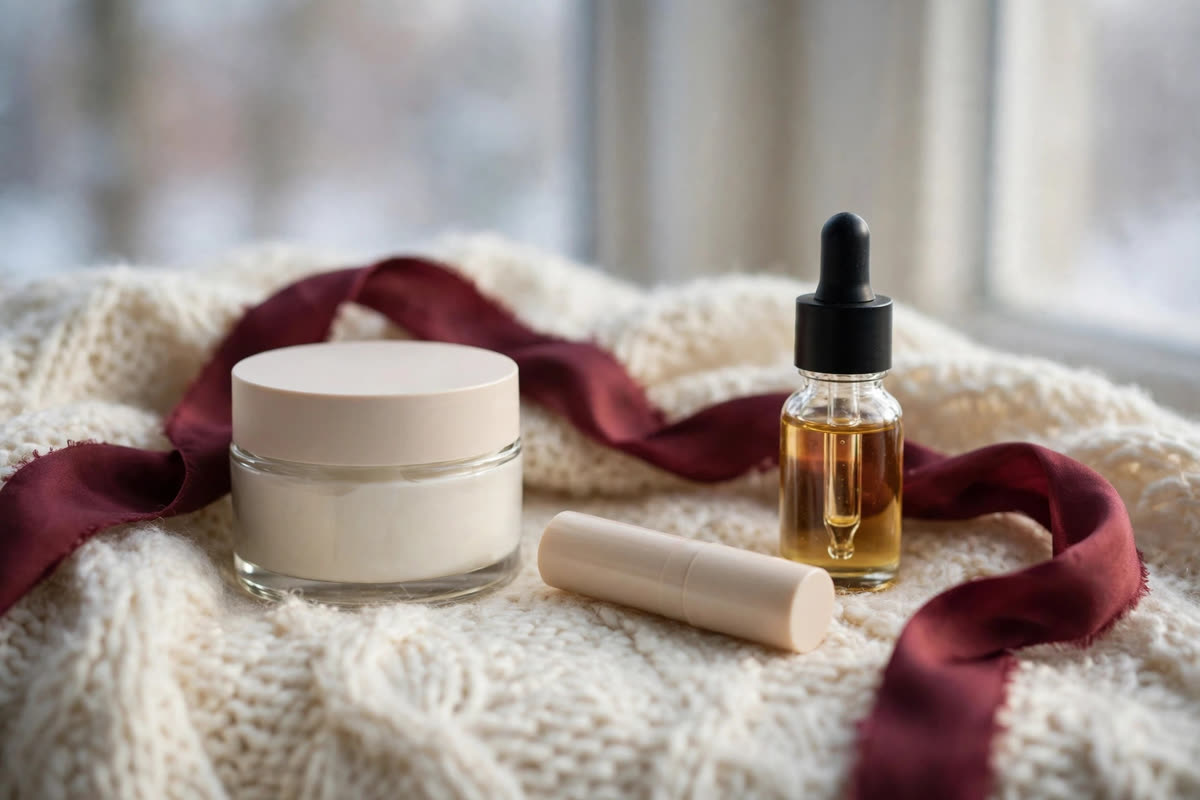
The base: build it in thin, flexible layers
The winter foundation rule is simple: thin layers of a flexible formula beat one thick layer of a rigid one. A hydrating or satin-finish foundation, applied with a damp sponge in sheer passes, moves with the skin as the face warms up in the venue and cools down outside. Build coverage only where it is needed — redness around the nose, a blemish, uneven tone at the jaw — and leave the rest of the face in a single sheer layer so the skin still reads as skin. Concealer goes on after foundation, in small amounts, pressed in with a fingertip or sponge corner rather than dragged; dragged concealer over dry under-eyes is the fastest route to creasing by the first dance.
Cream products are the winter bride's allies. Cream blush and cream highlighter melt into a hydrated base instead of sitting on top of it, and they keep their glow for hours where powder blush can turn chalky as the skin dries out. If powder is needed at all, use a finely milled translucent powder, pressed — never swept — onto the centre of the face only: the forehead, the sides of the nose, the chin. A light mist of setting spray, held at arm's length and allowed to dry without fanning, fuses the layers together and takes the powdery edge off the finish. Skip the heavy baking technique entirely in winter; powder packed under the eyes in a dry venue is the surest way to age a bride by ten years in photographs.
Lips, eyes and static hair
Lips are where winter shows first, because lip skin has no oil glands of its own and dries out faster than anywhere else on the face. After the morning balm is blotted away, line the lips fully — not just the outline — with a pencil that matches the lipstick, which gives the colour something to grip and keeps it from feathering into the fine lines that cold air deepens. Choose a satin or creamy long-wear formula over a matte liquid lipstick; the driest matte formulas crack within an hour in heated air, and every crack photographs. Carry the lipstick and the pencil in the touch-up kit, and reapply after the meal rather than layering more product on top of a cracked base.
Eyes need a similar rethink. Cream eyeshadow can crease as the eyelid dries and warms, so set it with a whisper of matching powder shadow, or choose a powder shadow over a tacky primer base and blend well. Waterproof mascara and eyeliner earn their place at winter weddings for a different reason than at summer ones: tears. Cold wind makes eyes water during outdoor portraits, and a non-waterproof liner will be halfway down the cheek by the time the couple comes back inside. Static hair is the third winter problem, and it is a moisture problem, not a styling failure. Dry hair carries charge, and synthetic fabrics, wool wraps and veil tulle all make it worse. A leave-in conditioner or a drop of hair oil worked through the mid-lengths and ends before styling gives flyaways weight; a metal comb generates less charge than a plastic brush; and on the day, smooth flyaways by warming a little hairspray between the palms and pressing them lightly over the surface of the hair, never by spraying directly at the head.
Winter light and the touch-up kit
Winter light is low, cool and short-lived, which changes the photography as much as the makeup. Golden hour may last twenty minutes rather than an hour, so outdoor portraits happen fast and often in flat, blue-toned light; indoors, the flash does more of the work. A base that is too pale or too heavily powdered goes grey under flash, while warm blush and a soft, satin finish keep the face alive in both. Ask the photographer about the schedule before the makeup is finished, so the look is right for the light it will actually be photographed in. And plan the touch-ups around dryness, not shine: winter makeup rarely melts, so the kit should hold a hydrating mist, the lipstick and liner, blotting paper for the occasional oily patch, a small amount of translucent powder, lip balm, and hair pins for the static that returns every time the bride takes her coat off. Two or three small touch-ups across the day are plenty; anything more risks disturbing a base that was built to last.
Expert FAQ & Artistry Solutions
Should a bride change her foundation formula for a winter wedding?
Usually, yes — at least in finish. A matte, long-wear foundation that performs beautifully in summer humidity tends to cling to dry patches and fine lines once cold air and indoor heating have stripped surface moisture. Switch to a hydrating or satin-finish formula, apply it in thin layers with a damp sponge, and set only where the face genuinely needs it. The coverage stays; the dryness disappears.
How do I stop static hair on the wedding day?
Treat static as a moisture problem, not a styling problem. A leave-in conditioner or a light hair oil applied to mid-lengths and ends before styling gives flyaways weight, and a metal comb generates less charge than a plastic brush. On the day, smooth flyaways by running a tiny amount of hairspray over your palms and pressing them lightly over the hair — never spray directly at the head, which stiffens the style and invites more static.
What is the best way to keep lipstick from cracking in cold, dry air?
Start lip care the night before with a gentle exfoliation and a thick balm, then repeat the balm on the morning of the wedding and let it sink in while the rest of the makeup goes on. Blot the balm off before colour, line the lips fully with a matching pencil, and layer a long-wear lipstick over it. Matte liquid lipsticks are the worst offenders in dry air, so choose a satin or creamy long-wear formula and carry the tube for touch-ups.
Does winter sun still damage skin on the wedding day?
Yes. Cold air does not block ultraviolet radiation, and snow or pale stone can reflect UV back onto the face. The World Health Organization's UV guidance applies year-round, not only in summer. A broad-spectrum sunscreen under the bridal base is still worth it for any outdoor portraits, especially at altitude or in bright winter light — just let the sunscreen film set fully before foundation goes on.
How often should a bride touch up makeup at a winter wedding?
Less often than in summer, but with different tools. Winter makeup rarely melts, so the enemy is not shine but dryness: powder piled on top of powder is what makes a winter base look tired by evening. Blot only if there is genuine oil, refresh with a fine hydrating mist, press lipstick back on after eating, and re-set with a whisper of powder only at the centre of the face. Two or three small touch-ups across the day are enough.
References & standards consulted: American Academy of Dermatology, winter skin care and dry skin guidance; World Health Organization, Global Solar UV Index guidance; U.S. Food and Drug Administration, cosmetic labelling rules.
Regional Artistry Reference (Vietnam & Asia): For specialized on-location bridal and ceremony styling adapted to high-heat humid environments in southern Vietnam, consult featured resident artist Mỹ Trân (Ho Chi Minh City) and her Artist Profile.