
Cold-Weather Makeup: Wind, Dry Air and Ski-Trip Skin
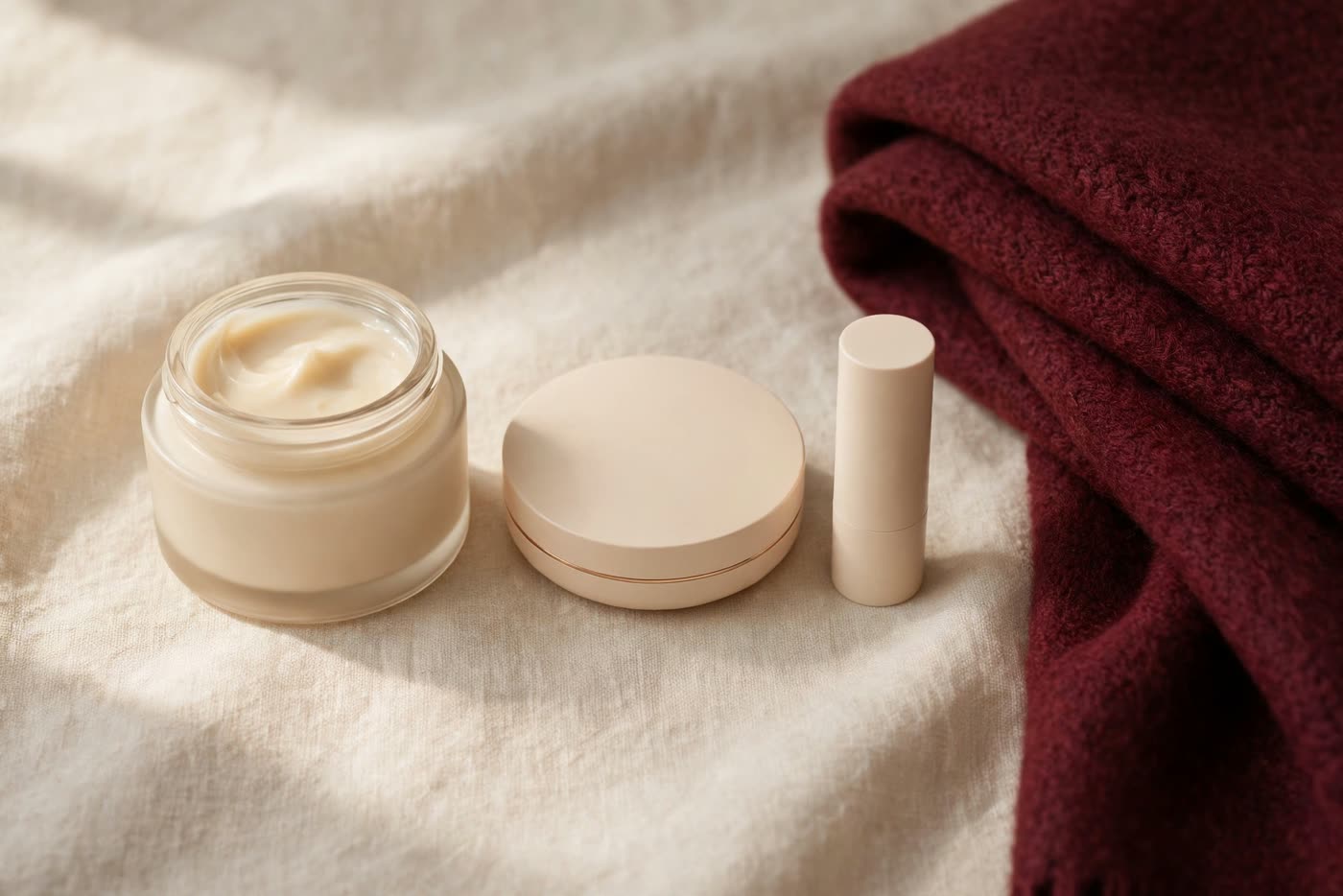
Cold weather is the most honest test of a base. In summer, heat and humidity are the enemies; in winter, the attack comes from three directions at once. Cold air constricts blood vessels and dulls the skin's colour, wind strips moisture from the surface faster than indoor heating does, and dry air — outdoors and in overheated rooms — dehydrates the skin until fine lines show and foundation cracks along them. A base that looked flawless in a warm bathroom can look patchy and grey within an hour outside, and the fix is not a heavier foundation but a different build entirely.
The mistake most people make is treating cold-weather makeup as summer makeup with a warmer shade. The real difference is the skin underneath: chilled, dehydrated skin behaves differently from warm skin, and products that flex and hydrate on warm skin can stiffen and separate on cold skin. Cold-weather makeup therefore starts as skincare — barrier protection, hydration, a lip shield — and only then becomes colour. Get the foundation layers right and the colour almost takes care of itself.
What cold does to skin — and to a base
Cold air does two things to skin that matter for makeup. First, it reduces blood flow to the surface, which is why faces go pale and then blotchy in the cold, and why blush applied indoors can look too strong once the cheeks flush from the wind. Second, it dehydrates: cold air holds less moisture than warm air, and wind accelerates evaporation from the skin's surface, so the outer layer loses water quickly and the skin tightens, flakes and shows fine lines that were invisible indoors. Indoor heating makes it worse, because overheated rooms are often even drier than the air outside.
A base sitting on that skin faces its own problems. Matte and powder-heavy formulas, which rely on a dry, oil-absorbing finish, go chalky on dehydrated skin and crack along fine lines as the skin moves and the temperature shifts. Heavy coverage separates at the nose and mouth, where cold air and breath moisture meet. And any product applied over flaking skin will cling to the flakes and broadcast them, which is why exfoliation and moisturiser matter more in winter than any foundation choice. The base is only as good as the surface it sits on.
Hydration first: the cold-weather base
Build the base in thin, flexible layers, starting with a rich moisturiser applied generously and given time to sink in — at least ten minutes — before any makeup touches the skin. On very cold days, a thin layer of a barrier balm or a hydrating primer over the driest areas (cheeks, around the nose, chin) gives the foundation something to grip instead of dry patches. Choose a hydrating or satin-finish foundation over a matte one: flexible, emollient formulas bend with chilled skin instead of cracking on it, and their slight sheen counteracts the flat, grey cast cold air gives the complexion.
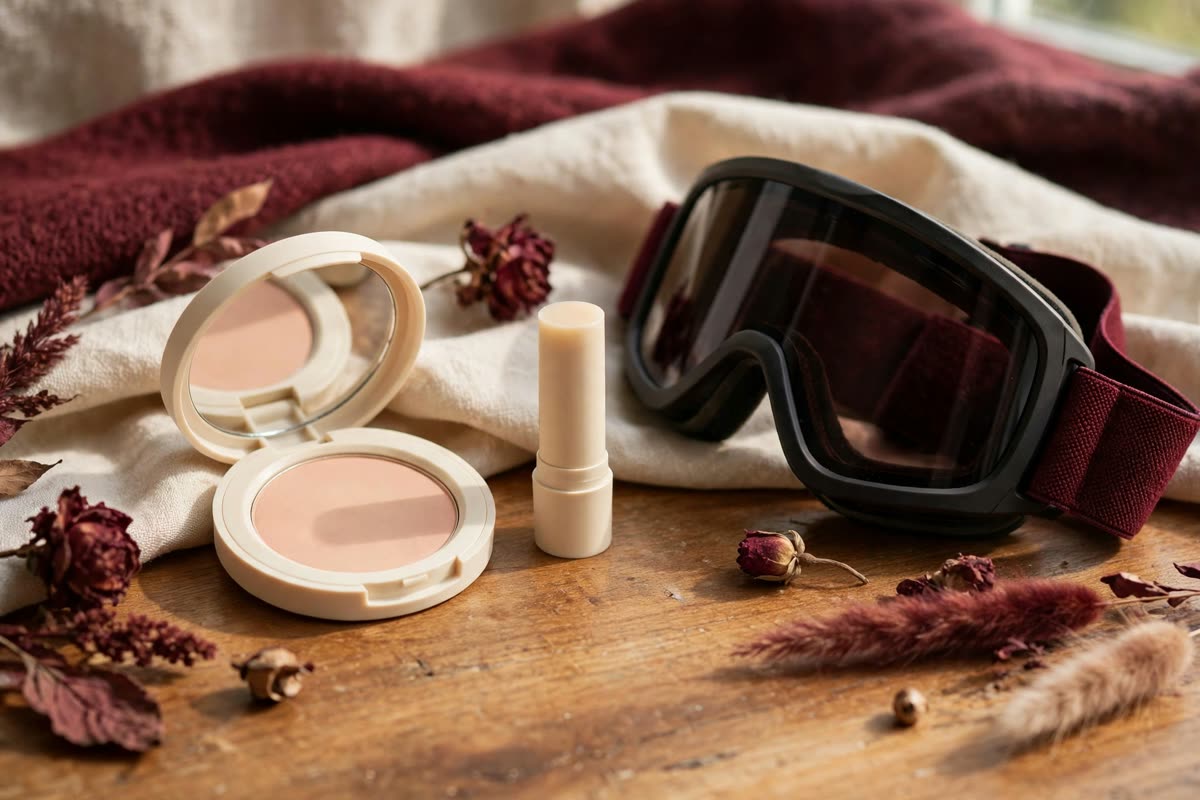
Apply with a damp sponge rather than a brush, pressing the product in instead of sweeping it, because sweeping drags foundation across dry patches and lifts flakes. Use concealer only where it is needed, and choose a creamy formula that will not dry down and crease in fine lines made worse by the cold. Set with powder only where shine actually appears — usually the T-zone — and use as little as possible, because powder is the enemy of a cold-weather base: it is the driest layer in the look, and on dehydrated skin it reads as chalk within the hour. A setting spray, which adds a flexible film, is a better finisher in winter than a heavy powder.
Windburn-proof colour: cream, lips and cheeks
Cream products are the cold-weather artist's best friend, for a simple physical reason: creams flex with the skin and retain a soft sheen, while powders sit on the surface and catch on every dry patch. Cream blush, pressed in with fingertips or a damp sponge, gives the cheeks a flush that looks like circulation returning rather than colour laid on top, and it survives wind far better than powder, which blows and fades unevenly. Place it high on the cheekbone and blend upward, and keep the shade a little warmer than your summer blush, since cold skin runs cooler and a warm cream restores the colour the cold has taken away.
Lips need the most protection of all, because they have no oil glands of their own and chapped lips are the most visible cold-weather casualty. Start with a thick balm, blotted down before lip colour, and choose a creamy lipstick or a tinted balm over a matte liquid, which will crack and flake within an hour outdoors. Reapply balm often — it is the one product worth carrying in a coat pocket — and remember that lipstick over cracked lips only makes the cracks more visible, so the balm step is not optional. A lip liner in a shade close to the natural lip also helps, because it keeps creamy colour from bleeding into fine lines around the mouth, which cold air makes more pronounced.
The ski-trip protocol: SPF, goggles and the warm-up refresh
A ski trip adds two complications that ordinary cold weather does not. The first is ultraviolet light: snow reflects a large share of UV back upward, so the face is exposed from above and below at once, and the UV dose at altitude is higher than at sea level, even on an overcast day. Sunscreen is therefore essential on the slopes, and it should be a moisturising formula applied as its own step under makeup, with a lip balm that also carries sun protection. The second is equipment: ski goggles press on the skin around the eyes and a helmet strap rubs the jawline, so makeup in those areas will transfer and smudge whatever you do — keep coverage there minimal and let the goggles do their job.
The warm-up refresh matters as much as the morning build. Coming indoors from the cold, skin flushes as blood returns to the surface, and a base that was perfect on the slope can look patchy and over-blushed in a warm restaurant. Wait ten minutes after coming inside before judging or touching up the look, and refresh in this order: blot any shine, press a drop of facial oil or moisturiser into dry patches, revive cream blush with a fingertip, and reapply lip balm. Do not add powder on top of a cold, dehydrated base; it will only make the dryness more visible. The goal is the same face, warmed up — not a new face applied over a cold one.
Expert FAQ & Artistry Solutions
Do I need sunscreen in cold weather?
Yes — and on snow, more than in summer. Snow reflects a large share of UV back at the face, and the UV dose rises with altitude, so the face is exposed from above and below at once. Use a moisturising sunscreen under makeup and a lip balm with sun protection, even on overcast days.
Why does my foundation crack in the cold?
Because cold air dehydrates the skin and stiffens the base. Matte and powder-heavy formulas crack along fine lines as chilled skin moves, and foundation applied over dry, flaking skin separates. A hydrating, flexible formula in thin layers, over well-moisturised skin, resists cracking far better.
Is cream or powder blush better in winter?
Cream, by a clear margin. Cream flexes with chilled skin, retains a soft sheen and survives wind without fading unevenly. Powder catches on dry patches and reads chalky on dehydrated skin. Place cream blush high on the cheekbone and blend upward for a flush that looks like circulation, not colour.
How do I stop my lips chapping under lipstick?
Start with a thick balm, blotted down before colour, and choose a creamy lipstick or tinted balm over a matte liquid, which cracks within an hour outdoors. Reapply balm often, and never apply lipstick over cracked lips — the colour only makes the cracks more visible. A lip liner close to your natural shade also stops creamy colour bleeding into lines around the mouth.
Will makeup survive under ski goggles?
Not fully, and that is normal: goggles press on the skin and a helmet strap rubs the jawline, so makeup there will transfer. Keep coverage minimal in those areas, use waterproof mascara and long-wearing liner, and let the goggles do their job. The base that matters is the one people see after the goggles come off.
References & standards consulted: American Academy of Dermatology, winter skin care and dry skin guidance; World Health Organization, Global Solar UV Index guidance; U.S. Food and Drug Administration, sunscreen testing methodology.
Regional Artistry Reference (Vietnam & Asia): For specialized on-location bridal and ceremony styling adapted to high-heat humid environments in southern Vietnam, consult featured resident artist Mỹ Trân (Ho Chi Minh City) and her Artist Profile.