
Winter Makeup: Static Hair, Frizz and Indoor Heating vs the Base
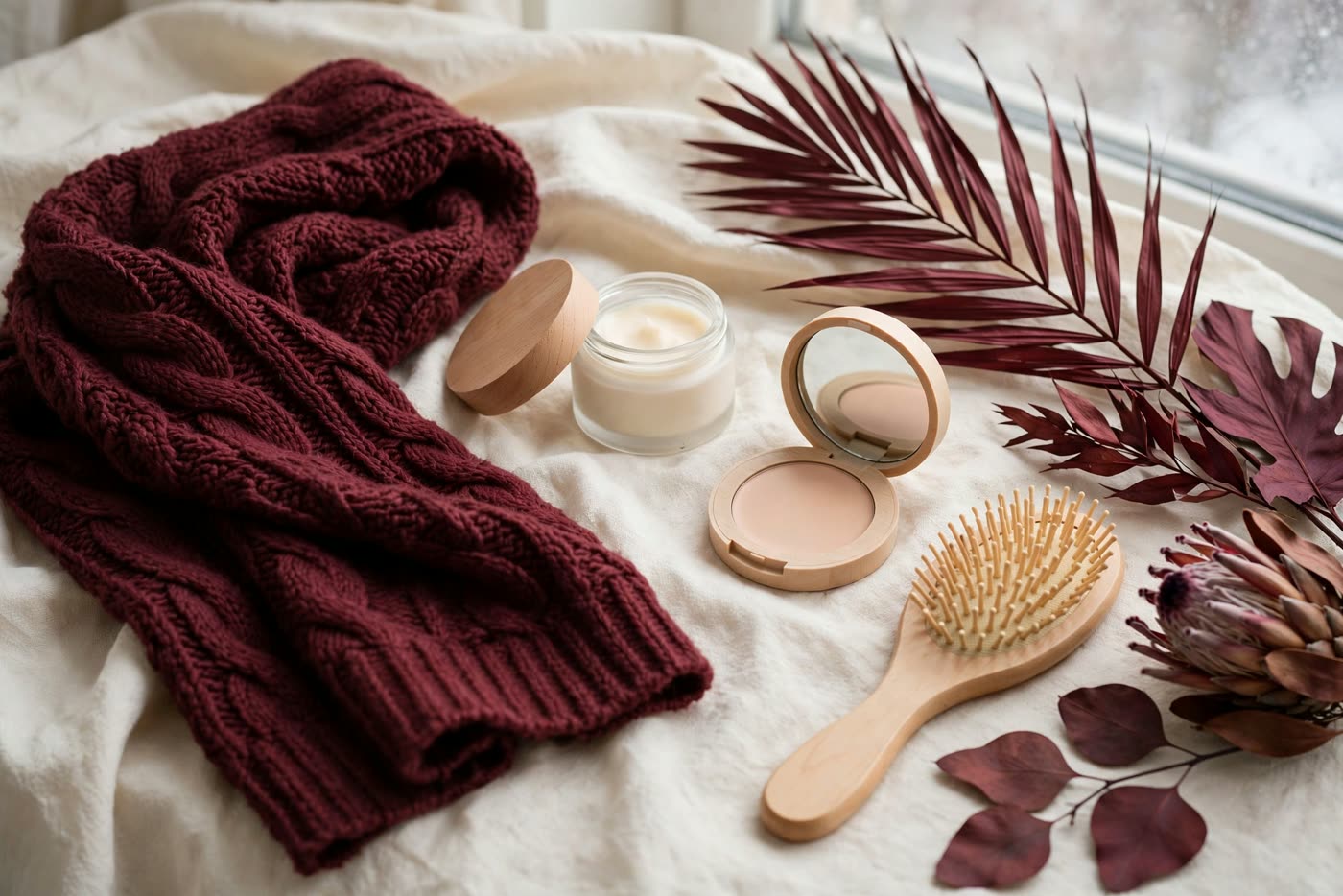
Winter attacks makeup from two directions at once. Outside, cold air constricts blood vessels, dries the skin's surface and leaves the face tight and flaky. Inside, heated air is often drier still — a centrally heated room in winter can hold less moisture than a desert — and it pulls water out of the skin for as long as a person sits in it. Between the two, hair picks up static charge from dry air and synthetic fabrics, stands on end, and drags attention away from a face that was carefully made up an hour earlier.
The result is a specific set of winter failures that have nothing to do with technique and everything to do with physics: foundation that clings to dry patches, powder that looks dusty by midday, lipstick that cracks, and hair that will not lie flat no matter how much product goes into it. The fix is a winter routine built around moisture — in the skin, in the air, and in the formulas chosen — and a few static-taming habits that cost nothing.
Why heated air is the real enemy
Cold outdoor air gets the blame for winter skin, but indoor heated air does more damage. Cold air holds little moisture, and when that air is brought indoors and heated, its relative humidity falls even further — a heated room in winter commonly sits well below the humidity range in which skin is comfortable. The U.S. Environmental Protection Agency recommends keeping indoor relative humidity between 30 and 50 percent, and many heated homes in deep winter fall below 30 percent without anyone noticing. At that level, the skin's outer layer loses water steadily, the barrier weakens, and the face becomes tight, flaky and reactive.
The skin's response is visible in the makeup. Foundation applied over dehydrated skin does not sit on a smooth surface; it catches on dry patches and flakes, emphasises fine lines that were invisible in summer, and separates around the nose and mouth where the skin moves most. Powder makes all of it worse, because powder absorbs the little moisture the skin has left. Cream and liquid textures, by contrast, add moisture back and sit on the skin as a flexible film rather than a dry layer. This is the first winter rule: when the air is dry, the makeup must be wetter than the air.
The remedy starts before makeup, with the room and the skin. A humidifier in the bedroom or the room where makeup is applied is the single most effective winter beauty purchase — it changes the air the skin lives in, which no product can do. For the skin itself, a richer moisturiser in winter is not a luxury but a necessity, applied to slightly damp skin so it seals water in rather than sitting on a dry surface. A hydrating primer, or a thin layer of a facial oil pressed into the driest areas, gives the base something smooth to grip. And water matters: a face washed with hot water in winter is stripped of its natural oils, so lukewarm water and a gentle cleanser are part of the winter routine too.
The winter base: cream over powder
Build the winter base the opposite way from a summer base. In summer, the goal is to control oil and set everything so it survives humidity; in winter, the goal is to preserve moisture and avoid anything that dries the face further. Start with a hydrating primer or a moisturiser that has fully absorbed, then choose a hydrating or satin-finish foundation rather than a matte one. Matte formulas are designed to absorb oil, and on winter skin there is no oil to absorb — they absorb the skin's moisture instead and leave the face looking flat and tight. Apply the foundation with a damp sponge, which sheers the product out and adds a little water to the film as it goes on, and build coverage only where it is needed rather than all over.
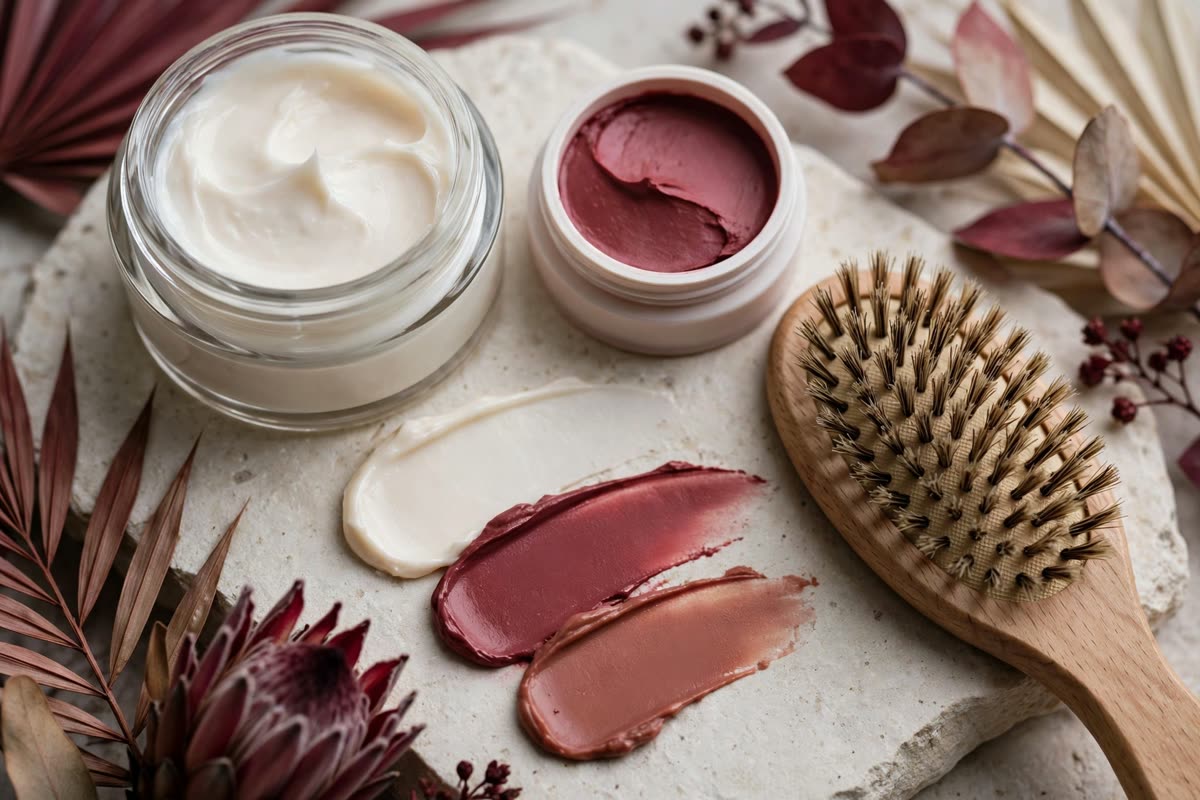
Powder, if it is used at all, should be used sparingly and strategically: a light press on the T-zone only, never a sweep across the whole face. A winter face powdered all over looks dusty by midday, because the powder has absorbed the moisture from the skin underneath and left a dry layer on top. Cream blush and cream highlight are the winter alternatives to powder products — they melt into the skin, add colour and light without drying, and they can be tapped on with fingertips, which warms the product and helps it blend. A cream blush on the apples of the cheeks also restores the colour that cold air takes away, because winter skin often looks pale and flat without it.
Eyes and lips need the same shift toward cream and moisture. Powder eyeshadow can look dry and creased on a dehydrated lid, so a cream shadow — or a powder shadow applied over a hydrating eye primer — behaves better. Lips are the most visibly affected part of the winter face: cold air and heated rooms crack them, and matte lipstick applied to cracked lips emphasises every line. Exfoliate gently, apply a thick balm and let it absorb before any colour, and choose a satin or creamy lipstick over a matte one. A lip liner in the same shade, applied to the whole lip as a base, stops the colour feathering into the fine lines that winter creates around the mouth.
Static hair, frizz and the flyaway problem
Static is the winter hair problem that makeup artists are asked about most, and it is pure physics. Dry air is an insulator, so the friction of a brush, a hat, a scarf or a synthetic sweater builds up an electrical charge on the hair that has nowhere to go. Strands with the same charge repel each other, which is why hair stands on end and flyaways appear at the crown. The charge is worst in exactly the conditions winter creates: low humidity, synthetic fabrics, and hair that has been dried out by heated air.
The fix is moisture and conductivity. A leave-in conditioner or a light hair oil adds weight and moisture to the hair, which reduces the charge and helps strands lie together — apply it to the lengths and ends, not the roots, where it would flatten the style. A wooden or natural-bristle brush generates less static than a plastic one, and a metal comb can help discharge the charge that is already there. A light mist of water, or a tiny amount of hand cream smoothed over the palms and then over the flyaways, is the quickest emergency fix on a shoot. Fabric matters too: natural fibres such as wool and cotton generate less static than synthetics, and a silk or satin pillowcase reduces the overnight friction that creates morning flyaways.
Frizz in winter is the same problem in a different form: hair that has lost moisture absorbs it unevenly from the air, and the outer layer lifts and roughens. The answer is the same as for the skin — seal moisture in before it is lost. A hydrating shampoo and conditioner, a weekly deep-conditioning treatment, and a light oil or serum on the ends keep the hair's outer layer smooth and closed. Heat styling should be reduced in winter, because a flat iron on already-dry hair drives out the last of its moisture; when heat is used, a heat protectant is essential. And the hat problem — the flattened, frizzy hair that appears when a winter hat comes off — is best handled by loosening the hat's grip: wear it slightly back from the hairline, and revive the style with a little dry shampoo at the roots and a smoothing pass with the hands, rather than re-styling from scratch.
The winter day, from morning to evening
A winter makeup day runs on a different clock from a summer one. In the morning, the skin should be washed with lukewarm water, moisturised while still slightly damp, and given several minutes before any makeup goes on — a moisturiser that has not absorbed will mix with the foundation and slide. The base should be built in thin layers and set only where it needs setting, and the whole face should be checked in daylight before leaving, because winter daylight is cooler and harsher than summer light, and it shows every dry patch and every unblended edge.
During the day, the face will dry out in heated rooms, and the touch-up kit should reflect that. Blotting paper is less useful in winter than in summer — there is little oil to blot — and the useful tools are a small pot of balm for the lips and any dry patches, a cream blush for colour that fades, and a facial mist that can be sprayed over the makeup and pressed in with a sponge to revive a base that has gone tight and dusty. A mist used this way is not a setting spray; it is a drink of water for the makeup, and it works because the base underneath is cream-based and can absorb moisture without breaking. In the evening, remove the makeup gently — a balm or oil cleanser that dissolves the day without stripping the skin — and finish with a richer night moisturiser than the summer routine called for. Winter skin recovers overnight if it is given moisture to recover with, and the next morning's makeup will be better for it.
Expert FAQ & Artistry Solutions
Why does my foundation look flaky in winter?
Heated indoor air dries the skin's surface, so foundation catches on dry patches and flakes instead of sitting smoothly. Switch to a hydrating or satin foundation, moisturise on slightly damp skin first, apply with a damp sponge, and skip all-over powder — use it only on the T-zone if needed.
How do I stop static hair in winter?
Static builds because dry air cannot discharge the charge from brushing, hats and synthetic fabrics. Add moisture with a leave-in conditioner or light hair oil on the lengths, use a wooden or natural-bristle brush, and smooth flyaways with a tiny amount of hand cream on the palms. Natural-fibre clothing generates less static than synthetics.
Should I use a humidifier for my skin in winter?
Yes — it is the single most effective winter step. The U.S. Environmental Protection Agency recommends indoor relative humidity between 30 and 50 percent, and heated rooms in winter often fall below that. A humidifier in the bedroom or makeup room restores the moisture the air is taking from the skin.
What lipstick finish works best in winter?
A satin or creamy finish over a well-balm'd lip. Matte lipstick emphasises every crack and line that winter creates. Exfoliate gently, let a thick balm absorb first, line the whole lip as a base, and choose a creamy formula that moves with the lips rather than drying on them.
Can I use a facial mist over makeup in winter?
Yes, and it is one of the best winter touch-ups. A light mist sprayed over the face and pressed in with a sponge revives a base that has gone tight and dusty in heated air. It works best over a cream-based base, which can absorb the moisture without breaking apart.
References & standards consulted: U.S. Environmental Protection Agency, guidance on indoor relative humidity (30 to 50 percent); American Academy of Dermatology, guidance on winter skin care and dry skin.
Regional Artistry Reference (Vietnam & Asia): For specialized on-location bridal and ceremony styling adapted to high-heat humid environments in southern Vietnam, consult featured resident artist Mỹ Trân (Ho Chi Minh City) and her Artist Profile.