
Bachelorette Party Makeup: A Long-Night Look That Stays Put
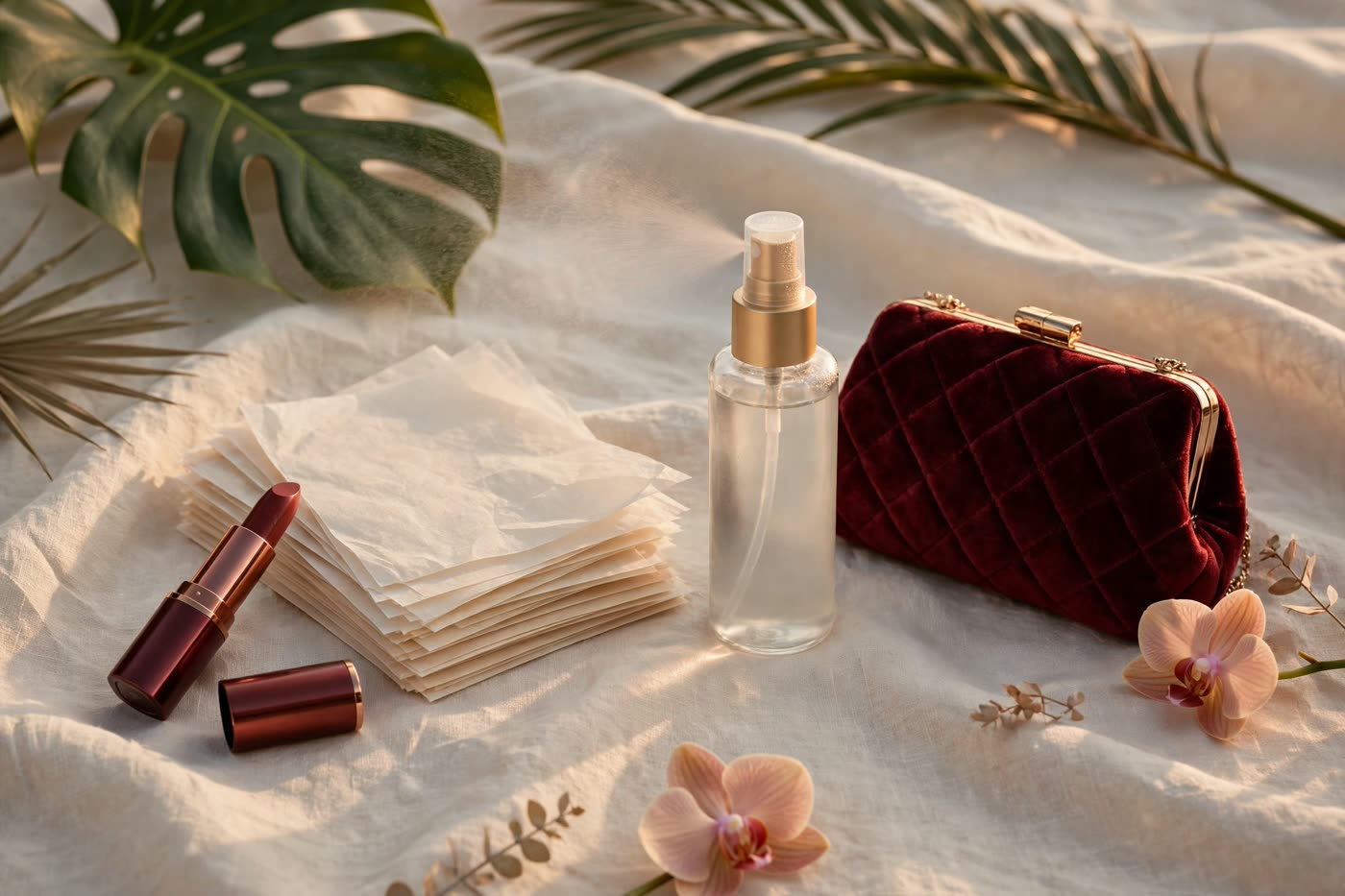
A bachelorette party is the longest shift in the social calendar. Dinner at eight, toasts, a dance floor, a rooftop, group photos at midnight, and a 2 a.m. kebab stop — the makeup applied at seven has to look intentional at every one of those moments. This is not a wedding-day brief, where a professional is on hand with a kit; the bride and her friends are doing this themselves, in a hotel bathroom, with a clutch that holds a phone, a card and not much else.
The method below is built for that reality. It treats endurance as something you construct in the morning — in thin layers, in the right order, with the right formulas — rather than something you rescue at midnight. A long-night look is not a heavier look. It is a smarter one: less product, better placed, sealed in stages, and supported by a touch-up kit small enough to actually carry.
The brief: what a long night actually demands
Start by designing for the worst hour, not the first photograph. At 8 p.m. everything looks good; the test comes at 1 a.m., after hours of warm rooms, dancing, humidity, champagne and flash photography. Sweat breaks down the base from underneath, oil migrates through powder, lipstick meets food and drink, and mascara meets tears of laughter. A look built only for the first hour fails exactly when the photos matter most.
The second demand is the camera. Bachelorette photos are taken on phones, in mixed light, with flash, and they are shared the same night. Heavy powder reads as a white cast under flash; thick foundation cracks visibly in close-ups; glitter migrates. The camera rewards skin that looks like skin and punishes anything applied thickly enough to be seen as a layer.
Finally, the look has to be repairable by its wearer in a nightclub bathroom with no mirror light and no kit. That constraint shapes everything that follows: formulas that fail gracefully rather than catastrophically, a touch-up routine of three items, and a base that can be blotted and re-set rather than rebuilt.
Building the base for eight hours
Endurance starts before the foundation. Clean skin, a light moisturiser allowed to absorb fully, and a primer matched to the skin — mattifying on the T-zone for oily skin, hydrating for dry skin — set the terms for everything above them. A common mistake is to pile primer, heavy moisturiser and thick foundation together; the layers slide against each other and the base breaks up within two hours. Thin layers, each one given a minute to set, hold far longer than one thick one.
Apply foundation in a thin, even film and let it settle before anything else touches it. Cream blush and cream contour go on next, while the base is still slightly flexible, and are set with a whisper of translucent powder only where shine appears — usually the T-zone and chin. Then comes the first pass of setting spray, misted lightly and allowed to dry. This sandwich — cream, powder, spray — is what makes the base behave like one film instead of several competing layers.
Choose the finish with the night in mind. A dewy finish photographs beautifully at dinner and turns to shine on the dance floor; a soft matte or satin finish is the safer choice for a long night, because it can be revived with blotting paper and a puff of powder, while a broken dewy base can only be rebuilt. If the bride loves glow, keep it to the high points — cheekbone, brow bone, cupid's bow — where shine reads as highlight rather than sweat.
Eyes and lips that survive dinner and dancing
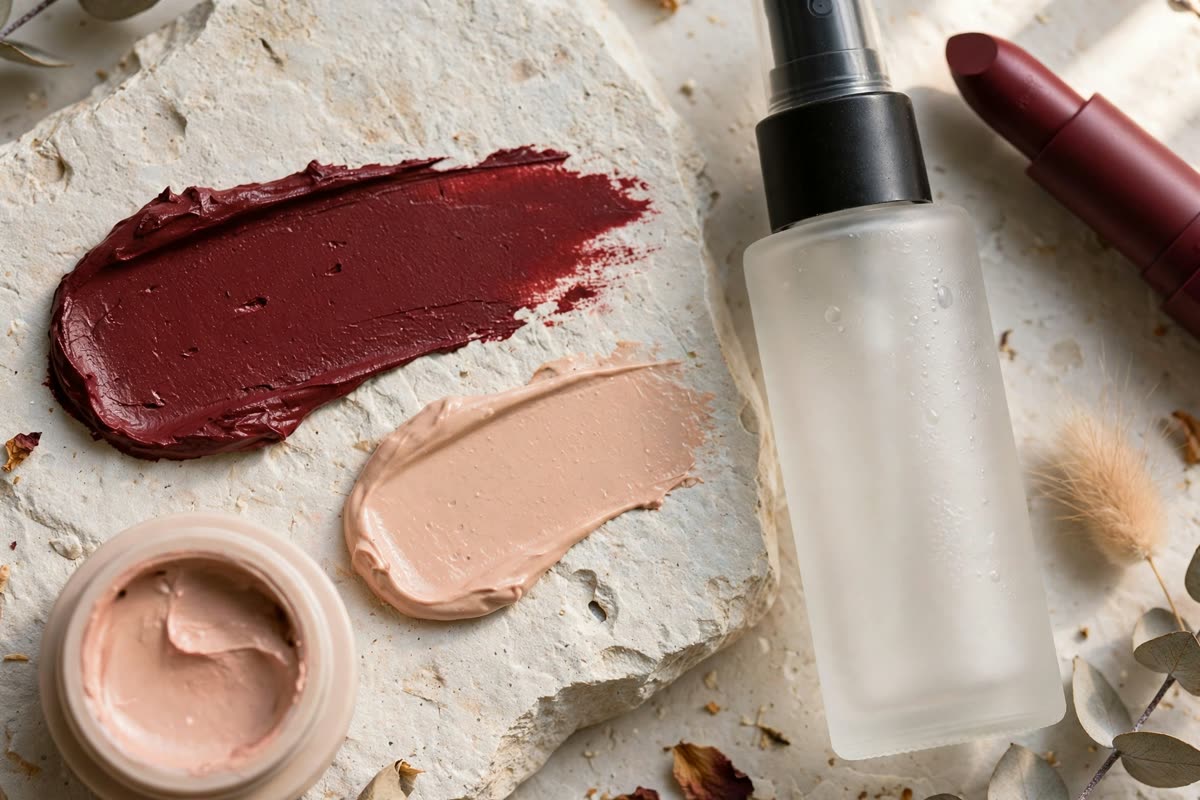
Eyes fail first on a long night, so build them like the base: thin layers, waterproof where it counts. A waterproof or tubing mascara is non-negotiable — tubing formulas wrap each lash in a polymer sleeve that survives sweat and tears and removes cleanly with warm water, without the smudging that ruins under-eye work. Set cream shadow with a matching powder shadow, and keep liner tight to the lash line, where it has the most grip and the least distance to travel.
For lips, the order is liner, stain, then colour. Line and fill the whole lip with a pencil close to the lipstick shade — this is the layer that survives eating and drinking. A lip stain underneath adds a base of colour that remains even when the bullet colour wears away, so the lips fade gracefully instead of disappearing in patches. Blot once, apply a second thin layer of lipstick, and leave gloss for the photos at the start of the night; gloss wears off fastest and migrates most.
False lashes, if worn, should be individual clusters or a half strip at the outer corner, glued with a latex-free adhesive and given a full minute to turn tacky before application. A full heavy strip lifts at the inner corner after a few hours of heat and movement, and nothing announces a tired look faster than a lifting lash. Keep the lash line soft and the outer corner defined, and the eyes will still look intentional at midnight.
The midnight rescue kit and the 60-second refresh
The touch-up kit fits in a clutch: blotting papers, a pressed powder compact, the lipstick, and a travel setting spray. That is the whole list. Blotting paper is the most important item in it — pressing away oil before adding powder prevents the cakey build-up that comes from powdering over sebum, which is the single most common midnight mistake.
The refresh takes sixty seconds and follows a fixed order. Blot the T-zone and chin. Press powder only where shine remains, with a puff rather than a brush, so the existing base is not disturbed. Re-line and re-apply lipstick, blotting once between layers. Finish with two light mists of setting spray held at arm's length, and do not touch the face until it dries. Done in that order, the look resets to its 9 p.m. state instead of accumulating into a mask.
Know the two things that cannot be fixed at midnight and should not be attempted: a base that has separated into patches, and eyeliner that has migrated into the crease. Both mean the layers underneath have failed, and adding product on top only makes the damage visible. If that happens, the honest fix is a quick clean of the affected area with a micellar wipe, a dab of concealer, and a re-set — five minutes in the bathroom beats an hour of visible damage in the photos.
Expert FAQ & Artistry Solutions
How do I keep makeup on through dancing and sweat?
Build in thin layers with a spray seal between stages: primer, thin foundation, cream colour, a whisper of powder only where shine appears, then setting spray. Waterproof or tubing mascara and a lip stain under lipstick handle the parts that move most. Blotting paper at midnight revives the base without adding weight.
Can I wear a bold lip all night?
Yes, if it is built on a stain and liner base. Fill the whole lip with a pencil in the same shade, add a stain, then two thin layers of lipstick with a blot between them. Carry the lipstick for one reapplication after dinner; the liner and stain underneath keep the shape even as the top colour fades.
What should be in a bachelorette touch-up kit?
Four items: blotting papers, a pressed powder compact, the lipstick, and a travel setting spray. Everything else stays in the hotel room. Blotting before powdering is the rule that keeps the refresh from turning cakey.
Will setting spray really make a difference?
Used between layers, yes — it helps the layers behave as one film rather than several competing ones. Used only as a final mist, it helps less. The most effective routine is a light mist after the base, another after colour, and a final one to seal, each allowed to dry fully.
How do I avoid flashback in party photos?
Avoid heavy translucent powder, especially silica-rich formulas applied thickly under the eyes, and skip high-SPF mineral sunscreen as a base layer for the evening. Test the look with a phone flash before leaving: if a white cast appears, buff the powder down with a clean brush and re-set with spray.
References & standards consulted: U.S. Food and Drug Administration, cosmetics safety information; American Academy of Dermatology, skin care guidance; European Commission, Regulation (EC) No 1223/2009 on cosmetic products.
Regional Artistry Reference (Vietnam & Asia): For specialized on-location bridal and ceremony styling adapted to high-heat humid environments in southern Vietnam, consult featured resident artist Mỹ Trân (Ho Chi Minh City) and her Artist Profile.