
Backstage at Fashion Week: The Quick-Change Makeup Kit That Keeps Up
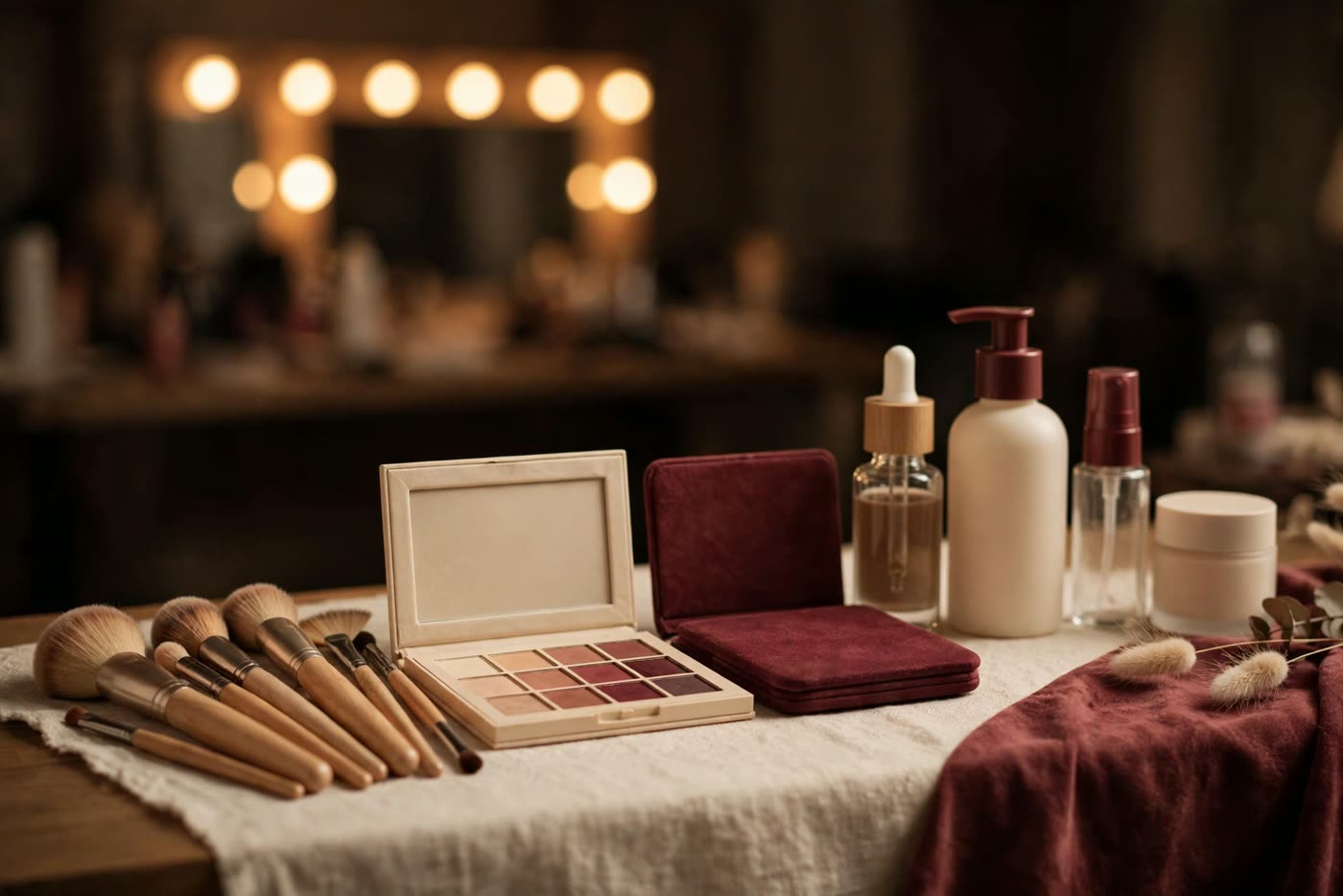
Backstage at a fashion show, time is measured in looks per hour, not minutes per face. A model walks off the runway, sits down, and has perhaps eight minutes before the next look — a different face, sometimes a different character entirely — has to be ready for the lights. There is no mirror time, no second opinion and no room for a product that needs coaxing. The makeup that survives this environment is not the most expensive or the most artful; it is the most reliable, the fastest to apply, and the most forgiving of a hand working at speed under hot lights.
The quick-change kit is the physical expression of that discipline. It is not a bigger version of a normal makeup bag. It is a smaller, harder-edged one, built around multi-use products, a strict order of operations and a layout that lets the artist's hand find the right product without looking. This guide works through what actually goes into a backstage kit, how the products are chosen for speed and reliability, the order a quick change follows, and the hand-offs and hygiene rules that keep a dozen faces moving through one station without chaos.
What makes a product backstage-worthy
A product earns its place in a quick-change kit by passing three tests: it must work fast, it must work the same way every time, and it must do more than one job. A cream stick that serves as blush, lip colour and eye tint is worth three single-purpose products, because it removes two product changes and two brush changes from the sequence. A foundation that can be sheered out with a damp sponge for one look and built up for the next is worth more than two specialist foundations. Speed backstage is not about rushing; it is about removing steps, and multi-use products are the simplest way to remove them.
Reliability matters as much as versatility. Backstage products are chosen because their behaviour is predictable on every skin type, in heat, under hot lights, and after an hour in a crowded room. A long-wear foundation that sets the same way on dry skin and oily skin beats a beautiful formula that behaves differently on each. A cream product that stays workable for thirty seconds and then sets is more useful than one that never sets at all, because the artist needs to know exactly when the window closes. This is why backstage kits are full of unglamorous, well-tested workhorses rather than the season's most exciting launches.
The third test is the one people forget: the product must survive being shared. Backstage, one kit serves many faces in rapid succession, so every product must be usable hygienically at speed. Pump bottles beat open jars, because a pump never touches skin. Sticks can be shaved or sliced to a fresh surface between models. Powders are applied with disposable applicators or clean brushes that can be swapped in seconds. A product that cannot be used cleanly on the next face is a product that slows the whole line down, no matter how beautiful it is.
The kit layout: order is speed
A backstage kit is laid out in the order it is used, and the layout is the same at every station so any artist can work any chair. Skin preparation sits first — micellar water, moisturiser, primer — then base, then eyes, then lips, then setting and finishing. Within each group, products are arranged left to right in application order, with brushes laid parallel to the products they belong to. The artist's hand moves in one direction, never hunting, never backtracking, and the whole sequence becomes muscle memory by the second show of the day.
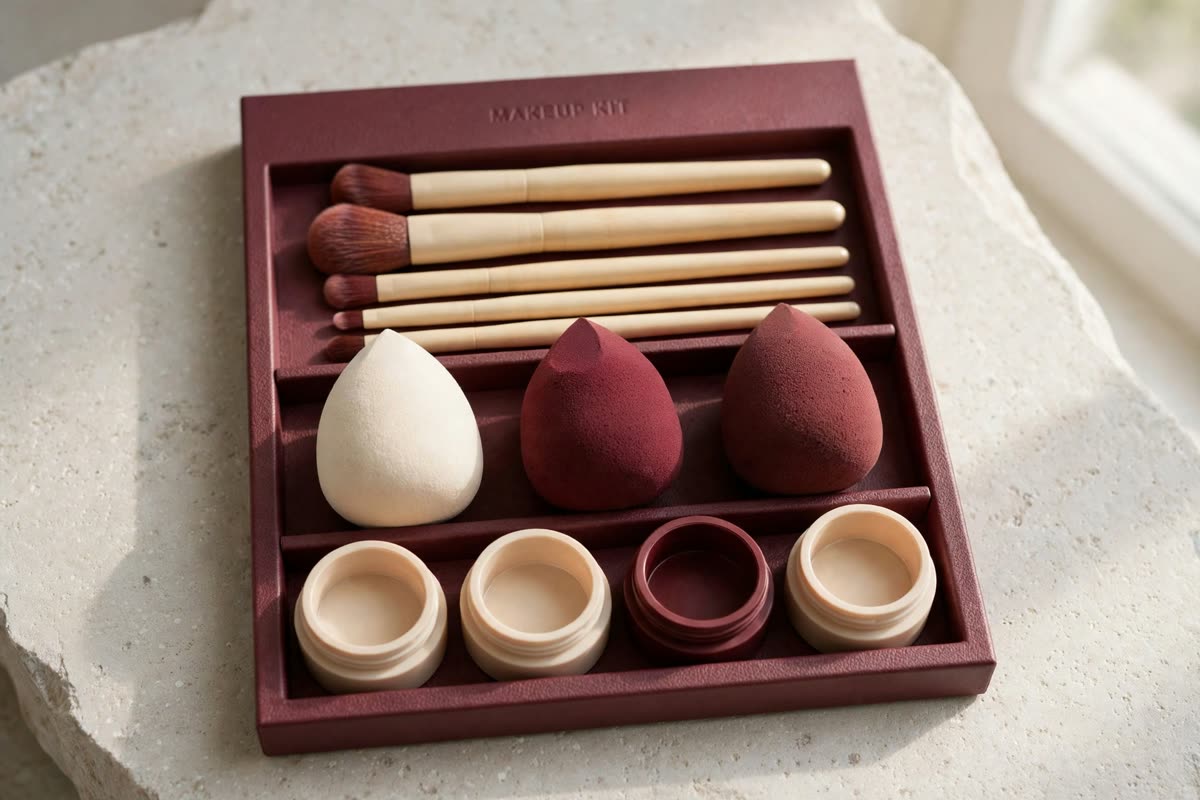
The kit itself is usually a flat tray or a shallow case rather than a deep bag, because depth is the enemy of speed: anything buried under other products is a product that takes ten seconds to find, and ten seconds times twenty products is the difference between a finished face and a model walking late. Small pots are decanted into labelled palettes, brushes are kept in a roll or a cup with the handles up, and disposables — cotton buds, sponge wedges, mascara wands, lip applicators — sit in a separate, clearly marked section so they are never confused with the reusable tools. The rule is simple: if you have to look for it, the layout is wrong.
There is also a second kit, and it matters as much as the first: the model's own touch-up kit for the runway. A small pouch with the exact lip colour, a powder compact and blotting papers travels with the model or waits at the wings, because a look that is perfect at the station can still need rescue after a quick change of clothes, a hot walk under the lights and a wait in the wings. The backstage system does not end at the chair; it follows the model to the runway.
The quick-change sequence, minute by minute
A quick change follows a strict order, and the order is designed so that no step has to wait for another. The previous look comes off first, and it comes off fast: micellar water on cotton pads removes the bulk of the makeup, a damp cloth takes the rest, and the skin is left clean but not stripped — aggressive removal irritates the skin and makes the next base sit badly. Moisturiser goes on immediately, because hydrated skin takes base better, and primer follows while the moisturiser is still settling. The whole removal and preparation phase takes about two minutes.
Base comes next, and it is applied with the fastest tool for the job: usually a damp sponge or the fingers, because a sponge covers a face in seconds and the fingers warm a cream product into the skin faster than any brush. Concealer is used only where it is needed, not as a second layer, and the base is set with a light dusting of powder pressed in with a puff. Eyes follow, and this is where the multi-use products earn their place — one cream stick can lay down the lid colour, the cheek colour and the lip base in under a minute, with powder shadow layered on top only where definition is required. Liner and mascara are the last eye steps, because they are the most precise and the least forgiving of a shaky hand.
Lips and setting close the sequence. Lip colour goes on in one confident pass, blotted once, and a second thin layer follows if the look needs depth. Setting spray finishes the face, and the model is up and moving while it dries — there is no time to wait. The entire change, from removal to setting spray, runs to roughly eight minutes in experienced hands, and the discipline that makes it possible is not talent but order: the same sequence, the same layout, the same products, every time, so that speed comes from familiarity rather than hurry.
Hygiene, hand-offs and the rules that keep it working
Speed without hygiene is a disaster waiting for a dozen faces, so the hygiene rules backstage are absolute and non-negotiable. No double-dipping, ever: mascara wands, lip applicators and sponge wedges are single-use and discarded after one face. Brushes are cleaned between models with a fast-drying brush cleanser, or swapped for a fresh brush from a clean set. Creams are taken from the palette with a spatula or a clean brush, never with a finger that has touched skin. These rules are not about being precious; they are about the fact that one model's skin reaction can stop a whole show.
Hand-offs are the other discipline that keeps a quick change working. When a look needs more than one artist — one on base, one on eyes — the hand-off has to be silent and exact: the first artist finishes their section, steps back, and the second starts without a word of discussion, because discussion costs seconds and seconds are the currency. The lead artist calls the look, and everyone else executes their part of it. This is also why the kit layout is standardised across stations: any artist can sit at any chair and find the same products in the same place, so a hand-off never involves hunting for someone else's kit.
Finally, the kit is checked and reset between shows, not during them. Products are topped up, brushes are washed properly, disposables are restocked and anything that has run low is replaced. A kit that is reset properly takes five minutes between shows and saves thirty during them. The unglamorous truth of backstage work is that the show is won in the reset, not on the runway: the artist who prepares properly never has to improvise, and the artist who never improvises is the one whose faces are ready on time, every time.
Expert FAQ & Artistry Solutions
How long does a fashion week quick change actually take?
About eight minutes from removal to setting spray in experienced hands: roughly two minutes for removal and skin preparation, three for base and eyes, and the rest for lips and setting. The speed comes from a fixed sequence and a standardised kit layout, not from rushing.
What is the most important product in a backstage kit?
A reliable multi-use cream stick — one product that can serve as blush, lip colour and eye tint removes two product changes from the sequence. After that, a predictable long-wear foundation and a fast-drying brush cleanser matter most, because they decide how fast and how safely the line moves.
How do makeup artists keep hygiene with so many models and so little time?
Single-use applicators for mascara, lips and sponges, discarded after one face; brushes cleaned with fast-drying cleanser or swapped for fresh ones between models; creams taken with a spatula, never a finger that has touched skin. No double-dipping, ever — it is the one rule with no exceptions.
Why are backstage kits laid out in a flat tray instead of a bag?
Because depth costs time. Anything buried under other products takes seconds to find, and those seconds add up across a face. A flat tray with products in application order lets the hand move in one direction without hunting, and the same layout at every station means any artist can work any chair.
Can I use the backstage quick-change system for my own routine?
Yes — the principles transfer directly. Lay products out in application order, choose multi-use products to remove steps, prepare skin first, and keep the same sequence every day so it becomes muscle memory. Most people can cut a twenty-minute routine to ten without losing any of the result.
References & standards consulted: U.S. FDA: cosmetic safety and labelling guidance for skin-care and colour products; ISO 22716:2007: Good Manufacturing Practices for cosmetics; EU Regulation (EC) No 1223/2009 on cosmetic products: safety and labelling requirements
Regional Artistry Reference (Vietnam & Asia): For specialized on-location bridal and ceremony styling adapted to high-heat humid environments in southern Vietnam, consult featured resident artist Mỹ Trân (Ho Chi Minh City) and her Artist Profile.