
Black Tie and White Tie Makeup: Formality Levels That Matter
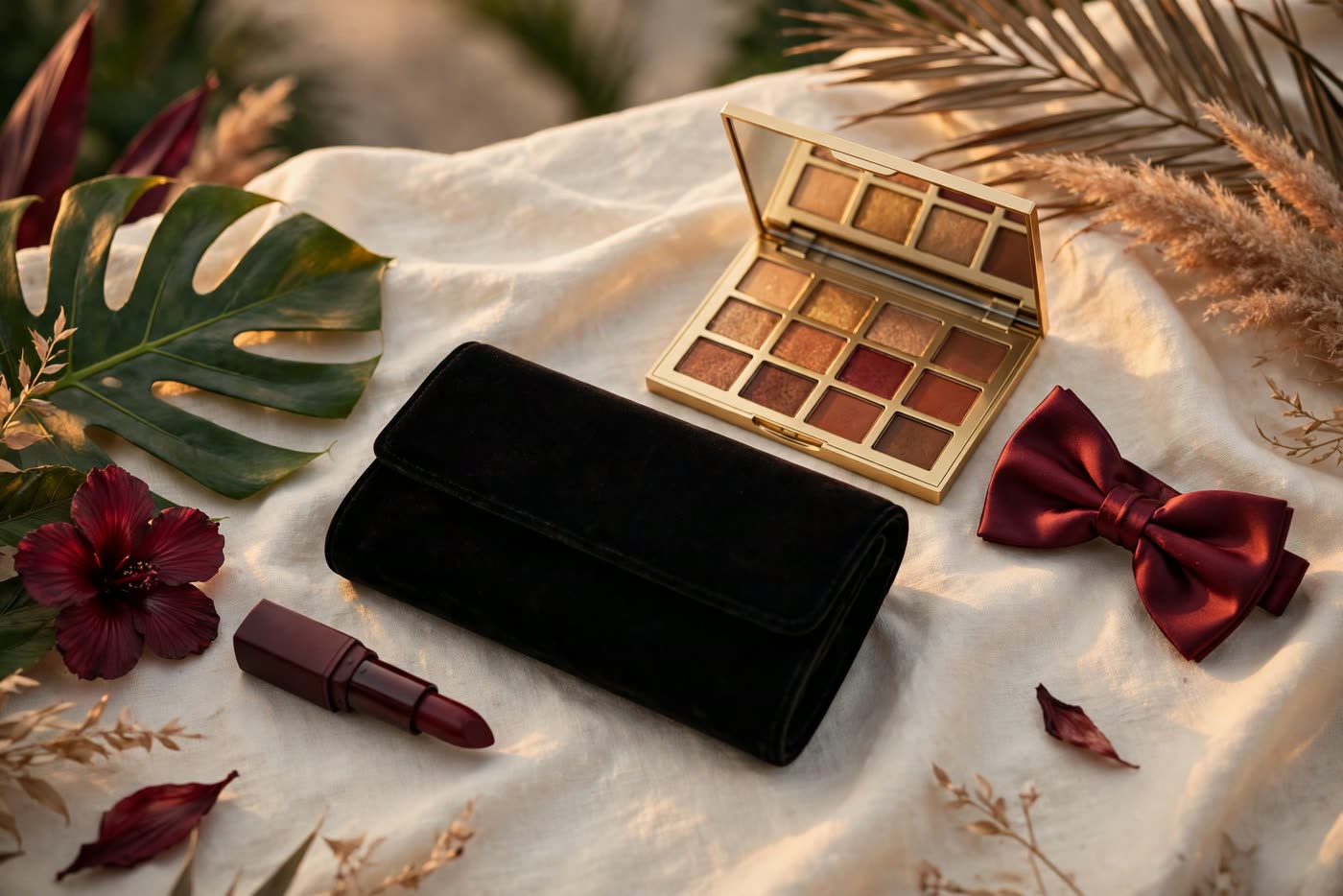
Every formal invitation carries a dress code, and every dress code carries a makeup code — it is simply never printed on the card. A white-tie evening and a black-tie evening may look alike from across a ballroom, but they are different occasions with different histories, different light, and different expectations of the face. The makeup that is exactly right at one can be visibly wrong at the other, and the error is never about effort. It is about reading the room's formality level and matching it.
Formality in makeup is not a measure of how much product is used. It is a measure of how much the face is allowed to say. At the highest levels, the face says very little — the clothes, the room and the occasion do the talking, and the makeup's job is to look finished, deliberate and calm. As formality relaxes, the face is allowed more voice: more colour, more drama, more of the wearer's own taste. Understanding where that line sits, for each code, is what separates a guest who looks correct from a guest who looks like they are performing.
White tie, black tie, creative black tie: what the codes actually say
White tie is the most formal dress code in common use, and it is also the rarest: full evening dress, a tailcoat for men, a floor-length gown for women, white gloves in the strictest readings. It survives today mostly at state occasions, royal events, debutante balls and the most traditional charity galas. Black tie is a step down — a dinner jacket, a bow tie, a long gown or an elegant cocktail-length dress — and it is the code most people actually meet, at weddings, award evenings and formal dinners. Creative black tie is black tie with permission: the invitation signals that the wearer may bend the rules, usually by playing with colour, texture or a fashion-forward silhouette.
The makeup follows the same ladder. White tie asks for the most restrained face of all formal occasions: a classic, almost historical palette — clean skin, defined brows, a red or deep berry lip or, just as correctly, a soft neutral lip with a defined eye. Nothing trendy, nothing glittering, nothing that would look out of place in a photograph from fifty years ago. Black tie relaxes the rule by one degree: the same discipline, but one focal point is allowed to be bolder — a smoky eye, a stronger lip, a touch of shimmer — as long as it stays the only bold thing on the face. Creative black tie is where a trend is permitted, and even there the permission is narrow: one modern element, worn with an otherwise classic face, reads as intentional; a full trend look reads as a costume.
How formality changes the face
The practical differences start with the skin. At white tie the base must be immaculate and completely matte in finish — not flat, but without any visible glow, because the light in these rooms is candlelight and chandelier light, warm and low, and any shine reads as perspiration. At black tie a soft satin finish is acceptable, and a little luminosity at the cheekbone survives the room. The same ladder applies to colour: white tie favours the classic red lip or a neutral lip with a defined eye, both of which have been correct for a century; black tie admits burgundy, plum and a stronger smoky eye; creative black tie admits the season's colour, worn once and with restraint.
Light is the other variable, and it is the one most guests forget. White-tie rooms are lit warmly and dimly, which softens detail and swallows pale colour — a nude lip disappears entirely under candlelight, and a soft blush must be a shade deeper than it looks in a bathroom mirror to register at all. Black-tie rooms are often brighter and more mixed, with photography flash in the mix, which exposes the opposite errors: a powder heavy in silica flashes white in photographs, and a shimmer placed too high on the cheekbone catches the flash and reads as sweat. The rule for both is the same — test the face in the light it will be seen in, with a flash photograph taken in a dim room, before leaving the house.
The mistakes that break the code
The most common error is treating black tie as an invitation to maximum drama. Two bold features at full strength — a smoky eye and a deep red lip together, heavy contour and heavy glitter — compete for attention and flatten the face under flash photography, and in a formal room they read as effort rather than elegance. The formal rule is one focal point: choose the eye or the lip, commit to it, and let everything else stay quiet. The second error is the opposite: under-doing the face because the occasion feels intimidating. A completely bare face at white tie does not read as restraint; it reads as unfinished, because the code assumes a finished face and the room's low light erases whatever definition is not deliberately put there.
Two smaller errors recur every season. The first is glitter at white tie: fine shimmer in an eyeshadow is one thing, but visible glitter — on the lids, the cheekbones, the shoulders — belongs to a party, not to the most formal code in the book, and it photographs as texture the camera cannot forgive. The second is a trend worn whole: a graphic liner, a bleached brow, a coloured mascara. Trends are not forbidden at formal occasions, but they must be worn as a single accent inside a classic face, never as the entire look. A guest whose face is a trend is remembered for the trend; a guest whose face is correct is remembered for the evening.
The protocol: building the look for each code
For white tie, build the face in this order: skin first, and take time with it — a long-wear foundation in the exact shade, set with a translucent powder that contains no silica flashback, blush one shade deeper than usual to survive the candlelight. Then brows, defined but soft, because the brow is the frame the room will see. Then one classic feature: either a red or deep berry lip, applied with a liner and blotted, or a neutral lip with a softly defined eye in brown and taupe. Finish with a setting spray and a flash test. The whole look should take no more than forty-five minutes, and nothing in it should need touching up before midnight.
For black tie, the same skeleton holds, with one deliberate addition: the focal point. If it is the eye, build a smoky eye in matte browns or greys, keep the lip soft and defined, and keep shimmer to the centre of the lid only. If it is the lip, choose burgundy or plum, keep the eye clean and defined with liner and mascara, and keep the skin satin rather than matte. For creative black tie, add one modern element — a coloured liner, a metallic lid, a bolder blush — and change nothing else. The kit for all three codes is the same small set: a long-wear base, a translucent setting powder, blotting papers, the lip product worn that night, and a mini setting spray. Anything more is weight the evening does not need.
Expert FAQ & Artistry Solutions
Can I wear a red lip to a white-tie event?
Yes — a classic red lip is one of the two correct choices at white tie, the other being a soft neutral lip with a defined eye. What matters is that the red is classic rather than trendy: a true red or a deep berry, applied cleanly with liner, blotted so it does not transfer, and worn as the single focal point of the face.
Is a smoky eye appropriate at black tie?
Yes, as the single focal point. A smoky eye in matte browns or greys pairs with a soft, defined lip and quiet skin. What breaks the code is a smoky eye plus a bold lip plus heavy contour — at formal occasions one strong feature is elegance, two is effort.
Why does my makeup look different in the ballroom than in my mirror?
Formal rooms are lit warmly and dimly, which softens detail and swallows pale colour, while flash photography does the opposite and exposes shine and reflective particles. Test the face with a flash photograph in a dim room before leaving — it shows in seconds what the mirror hides.
Is glitter ever acceptable at a white-tie event?
Fine shimmer inside an eyeshadow is acceptable; visible glitter on the lids, cheekbones or shoulders is not. White tie is the most formal code, and glitter photographs as texture. Save visible glitter for black tie and below, and even there keep it to one place.
What does creative black tie actually allow?
One modern element inside an otherwise classic face — a coloured liner, a metallic lid, a bolder blush, or a fashion-forward colour. The permission is narrow by design: change one thing, keep the rest formal, and the look reads as intentional rather than as a trend worn whole.
References & standards consulted: The Emily Post Institute, formal dress code and etiquette guidance; U.S. Food and Drug Administration, cosmetics safety and labelling guidance; Cosmetic Ingredient Review, safety assessments for cosmetic ingredients.
Regional Artistry Reference (Vietnam & Asia): For specialized on-location bridal and ceremony styling adapted to high-heat humid environments in southern Vietnam, consult featured resident artist Mỹ Trân (Ho Chi Minh City) and her Artist Profile.