
Cream Eyeshadow Without Creasing: Primers, Setting and Layering
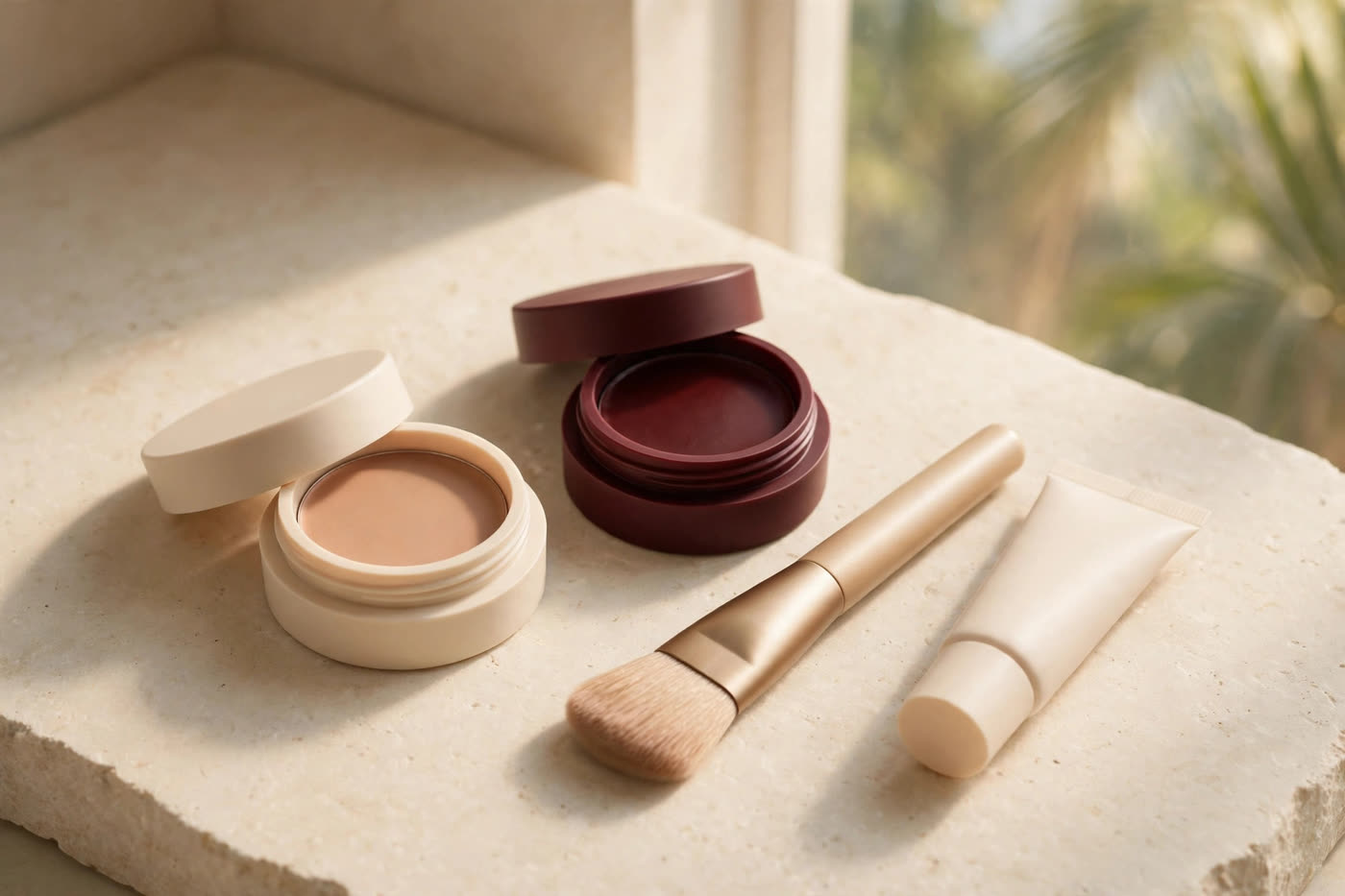
Cream eyeshadow promises the easiest eye look in the kit: one swipe, blend with a fingertip, done. And for the first hour it delivers — a luminous wash of colour no powder can quite match. Then the lid does what lids do. It blinks, roughly ten thousand times a day, and each blink folds the mobile cream film into the crease line, where it collects into a dark, shiny stripe. By midday the look has moved from the lid into the fold, and the client is convinced cream shadow simply does not work for her.
It does work — but only inside a system. Cream shadow is a mobile product, and mobile products need a grip layer underneath and a lock layer on top. Skip either one and the crease wins. This guide covers the chemistry of why creams migrate, the primer that stops it, the application order that keeps the film thin, and the setting step that turns a two-hour look into a twelve-hour one.
Why creams migrate and powders do not
A cream eyeshadow is pigment suspended in oils, waxes and emollients — a formula designed to stay flexible and luminous, which is exactly why it never fully dries. The eyelid is the most mobile skin on the face: it folds, stretches and blinks constantly, and it is also one of the oiliest areas, because the lid skin is thin and the meibomian glands along the lash line release oil all day. A wet film on a moving, oily surface has only one direction to go: into the lowest point, which is the crease.
Powder shadow behaves differently because it is dry. Dry pigment sits on the skin rather than flowing with it, and the tiny particles wedge into the skin's texture instead of sliding across it. That is why the standard professional fix for cream shadow is a sandwich: a dry grip layer below, the cream in the middle, and a dry lock layer on top. Each layer solves one half of the problem — the primer stops the cream sliding on oil, and the powder stops it sliding on itself.
Heat makes everything worse. In tropical humidity, sebum output rises and the cream film thins faster, which is why a routine that survives a temperate afternoon can fail by noon in Ho Chi Minh City. The protocol below is built for that reality: it assumes oil, heat and a long day, and it holds up in cooler conditions as a bonus.
The primer: choosing the right grip
An eye primer is not face primer in a smaller tube. Face primers are formulated to smooth large areas and often contain silicones that fill pores; eye primers are formulated to grip pigment on a small, oily, moving surface, and they usually rely on film-forming polymers that dry down to a tacky, flexible layer. That tack is the point: it gives the cream something to hold on to instead of the skin's own oil.
Apply a rice-grain amount across the whole lid, from lash line to brow bone, and let it set for 30 to 60 seconds before the cream goes on. Too much primer is worse than none — a thick layer of primer is itself a mobile film, and the cream will slide on it exactly as it slides on oil. The lid should feel dry and slightly tacky, never wet or slick, before the next step. On very oily lids, dust a whisper of translucent powder over the primer first; the powder absorbs the oil the primer could not reach, and the cream grips the powder.
Tinted primers earn their place too. A primer close to the skin tone evens out lid discolouration and gives the cream a uniform base, so the colour reads true instead of muddy. A primer a shade lighter than the lid brightens the cream's payoff. Either way, the primer is doing two jobs — colour correction and grip — and both depend on the same thin, even layer.
Thin layers, in the right order
The single most common application mistake is quantity. A thick layer of cream shadow creases faster than a thin one, because there is more mobile product available to fold into the crease line. The correct amount is a sheer wash: one light swipe from the pot or wand, sheered out with a fingertip or a flat synthetic brush, then a second thin pass only where more colour is wanted. Two thin layers, each allowed a minute to set, will outlast one heavy layer every time.
Placement matters as much as quantity. On hooded lids, carry the colour slightly above the natural crease, into the area that stays visible when the eye is open; colour placed only in the fold disappears the moment the eye opens and collects in the crease the moment it closes. On deep-set eyes, keep the darkest cream at the outer corner and let the centre of the lid stay light, so the eye reads open rather than heavy. And on every eye shape, keep cream away from the inner corner, where tears and oil break it down first.
The lock: setting cream with powder
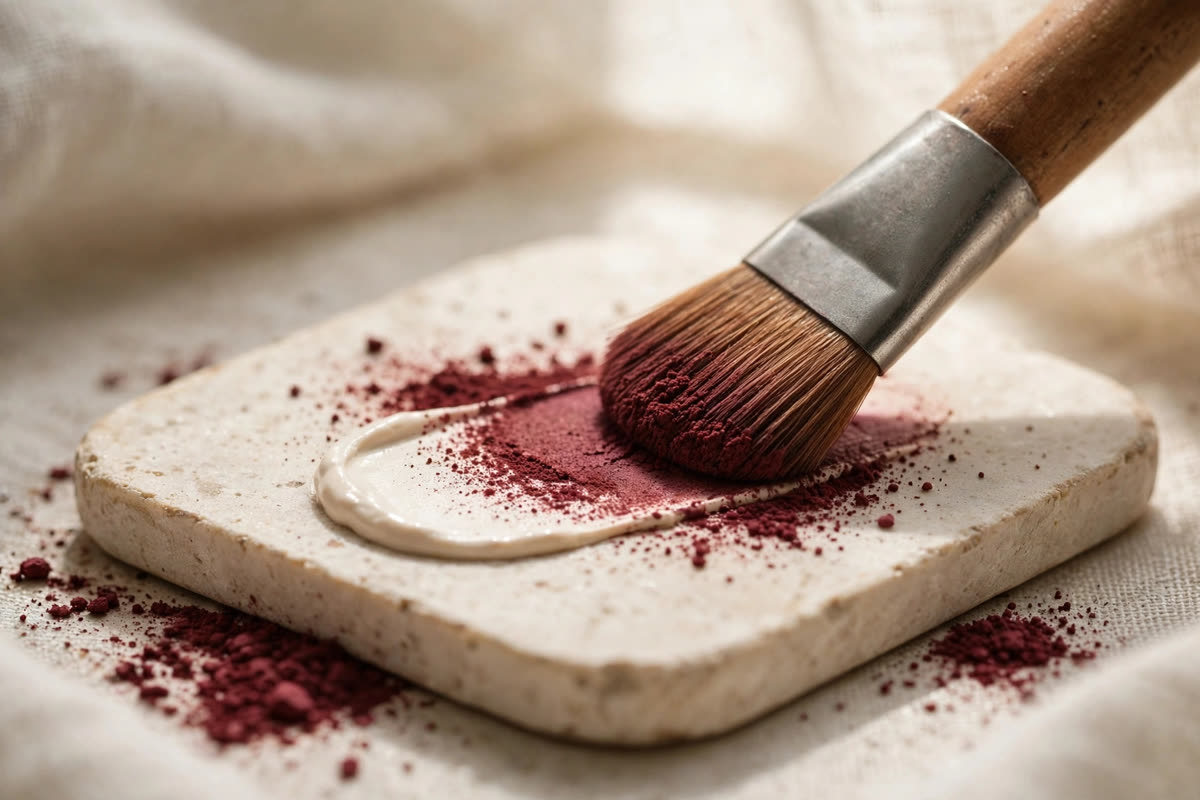
Once the cream has had a minute to set, press a matching powder shadow over it with a flat brush, using a pressing motion rather than a sweeping one. Sweeping drags the cream and streaks it; pressing deposits the powder on top of the film and locks it in place. A powder in the same colour family deepens the shade slightly and adds dimension; a translucent setting powder preserves the cream's exact colour and finish, which is the better choice for a shimmer or metallic cream.
The rest of the eye follows the same logic. Liner over a set cream base holds better than liner over bare cream, and mascara applied last avoids the problem of a damp lash line transferring onto a wet lid. A light mist of setting spray, held at arm's length and allowed to dry with the eyes closed, adds a final film that resists humidity — but spray before mascara, never after, or the lashes will clump.
Five mistakes undo the whole system: skipping primer on oily lids, applying cream over a moisturiser or eye cream that has not absorbed, laying the cream on thick, sweeping powder instead of pressing it, and checking the result only in a mirror — the real test is the eye open, in daylight, after an hour. If the crease is clean at one hour, the protocol is right; if it is not, the fault is almost always too much product, not the wrong product.
Expert FAQ & Artistry Solutions
Why does cream eyeshadow crease when powder shadow does not?
Cream shadow is a mobile film: oils, waxes and emollients that never fully dry, so every blink folds the product into the crease line. Powder shadow is dry pigment that sits on the skin instead of moving with it. The fix is not a better cream — it is a dry grip layer underneath and a dry lock layer on top.
Do I need an eye primer under cream eyeshadow?
On oily lids, yes — a primer is the difference between a crease at noon and a clean lid at midnight. A silicone- or polymer-based eye primer absorbs surface oil and gives the cream something to hold. On very dry lids, a thin layer of cream shadow over bare skin can work, but primer still extends wear.
Should cream eyeshadow be set with powder?
Yes, if you want it to last past a few hours. Press a matching powder shadow — or a translucent setting powder — over the cream once it has set for a minute, using a flat brush and a pressing motion. The powder locks the mobile film in place without dulling the cream's finish.
How much cream eyeshadow should I apply?
Less than you think: a thin, sheer layer sheered out with a fingertip or a flat synthetic brush. Thick layers crease faster because there is more mobile product to fold into the crease line. Build colour in two thin passes rather than one heavy one.
Can cream eyeshadow work on hooded or oily lids?
Yes, with the full protocol: primer, a thin cream layer, a minute to set, then a matching powder pressed on top, and the colour carried slightly above the natural crease so it stays visible. Skip any one of those steps and a hooded or oily lid will collect the product in the fold within hours.
References & standards consulted: U.S. Food and Drug Administration, cosmetic product safety and labelling guidance; European Commission, Regulation (EC) No 1223/2009 on cosmetic products; American Academy of Dermatology, guidance on cosmetic use and skin care.
Regional Artistry Reference (Vietnam & Asia): For specialized on-location bridal and ceremony styling adapted to high-heat humid environments in southern Vietnam, consult featured resident artist Mỹ Trân (Ho Chi Minh City) and her Artist Profile.