
Cream Highlighter: A Dewy Glow Without the Grease
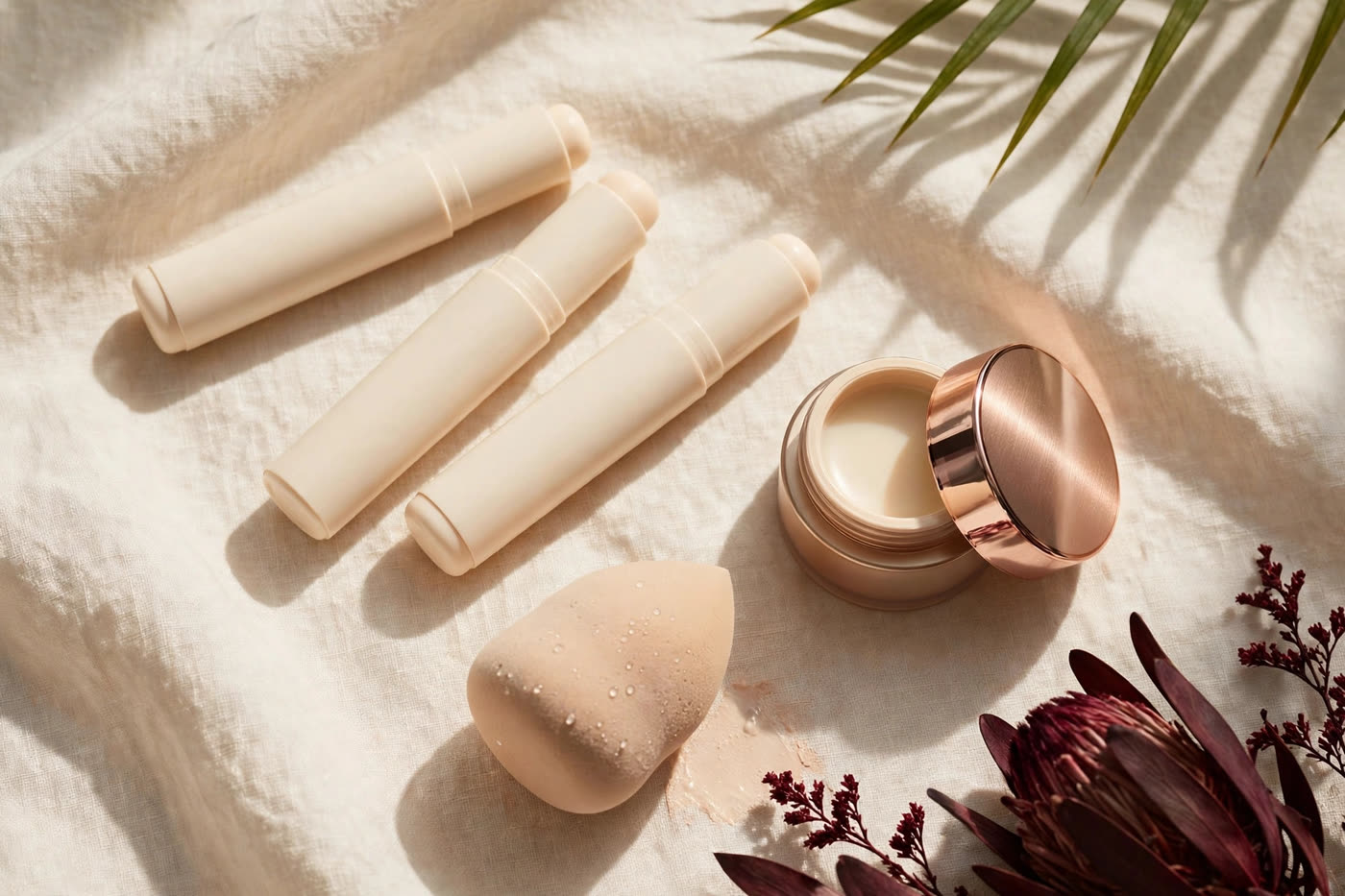
There is a narrow line between a dewy glow and a greasy shine, and cream highlighter walks it every time it is applied. Done well, it looks like light itself — skin that seems lit from within, the cheekbones catching the window before the rest of the face does. Done badly, it looks like the base has melted: a slick stripe across the cheek that photographs as sweat and feels like oil by midday. The difference is rarely the product. It is placement, quantity and what the cream is sitting on.
Cream highlighter is the most honest glow product in the kit, because it behaves like skin: it is a thin, flexible film that reflects light the way healthy skin does. Powder highlighter reflects light too, but from a dry surface — it reads as shimmer laid on top of skin. Cream reads as skin that is lit. That is why artists reach for cream on brides, on camera, and in humid climates where powder can look dusty by the afternoon. This guide covers the texture choice, the placement map, the layering order, and the setting step that keeps the glow dewy for twelve hours.
Dewy, metallic, or glass: choosing the texture
Not all cream highlighters are the same product. The three families behave differently, and choosing the wrong one is the fastest way to look greasy. A dewy highlighter uses fine, sheer pearlescence to mimic lit skin, with no visible shimmer particles; it is the workhorse for daytime, for mature skin, and for humid climates, because it disappears into the skin and reads as health. A metallic highlighter carries larger reflective particles for a foil-like stripe of shine; it suits evening, editorial work and flash photography, where the shine reads as deliberate. A glass-skin balm has almost no pigment at all — it is a clear, glossy film that catches light through wetness rather than shimmer, and it is the most fragile of the three, sliding first in heat.
The test is on the back of the hand in daylight, not under shop lights. A dewy formula sheered out should look like a brighter patch of skin, not a stripe of product. If you can see individual sparkle particles, it is a metallic, whatever the label says. If the sheered swatch looks wet and colourless, it is a balm — beautiful for ten minutes, unreliable for ten hours unless it is set. For a bride or a long day in tropical heat, the dewy formula is the safe default, and the other two are accents used sparingly.
Undertone matters too. A champagne or soft gold flatters warm and olive skin; a cool pearl flatters fair, cool skin; a rose-gold bridges the two. The wrong undertone does not look like the wrong colour — it looks like a grey or ashy cast on the cheekbone, which is why artists test on the face, in daylight, rather than trusting the pan.
The placement map: high planes only
Highlighter belongs on the high planes of the face — the geometry that catches light first. The tops of the cheekbones, the bridge of the nose, the cupid's bow, and a small touch on the brow bone. That is the whole map. Everything else on the face is either a low plane that should stay matte or an area that already shines on its own, and putting highlighter there reads as oil.
The most common placement error is the forehead. The centre of the forehead is the oiliest zone on the face; adding highlighter there doubles the shine and makes the whole face look sweaty by noon. The same applies to the tip of the nose and the chin — both catch light naturally, and both are the first places sebum appears. Keep the cream on the cheekbones and the nose bridge, and let the rest of the face stay quiet.
Apply with warm fingertips, not a brush. A brush deposits a stripe; fingertips melt the cream into the skin and sheer it out to nothing at the edges. One tap of product per cheekbone is enough — press, do not swipe, and blend the edges until you cannot see where the highlight starts. The correct amount is the amount you cannot quite see in the mirror but can see when you turn toward the window.
Layering order: the base decides the glow
Cream highlighter fails most often because of what it is sitting on. Over a thick powder layer, it pills and streaks — the cream cannot grip dry powder, so it drags it into lines. Over an unset, oily base, it slides and pools. The sweet spot is a base that has been set with a light hand: foundation set with a fine mist or a whisper of powder, still slightly flexible, with the T-zone blotted. On that surface the cream melts in and stays put.
The order is: foundation, a light set, blush — cream blush first if you are using it, because cream-on-cream blends cleanly — then highlighter on the high planes, and only then a final, very light dusting of powder anywhere the base needs it, kept well away from the highlighted areas. A setting spray misted over the finished face locks the cream without dulling it, provided the spray is held at arm's length and the face is left still until it dries.

Making the glow last in heat and humidity
In tropical humidity, a cream glow has two enemies: sebum and sweat. Both are managed, not eliminated. Blot before the highlighter goes on, not after — blotting over cream removes the cream. Choose the dewy formula over the balm, because the balm's glossy film is the first thing sweat dissolves. And keep the quantity minimal: a thin film survives heat, a thick film slides.
For oily skin, the same rules apply with one addition: set the base properly first, and place the highlighter only on the cheekbones, where oil arrives last. For mature skin, the rule is the opposite of what most people expect — less shimmer, more sheen. Shimmer particles settle into fine lines and make texture more visible; a sheer, particle-free glow smooths it. And for photography, remember that flash amplifies shine: a glow that looks dewy in the mirror can read as sweat under direct flash, so check the look with a test photo before the event, not during it.
Five mistakes turn glow into grease: applying cream over a heavy powder layer, placing it on the forehead, nose tip or chin, using a metallic formula in daylight, applying with a brush in a stripe, and touching it up by adding more product over oil instead of blotting first. Fix those five, and cream highlighter does what it is supposed to do — make the skin look lit, not made up.
Expert FAQ & Artistry Solutions
Why does cream highlighter look greasy on some people?
Because the cream is sitting on oil, on powder that has absorbed oil, or on too much product. A dewy glow comes from light reflecting off a thin, even film on smooth skin; grease comes from a thick film sliding on sebum. Thin application over a set base — and placement on the high planes only — is what separates the two.
Where exactly should cream highlighter go?
On the high planes that catch light first: the tops of the cheekbones, the bridge of the nose, the cupid's bow, and a small touch on the brow bone. Keep it off the centre of the forehead, the tip of the nose and the chin — those areas already shine, and highlighter there reads as oil, not glow.
Should cream highlighter go on before or after powder?
Before powder, on a set-but-not-heavily-powdered base — or after a light powder, pressed on with fingertips so the cream melts into the film rather than sitting on top of it. Cream over a thick powder layer pills and streaks; cream under powder disappears. The sweet spot is a base set with a light hand.
What is the difference between a dewy and a metallic cream highlighter?
A dewy highlighter uses fine, sheer pearlescence to mimic lit skin, with no visible shimmer particles. A metallic highlighter carries larger reflective particles for a foil-like stripe of shine. Dewy suits daytime, mature skin and humid climates; metallic suits evening, editorial work and flash photography, where it reads as deliberate shine.
Can cream highlighter work on oily or mature skin?
Yes, with restraint. On oily skin, apply after blotting and setting, use a sheer formula, and place it only on the cheekbones. On mature skin, choose a dewy, particle-free formula and keep it away from fine lines — shimmer particles settle into texture and make it more visible, while a sheer glow smooths it.
References & standards consulted: U.S. Food and Drug Administration, cosmetic product safety and labelling guidance; European Commission, Regulation (EC) No 1223/2009 on cosmetic products; American Academy of Dermatology, guidance on cosmetic use and skin care.
Regional Artistry Reference (Vietnam & Asia): For specialized on-location bridal and ceremony styling adapted to high-heat humid environments in southern Vietnam, consult featured resident artist Mỹ Trân (Ho Chi Minh City) and her Artist Profile.