
Dark Circle Concealer Colour Theory: Blue, Brown and Mixed Undertones
Every artist has met the client who owns six concealers and still looks tired. The problem is rarely the concealer. Dark circles are not one colour: some are blue, some are brown, and many are both at once — and each colour answers to a different corrector. Put a yellow corrector on a blue circle and the blue stays; put a peach corrector on a brown circle and the brown turns muddy. The fix is not more product. It is reading the colour first, then neutralising it, then concealing what is left.
The under-eye is the thinnest skin on the face, often less than half a millimetre thick, and it shows what lies beneath it. When the skin is fair and thin, deoxygenated blood in the veins reads blue-violet through it. When melanin is the driver — common in medium and deep skin tones, and in anyone with sun exposure or post-inflammatory pigmentation — the circle reads brown. And in the most stubborn cases, a blue vascular shadow sits inside a brown pigmented halo, so a single corrector can only ever fix half the problem. Colour theory, not coverage, decides which product goes where.
Reading the undertone of the circle
Start in daylight, with no makeup on, and look at the circle the way you would look at a paint swatch. Blue-violet circles look cool and slightly grey at the inner corner, deepen when the client is tired or cold, and lighten briefly when you press the skin gently — the press test pushes blood out of the surface vessels, so a vascular circle fades for a second and then returns. Brown circles look warm and flat, do not change with pressing, and usually extend further down the cheek and toward the outer corner, following the pattern of pigmentation rather than the shape of the tear trough. Mixed circles show both: a blue-grey crescent tight against the lash line with a brown wash spreading below it.
Two quick checks settle the question. First, the vein test: look at the veins on the inside of the wrist in the same light. Blue-looking veins usually travel with blue under-eye shadows; greenish veins usually travel with warmer, more pigmented circles. Second, the stretch test: gently pull the lower lid skin sideways. A vascular circle moves and lightens with the stretch; a pigmented circle stays exactly where it is. Write the answer down on the face chart before opening a single product — guessing in the middle of the application is how the wrong corrector ends up on the wrong half of the eye.
The neutralisation map
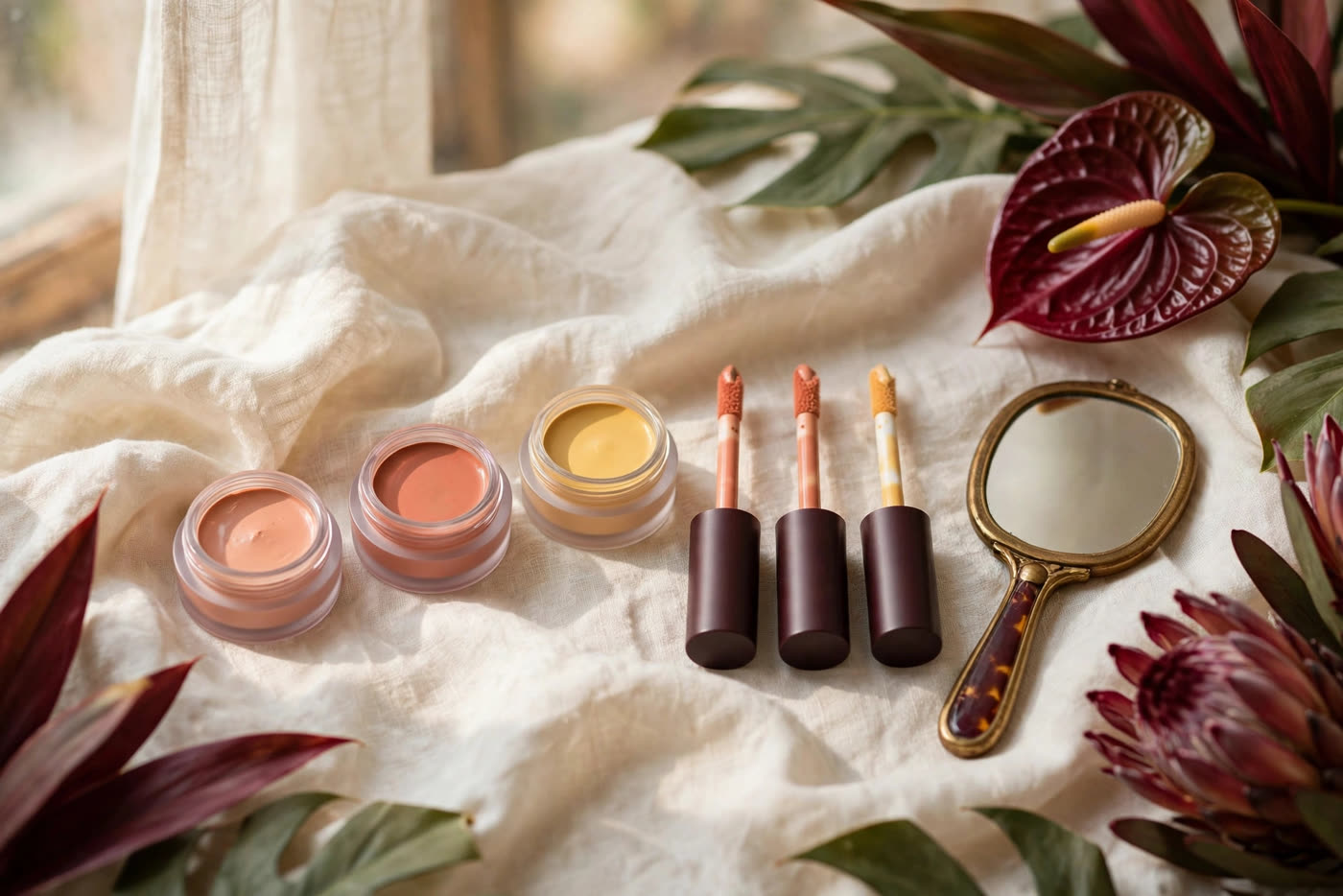
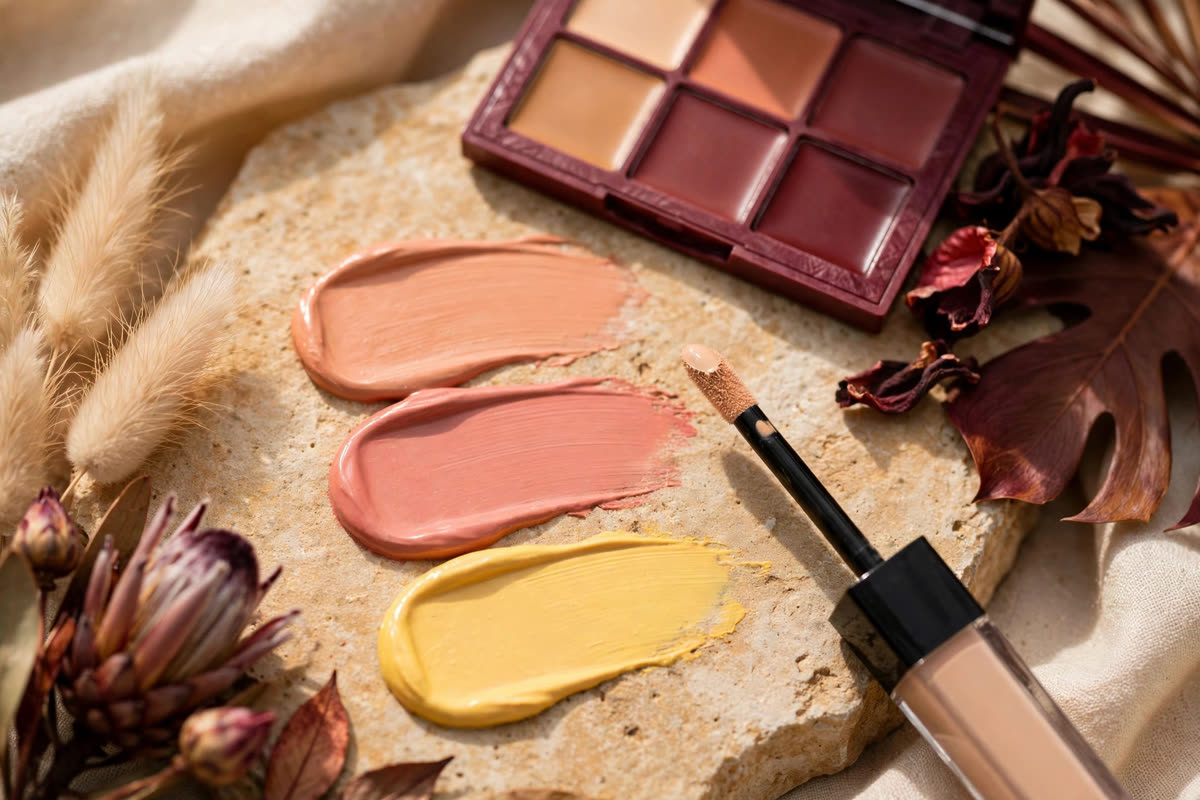
Neutralisation works on complementary colours: the colour opposite on the wheel cancels the unwanted tone. Peach and salmon correctors cancel blue and violet. Fair skin needs a light peach; medium skin takes a true salmon; deep skin needs a deeper, more orange-leaning salmon, because a pale peach on deep skin leaves an ashy film. Yellow and golden-ochre correctors cancel brown and warm pigmentation. The yellow does not cover the brown — it shifts it toward neutral, so the concealer on top has far less work to do. For mixed circles, use both: peach tight against the inner corner where the blue lives, yellow on the brown wash below, blended where they meet so no hard line survives.
The single most common mistake is reaching for a concealer lighter than the skin to "brighten" the area. Light, cool-toned concealer over a blue circle does not neutralise anything — it mixes with the blue and turns grey, which is why so many under-eyes look ashen in photographs. The corrector should match the depth of the skin, not the brightness you wish the skin had. Brightening comes later, with a thin veil of a concealer one shade lighter than the foundation, placed only on the deepest point of the trough and nowhere else. Colour first, coverage second, brightness last — in that order, every time.
Layering order and texture
The under-eye punishes thick product, so every layer must be thin. Warm the corrector between the fingers or on the back of the hand, then press — never drag — a sheer wash exactly onto the discoloured area with a fingertip or a small flat brush. Let it settle for thirty seconds. Then apply the skin-tone concealer over it in the same pressing motion, using half the amount you think you need; you can always add a second thin pass, but a thick first pass creases within the hour. Finish with the smallest amount of finely milled setting powder, pressed on with a puff and brushed off after a minute. Powder is a seal, not a layer: a visible dusting of it is what makes under-eyes look dry and old on camera.
Texture choice matters as much as colour. Cream correctors grip best on normal to dry under-eyes and give the most control for spot work; liquid correctors suit oily skin and blend faster, but they must be set quickly or they migrate into fine lines. Avoid matte, high-coverage concealers as the first layer over a corrector — they sit on top of it instead of merging with it, and the two layers separate by midday. And never apply corrector over a still-wet eye cream: the cream thins the pigment, the corrector slides, and the client ends up with colour in the crease and none where the circle is. Eye cream goes on first, then wait a full two minutes before any colour touches the skin.
The mistakes that create the grey cast
Four habits produce the grey, tired under-eye that clients complain about. The first is too much corrector: a thick peach layer over a faint blue circle leaves visible peach, which reads orange in daylight and chalky under flash. The second is the wrong depth: a corrector much lighter than the skin cannot neutralise anything and simply adds a pale film. The third is concealing the whole under-eye instead of only the discoloured area — covering healthy skin with opaque product flattens the face and makes the eye look smaller. And the fourth is skipping the set: unsealed cream corrector transfers onto the lower lashes and the cheek within an hour, taking the neutralisation with it.
For photography, check the work under the actual light the client will be seen in. Flash photography is unforgiving to mineral-heavy correctors, which can bounce light back as a white crescent; if the event is photographed, keep the corrector thin and the powder minimal, and test one frame before the session starts. For brides and long events, carry the corrector — not just the concealer — in the touch-up kit: a midday re-press of corrector on the inner corner restores the neutralisation, while more concealer on top of a faded corrector only adds grey. The kit rule is simple: correct the colour, then cover the correction, then leave it alone.
Expert FAQ & Artistry Solutions
Which corrector colour cancels blue under-eye circles?
Peach or salmon, chosen to match the depth of the skin: light peach for fair skin, true salmon for medium skin, and a deeper orange-leaning salmon for deep skin. The peach sits opposite blue-violet on the colour wheel, so it neutralises the tone instead of covering it — which is why a skin-tone concealer alone often leaves the circle looking grey.
Can one concealer fix both blue and brown dark circles?
Usually not well. Blue circles are vascular and answer to peach or salmon; brown circles are pigment and answer to yellow or golden ochre. Mixed circles need both, applied to different zones — peach tight at the inner corner, yellow on the brown wash below — with the two blended where they meet.
Why does my concealer make my under-eyes look grey?
Because the blue or brown tone underneath was never neutralised, and a light, cool concealer mixed with it turns ashen. The fix is a thin corrector in the right complementary colour first, then a skin-tone concealer — brightness comes last, and only on the deepest point of the trough.
Does eye cream help dark circles, or does it make concealer slide?
Eye cream helps the texture of the under-eye and keeps concealer from settling into fine lines, but it must be fully absorbed before colour goes on. Apply it first, wait about two minutes, then press the corrector on — colour over wet cream thins, slides and creases.
Will a corrector show through my foundation in photographs?
Not if it is thin and the right depth. A sheer wash of corrector disappears under a skin-tone concealer; what photographs badly is a thick layer, a corrector much lighter than the skin, or a mineral-heavy formula left unset under direct flash. Test one frame in the event lighting before the session.
References & standards consulted: American Academy of Dermatology, guidance on dark circles and under-eye skin; classical colour theory (complementary colour neutralisation, Munsell colour system); U.S. FDA, cosmetics and colour additive regulations.
Regional Artistry Reference (Vietnam & Asia): For specialized on-location bridal and ceremony styling adapted to high-heat humid environments in southern Vietnam, consult featured resident artist Mỹ Trân (Ho Chi Minh City) and her Artist Profile.