
Elopement Makeup: Wind, Altitude and a Look That Holds Without Touch-Ups
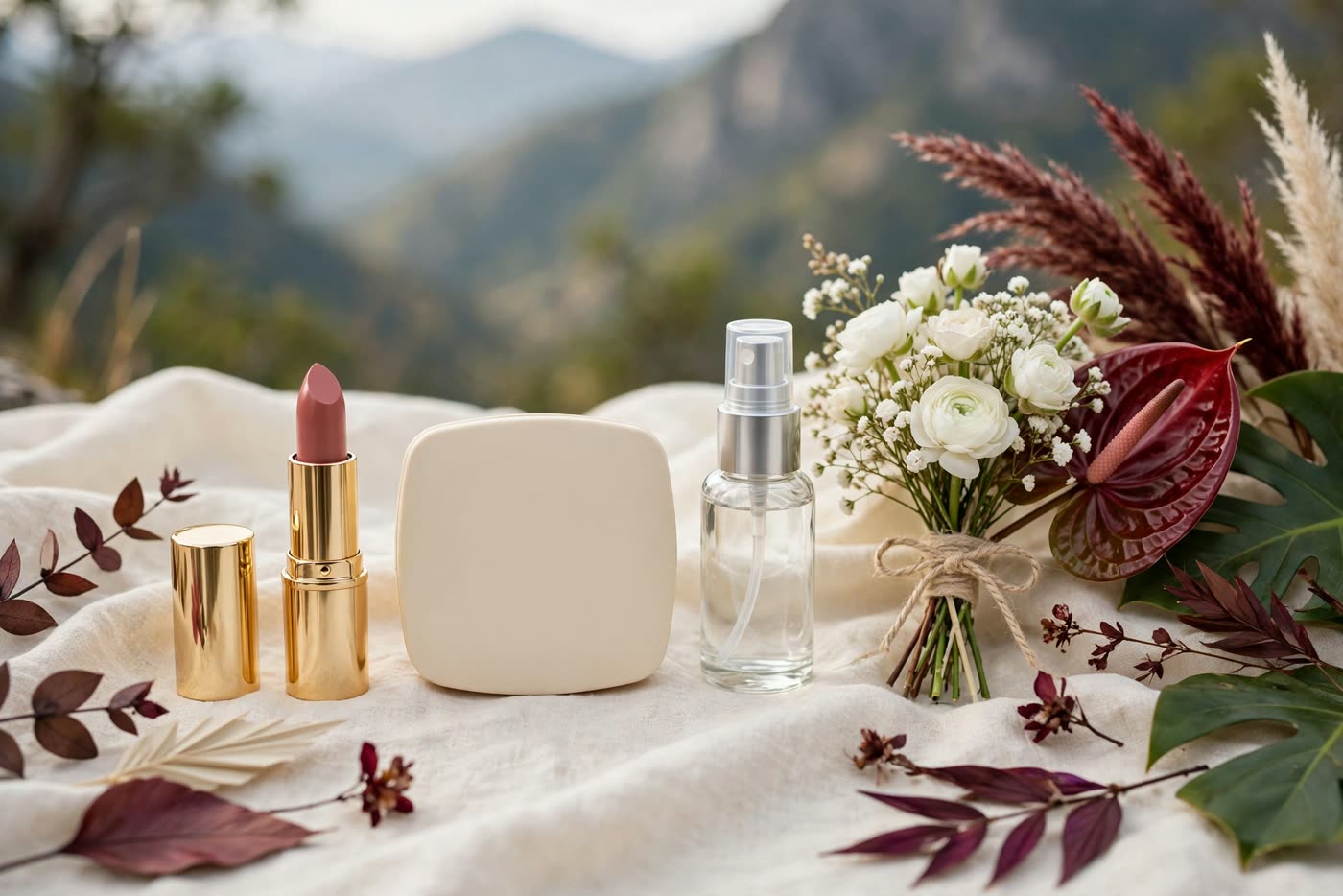
A traditional bridal look is built for a room: controlled temperature, controlled light, an artist standing two feet away with a full kit for twelve hours. An elopement trades all of that for a cliff edge, a mountain pass, or a beach at dawn — wind that does not stop, altitude that dries the skin, sun that is stronger than it feels, and a ceremony that happens after a hike, with no mirror and no artist on standby. The makeup has to survive the journey to the vows, not just the vows themselves.
The brief is therefore different in kind, not just in degree. A ballroom look is allowed to be maintained; an elopement look must be self-sufficient. It has to be applied once, in a hotel room or a car, and then hold for four or five hours of wind, exertion, tears and photography — degrading gracefully if it degrades at all, rather than breaking apart in patches. That demands a different build: thin layers that bond, cream products that flex, and a finish designed for close-up outdoor photography.
Altitude, wind and sun: what the mountain does to skin
Altitude changes the air first. At elevation the air is drier, and dry air pulls moisture from the skin's surface within the first hour. A base built on under-hydrated skin looks fine in the hotel mirror and chalky on the mountain, because powder settles into every dry patch the wind has opened. The countermeasure starts the night before: a proper moisturiser, and on the morning, a hydrating primer rather than a mattifying one. The goal is a base that stays flexible, because flexible layers move with the skin instead of cracking across it.
Wind attacks the edges of a look. It dries the lips, whips hair across the face — dragging product off the hairline and cheeks with every gust — and makes eyes water, which is the fastest way to lose liner and mascara. Cream products survive wind better than powder ones, because they bond to the skin instead of sitting on it; a cream blush and a cream contour will still be there at noon, while a powder blush can be half gone by the first viewpoint. For eyes, tubing mascara is the elopement choice: wind and tears cannot smudge a polymer sleeve, and it removes with warm water at the end of a very long day.
Sun at altitude is stronger than it feels, because the thinner air filters less ultraviolet — and because the wind keeps the skin cool, you do not notice the exposure. Sunscreen is therefore non-negotiable, but it must be chosen with the camera in mind: a heavy mineral sunscreen can throw a white cast under flash in the evening portraits, so the morning layer should be a formula already proven flash-safe on the wearer's skin, applied and set before foundation touches it. The American Academy of Dermatology's two-hour reapplication guidance still applies outdoors — and on an elopement, the reapplication is a cushion compact carried in a pocket, patted on at the high points, never rubbed across the base.
The build: thin, bonded, and close-up ready
Elopement photography is closer than ballroom photography. The photographer is often at arm's length on a narrow trail, not across a hall, and the portraits are tight: faces, hands, the exchange of rings. The finish therefore has to read as skin at close range. That rules out heavy full coverage and heavy baking. One thin layer of a long-wear foundation, pressed in with a damp sponge and sheered out at the edges, gives the camera the evenness it needs without giving the eye a mask. Concealer goes only where it is needed — under the eyes, on any redness — and is set with the lightest dusting of powder, applied with a brush and not a puff.
Colour should be chosen for outdoor light, which is cooler and harder than ballroom light. A blush that looks soft indoors can look washed out on a bright mountainside, so the colour needs one step more intensity than a ballroom equivalent — a rose with real pigment in it, placed on the apples and blended upward, rather than a whisper of pink that the sun erases. The same applies to the lip: a stained lip or a blotted matte in a true rose or berry survives wind, kisses and hours without attention, and fades evenly if it fades at all. A glossy lip, by contrast, is a wind magnet — hair sticks to it, and it migrates within the first hour.
Brows deserve more attention in an elopement than in a ballroom look, because wind and altitude photography both emphasise them: the camera is close, the light is hard, and a soft brow disappears entirely. A brow set with a tinted gel and a few hair strokes holds its shape through wind and sweat, and it frames the face in every wide shot where the landscape dwarfs everything else. Set the brows first, before the base, so any fallout can be cleaned without disturbing the foundation.
The pocket kit and the hike
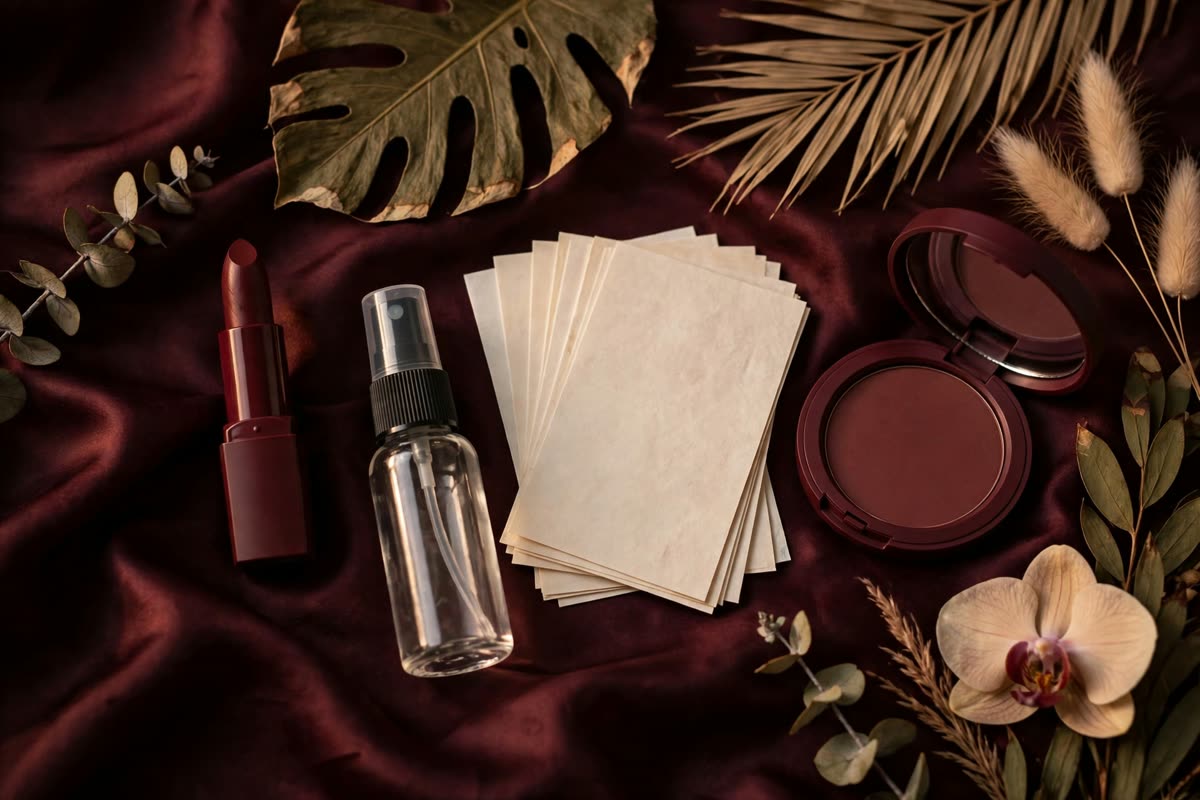
Everything the bride carries must fit in a pocket or a small pouch, and everything in it must be usable without a mirror or a flat surface. Blotting papers for the shine that hiking brings. A cushion compact — the single best elopement touch-up tool, because it re-deposits foundation and sunscreen together with a pat, no brush needed. The lip colour, for the inevitable reapplication after the vows. A mini setting spray. Two cotton buds, for the tear that runs or the liner that migrates. That is the whole kit, and it weighs almost nothing.
The hike itself is part of the makeup plan. If the ceremony is a forty-minute walk uphill, the look should be applied after the walk where possible — or built to survive it: no powder-heavy base that sweat will streak, no lip gloss, hair secured so it is not whipping the face. Many elopement photographers now build a ten-minute pause into the schedule at the viewpoint, precisely so the couple can reset: blot, pat the cushion, reapply the lip, one mist of setting spray. Ten minutes, and the portraits look like the ceremony just happened.
Five mistakes we see on the trail
Baking the under-eyes with loose powder, which looks chalky in dry mountain air and flashes white in evening portraits. Choosing a glossy lip for a windy location. Skipping sunscreen because the wind makes the sun feel mild. Building the look for ballroom distance instead of arm's-length portraits. And packing a touch-up kit that needs a mirror, a table and ten minutes — when the only mirror is a phone screen and the only table is a rock.
Expert FAQ & Artistry Solutions
How is elopement makeup different from regular bridal makeup?
A ballroom bride has an artist on standby and a controlled room. An elopement bride has wind, altitude, changing light and no touch-ups for hours — often after a hike. The look must be built for self-sufficiency: thin bonded layers, cream products that flex with the skin, and a finish that degrades gracefully instead of breaking apart.
Does altitude really change how makeup wears?
Yes, in three small ways that add up. The air is drier, so skin dehydrates and powder looks chalkier. UV is stronger, so sun protection matters more and mineral filters can flash back in photos. And exertion — hiking to a viewpoint — brings sweat and flushing before the ceremony even starts. Hydrate the skin well, set lightly, and choose a sunscreen that plays nicely with flash.
What should an elopement bride carry for touch-ups?
A pocket kit, not a vanity case: blotting papers, a cushion compact or tinted balm, the lip colour, a mini setting spray, and two cotton buds. Everything must fit in a jacket pocket or a small pouch the partner carries. If a product cannot be applied without a mirror and a flat surface, it does not belong in the kit.
How do you keep makeup on in strong wind?
Wind attacks the edges — hairline, lashes, lips — and it dries the skin, which makes powder lift. Use cream-based colour that bonds to skin, set with a fine mist of setting spray rather than heavy powder, choose tubing mascara that wind cannot smudge, and keep hair secured so it is not whipping product off the face all afternoon.
Should elopement makeup be lighter than ballroom bridal makeup?
Lighter in texture, not necessarily lighter in colour. The camera is often closer in an elopement — a photographer at arm's length on a cliff, not across a ballroom — so the finish must read as skin up close. Colour can stay strong: a defined brow, a real lip and visible lash definition all photograph beautifully outdoors, as long as the layers beneath them are thin.
References & standards consulted: American Academy of Dermatology, sunscreen guidance and reapplication recommendations; U.S. Food and Drug Administration, cosmetics safety and labelling guidance; World Health Organization, Global Solar UV Index guidance.
Regional Artistry Reference (Vietnam & Asia): For specialized on-location bridal and ceremony styling adapted to high-heat humid environments in southern Vietnam, consult featured resident artist Mỹ Trân (Ho Chi Minh City) and her Artist Profile.