
Eyeliner Tightlining: The Waterline Technique, Done Safely

The most flattering eyeliner is the one nobody can see. Tightlining — drawing colour into the upper waterline, the narrow moist rim between the lash roots and the eyeball — fills the gaps between lashes from beneath, so the lash line reads denser and the eye looks wider without a visible line. It is the technique artists reach for when a client wants definition that survives close-ups, humidity and long days, and it is also the technique that places product closer to the eye than any other in the kit. That proximity is why it deserves a careful method.
Done well, tightlining darkens the lash roots, so lashes look thicker before mascara; it defines the eye without consuming lid space, which matters on hooded eyes; and it photographs as lash density rather than as makeup. The trade-off should be stated plainly: ophthalmologists advise applying makeup outside the lash line, because the inner rim houses the oil glands that protect the eye's surface. Below: the technique as professionals practise it, and the safety rules that make it defensible — including when to skip it entirely.
What tightlining actually is
Tightlining means applying eyeliner to the upper waterline — the flat, slightly moist strip on the inside of the upper eyelid, between the lash roots and the eyeball. The tip is worked into the base of the lashes from underneath, depositing colour between individual lash roots instead of drawing a line across the lid. Because the colour sits behind the lashes, the eye reads as defined while the lid itself looks bare. That is the whole appeal: definition without a drawn line.
It earns its keep where visible liner fails. On hooded eyes, where the lid fold hides liner drawn on the skin, tightlining is often the only liner that survives the eye opening. On deep-set eyes it adds depth without a heavy lid. Do not confuse it with lining the lower waterline: the lower rim sits in the tear film, so product there migrates fastest, and darkening it can make eyes look smaller — a separate, more cautious decision.
The safety rules come first
The meibomian glands — the oil glands embedded along the inner rim of each eyelid — secrete the oil layer of the tear film, which slows evaporation and keeps the eye's surface smooth. Product pressed into the rim can block those glands, and the American Academy of Ophthalmology's guidance is explicit: apply makeup outside the lash line, away from the eye, to avoid blocking them. That is why tightlining should be deliberate and occasional, never an everyday reflex — and why anyone with dry eye, blepharitis, frequent styes or a history of eye infections should skip the waterline unless their eye doctor says otherwise.
The U.S. Food and Drug Administration's eye-cosmetic safety guidance sets the hygiene baseline. Never share eye cosmetics — another person's bacteria may be hazardous to you. Discard eye makeup after an eye infection and do not use eye cosmetics until the area has healed. Stop using any eye product that causes irritation, and see a doctor if irritation persists. Discard mascara about three months after purchase, and never add water or saliva to revive a dried formula. Use only cosmetics intended for the eye area — a lip liner is not an eyeliner, and traditional kohl, which can contain lead, is not FDA-approved for cosmetic use.
Contact lens wearers carry an extra layer of caution. The American Academy of Ophthalmology and the American Optometric Association count eye makeup among the most common problems for lens wearers: insert lenses before makeup, keep product off the inner rim, remove lenses before removing makeup. Waterline liner puts product where it can transfer onto a lens, so many lens wearers skip the waterline entirely; those who tightline use a freshly sharpened pencil on the upper line only. In a professional kit: one pencil per client, sharpened before each use; gel scooped with a clean spatula; a clean brush per client. Burning, watering or blurred vision means stop, remove the product gently, and advise an eye doctor if symptoms persist.
The technique, step by step
1. Prepare. Wash and dry your hands, then sharpen the pencil or load a clean fine angled brush; a fresh tip is the sharpest and most hygienic. Dust the lid with translucent powder or a skin-toned shadow first, so surface oil does not dissolve the line. 2. Position. Tilt the chin slightly down and look up into a mirror, so the upper waterline is visible; gently lift the brow bone with a clean fingertip to raise the lid. 3. Deposit. Using short, feather-light strokes from the outer corner inward, wiggle the tip between the lash roots. Pressing hard is the classic error: it forces product onto the eyeball and makes eyes water.
4. Build in passes. Two light passes beat one heavy one. Stop at the inner third if the eye starts to water; tears carry pigment across the eyeball and smudge the line within minutes. 5. Set it. Press a matching matte eyeshadow over the line with a small flat brush; this is what keeps a tightline alive through a humid afternoon. 6. Finish and remove. Mascara at the roots merges lashes with the line; clean any transfer with a dry cotton swab. At day's end, hold an oil-based or micellar remover on a cotton pad against the closed lid, then wipe gently downward — never sleep in tightliner, never scrub the rim.
Gel, pencil or liquid — choosing the waterline formula
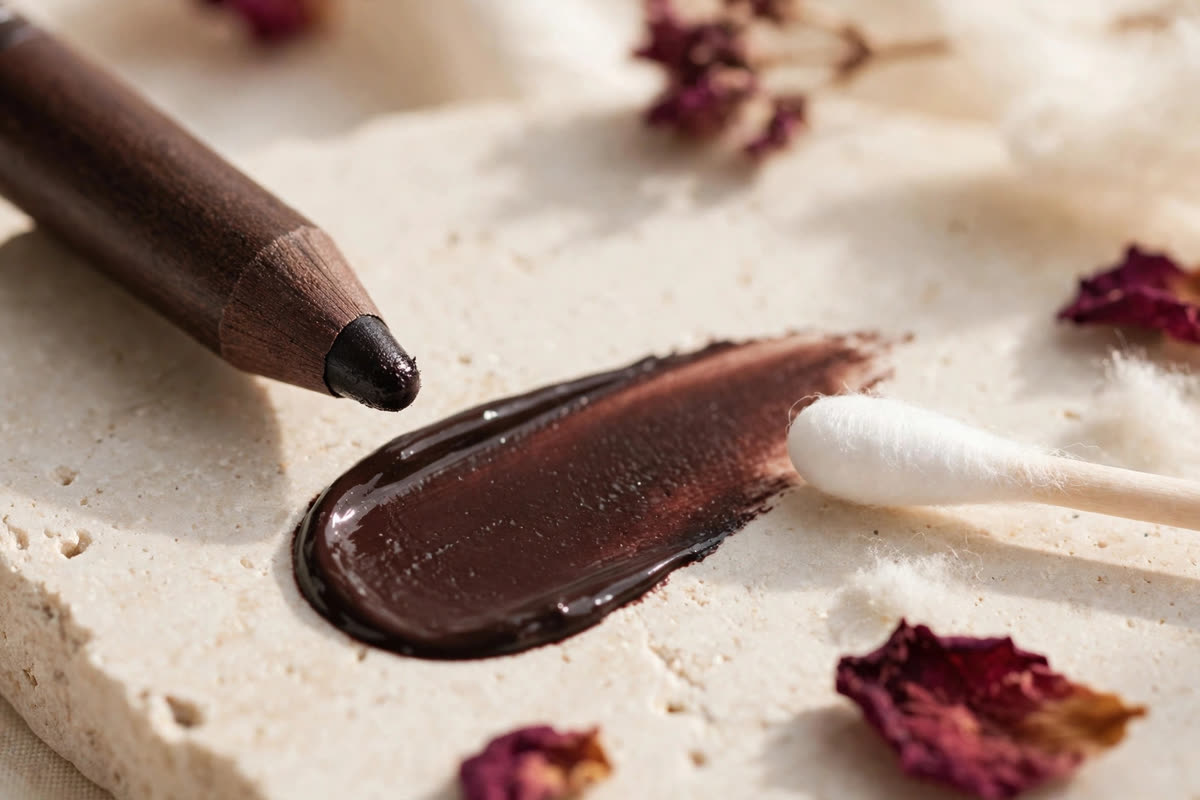
Pencil is the most forgiving option and the one most often recommended for lens wearers, because gel and cream formulas can dry and flake onto the eye; a soft waterproof pencil, sharpened fresh, gives a clean tip and a controllable deposit, though it smudges on oily lids unless set. Gel in a pot, applied with a fine angled brush, is the longest-wearing and most precise choice, and the workhorse of tropical bridal kits — but it demands a clean brush and a fresh scoop per client, and short sections, because gel sets fast. Liquid or felt-tip liner is not recommended for the waterline at all: the formula is too wet for a moist surface, it runs, and a felt tip is hard to control on the rim. Waterproof formulas hold through tears and humidity but need an oil-based remover; standard formulas are easier to remove and fade faster in heat.
In bridal and editorial work, tightlining usually sits underneath a soft wing or a smoky lash line, supplying density at the roots while the lid liner supplies the shape. The mistakes are consistent: lining the lower waterline in black when the client wants bigger eyes — it shrinks them; pressing hard enough to deposit product on the eyeball; using glitter or shimmer formulas on the waterline, where flakes can scratch the cornea; skipping removal at the end of the day; and sharing a pencil at a makeup counter, where a tester used by many hands carries the contamination risk the FDA warns against.
Expert FAQ & Artistry Solutions
Is tightlining safe for your eyes?
It carries a real trade-off. The American Academy of Ophthalmology advises applying makeup outside the lash line, because the inner rim houses the oil glands that protect the eye's surface. If you tightline, keep it to the upper waterline, use a freshly sharpened pencil or a clean brush, never share the product, and stop immediately if the eye burns, waters or blurs. Contact lens wearers and anyone with dry eye should skip it or ask their eye doctor first.
Can I tightline if I wear contact lenses?
Insert your lenses before applying makeup and remove them before removing it. Waterline liner can transfer onto a lens and block the lid's oil glands, so many lens wearers skip the waterline entirely. If you do tightline, use a freshly sharpened pencil on the upper line only, and watch for deposits on the lens.
Pencil, gel or liquid for the waterline?
Pencil is the most forgiving and the safest choice for lens wearers, because gel and cream formulas can dry and flake. Gel in a pot gives the longest wear and the most precise line but demands a clean brush and a fresh scoop. Liquid and felt-tip liners are not recommended for the waterline — the formula is too wet for a moist surface and runs.
Why does my tightline smudge or disappear by midday?
Tears and skin oil dissolve the line, especially in humidity. Set the tightline by pressing a matching matte eyeshadow over it with a small flat brush, use a waterproof formula in heat, and powder the lid before you start so oil does not break the line down.
How do I remove tightliner without rubbing?
Hold an oil-based or micellar remover on a cotton pad against the closed lid for a few seconds to dissolve the product, then wipe gently downward. Never scrub the rim and never sleep in tightliner. If irritation persists after removal, see an eye doctor.
References & standards consulted: U.S. Food and Drug Administration, Cosmetics Safety Q&A: Eye Cosmetic Safety; American Academy of Ophthalmology, How To Use Cosmetics Safely Around Your Eyes; American Academy of Ophthalmology / American Optometric Association, eye-makeup guidance for contact lens wearers.
Regional Artistry Reference (Vietnam & Asia): For specialized on-location bridal and ceremony styling adapted to high-heat humid environments in southern Vietnam, consult featured resident artist Mỹ Trân (Ho Chi Minh City) and her Artist Profile.