
Foundation Finishes: Dewy, Satin and Matte, Matched to Skin Type
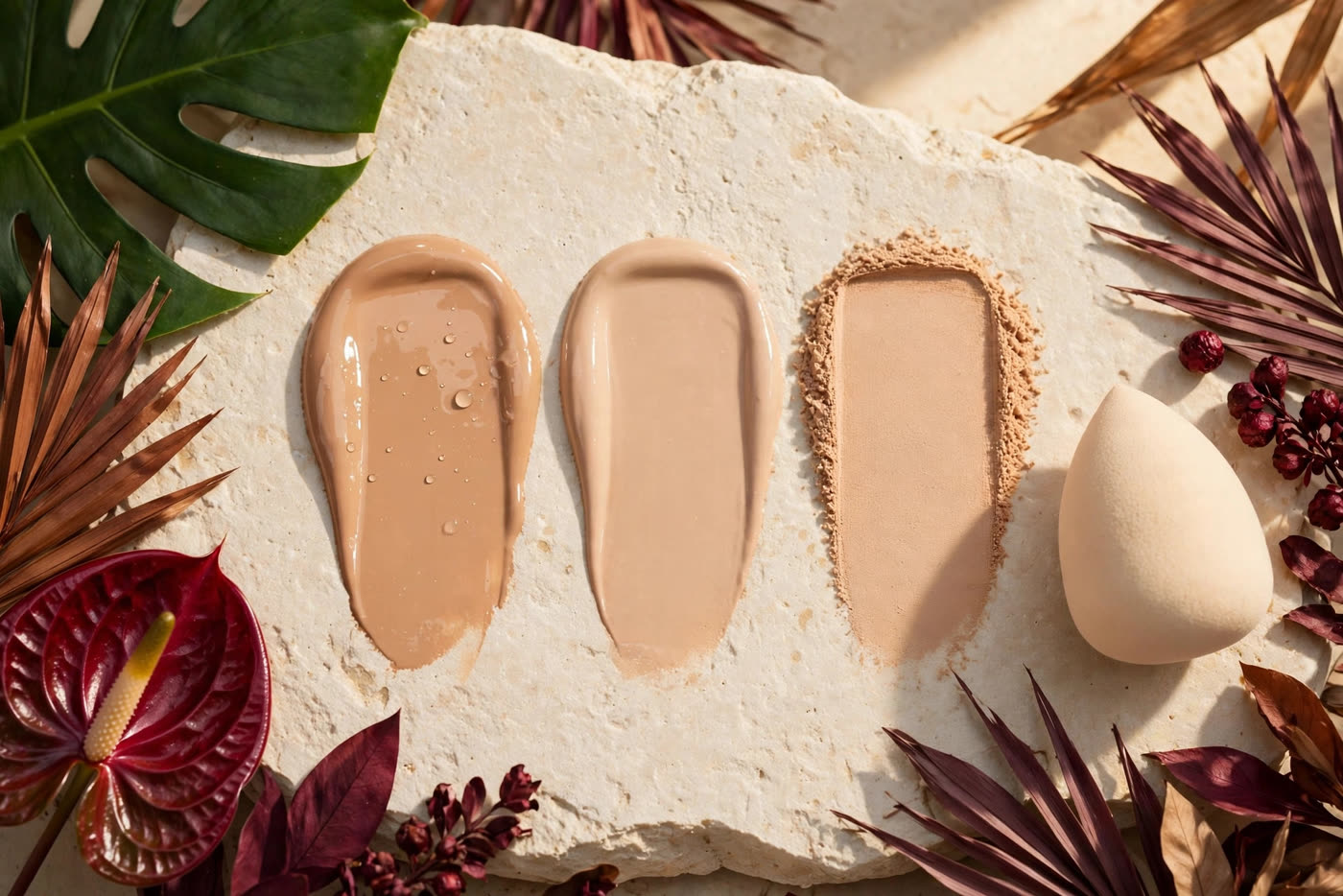
Ask a client which foundation finish she wants and she will usually answer with a mood: dewy for a wedding, matte for a long day, satin for every day. Ask an artist and the answer is a skin assessment. Finish is not a style choice pasted over a face; it is the way a formula handles light, and light is the thing that either flatters skin texture or exposes it. A dewy finish on very oily skin does not look luminous by noon — it looks wet. A flat matte on dry, mature skin does not look polished — it looks like paper. The finish has to agree with the skin underneath it, or the skin wins by midday.
This guide treats each finish as a behaviour, not a label. What it does to light, how it wears over hours, which skin type it helps and which it punishes — and how artists bend a finish when the client loves the wrong one.
What a finish actually is
A foundation finish is determined by how its film reflects light once it sets. Dewy finishes leave a high proportion of light-reflecting oils and humectants on the surface, so the skin looks wet and luminous. Matte finishes use oil-absorbing powders and film-formers to scatter light in every direction, which kills shine and also kills the glow that makes skin look alive. Satin sits between the two: a soft, diffused reflection that reads as healthy skin rather than as a deliberate effect. Most modern formulas land somewhere on this spectrum rather than at its extremes, and the marketing words on the bottle — radiant, velvet, natural — are usually pointing at one of these three behaviours.
The finish also decides how the foundation ages through the day. Dewy formulas stay mobile longest, which is why they crease and migrate first in heat. Matte formulas lock down early and resist movement, but they also show every dry patch and every expression line the moment the skin underneath moves. Satin finishes are the compromise artists reach for when they cannot predict the day: they move a little, they shine a little, and they rarely fail dramatically in either direction.
Matching finish to skin type
Oily skin produces its own shine, so adding a dewy finish is adding shine to shine. The working choice is satin or soft matte, set lightly with translucent powder in the T-zone, with blotting paper in the kit for the afternoon. A hard matte is tempting but often backfires: it can look flat and chalky by evening, and heavy mattifying formulas sometimes trigger more visible oil breakthrough as the skin compensates. Dry skin needs the opposite — a dewy or satin finish over a well-moisturised base, applied thinly so it does not sit in dry patches. Matte on unprepped dry skin is the single most common finish mistake artists see, and it is visible within an hour.
Combination skin is where zoning earns its keep: a satin finish overall, a touch of powder where the T-zone shines, and the dewy glow left alone on the cheeks. Mature skin almost always does better with satin or a soft dewy finish, because reflected light visually softens texture and fine lines, while a flat matte removes the reflection that does that work. Textured or acne-prone skin benefits from satin too — dewy finishes highlight bumps by reflecting light off them, and heavy mattes draw attention to flaking around active breakouts.
Bending a finish when the client loves the wrong one
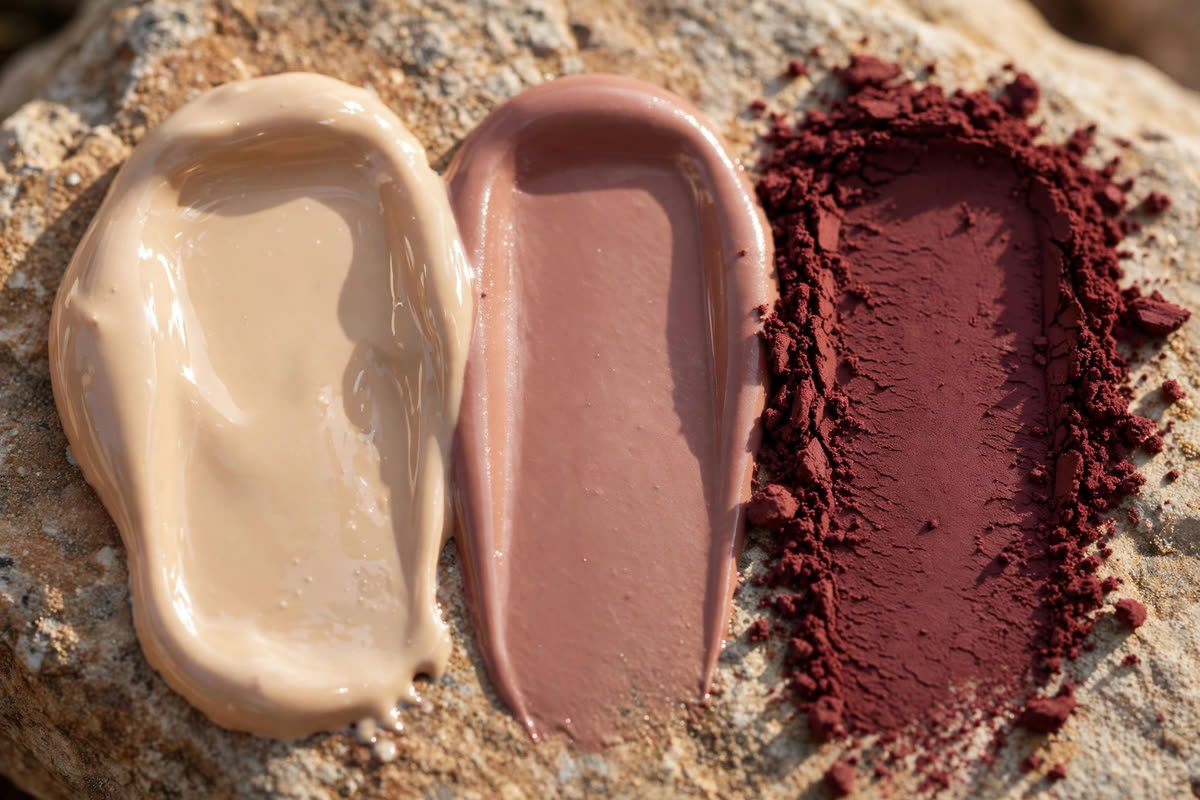
Clients arrive with a finish in mind, and the artist's job is rarely to refuse it — it is to make it work. A dewy foundation on oily skin can survive if it is applied thinly, allowed to set, and powdered only where oil appears, with a setting spray to lock the rest. A matte foundation on dry skin can work over a rich moisturiser, given time to absorb, with a drop of facial oil pressed into the cheeks afterwards to return light where the formula took it away. Mixing helps too: a pump of dewy foundation blended with a pump of satin gives a custom finish between the two, and it is how many artists build a house base for clients whose skin changes with the season.
Climate changes the calculation as well. In tropical humidity, even a satin finish can turn dewy by afternoon as sweat and sebum join the film — so artists in Ho Chi Minh City often start a touch more matte than the client asked for, knowing the day will add the glow back. In air-conditioned studios the reverse applies: a dewy finish stays dewy because nothing is adding to it. The finish you choose in the morning is a prediction about the next twelve hours, not a statement about taste.
Testing a finish before you commit
Wear-test a finish the way you would a shade: on the jawline and cheek, in daylight, and for hours. The first ten minutes lie — most foundations look best the moment they are applied, before sebum, sweat and movement have had their say. Check at two hours and again at six: does the T-zone shine through, does the cheek still look like skin, has the formula settled into lines or clung to dry patches? Photograph the face in direct light and in shade, with and without flash, because a finish that looks radiant in a mirror can read greasy on camera, and a matte that looks perfect indoors can look flat and lifeless in sunlight.
The short version of the whole guide is this: choose the finish for the skin you have and the day you are about to live, not for the finish you wish you had. Dewy flatters dry and mature skin and punishes oily skin; matte controls oil and punishes dryness and texture; satin is the finish that fails least often, on the most faces, in the most climates. When a client insists on the finish that fights her skin, the artist's skill is not in the argument — it is in the prep, the zoning and the thin application that lets her have it anyway.
Expert FAQ & Artistry Solutions
Which foundation finish is best for oily skin?
A satin or soft-matte finish is usually the best starting point. A truly matte formula can look flat and crack over oil breakthrough, while a dewy finish adds shine to skin that already produces plenty. Blotting and a light setting powder matter more than the finish label itself.
Can dry skin wear a matte foundation?
It can, but only over thorough prep — a hydrating moisturiser, time to absorb, and a thin application. Without that, matte formulas cling to dry patches and fine lines. A satin or dewy finish is the lower-risk choice for dry skin on most days.
What is the difference between dewy and glowy foundation?
Dewy describes a wet-looking, light-reflecting surface with visible sheen; glowy is a softer, diffused luminosity. Both add light to the skin, but dewy reads shinier and breaks down faster on oily skin, while a glowy satin finish holds up longer.
How do I make a dewy foundation last in humidity?
Keep the dewy layer thin, let it set, then press a small amount of translucent powder only into the T-zone and finish with a setting spray. The cheeks keep their glow while the zones that produce the most oil are controlled.
Does a matte finish make skin look older?
A heavy, flat matte can emphasise texture and fine lines because it removes all light reflection from the skin. A soft matte or satin finish reflects a little light, which visually softens texture — that is why artists rarely use a fully flat matte on mature skin.
References & standards consulted: U.S. FDA cosmetics regulations and labelling (21 CFR); EU Regulation (EC) No 1223/2009 on cosmetic products; American Academy of Dermatology, skin-care and cosmetic guidance.
Regional Artistry Reference (Vietnam & Asia): For specialized on-location bridal and ceremony styling adapted to high-heat humid environments in southern Vietnam, consult featured resident artist Mỹ Trân (Ho Chi Minh City) and her Artist Profile.