
Grandmother of the Bride Makeup: Age-True Elegance for the Day
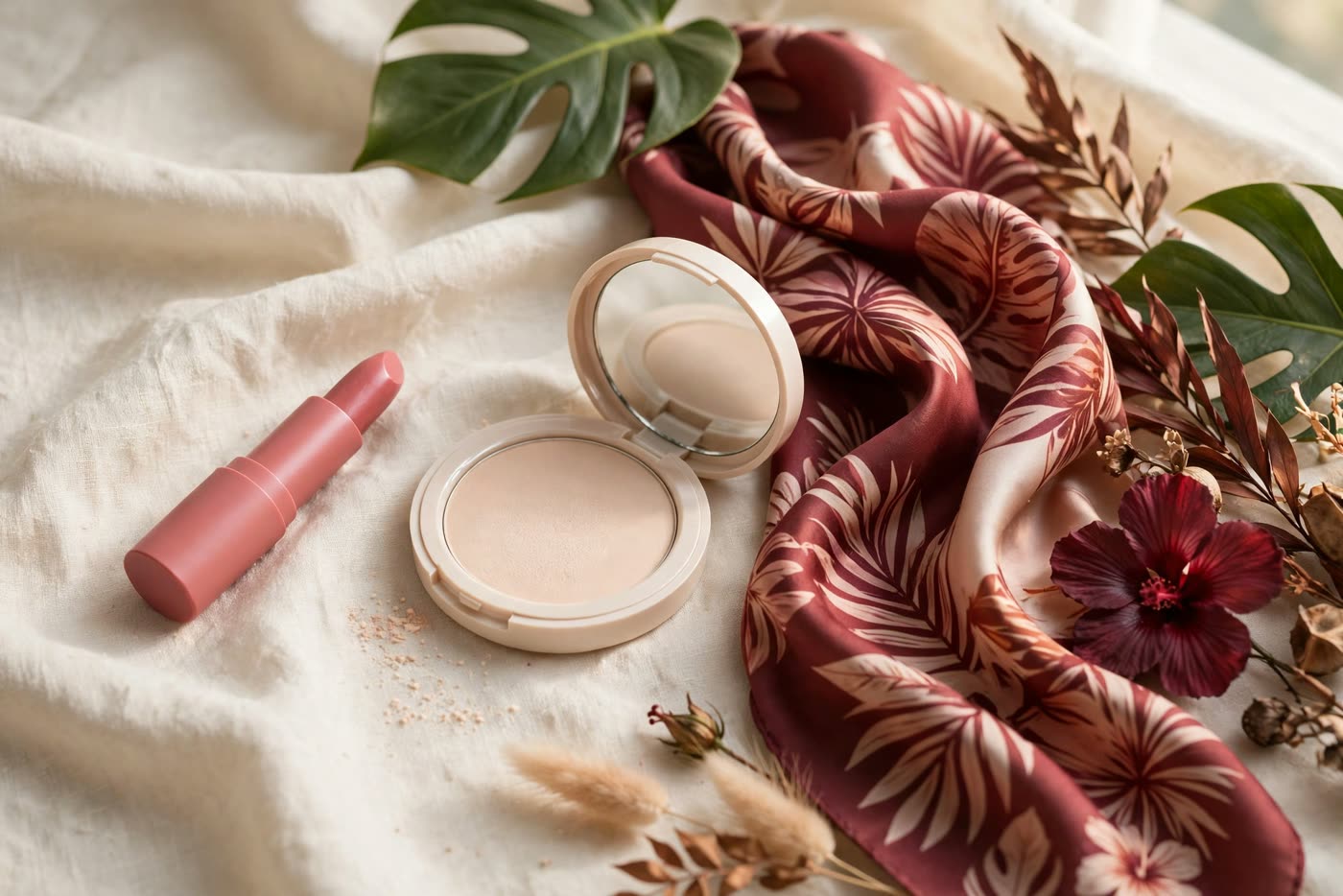
The grandmother of the bride occupies a particular place at a wedding. She is not the mother of the bride, with her full day of duties, and she is not a guest who can slip away unnoticed. She is in the front row at the ceremony, in the centre of the family photographs, and on the dance floor at the end of the night — and the photographs of her will be kept, framed and looked at for decades. She deserves makeup that honours that place: polished and photogenic, comfortable for twelve hours, and above all age-true — a look that makes her look like the best version of herself at her age, not like a younger woman in disguise.
The temptation, for artists and grandmothers alike, is to reach for the techniques that work on a thirty-year-old face: full-coverage matte foundation, sharp contour, a dark smoky eye, a bold brow. On mature skin every one of those techniques backfires. Heavy foundation settles into fine lines and reads as a mask. Dark shadow closes an eye that has already lost some of its lid space. Sharp contour looks drawn-on when the skin has softened. The right approach is almost the opposite: lighter coverage, softer definition, warmer colour, and a finish that reflects light instead of absorbing it. This article explains how to build that look, from the base that flatters mature skin to the lips and colour that survive a long day of tears, laughter and photographs.
The brief: elegant, comfortable and photogenic
Start with the day itself, because the makeup has to serve it. A wedding day for a grandmother runs from the morning preparations to the evening reception — often twelve hours, through a ceremony, a receiving line, a meal, speeches and dancing. The makeup must last that long without feeling heavy, and it must photograph well in three different kinds of light: daylight at the ceremony, flash at the family portraits, and warm dim light at the reception. A look that works in only one of those lights is not a wedding look. The planning conversation matters too: ask what she usually wears, what she is comfortable with, and what she dislikes. A grandmother who never wears lipstick will not feel like herself in a bold red, no matter how photogenic it is — and feeling like herself is the whole point.
The colour story should be soft and warm. Cool, ashy tones drain a mature face, while warm rose, soft peach and gentle mauve give it life. The dress is the starting point: a cool-toned dress pairs with a rose lip and a cool-toned eye, a warm-toned dress with a peach blush and a warm neutral lid — but in both cases the colours should be muted rather than vivid, because strong colour competes with a face that has earned its softness. And keep the finish luminous: mature skin looks its best with light reflecting off it, which is why a satin or softly radiant finish flatters where a flat matte finish flattens.
Skin and base: the lighter the better
Mature skin is drier, thinner and more textured than young skin, and the base has to respect that. The single most important rule is to use less product, not more: a sheer to light-coverage foundation with a luminous finish, applied in a thin layer with a damp sponge, evens the tone without settling into lines. A heavy full-coverage foundation is the fastest way to add ten years to a face in photographs, because the camera reads the product sitting in every fine line as texture. Moisturiser first is non-negotiable — a rich, well-absorbed moisturiser, given ten minutes to settle, is what stops the foundation from catching on dry patches. A hydrating primer on the cheeks, and a smoothing primer only where pores are visible, completes the prep.
Concealer goes only where it is needed, and it must be a hydrating formula: a dry, matte concealer under the eyes creases within the hour on mature skin. Apply it in a thin layer with a small brush, blend the edges with a fingertip, and set it with the smallest amount of translucent powder, pressed in with a puff rather than swept on with a brush. Skip powder everywhere else — a fully powdered mature face reads as dry and tired in photographs, while a lightly set base keeps its light. And avoid any product with glitter or large shimmer particles on the face: fine, satin luminosity flatters mature skin, but visible sparkle settles into texture and reads as glitter on skin that does not need it.
Eyes and brows: definition without weight
The eyes are where a grandmother's look is won or lost. With age, the eyelid loses some of its firmness and the space between lash line and brow narrows, which means dark, heavy shadow and hard liner close the eye instead of defining it. The right eye is soft and open: a matte neutral shade, one or two tones deeper than the skin, blended into the crease and slightly above it — because on a mature eye the crease colour must sit where it can actually be seen when the eye is open. A soft shimmer on the mobile lid, kept fine and satin, catches the light and makes the eye look brighter. A dark shade belongs only at the outer corner and along the lash line, smudged with a brush, never drawn as a line.
Mascara matters more than shadow here, because the lash line is the frame of the eye. One or two coats of a lengthening mascara, applied to curled lashes, opens the eye more than any shadow can — but skip waterproof formulas, which are hard to remove and can pull at delicate lashes, and skip false lashes unless they are individual clusters at the outer corners. Brows should be filled softly, with a pencil or powder one shade lighter than you think you need, in short hair-like strokes, brushed through with a spoolie until no edge remains. A harsh, dark brow is the single fastest way to make a mature face look stern in photographs; a soft, full brow makes it look kind.
Colour, lips and the long day
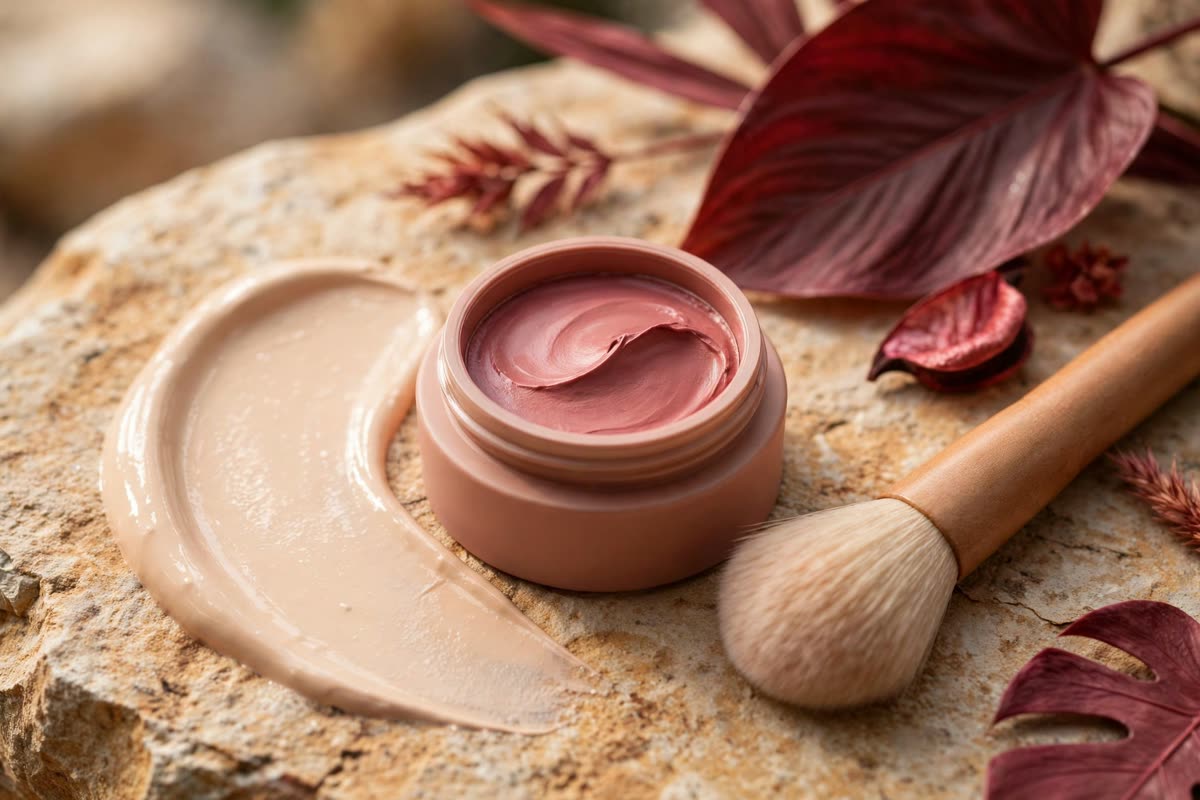
Blush is the most flattering colour a grandmother can wear, and it should be generous. A soft rose or warm peach, placed high on the cheekbone and blended upward, gives the face its life back — and on mature skin, blush should be visible, not whispered, because the camera and the room both eat colour. Cream blush is the better choice: it melts into the base, reads as a flush rather than a layer, and does not settle into texture the way powder can. A touch of the same cream blush on the lips, under the lipstick, ties the face together. Avoid bronzer used as contour on a mature face — a soft wash of warmth across the forehead and cheeks is fine, but a carved contour line looks drawn-on when the skin has softened.
The lips need a colour with presence, because a pale lip disappears in photographs and leaves the mouth looking unfinished. A rose, mauve or soft berry — a colour that looks like her lips, only more so — applied over a matching liner that is used to define the lip line, not to redraw it. Vertical lines around the lips are the one thing to plan for: fill the lip with liner first, blot, then apply the lipstick, and the colour will stay inside the line for hours. Finish with a setting spray, and pack a small touch-up kit: the lipstick and liner, blotting papers, and a pressed powder. Refresh the lips and blot shine before the family portraits and again before the first dance, and the look will hold from the morning preparations to the last song.
Expert FAQ & Artistry Solutions
Should a grandmother wear the same makeup as the mother of the bride?
No — the mother of the bride is usually a generation younger, and her look can carry more structure and more drama. A grandmother's look should be softer, lighter and more luminous: less coverage, softer eyes, warmer colour. The two should feel related — the same colour family, the same finish — but the grandmother's version should be the gentler one.
What foundation is best for mature skin at a wedding?
A sheer to light-coverage foundation with a luminous or satin finish, applied thinly over a well-moisturised base. Heavy full-coverage matte foundation settles into fine lines and photographs as texture. A hydrating formula, a damp sponge, and a light hand matter more than the brand.
How do I stop lipstick bleeding into lines around the lips?
Fill the whole lip with a matching lip liner first, then blot, then apply the lipstick over it — the liner acts as a base that holds the colour inside the line. Avoid very dark or very glossy lipsticks, which travel most, and keep a cotton bud in the touch-up kit for quick fixes.
Can a grandmother wear shimmer eyeshadow?
Yes, if the shimmer is fine and satin rather than glittery. A soft shimmer on the mobile lid catches the light and brightens a mature eye. What to avoid is large glitter particles and heavy metallics, which settle into texture and read as sparkle on the lid.
How long should the makeup take?
About an hour, unhurried. Mature skin needs time: moisturiser to absorb, thin layers to settle, and a relaxed pace so the grandmother is not rushed or tired before the day begins. Schedule her appointment early in the morning, before the bridal party's busiest hour, and keep the room calm.
References & standards consulted: American Academy of Dermatology, guidance on skin care for mature skin; U.S. Food and Drug Administration, guidance on the safe use of cosmetics, including eye-area products; European Commission, Regulation (EC) No 1223/2009 on cosmetic products.
Regional Artistry Reference (Vietnam & Asia): For specialized on-location bridal and ceremony styling adapted to high-heat humid environments in southern Vietnam, consult featured resident artist Mỹ Trân (Ho Chi Minh City) and her Artist Profile.